
Deep Water Culture: The Soilless Growing Method That’s Changing Water Gardens Forever
Suspend plant roots directly in nutrient-rich, oxygenated water instead of soil, and you’ll discover why deep water culture has transformed how pond enthusiasts grow vegetables, herbs, and flowering plants. This hydroponic method works beautifully alongside existing pond systems because you’re already managing water quality and circulation.
Picture your favorite pond plants thriving without any growing medium at all. That’s DWC in action. The roots dangle freely in a reservoir while an air pump delivers constant oxygen through bubble stones, creating an environment where plants grow two to three times faster than traditional soil methods. For water gardeners, it’s a natural extension of what you already know about aquatic ecosystems.
You don’t need expensive equipment to begin. A simple five-gallon bucket, net pot, air pump, and basic nutrients will get your first system running this weekend. Many pond owners already have these supplies tucked away in their sheds.
The real advantage? DWC systems share the same principles as your pond filtration setup. You’re controlling dissolved oxygen, monitoring pH, and maintaining beneficial bacteria. If you’ve successfully kept koi or goldfish healthy, you already understand the fundamentals. You can even start your own plant swap once you see how quickly plants multiply in these systems.
Let’s walk through everything you need to build a thriving deep water culture setup that complements your existing water garden perfectly.
What Exactly Is Deep Water Culture?
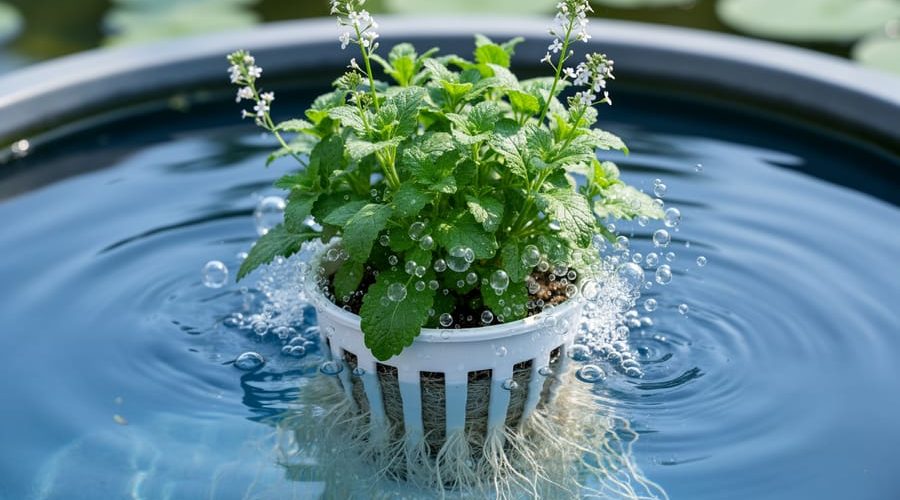
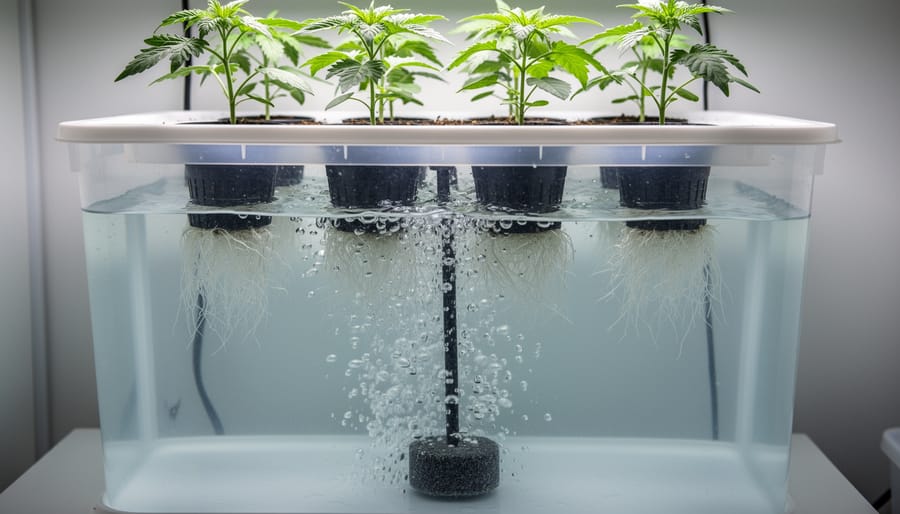
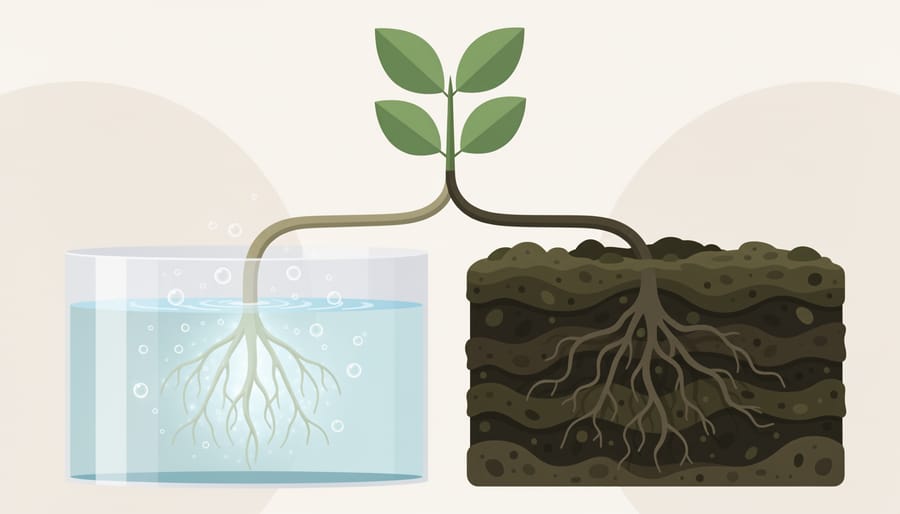
Deep water culture flips the traditional gardening rulebook on its head. Instead of tucking plant roots into soil, you suspend them directly in water, but not just any water. The roots dangle freely in a nutrient-rich solution that’s constantly bubbled with oxygen from an air pump, the same type you’d use in a fish tank. That oxygenation is the secret sauce. Without it, roots would drown and rot. With it, they absorb nutrients faster than they ever could from soil because everything they need arrives dissolved in the water around them.
Deep water culture needs aeration to work properly, which is why every DWC setup includes an air stone or diffuser at the bottom of the water reservoir. Think of it like your pond’s aerator, but on a smaller scale and serving plant roots instead of fish.
If you’re used to pond plants sitting in gravel or aquatic planting baskets filled with heavy clay soil, DWC feels surprisingly different. Traditional pond marginals like irises and cattails grow from the muddy edges, their roots anchored in substrate. In DWC, there’s no mud, no mess, and no digging. The plants sit in net pots, plastic cups with slotted sides, filled with a lightweight growing medium like clay pebbles or lava rock. These materials simply hold the plant upright while roots grow through the holes and into the water below.
The biggest shift for water gardeners is control. In a natural pond or bog garden, nutrients come from decomposing organic matter, fish waste, and whatever nature provides. In DWC, you decide exactly what nutrients your plants receive and when they get them. It’s more hands-on than letting pond plants fend for themselves, but that control translates into vegetables that grow three times faster than their soil-bound cousins.
Why Water Gardeners Are Falling in Love with DWC
If you’ve spent any time tending a traditional bog garden or wrestling with waterlogged soil around your pond, you’ll immediately appreciate why DWC is turning heads in the water gardening world. The benefits aren’t just theoretical, they’re practical improvements you’ll notice from your very first harvest.
**Speed that’ll surprise you.** Plants in DWC systems grow noticeably faster than their soil-bound cousins. Without soil acting as a middleman, roots absorb nutrients directly from the water solution. That lettuce you planted? It could be ready for salads in three weeks instead of six. Your basil might double in size while your neighbor’s dirt-planted herbs are still getting established. For water gardeners who already understand how aquatic plants thrive, this accelerated growth feels natural, you’re just extending that principle to vegetables and herbs.
**Less mess, more enjoyment.** Traditional bog gardens create muddy zones around ponds that track into the house and complicate maintenance. DWC containers stay contained. No soil means no erosion washing into your pond, no muddy knees during weeding sessions, and no guessing whether you’re overwatering or underwatering. The system itself tells you everything, just glance at the water level.
**A cleaner pond ecosystem.** Here’s where it gets interesting for pond enthusiasts. DWC plants act as biological filters, pulling excess nutrients from the water that would otherwise feed algae blooms. If you’re using pond water to feed your DWC system (which many gardeners do), those vegetable roots are essentially scrubbing nitrates and phosphates from your fish habitat. It’s a win-win: healthier pond water and thriving plants.
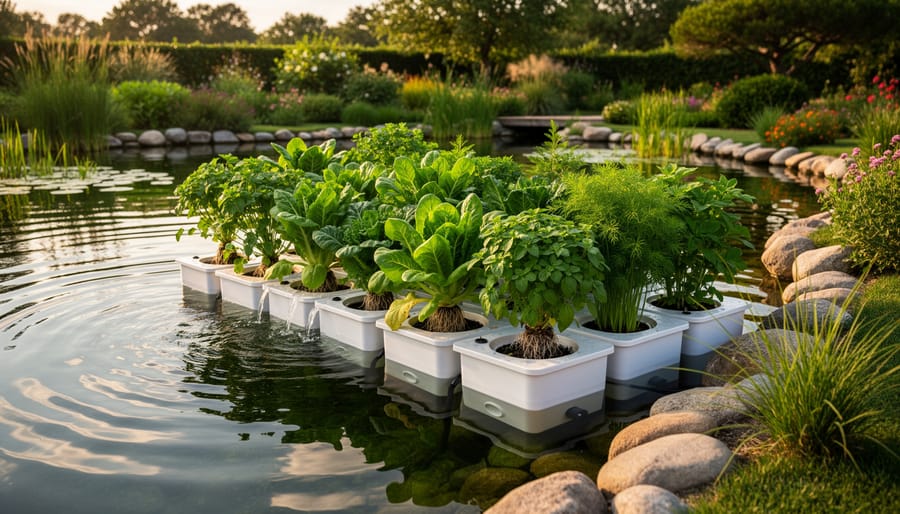
**Vegetables meet ornamentals.** You don’t have to choose between a beautiful water feature and a productive garden anymore. Picture crisp lettuce growing in sleek containers beside your water lilies, or cherry tomatoes cascading near your fountain. DWC systems integrate seamlessly with existing pond aesthetics, they can be as decorative or utilitarian as you want. Many water gardeners position their DWC setups as floating planters that become conversation pieces while producing dinner ingredients.
The learning curve is gentle, especially if you already maintain a pond. You’re already monitoring water quality and managing aquatic life. DWC just adds another rewarding dimension to skills you’ve already developed.
Setting Up Your First DWC System Near Your Pond
What You’ll Need to Get Started
Starting a DWC system doesn’t require fancy equipment or expert skills. Most of what you need is probably sitting in your garage or available at your local hardware store for under $50.
| Item | Purpose | Budget-Friendly Alternative |
|---|---|---|
| Container (5-20 litres) | Holds nutrient solution | Old ice cream tub, storage bin, dark-coloured bucket |
| Air pump with tubing | Oxygenates water for roots | Basic aquarium pump from discount stores ($15-25) |
| Net pots (5-8cm) | Supports plants above water | Cut holes in container lid, use yogurt cups with drainage holes |
| Growing medium | Anchors plant roots | Clay pebbles, perlite, or clean river stones |
| Light-blocking lid | Prevents algae growth | Cardboard wrapped in foil, dark plastic sheet, or spray-painted container lid |
The container needs to be opaque or covered to keep light away from roots and nutrients. Dark colours work best because they prevent algae from taking over your system. If you’re using a clear container, wrap it in duct tape or black plastic bags.
Your air pump doesn’t need to be powerful. The same pump that works for a small fish tank will handle one or two plants just fine. Position the airstone at the container bottom so bubbles rise through the entire water column, creating maximum oxygen contact with the roots.
Connecting Your DWC to Your Pond Ecosystem
Your pond is already doing half the work for you. That healthy, established ecosystem you’ve built can become the foundation for your DWC setup, creating a closed loop where everything benefits everything else.
Start by using your pond water to fill your DWC containers. This water already contains dissolved nutrients from fish waste, decomposing plant matter, and beneficial bacteria. You’re not starting from scratch with sterile water that needs everything added, you’re building on what’s already there. Just make sure the water is reasonably clear and not overly cloudy with algae or debris.
Position your DWC system near your pond so you can easily share water between them. Some water gardeners set up their containers right at pond level, using a small pump to circulate water from the pond through the DWC system and back again. This creates a natural filtration loop. The plant roots in your DWC setup act like a biological filter, pulling nitrates and phosphates from the water before it returns to your fish. Your pond stays cleaner, and your plants get fed, everyone wins.
If you’re not ready for a fully integrated system, try this simpler approach: when you perform routine pond water changes, use that removed water to top off or refresh your DWC containers instead of dumping it. You’re recycling nutrients rather than wasting them. Taking time for interactive planning before you start helps you figure out the best placement and water flow for your specific setup.
The beauty of this connection is that you reduce maintenance in both systems. Less frequent nutrient additions to your DWC, cleaner water for your fish, and a more balanced ecosystem overall. You’re working with nature’s cycles instead of fighting against them.
Best Plants for DWC in Water Garden Settings
Choosing the right plants for your first DWC setup makes all the difference between thrilling success and frustrating setbacks. The good news? Several plants absolutely love DWC conditions and forgive beginner mistakes while delivering impressive results near your pond.
Leafy greens reign supreme for newcomers. Lettuce varieties, butterhead, romaine, and loose-leaf types, grow ridiculously fast in DWC, often ready to harvest in three to four weeks. Their shallow root systems adapt perfectly to net pots, and they’ll tolerate minor fluctuations in nutrient strength that would stress fussier plants. Spinach and Swiss chard follow close behind, thriving in the same conditions.
Herbs deserve a special place in any water garden DWC system. Basil grows like a weed in oxygenated water, producing aromatic leaves that dwarf anything you’d get from soil. Mint (already a water-lover) transitions beautifully to DWC, though you’ll want to keep it contained since it grows aggressively. Cilantro, parsley, and chives all flourish with minimal fuss.
| Plant | Difficulty | Harvest Time | Notes |
|---|---|---|---|
| Lettuce (any variety) | Beginner | 3-4 weeks | Most forgiving, grows fast, loves cool weather |
| Basil | Beginner | 4-6 weeks | Pinch tops regularly, needs warmth |
| Swiss Chard | Beginner | 5-6 weeks | Colorful stems add visual appeal |
| Strawberries | Intermediate | 8-10 weeks | Beautiful flowers, needs patience |
| Tomatoes | Advanced | 10-12 weeks | Requires support, heavy feeders |
For something ornamental that ties beautifully into water garden aesthetics, try nasturtiums. Their trailing vines and bright flowers create stunning visual connections between your DWC containers and pond edges, plus the leaves and flowers are edible.
Skip fruiting plants like tomatoes, peppers, and cucumbers until you’ve mastered the basics. These heavy feeders demand precise nutrient management and strong support structures. They’ll eventually work in DWC, but starting with them invites unnecessary complications.
Also avoid root vegetables entirely. Carrots, beets, and potatoes need soil structure that DWC simply can’t provide. Save yourself the disappointment and stick with leafy crops and herbs while learning the system. Once you’ve harvested three or four successful lettuce crops, you’ll have the confidence and knowledge to tackle trickier plants.
Feeding Your Plants: Understanding Nutrients Without the Confusion
Your DWC plants need food, but don’t let the term “hydroponic nutrients” intimidate you. Think of it this way: in soil, plants pull nutrients from the earth. In DWC, you’re simply adding those same nutrients directly to the water. It’s actually simpler than managing soil fertility once you understand the basics.
Start with a complete hydroponic nutrient solution designed for water-based growing. The label will show three numbers, like 10-5-7, which represent nitrogen, phosphorus, and potassium (NPK). Nitrogen fuels leafy growth, phosphorus supports roots and flowering, and potassium strengthens overall plant health. For leafy greens and herbs, choose a formula higher in nitrogen. For fruiting plants like tomatoes, you’ll want more balanced ratios once they start flowering.
Most beginners make the mistake of adding too much. Follow the package directions carefully, typically starting at half-strength for your first week. You can always add more, but overdoing it causes nutrient burn, crispy brown leaf edges that signal you’ve gone too far.
If you have fish in your pond, you’ve got a natural head start. Fish waste contains nitrogen and trace elements that plants love. Many water gardeners use pond water to fill their DWC systems, cutting their nutrient needs by half or eliminating commercial fertilizers entirely for less-demanding plants. Test this approach with hardy herbs or lettuce before trying it with pickier vegetables.
Change your nutrient solution every two weeks, or when the water level drops by half. As plants drink, they leave behind salts and unused nutrients that can accumulate to harmful levels. Fresh water with properly measured nutrients prevents buildup and keeps plants thriving.
Don’t obsess over getting it perfect. Plants will tell you what they need, pale leaves mean more nitrogen, stunted growth suggests phosphorus deficiency. Start simple, observe your plants, and adjust as you go. That’s the whole secret.
Keeping the Water Healthy: Maintenance Made Easy
Regular maintenance keeps your DWC system running smoothly, but don’t worry, it’s actually simpler than maintaining a traditional pond. Most tasks take just a few minutes and become second nature after your first couple of weeks.
**Weekly Water Checks**
Top off your reservoir as water evaporates, adding fresh water to maintain consistent levels. This matters because changing water levels affect nutrient concentration. Every two weeks, replace about half the water in your system. If you’re using pond water, you might stretch this to three weeks since it contains beneficial bacteria that help keep things balanced. When you change water, rinse any visible debris from net pots and check that roots look white or cream-colored, that’s healthy.
**pH Made Simple**
Here’s the truth: you don’t need to obsess over pH. Most plants tolerate a range between 5.5 and 7.0, and pond water usually sits right in this sweet spot. Check pH once weekly with inexpensive test strips from any pet store. If your plants grow steadily and leaves look vibrant, you’re fine. Only adjust if you see slow growth or yellowing despite adequate nutrients. A splash of white vinegar lowers pH, while a pinch of baking soda raises it. Make tiny changes and wait a day before adjusting further.
**Oxygen Level Reality Check**
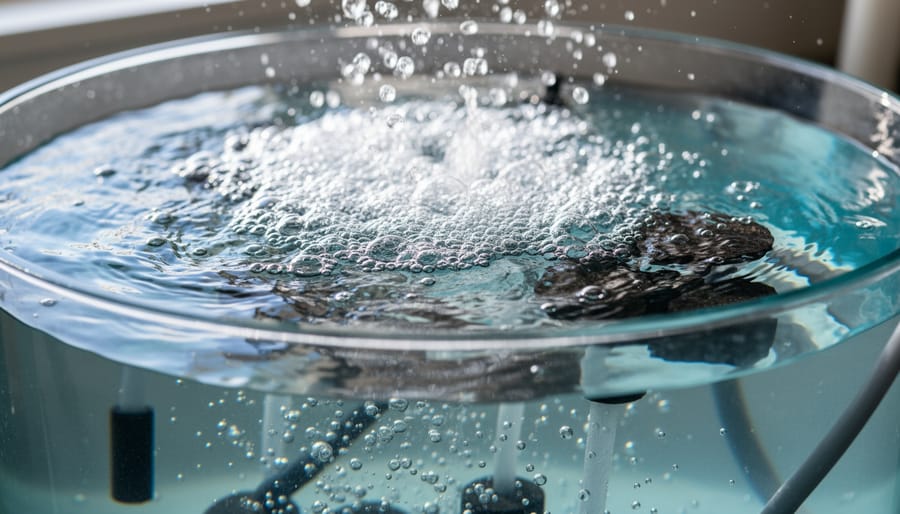
Your air pump should create a vigorous bubbling action, imagine a pot of water at a rolling boil. If bubbles weaken, check for kinked airline tubing or clogged airstones. Clean airstones monthly by soaking them in vinegar overnight, then rinsing thoroughly. In hot weather, water holds less oxygen, so you might add a second airstone or upgrade to a stronger pump if you notice roots turning brown or slimy.
**Algae Prevention Without Chemicals**
Algae loves light and nutrients, exactly what your system provides. Keep your reservoir covered or painted dark to block light from reaching the water. If algae appears on roots, it usually won’t harm mature plants, but you can reduce nutrients slightly or add a small pond snail to graze on it. Green water means you’re overfeeding or getting too much sunlight exposure. Covering the container solves this problem almost immediately.
Common Problems and Simple Fixes
Even experienced water gardeners hit snags when they’re new to DWC. The good news? Most problems have simple fixes that don’t require a chemistry degree or expensive equipment. Here’s what you’re likely to encounter and how to handle it without stress.
- Wilting or Drooping Leaves
- Usually means your roots aren’t getting enough oxygen. Check that your air pump is working and bubbles are rising vigorously, if the pump’s running but bubbles are weak, clean or replace your airstone.
- Slimy Brown Roots (Root Rot)
- This happens when water gets too warm or stagnant. Move your container to a shadier spot, add more aeration, and trim away any mushy roots with clean scissors, healthy roots should be white or cream-colored.
- Green Water or Algae on Roots
- Light hitting your nutrient solution feeds algae growth. Cover any gaps in your container lid with aluminum foil or opaque tape, and reduce how long you’re exposing the water when checking plants.
- Pump Stops Working
- Have a backup air pump on hand, they’re your system’s lifeline. If your pump quits, get another running immediately, or temporarily move plants to a bucket with fresh water while you replace it.
- Yellow Leaves Despite Healthy Roots
- You’re either overfeeding or underfeeding nutrients. If leaves yellow from the tips inward, cut nutrients by half; if they yellow from the base upward, increase feeding slightly.
The biggest mistake beginners make is panicking and changing everything at once. When something goes wrong, adjust one variable at a time and wait a day or two to see the result. Plants are surprisingly resilient and will bounce back from most issues if you catch them early.
Keep a simple notebook near your DWC setup. Jot down when you add nutrients, change water, or notice problems. You’ll start seeing patterns that help you prevent issues before they start. Most DWC disasters happen because someone forgot when they last did maintenance, not because the system is fragile.
If a plant isn’t thriving after you’ve tried the basics, sometimes it’s just the wrong variety for DWC. Don’t take it personally, pull it out and try something else. Part of the fun is experimenting.
Taking It Further: Advanced DWC Ideas for Your Water Garden
Once you’re comfortable with basic DWC, the real fun begins. Floating raft systems transform your pond’s surface into productive growing space, simply build a foam board platform that sits directly on the water, cut holes for net pots, and let plant roots dangle into the pond below. Your fish provide natural fertilizer while plants filter the water, creating a self-sustaining cycle. This fish-powered aquaponics approach works beautifully with koi or goldfish ponds, turning waste into harvests.
Consider seasonal rotations to keep your water garden interesting year-round. Grow cool-season greens like spinach and peas in autumn and spring, then switch to heat-loving basil and peppers when temperatures rise. In winter, even if plant growth slows, roots continue filtering pond water.
Aesthetically, combine DWC with your existing features rather than hiding it. Position floating rafts alongside water lilies for a striking contrast between modern food production and classical water gardening. Use architectural plants like ornamental grasses or trailing varieties that cascade over container edges, blending the technical with the beautiful.
Try vertical DWC towers near pond edges for dramatic visual impact and space efficiency. Stack multiple growing chambers that share one reservoir, perfect for strawberries or herbs. Link several small DWC units at different heights around your pond to create layered interest, with each system operating independently but contributing to the overall ecosystem. The possibilities expand as quickly as your confidence grows.
Starting your DWC journey doesn’t require perfection or expensive equipment. Pick one simple container, add an air pump, and try growing lettuce or basil beside your pond. That’s it. Your first attempt might not yield prize-winning plants, and that’s completely normal. Every wilted leaf and algae bloom teaches you something valuable about water chemistry, oxygen levels, and plant needs.
The beauty of deep water culture is how it expands what’s possible in your outdoor space. You’re not just maintaining a pond anymore, you’re creating a living system where plants and water work together in ways traditional gardening can’t match. Thousands of water gardeners worldwide are discovering these methods right now, sharing their successes and failures, learning from each other’s experiments.
If you get stuck or want guidance, don’t hesitate to find a mentor in the water gardening community. Someone’s already solved the problem you’re facing.
Your pond deserves this experiment. Start small, stay curious, and watch what happens when you give plants exactly what they need.