
How Riparian Buffers Transform Your Pond Into a Thriving Ecosystem
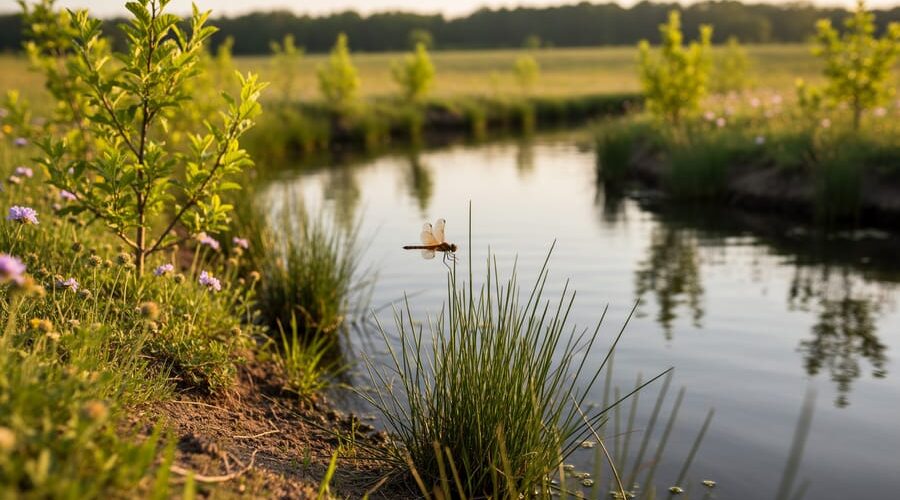
Picture the edges of your pond transformed into a living shield—a ribbon of carefully chosen plants that filters runoff before it reaches your water, anchors soil during heavy rains, and creates a haven for dragonflies, frogs, and songbirds. This is what a riparian vegetation buffer does, and it’s one of the smartest investments you can make for your pond’s long-term health.
If you’ve struggled with murky water, algae blooms that seem to appear overnight, or crumbling banks that lose more soil each season, you’re experiencing what happens when ponds lack this natural defense system. Riparian buffers work like kidneys for your pond, intercepting fertilizers, pesticides, and sediment before they compromise water quality. They stabilize shorelines with root networks that hold soil in place far better than any manufactured solution.
The beauty of establishing these buffers is that they become more effective over time, requiring less maintenance as plants mature and ecosystems develop. You’re not just solving today’s problems—you’re creating a self-sustaining system that reduces your workload while improving conditions for fish, beneficial insects, and wildlife.
Whether you manage a quarter-acre farm pond or a backyard water feature, the principles remain consistent. The right combination of grasses, shrubs, and native plants creates layers of protection that work together. This guide walks you through selecting appropriate species for your climate, designing buffer zones that match your space, and installing vegetation that thrives with minimal intervention.
What Riparian Vegetation Buffers Actually Do for Your Pond
Nature’s Water Filter
Think of riparian buffers as your pond’s personal filtration system, working tirelessly 24/7 without electricity or maintenance hassles. Here’s the magic: as rainwater flows across your property toward the pond, it carries sediment, lawn fertilizers, pet waste, and other unwanted materials. When this runoff encounters your buffer plants, something wonderful happens. The dense root systems act like a living sponge, slowing the water down and trapping those particles before they muddy your pond. The plants themselves are nutrient-hungry, absorbing excess nitrogen and phosphorus that would otherwise fuel algae blooms.
I like to compare it to having a doormat outside your home. Just as that mat catches dirt before it enters your house, buffer vegetation catches pollutants before they enter your water. The difference? This natural doormat actually thrives on the stuff it captures. Studies show properly designed buffers can remove up to 80% of sediment and significantly reduce nutrient loads, making a dramatic difference in riparian health and water clarity. Your pond essentially gains a protective shield that gets stronger as plants mature.
Temperature Control and Shade
Here’s something I’ve learned from years of managing my backyard pond: the difference between a crystal-clear, thriving water feature and a murky green soup often comes down to temperature control. Riparian vegetation buffers are like a natural air conditioning system for your pond, and they work beautifully.
When you establish trees and shrubs along your pond’s edge, they create overhead shade that can reduce water temperatures by 10-15 degrees Fahrenheit during scorching summer months. Cooler water holds more dissolved oxygen, which your fish absolutely need to thrive. I remember one particularly hot July when my goldfish were sluggish and stressed until I added more overhanging plants—the transformation was remarkable within weeks.
Here’s the sweet spot: aim for dappled shade rather than complete darkness. Full sun exposure leads to excessive algae growth since warmth and light trigger algae blooms that cloud your water and deplete oxygen. But total shade can limit beneficial aquatic plants that need some sunlight. Dappled shade provides the perfect balance, filtering harsh midday rays while allowing gentle morning and evening light to nourish your pond ecosystem. Think of it as creating a comfortable umbrella that still lets some sunshine dance across the water’s surface.
Erosion Prevention That Actually Works
Picture this: after a heavy rainstorm, you walk out to check your pond and find muddy brown water and chunks of your bank that have simply washed away. Frustrating, right? I’ve been there, watching helpless as my carefully shaped pond edges crumbled into the water.
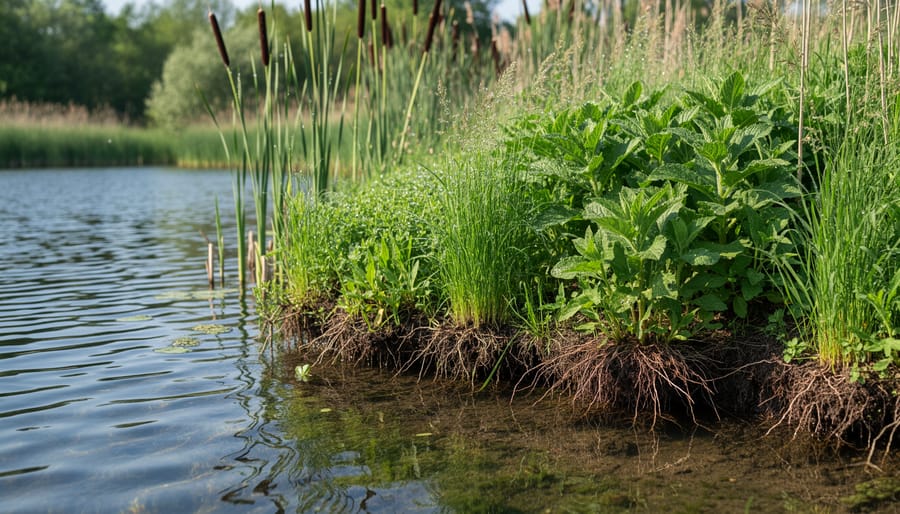
Here’s where riparian buffers become your pond’s superhero. Plant roots create an underground network that works like rebar in concrete, holding soil particles together. Grasses form dense, shallow root mats near the surface, while shrubs and small trees send deeper anchors into the bank. This layered root system literally knits your soil together.
Before installing a buffer, you might see bare soil slumping into the water, cloudy runoff after every rain, and banks that lose inches each season. After establishing your vegetation buffer, the transformation is remarkable. Rain hits leaves and stems first, slowing its momentum before it reaches the ground. Water infiltrates gradually through the root-filled soil instead of sheeting across bare surfaces. Your pond stays clearer, banks hold firm, and that muddy mess becomes a memory.
The best part? This protection gets stronger every year as roots grow deeper and more extensive.
Designing Your Riparian Buffer: Width and Layout Matter
The Three-Zone Approach Made Simple
Think of your riparian buffer like a natural gradient moving away from your pond’s edge, with three distinct zones working together as a team. The good news? You don’t need acres of property to make this work. Even smaller ponds benefit from a scaled-down version of this approach.
The streamside zone sits right at the water’s edge, typically extending 10-25 feet from your pond. This is your heavy-duty erosion fighter, populated with water-loving plants that can handle wet feet and occasional flooding. Think native rushes, sedges, and moisture-loving shrubs. Their root systems act like living rebar, holding soil in place while filtering nutrients before they reach your water.
Moving outward, the middle zone extends another 25-50 feet and serves as your transition area. Here you’ll plant a mix of trees and shrubs that tolerate occasional moisture but don’t demand it constantly. This zone catches any runoff that makes it past your upland area while providing valuable wildlife habitat and shade.
The upland zone is your outer buffer, typically 50-100 feet from the pond. Native grasses and deep-rooted plants dominate here, slowing down water flow and capturing sediment before it travels toward your pond.
For smaller properties, don’t stress about hitting these exact measurements. Even a 10-foot buffer using all three zones in miniature will dramatically improve your pond’s health. The key is maintaining that gradient concept, even if compressed. Your pond doesn’t know the difference between a 100-foot buffer and a thoughtfully designed 15-foot version.
Sizing Your Buffer for Your Pond
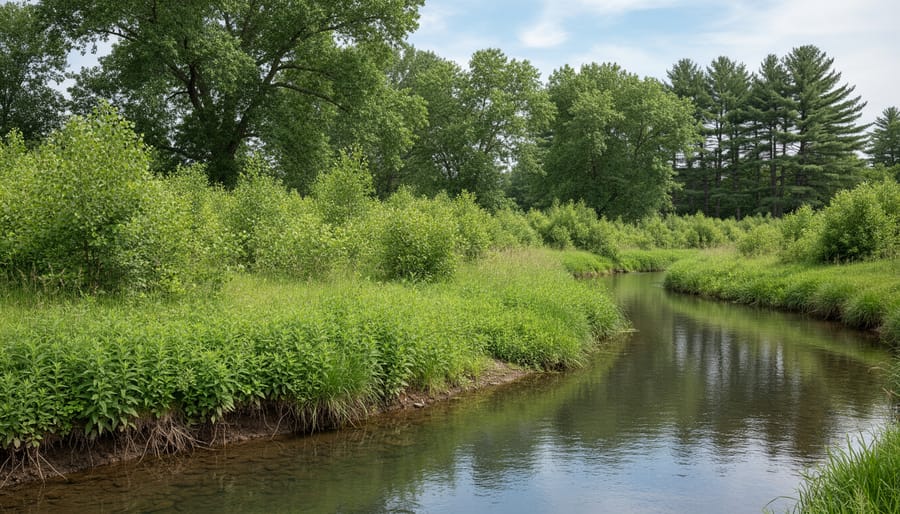
Here’s the honest truth about buffer sizing: bigger is always better, but something is infinitely better than nothing. I’ve worked with ponds ranging from cozy 100-square-foot water features to sprawling half-acre lakes, and I can tell you that even a narrow buffer makes a noticeable difference.
For small backyard ponds under 500 square feet, aim for a buffer that’s at least 3 to 5 feet wide. I know that sounds modest, but when space is tight, a well-planted narrow strip can still filter runoff and soften pond edges beautifully. I’ve seen dramatic improvements in water clarity with just a 3-foot band of native grasses and compact shrubs.
Medium ponds between 500 and 2,000 square feet deserve a 6 to 10-foot buffer if you can manage it. This width gives you room to layer plants, creating that natural gradient from water-loving sedges right at the edge to moisture-tolerant perennials further back.
Large ponds exceeding 2,000 square feet benefit most from buffers 10 to 15 feet wide or more. At this scale, you can create truly diverse plantings that support wildlife and handle serious erosion control.
Working with limited space? Get creative. Even a 2-foot strip is worthwhile. Focus on the areas where runoff enters your pond, placing your buffer where it works hardest. You might buffer only the north side if that’s where your downspout drains, or prioritize slopes where erosion threatens. Remember, partial protection beats no protection every single time.
Choosing the Right Plants for Your Riparian Buffer
Water’s Edge Heroes: Plants for the Immediate Shoreline
These plants are the true champions of your riparian buffer, thriving where the soil stays consistently moist or even waterlogged. Think of them as the first line of defense right along your pond’s edge.
Soft Rush (Juncus effusus) tops my list for beginners. This clumping grass-like plant grows about 60-90cm tall and honestly couldn’t be easier to establish. I’ve watched it spread gently (never aggressively) around my own pond, filtering runoff beautifully while providing shelter for frogs. The upright stems create lovely vertical interest too.
For those wanting color, Blue Flag Iris (Iris versicolor) delivers stunning purple blooms in spring while stabilizing banks with its rhizomatous root system. It grows 60-80cm tall and handles everything from saturated soil to shallow standing water. Just magical watching dragonflies land on the flowers!
Cardinal Flower (Lobelia cardinalis) brings vibrant red spikes that hummingbirds absolutely adore. Growing 60-120cm tall, it prefers partial shade and really wet conditions, making it perfect for shadier pond edges.
Don’t overlook Pickerel Rush (Pontederia cordata) either. This powerhouse grows directly in shallow water up to 30cm deep, with glossy heart-shaped leaves and purple flower spikes. It’s phenomenal at nutrient uptake, which means clearer water for you.
For groundcover, Creeping Jenny (Lysimachia nummularia) cascades beautifully over rocks while tolerating wet feet. Pair these native pond plants strategically, mixing heights and bloom times for year-round functionality and beauty.
Mid-Zone Multitaskers: Shrubs and Perennials
This transition zone between your pond’s edge and dry land is where the magic really happens. Think of these plants as your buffer’s workhorses – they’re adaptable enough to handle fluctuating moisture levels while creating that dense, filtering layer you need.
Native shrubs like buttonbush and red twig dogwood are absolute winners here. They grow 3-6 feet tall, creating visual interest year-round with striking stems and seasonal blooms. I’ve watched buttonbush in my own buffer attract dozens of pollinators while its root system quietly filters runoff before it reaches the water. Red twig dogwood adds that gorgeous winter color when everything else has died back.
For perennials, joe-pye weed and swamp milkweed are low-maintenance champions. They handle occasional dry spells beautifully but really thrive when their roots tap into moisture. Joe-pye weed can reach 5-7 feet, providing excellent screening and wildlife habitat. Swamp milkweed stays more compact at 3-4 feet and supports monarch butterflies.
Cardinal flower adds those brilliant red blooms that hummingbirds can’t resist, while ironweed provides late-season purple flowers when most everything else has finished blooming. These plants don’t demand babying – once established, they return year after year, getting fuller and more effective with each season.
Outer Buffer Anchors: Trees and Larger Shrubs
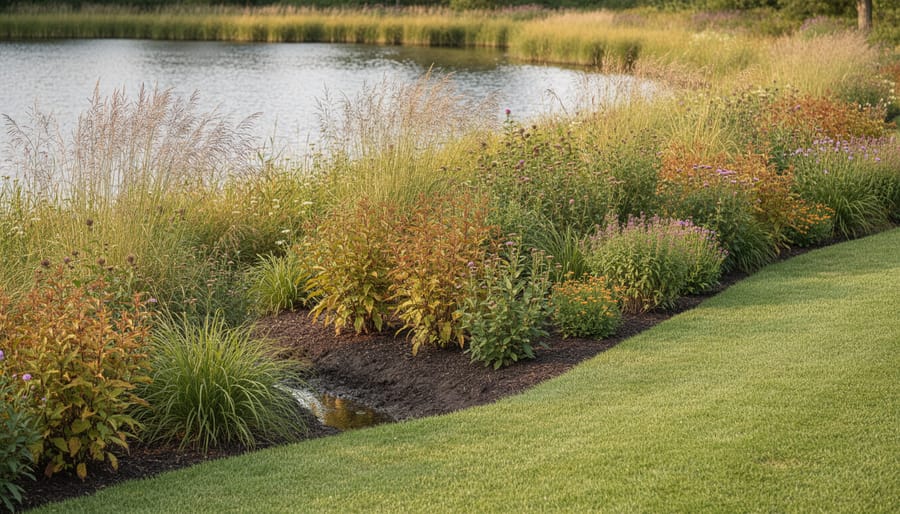
The outer edge of your riparian buffer is where buffer zone trees and larger shrubs work their magic. These plants provide crucial shade during hot months, help stabilize soil with their root systems, and create a natural transition between your maintained yard and the pond ecosystem.
When selecting trees for this zone, think carefully about root behavior. Willows and poplars might seem like natural pond companions, but their aggressive roots can travel surprising distances seeking water. If you have a liner, these roots can puncture right through it. Instead, choose non-invasive species like dogwoods, redbuds, or native serviceberries that offer beautiful seasonal interest without the liner-busting tendencies.
Spacing matters here too. Plant trees at least 10 to 15 feet from your pond’s edge, and give them room to grow into their mature size without crowding each other. I learned this lesson the hard way when three closely planted shrubs turned into a tangled mess within five years.
For shrubs in this outer zone, consider viburnums, witch hazels, or native elderberries. These provide structure, wildlife food, and year-round visual appeal while keeping a respectful distance from your pond infrastructure. Remember, you’re creating a living system that will mature over time, so patience and proper spacing now prevents headaches later.
Installing Your Riparian Buffer: A Step-by-Step Approach
Preparing the Site Without Major Disruption
Getting your pond ready for riparian buffers doesn’t mean you need to bring in heavy equipment or tear everything apart. The key is working gently with what you’ve got.
Start by identifying invasive species around your pond’s edge. These troublemakers often include plants that spread aggressively and crowd out beneficial natives. When removing them, hand-pulling works wonderfully for smaller areas, especially when the soil is damp after a good rain. For stubborn invaders with deep roots, use a garden fork to loosen the soil first, reducing disturbance to surrounding plants and pond banks.
Here’s my favorite trick: work in small sections rather than tackling the entire perimeter at once. I learned this the hard way after disturbing too much bank area and dealing with muddy runoff for weeks! Focus on a manageable 5 to 10-foot section, complete it fully, then move to the next area.
Avoid tilling or heavy digging near the water’s edge, as this can destabilize banks and send sediment straight into your pond. Instead, use sheet mulching with cardboard or newspaper over particularly weedy areas, then plant right through it. This suppresses unwanted growth while your new buffer plants establish themselves naturally.
Planting Sequence and Timing
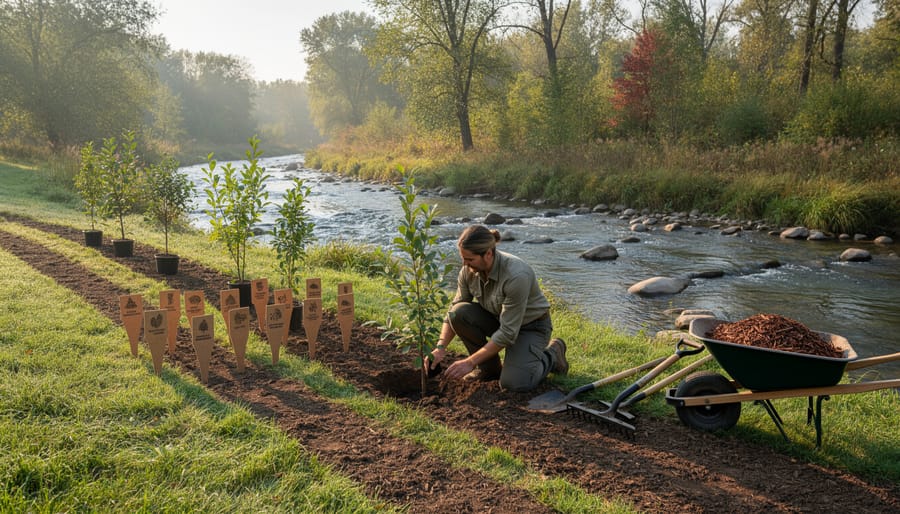
Timing is everything when establishing your riparian buffer! The best planting window is early spring or fall when temperatures are moderate and rainfall is typically more reliable. These cooler seasons give plants time to develop strong root systems before facing summer heat or winter cold.
Start by installing your outer upland zone first, moving progressively toward the water’s edge. This approach prevents you from trampling newly planted areas as you work. If your project feels overwhelming, breaking it into phases over two or three seasons is perfectly fine. Many pond owners tackle one zone per year, which also spreads out the cost and physical effort.
For phased projects, prioritize the zone causing you the most trouble. If erosion is your main concern, start closest to the water. If you’re battling lawn runoff, begin with the upland buffer. I’ve found that seeing results in one area provides wonderful motivation to complete the rest!
Avoid planting during extreme weather, frozen ground, or mid-summer heat waves. Your plants will struggle, and you’ll be frustrated. Early morning or late afternoon planting sessions help reduce transplant shock. Container plants offer more flexibility than bare-root specimens, which demand precise timing. Remember, patient establishment in the right season beats rushed planting any day.
Getting Plants Established
Your new plants need a little TLC to get comfortable in their new home. For the first few weeks, water deeply two to three times per week if nature doesn’t cooperate with rain. Think of it like helping houseguests settle in—they need extra attention at first but soon become independent.
Apply a 2-3 inch layer of mulch around each plant, keeping it a few inches away from stems to prevent rot. I learned this the hard way when my first batch of buttonbush got soggy crowns from overzealous mulching! The mulch keeps roots cool, retains moisture, and suppresses weeds that compete for resources.
Set realistic expectations—most riparian plants take a full growing season to truly establish. You might see modest growth the first year as roots develop underground. By year two, you’ll notice significant progress, and by year three, your buffer will look lush and purposeful. Native plants are playing the long game, building strong root systems that make them drought-tolerant and resilient for years to come. Pull weeds regularly during this establishment period, especially around smaller plants that can’t compete yet. Be patient and trust the process—your pond ecosystem will thank you.
Maintaining Your Buffer Through the Seasons
First Year Care: Setting Your Buffer Up for Success
Your buffer’s first year is crucial for establishing strong roots, so consistent attention makes all the difference. Water new plantings two to three times weekly during dry spells – think of it like caring for any new garden addition. I learned this the hard way when I lost several native sedges during a particularly hot June because I assumed they’d manage on their own near the water’s edge.
Keep an eye out for common troubleshooting issues. If leaves look yellowed, you might have drainage problems or be overwatering. Wilting despite moist soil often signals root stress, so ease up on foot traffic around new plants. Weeds are your biggest competition during establishment, so pull them regularly before they steal nutrients and light from your buffer plants.
Mulching with two to three inches of shredded bark helps retain moisture and suppress weeds, but keep mulch a few inches away from plant stems to prevent rot. Some dieback is normal as plants adjust, but if you lose more than 20 percent of a planting, consider whether that species is truly suited to your specific conditions. Don’t be discouraged – even experienced water gardeners need to make adjustments as they learn what thrives in their unique riparian zone.
Long-Term Maintenance: Less Work Than You Think
Here’s the good news: once your riparian buffer settles in, it practically takes care of itself. I’ve found that my mature buffer needs attention just three or four times a year, which is less than maintaining pond edges with traditional grass.
Your main annual tasks are straightforward. In autumn, decide whether to leave leaf litter (great for wildlife and soil health) or remove some to prevent excess nutrients entering your pond. I usually rake out about half, composting it elsewhere. Spring is your time to check for aggressive spreaders like mint or certain sedges that may need thinning. Simply pull or cut back any plants overstepping their bounds.
Occasionally, you’ll need to replace plants that don’t thrive or have completed their lifecycle. This happens less often than you’d think, especially with native perennials. The beauty of this minimal intervention approach is that your buffer becomes increasingly self-sufficient over time. Plants spread naturally, beneficial insects establish, and the ecosystem finds its balance. Think of yourself as a gentle guide rather than an intensive manager, stepping in only when nature needs a slight nudge in the right direction.
Common Mistakes to Avoid (And How to Fix Them)
Planting Too Close or Too Far
Getting the spacing right can feel like a puzzle, but it makes all the difference! I once planted shrubs so close together that they battled for sunlight within two years, creating a stressed, unhealthy buffer that defeated the whole purpose.
When plants are too close, they compete fiercely for water, nutrients, and light, resulting in weak growth and poor root systems that won’t stabilize your pond banks effectively. Too far apart, and you’ll have gaps where erosion sneaks through, plus weeds will happily fill those empty spaces before your desirable plants mature.
A good rule of thumb: space small plants 12-18 inches apart, medium shrubs 3-4 feet apart, and larger trees 10-15 feet apart. Check the mature size on plant tags and aim for slight overlap at maturity, not at planting time.
If you’ve already planted incorrectly, don’t worry! You can relocate plants during their dormant season or selectively thin overcrowded areas. For gaps that are too wide, add additional plants now rather than waiting years for spread.
Choosing the Wrong Plants for Your Conditions
I learned this lesson the hard way when I planted moisture-loving cardinal flowers in a sunny, well-drained area—they lasted about three weeks! Matching plants to your actual conditions is crucial for buffer success.
Start by observing your site throughout the day. Does it get full sun (six-plus hours) or dappled shade? Walk around after a rain to identify consistently wet zones versus drier spots. These observations tell you exactly what you’re working with.
Signs your plants are mismatched include persistent yellowing, stunted growth, or plants that simply disappear. Sun-lovers in shade get leggy and sparse, while shade plants in full sun develop crispy, bleached leaves.
To fix mismatches, transplant struggling specimens to more suitable locations around your property—no need to waste them! Replace with plants that match your conditions. For sunny, wet areas, try Joe Pye weed or swamp milkweed. Shady, moist spots love ferns and sedges. Dry, sunny edges do well with little bluestem grass.
Don’t fight your site’s natural conditions. Working with what you have creates healthier, lower-maintenance buffers that actually thrive.
Expecting Instant Results
I’ll be honest with you—creating a thriving riparian buffer isn’t an overnight project. When I planted my first buffer strip, I kept checking daily for dramatic changes. What I’ve learned is that nature works on her own schedule, and that’s actually a beautiful thing.
In the first growing season, expect your plants to focus their energy underground, developing strong root systems. You might see modest top growth, but those roots are doing the heavy work of stabilizing soil and beginning to filter runoff. By year two, you’ll notice more visible progress as plants mature and fill in gaps. The real magic happens in years three to five, when your buffer truly comes alive—mature plants filtering nutrients effectively, roots firmly anchoring the soil, and wildlife discovering their new habitat.
Don’t get discouraged by slow starts or patchy areas. I promise, those scraggly seedlings will transform into a lush, functioning ecosystem. Take photos along the way so you can appreciate the gradual transformation. Your patience will reward you with a self-sustaining buffer that serves your pond for decades to come.
Creating a riparian buffer around your pond might seem like a big project, but here’s the wonderful truth: even a modest buffer makes a meaningful difference. You don’t need to transform your entire property overnight. Start with just a few feet of native plants along one section of your shoreline. Watch what happens. You’ll likely notice clearer water, more visiting wildlife, and reduced maintenance headaches. That small success will inspire you to expand naturally over time.
I’ve seen countless pond owners light up when they realize their buffer isn’t just solving problems—it’s creating something truly special. Your pond becomes a living, breathing ecosystem that largely takes care of itself. Those early mornings when you spot a heron fishing in the shallows or notice dragonflies dancing above your flowering sedges? That’s your buffer working its magic.
The best time to start planning your riparian buffer is right now. Grab a notebook, walk around your pond, and start sketching ideas. Consider which areas need the most help with erosion or filtering. Think about the views you want to enhance and the wildlife you’d love to attract. Remember, this is your project—make it reflect your vision and your pond’s unique character.
Your pond ecosystem is already waiting to thank you. Those beneficial bacteria, fish, frogs, and aquatic plants will thrive in ways you haven’t seen before. So take that first step today. Your healthier, more beautiful pond is just one buffer away.