
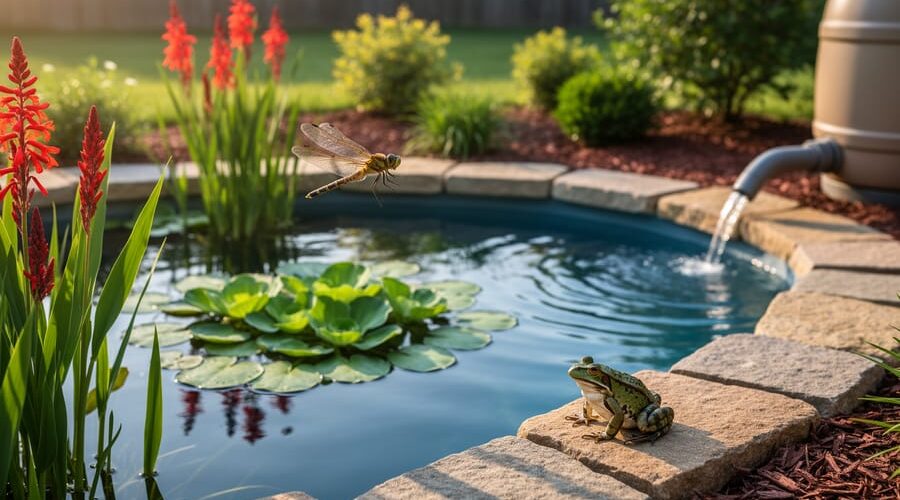
Your Water Garden Can Save Water (And Still Attract Amazing Wildlife)
Position your water garden where it receives morning sun rather than harsh afternoon rays—this reduces evaporation by up to 30% while still providing enough light for most aquatic plants to thrive. Layer flat stones or river rocks around your pond’s edges to create a natural moisture barrier that prevents water from wicking into surrounding soil, a simple fix that can save hundreds of gallons monthly.
Choose native aquatic plants like pickerelweed and cardinal flower that have naturally adapted to your region’s rainfall patterns—they’ll need less supplemental watering and actually help oxygenate your pond, reducing the need for energy-consuming pumps. Install a rain barrel system connected to nearby gutters to capture free water for topping off your feature during dry spells, turning every storm into an opportunity rather than watching treated municipal water disappear down the drain.
Mulch heavily around the perimeter with organic materials to lock moisture into the soil and reduce the temptation to overwater surrounding landscape beds. Add floating plants like water lettuce or dwarf water lilies that shade the surface and dramatically cut evaporation while creating those peaceful, dappled reflections you love. These conservation techniques don’t mean compromising beauty—they actually enhance your water garden’s natural character while slashing water waste, reducing maintenance time, and attracting more dragonflies, frogs, and birds to your backyard oasis.
Why Water Conservation Matters in Your Water Garden
I’ll be honest with you—when I first built my backyard pond, water conservation wasn’t even on my radar. I was too busy dreaming about koi and lily pads! But after watching my water bill spike during a particularly hot summer and receiving a notice about municipal watering restrictions, I realized my beautiful water garden needed to work smarter, not just look prettier.
Here’s the thing: water gardens can actually be surprisingly thirsty. Between evaporation (especially in hot, windy conditions), splashing from waterfalls, and the occasional leak, a typical pond can lose hundreds of gallons per month. In drought-prone areas, that’s not just expensive—it’s increasingly restricted by local ordinances that limit outdoor water use.
But here’s the good news: conserving water in your pond doesn’t mean sacrificing its beauty or health. In fact, many conservation strategies actually improve water quality and reduce maintenance headaches. You’re creating a more sustainable ecosystem that benefits local wildlife while lowering your environmental footprint.
Think about it this way—your water garden is part of your overall landscape water budget. While it might seem like a drop in the bucket compared to lawn irrigation, every gallon you save adds up. Plus, the techniques you’ll learn for conserving water in your pond often translate to smarter practices throughout your entire yard. When municipal restrictions hit during dry spells, you’ll have peace of mind knowing your pond is as efficient as possible, and you’re doing your part for the environment without giving up the feature you love.
Smart Design Choices That Save Water From Day One
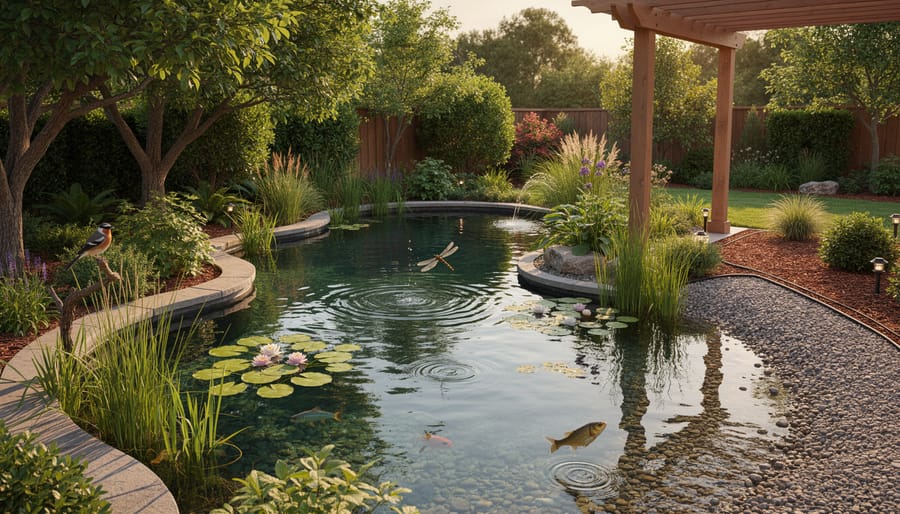
Right-Sizing Your Pond for Conservation
Here’s a secret I learned after building my first pond way too big: deeper and smaller beats shallow and sprawling every time for water conservation. When you’re planning your pond dimensions, think vertical rather than horizontal. A pond that’s 6 feet by 8 feet and 3 feet deep will lose far less water to evaporation than a 10 feet by 12 feet pond that’s only 18 inches deep, even though they hold similar volumes.
The math is simple but powerful. Evaporation happens at the surface, so reducing that surface area is your best friend. For example, a compact 50-square-foot pond loses about 30 gallons weekly in summer heat, while a shallow 100-square-foot pond might lose 60 gallons or more during the same period. That’s over 1,500 gallons annually just from doubling your surface area.
When incorporating wildlife pond design principles, aim for at least 2 feet deep in most areas. This depth supports fish and beneficial bacteria while minimizing the surface-to-volume ratio. Add shallow shelves around the edges for plants and wildlife access, but keep your main water body compact and deep. Your water bill and the environment will thank you.
Location and Shade Strategies
Where you position your pond makes a bigger difference than you might think! I learned this the hard way when my first pond lost nearly an inch of water daily during summer heat waves. Evaporation is your water conservation enemy, and smart placement is your first line of defense.
Consider locating your pond where it receives morning sun but afternoon shade. Those scorching afternoon hours are when evaporation peaks, so even partial shade from 2-6 PM can reduce water loss by up to 30%. Existing trees are nature’s free shade solution, though keep in mind you’ll need to manage leaf debris. Deciduous trees on the south or west side work beautifully, providing summer shade while allowing winter sunlight through bare branches.
No mature trees? No problem! Tall ornamental grasses, shrubs, or even a pergola positioned strategically can create shade zones. I’ve seen creative gardeners use large potted plants on wheeled bases to provide movable shade during the hottest months.
Balance is key here. Your pond still needs some direct sunlight for beneficial bacteria, oxygenating plants, and if you’re hoping to attract wildlife, those critters appreciate sunny basking spots too. Aim for 4-6 hours of sunlight daily while protecting against that intense afternoon blaze.
Materials That Minimize Water Loss
Choosing the right materials from the start saves you gallons down the road! Quality pond liners are your first line of defense against water loss. EPDM rubber liners are my personal favorite—they’re flexible, durable, and resist UV damage for decades. I learned this the hard way after my first pond with a budget liner developed tiny leaks within two years. PVC liners work well too, though they’re a bit stiffer in cold weather.
Pay special attention to your pond edges. Capillary action can wick water into surrounding soil faster than you’d imagine. Create a proper lip around your pond’s perimeter by raising the liner edge slightly above water level, then disguise it with flat stones or gravel. This simple trick stopped my water level from mysteriously dropping during dry spells.
For larger installations, consider bentonite clay as a natural sealant. It swells when wet, creating an impermeable barrier. Construction technique matters too—smooth out sharp rocks before laying your liner to prevent punctures. A quality underlayment adds extra protection. These upfront investments mean less topping off, fewer repairs, and more time enjoying your beautiful water garden!
Plant Selection: The Double Win for Water and Wildlife
Water-Saving Marginal Plants That Wildlife Love
Choosing the right marginal plants can dramatically cut your water loss while creating a thriving ecosystem around your pond. I learned this firsthand when I replaced my struggling lawn edges with carefully selected marginals and watched my refill frequency drop by nearly half.
Native sedges and rushes are absolute champions for water conservation. Their dense root systems stabilize soil and prevent erosion, while their foliage creates a microclimate that reduces surface evaporation. Juncus effusus, or soft rush, grows quickly and provides nesting material for birds. Carex species adapt to varying moisture levels, so they’ll survive even if water levels fluctuate during dry spells.
For adding color without demanding extra water, consider cardinal flower and blue flag iris. These beauties thrive in moist soil at the pond’s edge and attract hummingbirds and butterflies. Their broad leaves shade the water’s surface, keeping temperatures cooler and reducing evaporation.
Pickerelweed deserves special mention because it does triple duty: its heart-shaped leaves provide excellent shade coverage, its purple flower spikes feed pollinators throughout summer, and its seeds nourish waterfowl into fall. Pair it with arrowhead plants, which develop tubers that ducks love.
The key is layering your pond plants for wildlife at different heights. Taller species like cattails create windbreaks that reduce water loss, while lower-growing options like water forget-me-nots fill gaps and prevent soil exposure. This layered approach maximizes shade while supporting diverse wildlife populations, turning conservation into an ecological win-win.
Floating Plants as Natural Water Savers
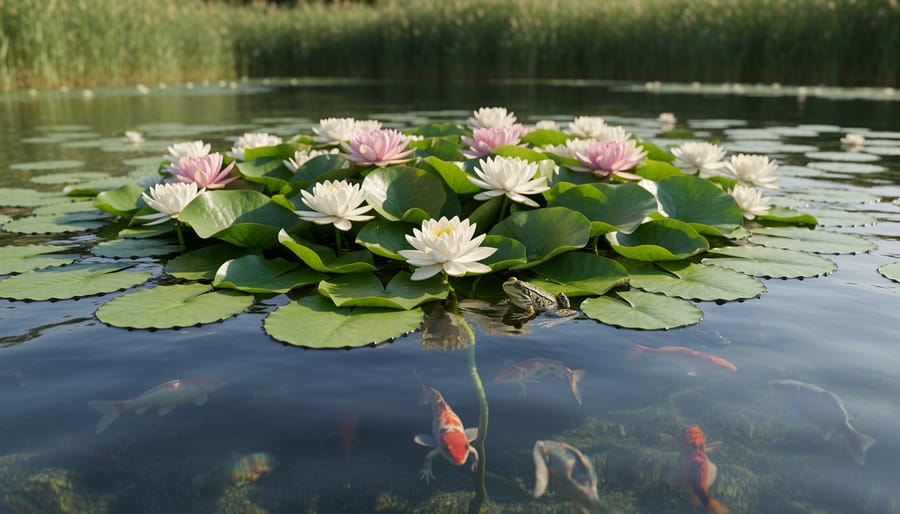
Here’s a water-saving trick that feels almost too good to be true: adding more plants to your pond can actually help you conserve water! Floating plants like water lettuce, water hyacinth, and lilies create a living blanket across your pond’s surface, dramatically reducing evaporation. On hot summer days, you could lose significant amounts of water to evaporation, but these natural umbrellas can cut that loss by up to 50 percent.
Think of it as nature’s way of keeping your water where it belongs. The broad leaves of floating plants shade the water surface, keeping it cooler and preventing moisture from escaping into the air. I’ve noticed my own pond stays fuller longer during drought periods since adding more floaters.
But the benefits go way beyond conservation. These plants create welcome shade for fish during scorching afternoons, and their dangling roots provide perfect hiding spots for baby fish and tadpoles. Frogs absolutely love perching on lily pads, and dragonflies use them as landing pads. You’re not just saving water, you’re building a thriving ecosystem that practically takes care of itself while looking gorgeous.
Circulation and Filtration That Works With Nature
Energy-Efficient Pumps and Smart Water Movement
Here’s the thing about pumps: bigger isn’t always better! I learned this the hard way when my first overpowered pump created a mini Niagara Falls that looked dramatic but sent half my water skyward as evaporative mist. Your pump should match your pond’s actual needs, not your imagination of what looks impressive.
Choose a pump rated for your pond’s volume and desired circulation rate. For most wildlife-friendly ponds, you want gentle turnover that moves water without creating excessive spray or splashing. Think babbling brook rather than fountain display. Position outlets to create smooth surface movement that oxygenates water while minimizing exposed droplets that quickly evaporate in sun and wind.
Consider variable-speed pumps that let you adjust flow seasonally. Run them slower during hot, dry periods to reduce evaporation while maintaining enough movement for beneficial bacteria and wildlife. Submersible pumps generally run cooler and more efficiently than external models for smaller water gardens.
Smart placement matters too. Direct water flow through planted areas where roots benefit from nutrients, rather than shooting it high into the air. Create gentle ripples instead of splashy waterfalls during drought conditions. Your fish and frogs will appreciate the calmer environment, and your water level will thank you by staying steadier between top-ups.
Biological Filtration Reduces Water Changes
Nature has an incredible way of keeping water clean, and you can harness that power right in your own backyard! By setting up a bog filter or plant-based filtration system, you’ll create a mini ecosystem that works around the clock to purify your pond water. Think of it as hiring a team of tiny, tireless cleaners that never ask for a paycheck.
Here’s how it works: beneficial bacteria colonize the roots of wetland plants like pickerel rush, cattails, and sweet flag. These bacteria break down fish waste, decaying leaves, and other organic matter that would otherwise cloud your water and deplete oxygen. The plants themselves absorb excess nutrients like nitrogen and phosphorus, starving algae of the food they need to bloom.
I added a bog filter to my pond three years ago, and the difference was remarkable. Before that, I was draining and refilling sections every few weeks during summer. Now? Maybe twice a season for minor top-ups due to evaporation. The water stays crystal clear because the natural pond filtration handles the heavy lifting.
Setting up a bog filter is surprisingly simple: create a shallow planted zone where water flows through gravel and plant roots before returning to the main pond. This biological powerhouse reduces water changes dramatically while supporting dragonflies, frogs, and other beneficial wildlife.
Seasonal Water Conservation Tactics
Summer: Managing Peak Evaporation
Summer’s heat can feel like your pond is waging a losing battle against evaporation, but don’t worry—you’ve got options! During peak season, your pond might lose up to a quarter-inch of water daily, so monitoring becomes your new best friend. Check levels every morning before the sun climbs high, and top up during the coolest parts of the day, ideally early morning or evening. This simple shift reduces immediate re-evaporation of that fresh water you’re adding.
Consider temporary shade solutions when temperatures soar. A strategically placed beach umbrella or shade sail over part of your pond can cut evaporation by 30-50 percent without permanently altering your design. I’ve even used large potted plants on wheeled bases to create movable shade zones—they look intentional and work beautifully!
Float some water hyacinths or add more lily pads to cover exposed surface area naturally. These living shade providers reduce evaporation while keeping your ecosystem thriving. Mark your pond’s typical water level with a discreet stone or waterproof marker to quickly spot unusual losses that might indicate leaks rather than normal evaporation.
Winter and Dormant Season Conservation
Winter is actually your pond’s most water-efficient season, and you can take full advantage by adjusting your approach. As temperatures drop, evaporation slows dramatically, meaning you’ll need to add water far less frequently. This is nature’s built-in conservation period!
Lower your water level slightly if you live in freeze-prone areas, but keep enough depth for fish and beneficial bacteria to survive. I typically reduce mine by 2-3 inches, which protects the liner from ice expansion while maintaining habitat. Turn off fountains and waterfalls once freezing becomes regular, as ice can damage equipment and running water accelerates heat loss.
Here’s where conservation meets compassion: resist the urge to do a complete cleanout. Those dead plant stems and leaf debris you might consider unsightly? They’re winter hotels for beneficial insects and provide insulation for frogs and other creatures. A pond de-icer uses minimal electricity but prevents total freeze-over, allowing gas exchange that keeps fish healthy.
By embracing this dormant period rather than fighting it, you’ll conserve water, electricity, and energy while supporting the ecosystem that makes your water garden thrive year-round.
Rainwater Harvesting for Your Water Garden
Collecting rainwater for your pond is one of those beautiful moments where practical meets perfect. Instead of watching all that free water rush down your driveway during a storm, you can capture it and use it to top up your water garden throughout drier months.
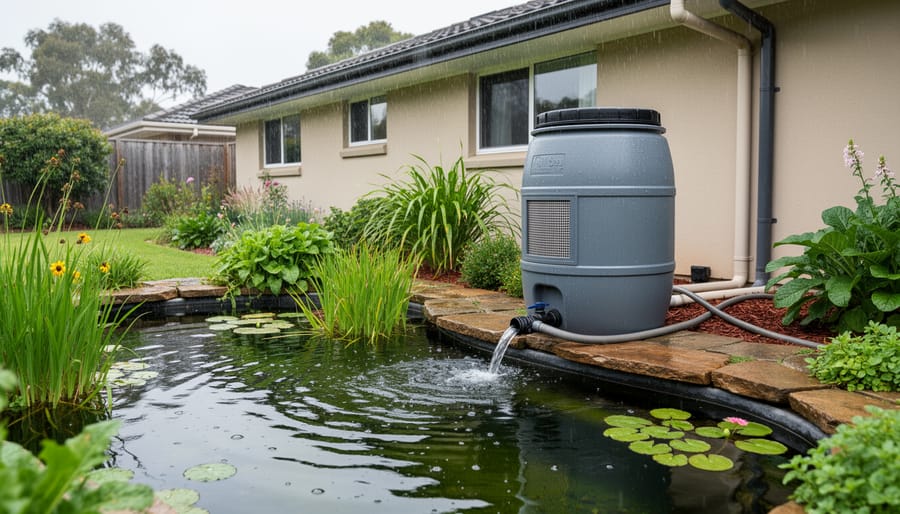
The simplest system starts with your roof. Gutters and downspipes already channel thousands of litres past your property with every decent rainfall. By redirecting a downpipe into a rain barrel or storage tank positioned near your pond, you create an instant water reserve. I remember installing my first rain barrel and feeling ridiculously pleased watching it fill during the first rain – such a simple win!
For basic setups, you’ll need a food-grade storage container (avoid anything that previously held chemicals), a fine mesh screen to filter out leaves and debris, and perhaps a simple tap at the base for easy access. Position your container on a stable platform near your pond, and you’re essentially done. Gravity does the rest when you need to transfer water.
Your fish and aquatic plants will actually prefer rainwater over chlorinated tap water. It’s naturally soft, chemical-free, and closer to what they’d experience in nature. Plus, rainwater pond systems benefit visiting wildlife like frogs and birds who are sensitive to treated water.
Even a modest 200-litre barrel can significantly reduce your water bills while supporting a healthier pond ecosystem. Start small, see how much you collect, then expand your system as needed.
Quick Wins: Simple Changes With Big Water Savings
Ready to make a difference right now? These simple tweaks can slash your water usage without draining your pond of its charm or wildlife appeal. I started with these quick fixes in my own garden, and honestly, the water savings surprised me within the first month.
Start by checking for leaks around your pond liner, pump connections, and tubing. Even tiny drips add up fast. I once ignored a small weep near my waterfall, and it cost me hundreds of gallons before I finally patched it.
Add a layer of mulch around the perimeter of your water feature. This simple barrier reduces soil evaporation and prevents runaway water from soaking into surrounding dirt instead of staying where you need it.
Adjust your waterfall or fountain runtime. Does it really need to run 24/7? Try cutting back to daylight hours only. You’ll save water from evaporation and electricity too. Wildlife will still visit during active hours.
Group thirsty marginal plants together in one section of your pond. This concentrated approach lets you focus water where it’s actually needed rather than spreading resources thin.
Remove or relocate aggressive water-hogging plants that aren’t pulling their weight in terms of wildlife value or beauty. Sometimes less really is more.
Check your water level daily during hot months. Catching a sudden drop early helps you identify problems before they become water-wasting disasters.
Finally, collect that first flush of hose water in a bucket before topping off your pond. Use it on nearby garden plants instead of sending it down the drain.
Here’s the wonderful news I want you to take away from all of this: conserving water and creating a thriving wildlife habitat aren’t competing goals. They’re actually perfect partners. Every drop you save through smart design and thoughtful maintenance means more resources available for the birds, butterflies, frogs, and beneficial insects that will make your water garden truly come alive.
You don’t need to implement everything at once. Start with just one or two strategies that make sense for your situation. Maybe you’ll add a rain barrel this weekend, or perhaps you’ll simply adjust your watering schedule and observe what happens. The beauty of water gardening is that it’s always evolving, and small changes often lead to surprising results.
I’d love to hear how these techniques work in your own garden. Every landscape is different, and your experiences can help fellow water gardeners learn and adapt. Share your successes, your challenges, and even your happy accidents with your local gardening community or online groups. Together, we’re creating outdoor spaces that are beautiful, sustainable, and buzzing with life. Now grab your gardening gloves and let’s make every drop count.