
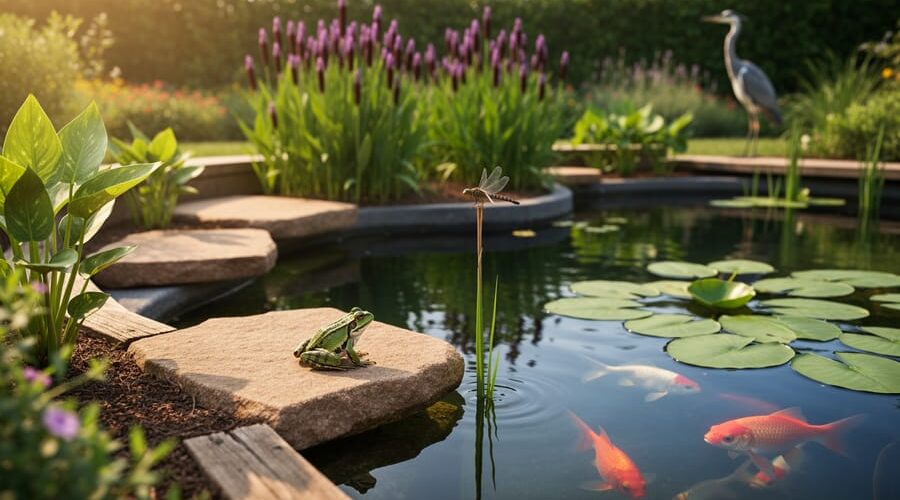
Why Your Pond Needs Wildlife (And How to Make Everyone Happy)
Create shallow ledges at varying depths—6 inches, 12 inches, and 18 inches—around your pond’s perimeter to give amphibians easy entry and exit points while allowing birds to wade safely. These graduated zones become natural gathering spots where dragonflies perch, frogs sun themselves, and herons hunt without disturbing your deeper-dwelling fish.
Plant native marginals like pickerelweed, arrowhead, and cardinal flower in these shallows to provide cover for tadpoles and invertebrates. Dense vegetation creates hideouts where fish fry escape predation while simultaneously offering nesting material and hunting perches for visiting wildlife.
Position rocks and logs partially submerged at pond edges to serve as basking platforms for turtles and frogs. These simple additions create microclimates that attract beneficial insects, which in turn feed your fish and draw insectivorous birds to your water garden.
Stock fish species thoughtfully by choosing smaller, less aggressive varieties like native minnows or mosquitofish rather than large koi that might prey heavily on tadpoles and invertebrates. The right fish population keeps mosquitoes controlled without decimating the food web that supports other wildlife.
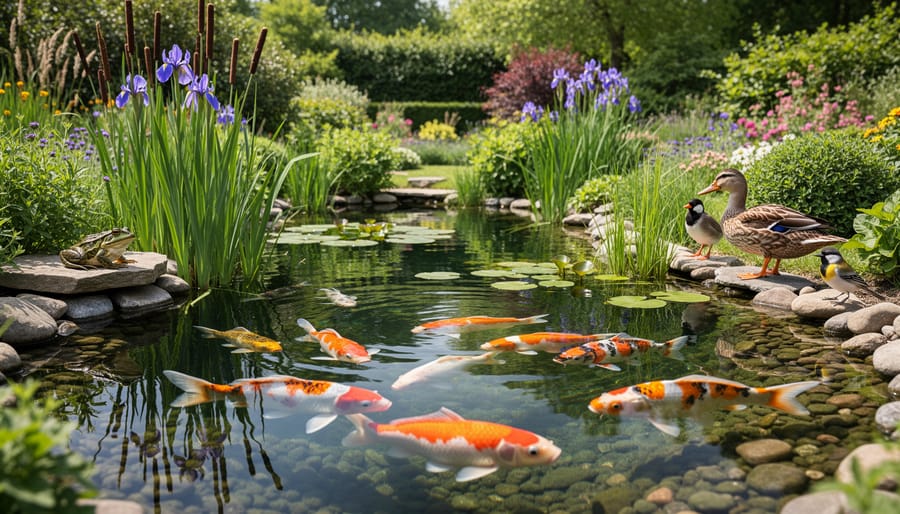
Your habitat pond becomes a thriving ecosystem when you balance these elements. The shallow zones, strategic plantings, and carefully selected fish work together to create something remarkable: a backyard water feature where goldfish flash beneath lily pads while dragonflies patrol above and frogs call at dusk. This isn’t just possible—it’s the natural outcome of design choices that respect what both fish and wildlife need to flourish side by side.
What Makes a Habitat Pond Different from a Regular Water Garden
At first glance, a habitat pond might look surprisingly similar to a traditional water garden. Both can be beautiful, both can have fish, and both involve water, plants, and landscaping. But here’s where they differ: a habitat pond is designed with wildlife as equal residents, not just occasional visitors.
Think of a regular water garden as a carefully curated outdoor display. The focus is primarily on aesthetics—perfectly placed koi, spotless water lilies, and manicured edges. There’s nothing wrong with this approach! It’s brought joy to countless pond keepers. However, traditional water gardens often prioritize human preferences over ecological function. Plants are chosen for color rather than shelter value, and wildlife might be seen as a complication rather than a feature.
A habitat pond flips this mindset. Yes, it can absolutely be gorgeous, but beauty emerges from function. The design mimics natural water bodies, incorporating shallow areas where frogs can bask, native plants that dragonfly nymphs need to complete their lifecycle, and muddy edges where birds can forage. The wildlife pond design philosophy recognizes that a thriving ecosystem actually makes pond keeping easier in many ways.
Here’s what surprised me when I made this shift in my own pond: the balance became self-sustaining. Instead of constantly battling algae or worrying about water quality, the diverse plant and animal life created a natural equilibrium. Dragonfly larvae kept mosquito populations in check. Native plants competed with algae for nutrients. The pond did more of the work itself.
This doesn’t mean habitat ponds are maintenance-free or that you sacrifice beauty for function. It means you’re working with nature rather than against it. You’re creating a space where fish and wildlife genuinely coexist, where your koi share their home with visiting herons, breeding frogs, and bustling invertebrates. The result is a dynamic, living system that rewards observation and offers something new to discover every season.
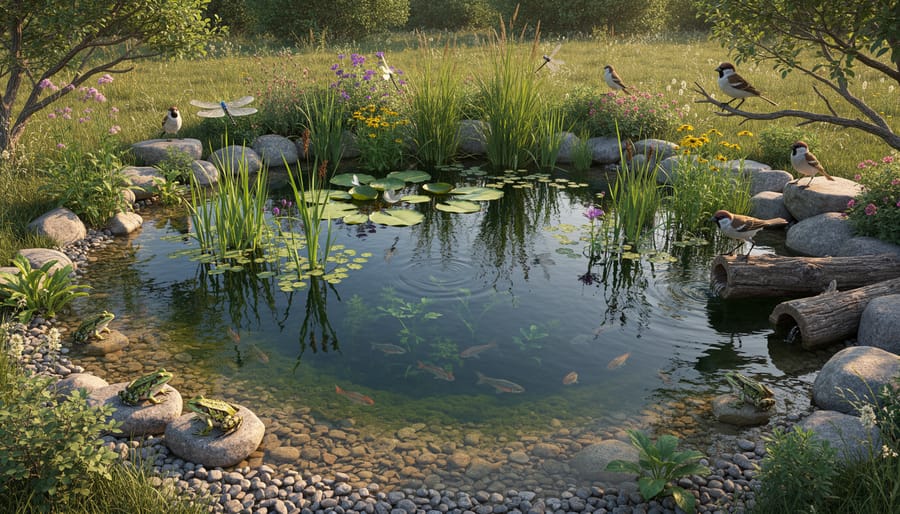
The Wildlife You’ll Welcome (And Why They’re Good for Your Pond)
Frogs and Toads: Your Free Pest Control Team
Think of frogs and toads as your unpaid maintenance crew. A single adult frog can devour hundreds of mosquitoes, flies, and slugs each week, keeping your garden naturally balanced without chemicals. I’ve watched toads patrol my pond edges at dusk, snapping up pests I didn’t even know I had.
These amphibians need three essentials: shallow entry zones for easy pond access, damp hiding spots like stacked rocks or logs near the water’s edge, and chemical-free water since their permeable skin absorbs everything. Add some native plants around your pond’s perimeter to create shaded retreats where they can stay cool during hot afternoons.
The good news? Frogs and fish can absolutely coexist. Adult frogs and toads live mostly on land and won’t bother your fish. However, fish will eat frog eggs and tadpoles if given the chance. If you want to boost amphibian populations, create a separate shallow zone with dense vegetation where tadpoles can develop safely away from hungry fish. Some pond owners even add a small connected bog area specifically for breeding, giving both groups their own space to thrive.
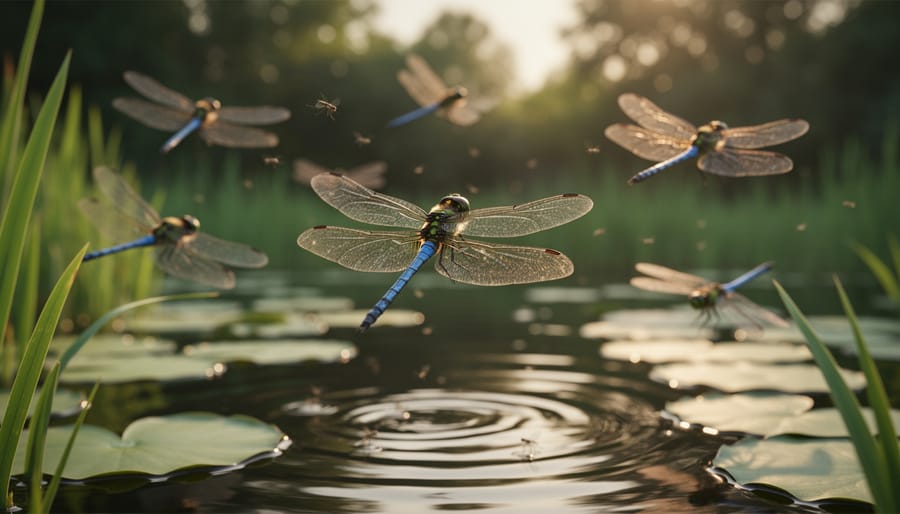
Dragonflies and Damselflies: Nature’s Mosquito Hunters
These aerial acrobats are like tiny helicopters patrolling your pond, and they’re absolutely fantastic at controlling mosquitoes. A single dragonfly can eat hundreds of mosquitoes in a day, making them your pond’s best friends.
Here’s what makes them special: dragonfly and damselfly nymphs actually live underwater for most of their lives, sometimes up to two years. They’re hunting mosquito larvae the entire time, which is brilliant for you. When they’re ready, they climb up plant stems, emerge as adults, and continue their mosquito-munching mission from the air.
Want to roll out the welcome mat? Plant vertical emergent plants like cattails, water irises, and pickerelweed around your pond edges. These give nymphs places to climb out and transform into adults. Add some flat stones or driftwood near the water’s edge too, as adults love basking spots to warm up their flight muscles.
The key difference between attracting dragonflies and breeding mosquitoes is water movement and wildlife. Mosquito larvae hate moving water and natural predators. Your fish, frogs, and those dragonfly nymphs will handle the rest. Keep a healthy, balanced ecosystem, and you’ll see dragonflies dancing over your pond all summer long.
Birds, Bees, and Butterflies: The Bonus Visitors
Your habitat pond becomes an irresistible hub for pollinators too! Dragonflies and damselflies patrol the water’s surface, hunting mosquitoes while their nymphs develop below. You’ll notice honeybees and bumblebees visiting for drinks, especially during hot summer days. Butterflies love basking on flat rocks near the water’s edge, and many species require muddy puddles for essential minerals.
These bonus visitors create a ripple effect of benefits throughout your garden. Dragonflies can consume hundreds of mosquitoes daily, while bees pollinate your vegetables and flowers. Birds that come for water often stick around to feast on garden pests like aphids and caterpillars. I’ve watched swallows swooping across my pond, catching insects mid-flight—free pest control at its finest! By creating one wildlife feature, you’re essentially building an interconnected ecosystem where each creature supports the others, making your entire garden healthier and more productive.
Snails and Freshwater Mussels: The Cleanup Crew
Think of snails and freshwater mussels as your pond’s gentle housekeeping team. These hardworking invertebrates spend their days grazing on algae, consuming decaying plant matter, and filtering tiny particles from the water. I’ve watched a single pond snail methodically clean an entire rock surface in just a few days, leaving it spotless.
Freshwater mussels are particularly impressive cleaners. They filter gallons of water daily, removing suspended debris and microscopic organisms that can cloud your pond. Native species like ramshorn snails and mystery snails are easy additions that require no special care.
Here’s the beautiful part: these creatures arrive naturally in most habitat ponds, hitchhiking on plants or introduced through pond water from other sources. You can also purchase them from aquatic suppliers if you want to give your cleanup crew a head start. Just avoid non-native species that might become invasive in your area.
Design Features That Make Coexistence Possible
Shallow Shelves and Beach Edges
Creating shallow shelves around your pond is like building a welcoming front porch for wildlife—it’s where the magic happens! These gradual slopes give frogs, toads, newts, and birds safe, easy access to water without forcing them into the deep end where fish might startle them.
Aim for a beach-like slope that extends 12 to 18 inches from the edge before dropping to deeper water. Your shelf should be about 2 to 6 inches deep—shallow enough for a robin to wade in for a bath, but not so shallow it dries out on hot days. I’ve found that creating multiple shelves at different depths (like stepping stones going down) works beautifully for accommodating various creatures.
The genius of this design? It naturally separates zones. Fish typically prefer staying in water deeper than 18 inches where they feel secure, while amphibians and birds stick to the shallows. You can even place flat stones or gravel on these shelves to create textured surfaces that tadpoles love to cling to. If you’re planting marginal plants, these shelves become perfect planting zones too—giving you both function and beauty in one thoughtful design feature.
Planting Zones: Creating Natural Boundaries
Think of your pond as having three distinct neighborhoods, each catering to different wildlife residents. Strategic plant placement creates these natural zones that give everyone their own space while keeping the peace.
Start with marginal plants along your pond’s edges. These shallow-water lovers, like irises and rushes, grow in just a few inches of water and create perfect hideaways for frogs and newts. I’ve watched dragonfly nymphs climb these stems during their magical transformation into adults. Plant them in clumps rather than neat rows to mimic nature and provide better cover.
Move deeper, and you’ll find the shallow-water zone, typically 6 to 18 inches deep. Here, plants like water lilies float on the surface, offering shade that cools the water and gives fish a retreat from herons. Their broad leaves also provide landing pads for frogs and resting spots for insects.
The deep-water zone, anything over 18 inches, hosts submerged oxygenating plants like hornwort. These underwater forests are breeding grounds for fish and shelter for tadpoles escaping hungry predators.
Here’s the trick: don’t plant everything at once. Add species gradually over your first season, watching how wildlife responds. You’ll quickly notice which areas become bustling with activity and which need more cover. This layered approach creates distinct territories where different species can coexist without constant competition.
Rocks, Logs, and Hiding Spots
Creating refuge spots with rocks, logs, and other natural materials is one of the most rewarding parts of building a habitat pond. These features give your pond character while providing essential hiding places for shy fish, amphibians, and insects, plus perfect sunbathing spots for turtles and dragonflies.
Start by positioning larger rocks around the pond’s edge and shallow areas. Flat rocks work beautifully as basking platforms, while stacked stones create cozy caves underneath. I learned this the hard way when I first scattered rocks randomly and wondered why my frogs never used them. They need gradual access from the water up!
Partially submerged logs add incredible habitat value. Choose naturally rot-resistant wood like cedar or oak, and angle them so one end rests on the pond bottom while the other emerges above water. This creates a highway for frogs and salamanders moving between land and water. Just avoid treated lumber, which leaches chemicals harmful to wildlife.
For added hiding spots, cluster smaller rocks in groups of three or five rather than spacing them evenly. This looks more natural and creates better shelter. Tuck some rocks into planting pockets too, giving small fish escape routes from herons while keeping plants secure.
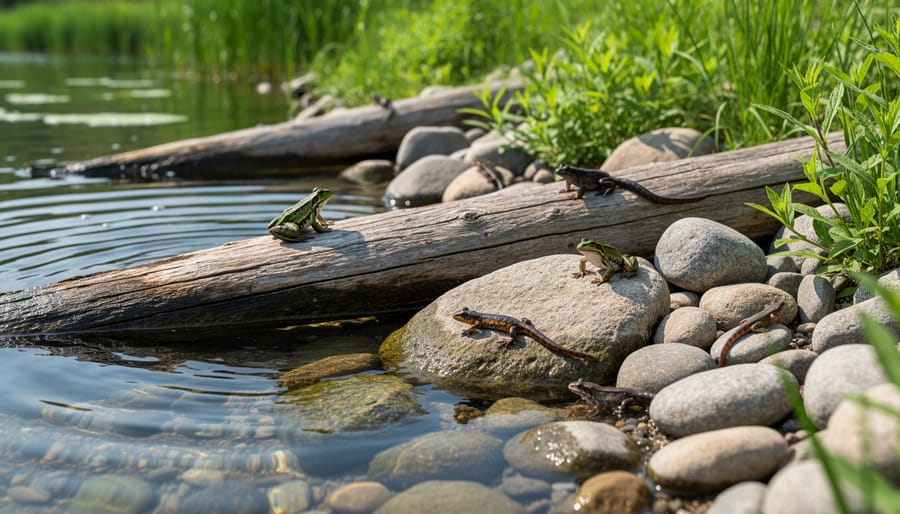
Entry and Exit Points for Non-Fish Wildlife
Here’s the thing about wildlife ponds: not every creature that visits is an Olympic swimmer. Frogs, toads, hedgehogs, and even small mammals can accidentally tumble in while drinking or hunting insects. Without a way out, these helpful garden visitors can quickly become exhausted and drown.
Creating escape routes is incredibly simple. Add gently sloping beach areas on at least one side of your pond, using pebbles and rocks to create a gradual incline from deep water to dry land. Think of it like a natural ramp. I’ve found that placing flat stones in a stair-step pattern along steeper edges works beautifully too.
Another lifesaver is positioning logs or branches that extend from the water’s edge partway into the pond. These give struggling animals something to climb onto and rest. Floating cork bark pieces work wonderfully as emergency platforms.
Don’t forget to keep some marginal plants around the edges. Their roots and stems create natural ladders that small creatures instinctively use. Dense plant growth also provides cover, making wildlife feel safer as they enter and exit.
These simple additions transform your pond from a potential trap into a genuine wildlife haven where every visitor can safely come and go.
Choosing Fish That Play Well With Others
If you want frogs hopping around your pond edges and dragonflies perching on your water lilies, fish selection matters more than you might think. Not all fish are created equal when it comes to sharing space with wildlife, and choosing the right residents can make the difference between a thriving ecosystem and a pond that feels oddly empty despite your best efforts.
Let’s start with the gentle giants of the pond world. Koi and goldfish are generally the most wildlife-friendly options for habitat ponds. They’re not aggressive hunters, and while they might accidentally slurp up tiny tadpoles while bottom-feeding, they won’t systematically hunt down every living creature in your pond. I’ve watched goldfish swim right past adult frogs without any interest whatsoever. That said, they will eat fish eggs and very small tadpoles, so don’t expect every spawn to survive—but enough usually do to maintain healthy populations.
Here’s where things get tricky: avoid large predatory fish like bass, pike, or catfish if wildlife coexistence is your goal. These fish are efficient predators that will actively hunt tadpoles, newts, and anything else that fits in their mouths. I learned this lesson the hard way when a well-meaning neighbor gifted me bass fingerlings. Within weeks, my frog chorus went silent.
Stocking density is equally important. Overcrowding creates competition for oxygen and food, leading to stressed fish that produce excessive waste. A good rule of thumb is one inch of fish per square foot of surface area, but go lighter if you want to leave room for wildlife. I typically recommend starting with fewer fish than you think you need. You can always add more, but removing fish from an established pond is frustrating work.
Remember, balance is everything. Your pond isn’t just a fish tank—it’s a complete ecosystem where every resident plays a role in keeping things healthy and harmonious.
Managing the Inevitable Challenges
When Fish Eat Tadpoles (And Why It’s Not the End of the World)
Here’s the reality: fish will occasionally snack on tadpoles, and that’s completely normal. It’s part of the natural predation cycles that keep ecosystems healthy. The good news? Most frogs lay hundreds or even thousands of eggs at once, factoring in these losses. You don’t need every tadpole to survive for frogs to thrive in your pond.
Smart design is your best friend here. Those shallow ledges and densely planted zones we talked about earlier create safe nurseries where tadpoles can develop beyond their most vulnerable stages. Native water plants like sedges and rushes provide hiding spots that fish can’t easily access. The key is giving tadpoles a fighting chance during their first few weeks of life.
Remember, a pond with both fish and frogs isn’t failing; it’s actually demonstrating a balanced ecosystem at work. You’ll still hear evening choruses and spot frogs hunting around your pond edges. Think of predation as nature’s population control rather than a problem to solve.
Dealing With Unwanted Visitors
Not every visitor to your habitat pond will be welcome! Herons, raccoons, and cats can decimate fish populations overnight, but you can discourage them without hurting the wildlife you want to attract.
Start with physical barriers that blend into your design. Fishing line strung 15-20cm above the water surface confuses herons without being visible from a distance. Shallow shelves around your pond’s perimeter make it harder for herons to wade in for an easy meal. I’ve found that adding dense marginal plantings creates a natural buffer that most predators won’t push through.
Motion-activated sprinklers work brilliantly for raccoons and cats while giving visiting birds a refreshing shower! Place netting over the pond temporarily if predation becomes severe, but remove it once the threat passes to keep frogs and dragonflies accessible.
Create hiding spots for fish using overhanging plants, submerged logs, or artificial caves. When fish have escape routes, they’re far more likely to survive encounters with protecting your pond visitors.
Remember, a heron visiting once doesn’t mean you’ve failed. It means you’ve created a genuinely attractive habitat! The goal is balance, not fortress-building.
Algae and Water Quality in a Wildlife-Rich Pond
Green water and string algae are completely natural in wildlife ponds—in fact, they’re signs of a thriving ecosystem! The key is balance, not elimination. A little algae actually feeds tadpoles, insect larvae, and snails, forming the foundation of your pond’s food web.
Resist the urge to use algaecides or chemical clarifiers, which can devastate dragonfly nymphs, frogs, and beneficial bacteria. Instead, add plenty of oxygenating plants like hornwort or water milfoil, which compete with algae for nutrients. Floating plants such as water lilies shade about half the pond surface, naturally limiting algae growth by blocking sunlight.
If algae becomes excessive, manually remove string algae with a stick or rake—it makes excellent garden compost! For murky water, consider adding more native plants rather than mechanical filters, which can trap tiny creatures. Patience helps too; most new ponds go through a cloudy phase before naturally clearing as plants establish and the ecosystem matures. Think of algae as wildlife food, not a problem to eliminate.
Seasonal Care for Your Habitat Pond
Your habitat pond needs different care throughout the year, but the beauty of these naturalistic water features is that they’re remarkably forgiving. The key is working with the seasons rather than against them, all while keeping your wildlife residents in mind.
Spring arrives with a burst of activity. As temperatures rise above 50°F, frogs start singing and fish become more active after their winter dormancy. This is your time to gently remove any debris that accumulated over winter, but do it gradually over several weeks. I learned this lesson the hard way when I cleared out my entire pond in one enthusiastic afternoon, only to realize I’d removed countless hibernating insects and amphibian eggs hiding in the leaf litter. Now I clear just a third of the material at a time, leaving plenty of habitat intact. Hold off on major cleaning until mid-spring, after frogs have finished spawning. Those clumps of jelly you see are precious cargo.
Summer brings the easiest maintenance schedule, though you’ll want to top off water levels during hot spells. Evaporation happens faster than you’d think, and maintaining consistent depth protects fish and keeps marginal plants happy. If algae blooms appear, resist the urge to chemically treat them. A little algae is actually beneficial, providing food for tadpoles and invertebrates. If it gets excessive, add more submerged plants or create additional shade.
Fall preparation means letting nature do most of the work. Those falling leaves? Leave some of them. They create cozy hibernation spots for frogs and beneficial bacteria that keep your ecosystem balanced. I usually remove about half, leaving the rest to settle naturally. Cut back dead plant material only if it’s blocking sightlines or becoming unsightly.
Winter is your pond’s quiet season. If your pond is at least two feet deep, fish and frogs will survive just fine under ice. Avoid breaking ice by banging on it, as the shock waves can harm fish. Instead, place a pan of hot water on the surface to melt a small opening for gas exchange. Better yet, install a small floating heater or bubbler to maintain an ice-free spot. Then step back and let your pond rest, knowing spring’s magic will return.
Creating a habitat pond is one of the most rewarding projects you can undertake in your garden. There’s something truly magical about watching a simple water feature transform into a bustling ecosystem teeming with life. You don’t need to be an expert or start with an elaborate design. Even small changes, like adding a shallow ledge, planting native marginals, or leaving a corner a bit wild, can make an enormous difference to the wildlife that discovers your pond.
The beauty of a wildlife-friendly pond is that it keeps revealing new surprises. Each season brings different visitors, from the delicate damselflies dancing above the surface in summer to the hardy amphibians that hibernate in the mud during winter. And yes, your fish can absolutely be part of this vibrant community when you design with intention and balance.
I’ll never forget the first spring evening I heard frogs calling from my pond. It had been just eight months since I’d added some shallow zones and native plants, and suddenly the air filled with that unmistakable chorus. A few weeks later, I watched a dragonfly pull itself from the water for the first time, its crumpled wings slowly unfurling in the morning sun. These moments remind me why we create habitat ponds in the first place—not just for the wildlife, but for the pure joy they bring into our lives.