

Turn Your Water Garden Into a Wildlife Magnet (Without the Mess)
Position your pond where it receives partial shade and morning sun to control algae while creating comfortable resting spots for visiting birds and amphibians. Install a shallow beach entry with gradually sloping pebbles—this simple feature lets hedgehogs drink safely, gives bees access to water, and provides escape routes for any creatures that accidentally tumble in.
Create a three-tier planting strategy around your water feature: submerged oxygenators like hornwort that keep water crystal clear, marginal plants such as irises and marsh marigolds that offer perching spots for dragonflies, and surrounding native shrubs that provide shelter and food sources year-round. This layered approach maintains healthy water chemistry while building a complete habitat corridor.
Skip the fountain if you’re serious about attracting wildlife—many beneficial insects and amphibians prefer still or gently moving water. Instead, add a small recirculating stream or install a solar-powered bubbler that aerates without creating overwhelming turbulence. The gentle water movement prevents mosquito breeding while keeping fish happy and pond conditions stable.
Leave fallen leaves and plant debris in designated areas around your pond’s edge rather than maintaining a pristine perimeter. These “messy” zones become overwintering sites for helpful insects and provide nesting material for birds, all while the decomposing matter supports the microorganisms that form the foundation of a thriving pond ecosystem. Your water garden becomes a true wildlife haven when you balance aesthetic appeal with nature’s practical needs.
Why Your Water Garden Is Already a Wildlife Haven (And How to Make It Even Better)
If you’ve already got a water garden, congratulations! You’ve essentially hung out a “welcome” sign for local wildlife without even trying. Water is the ultimate magnet for creatures of all kinds, and your pond is probably already buzzing with more life than you realize.
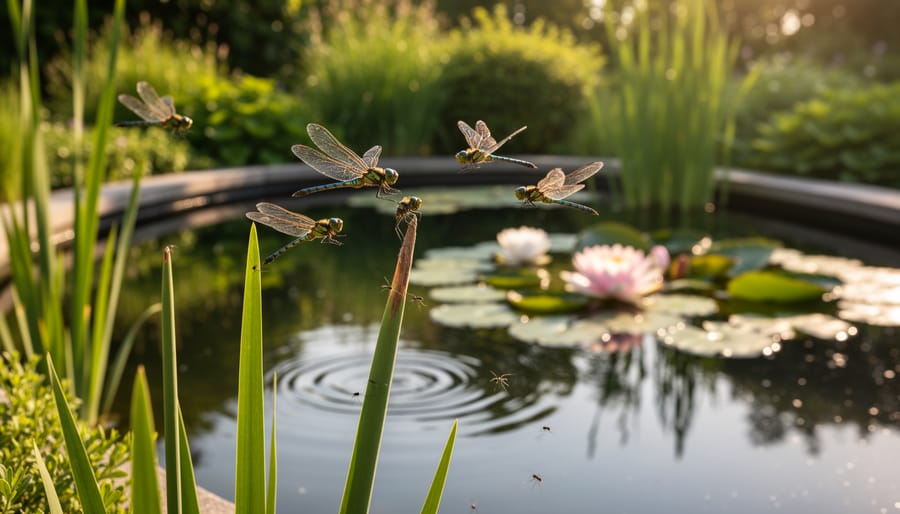
Think about it: water is essential for every living thing. Birds don’t just admire your pond from afar – they’re bathing, drinking, and hunting insects around its edges. Frogs and toads are drawn to still water for breeding, while dragonflies patrol the surface hunting mosquitoes (your new favorite neighbors, trust me). Butterflies and bees stop by for a drink on hot days, and beneficial insects like lacewings and hoverflies make homes in the vegetation around your pond’s perimeter.
I remember the first time I spotted a family of blue-tongue lizards living near my pond. I hadn’t planned for reptiles, but they’d moved in anyway, drawn by the combination of water, shelter, and the abundant insect buffet. That’s when it hit me: my pond was already doing the work of attracting wildlife. The question was, how could I make it even better?
This is where intentional wildlife pond design comes into play. While happy accidents are wonderful, understanding what attracts different species means you can deliberately create features that support them. Instead of hoping wildlife shows up, you’ll be designing specific habitats that invite them in and encourage them to stay.
The beauty of this approach? You’re not starting from scratch. Your water garden already has the foundation. Now you’re just adding thoughtful touches – like varied water depths, native plantings, and safe access points – that transform your pond from a wildlife rest stop into a thriving ecosystem where creatures feel truly at home.
Creating the Perfect Wildlife-Friendly Water Garden Layout
Shallow Zones and Beach Edges That Welcome Visitors
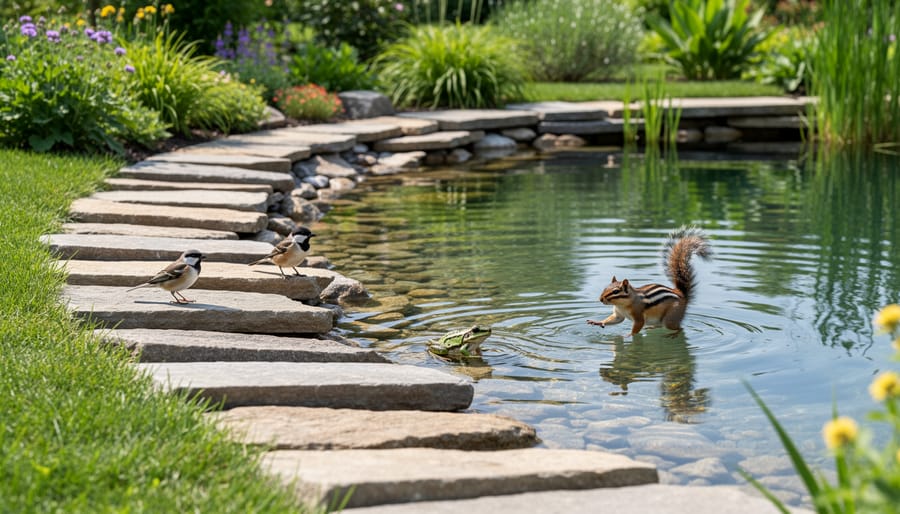
Creating gentle transitions between water and land is one of the best things you can do for wildlife visitors. Think of these shallow zones as nature’s welcome mat – they give nervous birds a safe place to splash, allow hedgehogs to reach water without risk of drowning, and provide crucial access points for frogs and newts.
The secret is building a gradual slope rather than steep edges. I learned this the hard way when I found a young robin struggling in my pond’s deep edge. Now I always create at least one area where the water depth increases slowly over several feet.
Start by arranging flat rocks in a tiered pattern along one section of your pond edge. Stack them like natural steps, ensuring each layer is stable and won’t shift when animals step on them. Fill gaps between rocks with pea gravel or small river stones – this creates texture that birds love for gripping while they bathe.
For an even gentler beach effect, extend a layer of gravel from the shoreline into the water, creating a pebble beach that slopes gradually. Aim for a depth of just one to two inches at the water’s edge, gradually deepening to four or five inches over a distance of twelve to eighteen inches.
Position some larger stones partially submerged as natural perches where birds can stand while drinking. These also give amphibians easy exit routes and provide dragonfly nymphs with climbing spots when they’re ready to emerge as adults.
Strategic Plant Placement for Safety and Viewing
Think of plant placement as creating a stage where you get the best seats in the house. I learned this the hard way when I filled my pond edges so densely with cattails that I couldn’t see the frogs I’d worked so hard to attract! Strategic positioning makes all the difference.
Start by mapping out your primary viewing areas—where you’ll watch from your deck, patio, or favorite garden bench. Keep taller marginal plants like rushes and irises toward the back or sides of these sightlines, creating a natural frame rather than a visual barrier. This gives wildlife the cover they love while keeping your view open.
Place floating plants like water lilies strategically, covering about 40-60% of your pond surface. Cluster them to one side rather than scattering them evenly. This creates shaded hideaways for fish and amphibians while leaving open water for you to observe visiting birds and dragonflies.
Around your pond’s perimeter, layer plants by height. Low groundcovers near the water’s edge transition to medium shrubs, then taller plants farther back. This tiered approach creates what wildlife biologists call edge habitat—those magical transition zones where different species meet, feed, and shelter.
Consider wildlife corridors too. Leave natural pathways through your plantings so small animals can move safely between your pond and other garden areas. A gap between plant clusters becomes a highway for toads, while overhanging branches create perching spots for kingfishers and dragonflies. You’ll enjoy watching these natural behaviors unfold from your perfect vantage point.
Adding Perches, Rocks, and Landing Pads
Creating strategic perching and basking spots around your pond is one of the simplest ways to make wildlife feel right at home. These additions require minimal effort but deliver maximum results in attracting diverse creatures to your water garden.
Start with flat rocks placed near the water’s edge or partially submerged. Turtles absolutely love these sunbathing platforms, and you’ll often spot dragonflies resting on them too. Choose smooth, dark-colored stones that absorb heat well. Position them where they’ll catch morning sun, as this is when cold-blooded visitors need warmth most. I’ve found that grouping three to five rocks of varying sizes creates natural-looking clusters that appeal to different wildlife.
For dragonflies and damselflies, add vertical elements like sturdy branches or bamboo stakes near the water. Push them securely into the pond bottom or surrounding soil so they won’t topple in wind. These insects need resting spots while they hunt for mosquitoes and other prey. Dead branches with interesting angles work beautifully and cost nothing.
Don’t overlook your pond edging. Install flat coping stones or pavers that extend slightly over the water. Birds will use these as drinking and bathing stations, and frogs appreciate the easy access in and out of the pond. Make sure at least one section has a gentle slope or stacked stones creating a natural staircase effect. This prevents wildlife from becoming trapped if they fall in.
Space these features around your entire pond perimeter rather than clustering everything in one spot. This creates multiple wildlife zones and prevents territorial disputes among visitors.
Balancing Fish and Wildlife (Yes, They Can Coexist)
Protecting Your Fish from Herons and Raccoons
Creating a wildlife-friendly garden doesn’t mean sacrificing your precious pond fish! I’ve learned through experience that protecting fish from predators like herons and raccoons is all about gentle deterrents that keep everyone safe.
Start with pond netting as your first line of defense. Choose black netting rather than green since it’s actually less visible. Stretch it taut across your pond about 15 centimeters above the water surface so herons can’t wade in. I know netting isn’t the prettiest solution, but you can disguise it beautifully with overhanging plants around the edges.
Deep zones are your secret weapon. Create at least one area that’s 90 centimeters deep where fish can retreat quickly. Herons won’t wade into deep water, and raccoons hate reaching where they can’t touch bottom. It’s like giving your fish their own panic room!
Add plenty of hiding spots using rocks, upturned clay pots, or purpose-built fish caves positioned under water lilies or other floating plants. These provide instant shelter when predators visit. I’ve placed three caves in my pond, and my fish dart into them the moment a shadow passes overhead.
Strategic planting creates natural barriers too. Dense marginal plants like rushes and irises around pond edges make access difficult for wading birds while still looking gorgeous. Think of it as landscaping with purpose, not just protection.
When to Embrace the Circle of Life
Here’s something I learned after years of pond keeping: a truly healthy wildlife garden means accepting that nature isn’t always picture-perfect. Yes, that heron visiting your pond might snag a fish occasionally, and raccoons will hunt frogs from time to time. It’s tough to watch, but this predation is actually a sign your ecosystem is thriving.
I remember feeling heartbroken the first time I saw a kingfisher dive into my pond. But then I noticed something remarkable: the dragonflies patrolling my water’s edge were decimating mosquito larvae, the birds visiting for an occasional fish were also feasting on aphids destroying my marginal plants, and the frogs I was worried about were keeping insect populations beautifully balanced.
The key is perspective. A backyard wildlife garden creates such abundant life that losing an occasional fish to a predator doesn’t destabilize your pond population. In fact, predators often target weaker or sick fish, which actually improves your overall fish health. Meanwhile, the insects, amphibians, and birds your garden attracts provide incredible natural pest control that keeps your plants healthier and your water cleaner.
Think of it as a trade-off: you might lose one fish but gain hundreds of mosquito-eating dragonfly nymphs and dozens of slug-munching toads. The circle of life isn’t just poetic; it’s practical ecosystem management that ultimately makes your pond healthier and easier to maintain.
Water Quality Tricks That Keep Wildlife Happy and Water Clear
The Right Plants for Natural Filtration and Wildlife Food
Choosing the right plants is like assembling a dream team for your wildlife pond—each member plays a crucial role in creating a thriving ecosystem. Let me share some favorites that have worked wonders in my own backyard.
Water lilies are absolute superstars. They provide beautiful surface coverage that shades the water (keeping algae in check), while their broad leaves create perfect landing pads for dragonflies and frogs. Plus, birds love drinking from the collected water on their leaves. Hardy varieties like nymphaea are perfect for beginners.
Below the surface, submerged oxygenators are your pond’s hidden heroes. Plants like hornwort, anacharis, and waterweed work tirelessly to pump oxygen into the water while absorbing excess nutrients that would otherwise fuel algae growth. I always recommend adding generous bunches—you can never have too many oxygenators.
Around the edges, native marginal plants create essential wildlife habitat. Species like water iris, cattails, and pickerel rush provide shelter for fish fry, perching spots for dragonflies, and nesting materials for birds. Their root systems also filter runoff before it enters your pond.
Don’t forget floating plants like water lettuce or duckweed in moderation. They’re nutrient sponges that double as snacks for turtles and ducks. Start with a few and let them naturalize—they’ll multiply quickly enough on their own.
Managing Wildlife Waste Without Chemicals
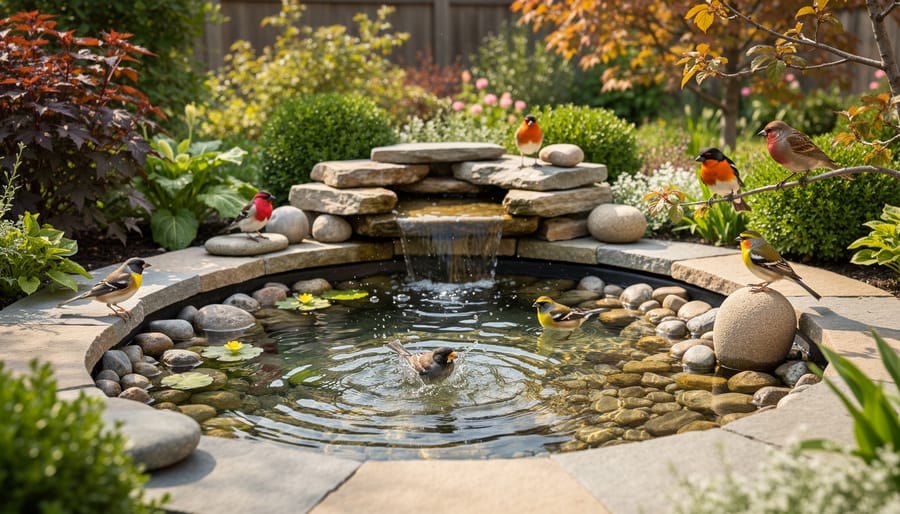
Here’s the thing about wildlife visitors – they’re wonderful to watch, but they do leave behind waste that can spike your nitrogen levels! When birds bathe, frogs hop around, and dragonflies patrol your pond, you’re getting free entertainment with a side of ammonia and nitrates.
The good news? You don’t need harsh chemicals that’ll send your wildlife friends packing. Natural solutions work beautifully. First, let your beneficial bacteria do the heavy lifting. These microscopic helpers break down waste naturally, converting harmful ammonia into less toxic compounds. You can boost their numbers by adding biological filter media or simply being patient – they’ll establish themselves over time.
Next, make sure your filtration system is up to the task. A slightly oversized filter handles wildlife waste much better than one running at capacity. I learned this the hard way when neighborhood raccoons discovered my pond!
Finally, embrace your aquatic plants as natural water purifiers. Water lilies, iris, and submerged plants like hornwort absorb excess nutrients directly from the water. Think of them as your clean-up crew that also looks gorgeous. Adding more plants around the edges creates a living filtration system that keeps everyone healthy without a single chemical bottle in sight.
Seasonal Water Maintenance for Year-Round Wildlife
Keeping water available year-round makes a huge difference for your backyard visitors! During winter months, a simple floating de-icer prevents your pond or birdbath from freezing solid, giving birds and other wildlife crucial access to drinking water when natural sources are scarce. I’ve watched grateful chickadees and robins visit my de-iced birdbath even on the coldest days.
Summer brings different challenges, especially algae blooms when wildlife activity peaks. Regular water changes help, but avoid harsh chemicals that harm your visitors. Instead, add more aquatic plants to shade the water and compete with algae for nutrients. Barley straw is another gentle, wildlife-safe option.
Fall requires vigilance with leaf control. Those beautiful autumn leaves can quickly overwhelm a small pond, decomposing and creating water quality issues. Stretch netting over your pond before leaves drop, or skim daily with a net. Your fish and amphibians will thank you for the cleaner water throughout winter.
Beyond the Pond: Creating Wildlife Corridors in Your Backyard
Native Plants That Bridge Water and Garden
The magic happens where your pond meets your garden! I’ve learned that selecting the right native plants around your water feature creates natural wildlife corridors that benefit everyone in your backyard ecosystem.
For sunny spots, try native grasses like switchgrass or little bluestem. They provide shelter for beneficial insects and look gorgeous swaying in the breeze. In my own garden, I’ve watched goldfinches feast on their seed heads well into winter.
Berry-producing shrubs are absolute winners for attracting birds. Consider elderberry, serviceberry, or native viburnums depending on your region. These do double duty by offering nesting sites and food sources throughout the seasons.
Don’t forget pollinator favorites! Native milkweeds, coneflowers, and black-eyed Susans bring butterflies and bees right to your pond’s edge. Plant them in drifts rather than single specimens for maximum impact.
The key is choosing plants suited to your specific climate zone. Check with local native plant societies or extension offices for recommendations. This ensures your wildlife garden thrives with minimal fussing while supporting local species perfectly adapted to your conditions.
Simple Additions That Multiply Wildlife Visitors
Your pond becomes exponentially more attractive to wildlife when you add a few simple supporting features. Think of these as the hospitality extras that turn casual visitors into regular guests!
A shallow bird bath placed near your pond gives smaller birds a safe drinking and bathing spot without risking the deeper water. I’ve found that placing one on a pedestal about ten feet from the pond edge creates the perfect setup—close enough to feel like part of the ecosystem, but safe from predators.
Bee hotels are ridiculously easy to make. Just bundle hollow bamboo stems together or drill holes in a wood block, and you’ll provide nesting sites for solitary bees that pollinate your garden plants. Mount it in a sunny spot facing southeast for best results.
Don’t be too tidy! A log pile tucked in a corner becomes instant habitat for beetles, salamanders, and hedgehogs. Stack logs loosely in a shady area, and nature does the rest. Similarly, leaving a brush pile of pruned branches creates shelter for small mammals and ground-nesting birds.
These additions work together with your pond to create multiple habitat layers, and that diversity is exactly what transforms a simple water feature into a thriving wildlife haven.
Common Mistakes That Drive Wildlife Away (And How to Fix Them)
Too Clean, Too Sterile, Too Deep
I learned this the hard way when my first pond looked picture-perfect but stayed eerily empty of wildlife. Here’s the thing: animals don’t want a swimming pool. They want a mess! If your pond has straight, steep sides like a bathtub, most creatures simply can’t get in or out safely. Frogs, birds, and beneficial insects need gradual slopes and shallow areas to access water.
Chemical treatments are another wildlife-killer. That crystal-clear water you’re chasing might mean there’s nothing left alive to eat. Skip the harsh chemicals whenever possible and embrace a little algae—it’s actually food for many pond visitors.
Quick fixes? Add a few flat rocks creating a gentle ramp into the water. Let some plants sprawl over the edges instead of trimming everything back. Leave leaf litter around the margins—it’s habitat, not mess. Place a log half-submerged at the edge. These simple touches transform your pond from sterile to welcoming, and you’ll notice the difference within days.
Missing the Food Chain Foundation
Here’s the thing many folks overlook when creating a wildlife garden: those beautiful birds and frogs you’re hoping to attract need something to eat! I learned this lesson myself when I wondered why my pond wasn’t drawing in the wildlife I expected. The secret? You’ve got to build from the ground up, starting with the tiny creatures that form the foundation of your backyard ecosystem.
Insects and small invertebrates are the powerhouse of any thriving wildlife garden. They’re the protein-packed snacks that keep birds coming back and provide essential food for amphibians. The good news is you don’t need to create a pest haven to support beneficial bugs. Focus on native plants around your pond that attract pollinators like bees and butterflies. Leave some leaf litter in garden beds for ground beetles and spiders to shelter in. A shallow pebble beach at your pond’s edge gives beneficial insects safe drinking spots while ladybugs and lacewings naturally control aphids.
The key is diversity. When you support a variety of small creatures, predator bugs keep pest populations in check naturally, and your larger wildlife visitors get the buffet they’re seeking.
You don’t need to transform your entire backyard overnight to create a thriving wildlife haven around your water garden. Start with just one or two small changes, perhaps adding a shallow pebble beach or planting a native shrub near your pond’s edge. These simple steps will set the wheels in motion, and you’ll be amazed at how quickly nature responds.
The real magic happens when you slow down and observe. There’s something incredibly rewarding about watching a dragonfly emerge on your cattails, spotting a frog basking on your rocks, or seeing birds splash in your shallow zone. These everyday wildlife interactions become moments of genuine connection with the natural world right outside your door.
Here’s the truth that many new pond owners discover: a balanced ecosystem with wildlife is actually easier to maintain than a sterile, chemical-dependent water feature. Nature has its own way of keeping things in check when you provide the right conditions. By measuring pond biodiversity, you’ll gain confidence in your ecosystem’s health.
So grab a chair, settle in near your water garden, and simply watch. You’ve created something special, now enjoy it.