
Why Coastal Birds Need Your Backyard Pond (And How to Help Them Thrive)
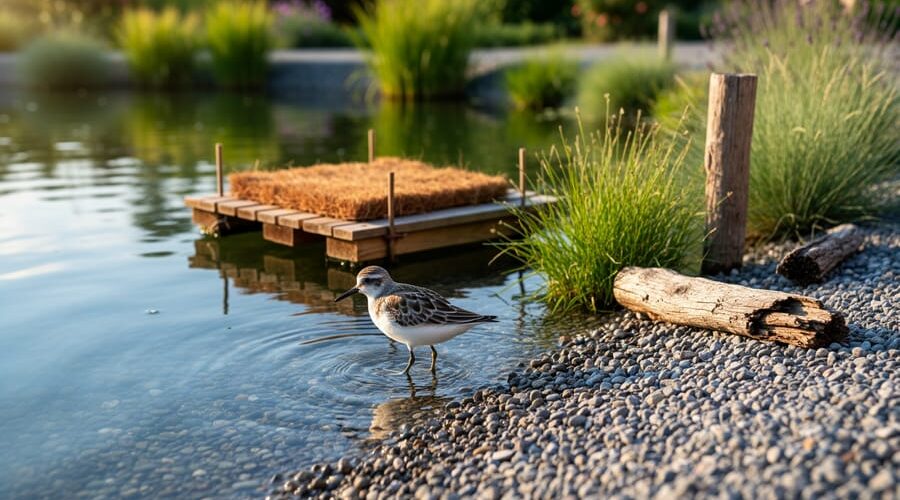
Transform your backyard pond into a haven for coastal birds by installing shallow gravel beaches along pond edges where shorebirds can safely nest and forage. Create these gently sloping areas using pea gravel or small river rocks, maintaining water depths of 1-3 inches that mimic natural tidal zones where plovers, sandpipers, and terns typically breed.
Establish vegetation buffers using native salt-tolerant grasses and sedges around your pond perimeter to provide critical nesting cover and predator protection. Plant species like saltgrass or rush varieties in clusters 2-3 feet from the water’s edge, creating natural screens that give ground-nesting birds the security they need while enhancing your water garden’s wild aesthetic.
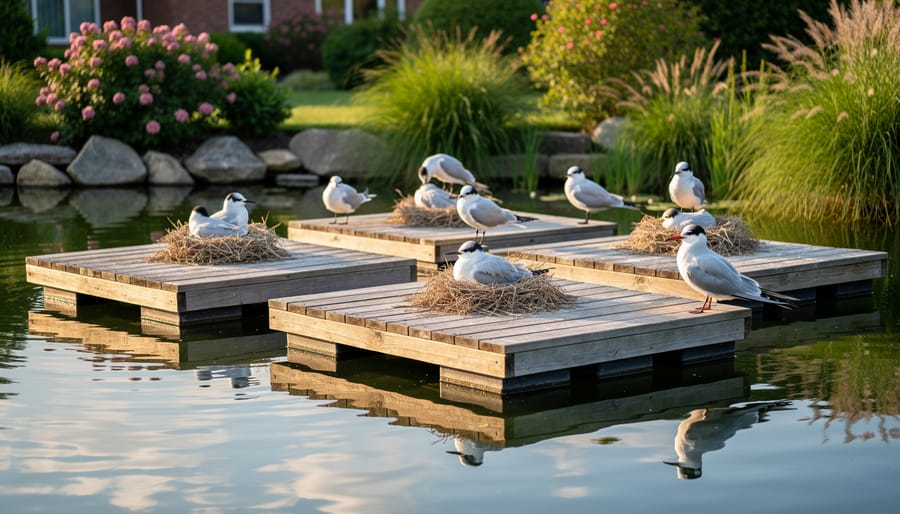
Position floating platforms or anchored rafts in open water areas to offer predator-proof nesting sites for waterfowl and gulls. Build these simple structures using untreated wood frames topped with coconut coir matting, securing them with nylon rope to allow natural movement with water level changes. Your wildlife pond guide can help you integrate these features seamlessly into your existing design.
Monitor and protect nesting areas during breeding season by marking off zones with natural barriers like driftwood or stone arrangements, keeping human activity and pets at respectful distances. This small effort multiplies conservation impact while adding dynamic wildlife viewing opportunities to your daily pond enjoyment.
The Coastal Bird Crisis Happening in Our Backyards
What Makes a Safe Nesting Site
Coastal birds aren’t picky creatures, but they do have some non-negotiables when choosing where to raise their families. Understanding these basics can help you transform your water garden into a welcoming sanctuary.
First up is water access. Birds need to be within easy flying distance of their food source, whether that’s your pond, a nearby stream, or the ocean itself. Think of it like choosing a home close to your favorite grocery store. For nesting birds, this proximity means less energy spent traveling and more time protecting their young.
Ground cover matters more than you might expect. Birds look for spots with low vegetation, grasses, or even bare ground where they can spot danger approaching. Dense shrubs might seem protective, but they actually block the bird’s view of predators. When planning your pond area, leave some open sight lines mixed with natural cover.
Speaking of predators, protection is huge. Birds avoid areas where cats, raccoons, or other hunters can easily sneak up on them. Islands in ponds work wonderfully because they create natural barriers. Even a small floating platform can give birds that extra security they’re instinctively seeking.
Finally, there’s the food factor. Healthy ponds naturally attract insects, small fish, and aquatic plants that many coastal birds feed on. When your water garden ecosystem is thriving, it becomes a buffet that draws nesting birds season after season. The beauty is that what’s good for birds often makes your pond more vibrant and balanced too.
Transform Your Pond Into a Bird-Friendly Nesting Haven
Create Natural Edges and Shallow Zones
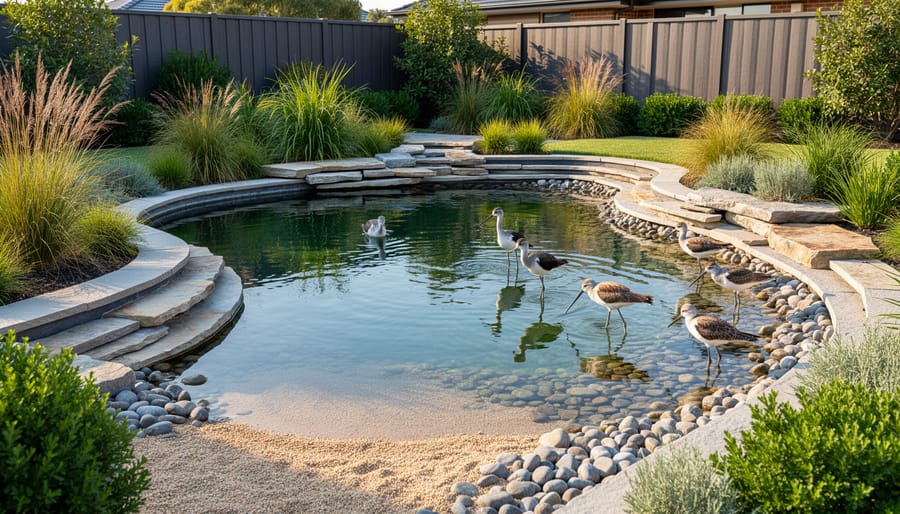
Creating gentle transitions between land and water is one of the most valuable features you can add to your pond for nesting birds. These gradual edges mimic natural shorelines and give birds safe spaces to wade, forage, and build nests without struggling in deep water.
Start by building a shallow shelf around at least one side of your pond, ideally the northern edge where it receives maximum sun exposure. This shelf should slope gradually from the bank to about 15-20 centimeters deep over a distance of 60-90 centimeters. I discovered this technique while working on my own waterfowl pond design, and it completely transformed how birds interacted with the space.
Once your shelf is shaped, cover it with a mix of materials. Begin with larger river rocks along the edge to prevent erosion, then add smooth pebbles of varying sizes to create a beach-like area. These rocks give birds stable footing and also provide habitat for insects and small aquatic creatures that birds feed on.
Next, add a layer of pea gravel in the shallowest zones. This creates perfect nesting substrate for ground-nesting species. Leave some areas with exposed gravel and others planted with native sedges, rushes, or low-growing grasses. These plants stabilize the shoreline while offering nesting material and cover.
The key is variety. Some birds prefer open pebble beaches, while others need vegetation for concealment. By combining these elements along your pond edge, you’ll accommodate different species and create a dynamic, natural-looking habitat that’s both functional and beautiful.
Plant the Right Vegetation for Shelter and Nesting
The vegetation you choose around your pond makes all the difference for nesting birds. Think of it as creating a natural apartment complex where birds feel safe and have everything they need right at their doorstep.
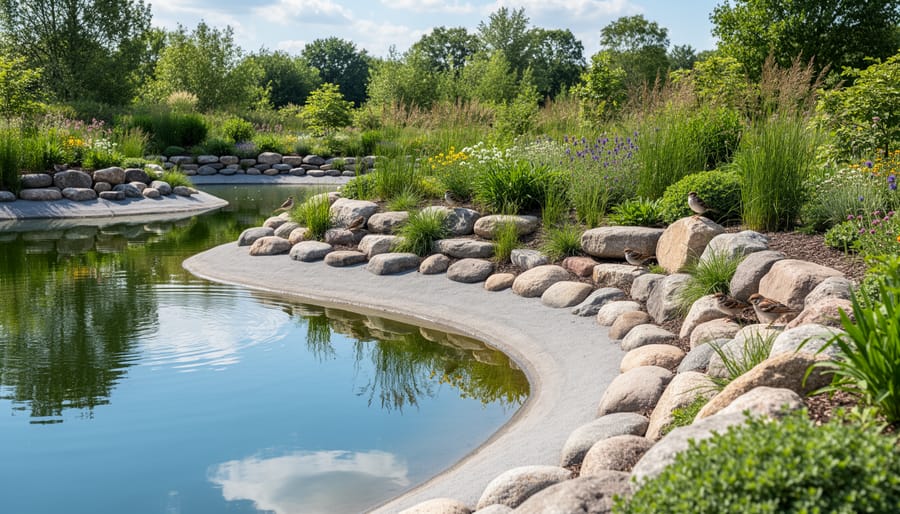
Start with native grasses like lomandra and kangaroo grass around the pond’s edge. These beauties grow in lovely clumps that birds adore for tucking their nests into, and they’re practically maintenance-free once established. I’ve watched several families of fairy-wrens raise their young in lomandra clumps near my pond, completely hidden from predators but close enough to water for quick drinks.
Sedges are absolute champions for pond settings because they thrive in moist soil and provide excellent nesting material. Carex species work wonderfully, creating dense shelter at ground level while their stems are perfect for birds to weave into their nests. Plant them in groups of three or five for the most natural effect.
Low-growing shrubs like native violets and native daisies around your pond’s perimeter create layered habitat. These plants attract insects, which means a constant food buffet for parent birds feeding hungry chicks. The bonus? You get gorgeous blooms while supporting the ecosystem.
Consider adding a few slightly taller options like bottlebrush or grevillea varieties at a respectful distance from the water’s edge. These provide elevated nesting spots for different bird species while their flowers attract nectar-feeding birds and beneficial insects. When selecting pond plants for wildlife, always prioritize native species suited to your local climate. They’ll establish faster, need less care, and provide exactly what your local birds have evolved to use.
Remember to plant in stages, creating different heights and densities. This variety accommodates different nesting preferences and makes your pond irresistible to feathered visitors.
Add Safe Nesting Platforms and Structures
Creating safe nesting platforms doesn’t require advanced carpentry skills, and I’ve found that the simplest designs often work best. Let me walk you through a few options that birds genuinely appreciate.
For floating platforms, start with a square of untreated plywood (about 2×2 feet) attached to Styrofoam pool noodles underneath for flotation. Drill drainage holes in the plywood to prevent water pooling, then add a shallow lip around the edges using 2-inch strips of wood. Fill the center with dried grasses, straw, or coconut fiber. Anchor it with rope tied to concrete blocks or weighted milk jugs on the pond bottom. Position these platforms about 15-20 feet from shore where predators can’t easily reach.
Ground-level shelters work wonderfully for species that prefer shoreline nesting. I created mine using stacked flat rocks or concrete blocks to form a small cave-like structure, leaving a 6-inch entrance. Cover the top with more flat stones and native plants. Place these near dense vegetation but with clear sightlines so birds can watch for threats.
Protective barriers are equally important. Plant native shrubs like willows or rushes in clusters around potential nesting spots. You can also position large branches or small logs in shallow water, creating natural screens. These barriers break up open spaces and give nervous parent birds the cover they need.
The key is variety. Offer multiple platform types at different heights and locations. Some species prefer open water, others like sheltered coves. By providing options, you’ll attract diverse nesting birds throughout the season.
Keeping Your Pond Safe for Nesting Birds
Seasonal Maintenance That Respects Nesting Cycles
Timing your pond maintenance around bird nesting seasons is one of the most impactful ways you can support local wildlife. Most water birds nest between March and August, with peak activity happening from April through June in many regions. During these crucial months, hold off on major projects like complete pond drains, extensive shoreline reconstruction, or removing large vegetation sections.
I learned this lesson the hard way when I discovered a killdeer nest near my pond edge right after I’d scheduled a pump replacement. Now I plan my big projects for late fall or winter when birds have finished raising their young and migrated.
Safe tasks during nesting season include routine maintenance like skimming debris, checking water levels, and minor plant trimming away from nest areas. You can still feed fish, operate filtration systems, and gently weed around established nests from a respectful distance. If you spot a nest, mark the area mentally and give it at least a 10-foot buffer zone.
Save these activities for September through February: dredging sediment, installing new equipment, major plant divisions, reshaping pond edges, or adding substantial hardscaping features. Emergency repairs are obviously necessary anytime, but approach them carefully during breeding months.
Create a simple calendar reminder system on your phone marking March 1st as “nesting season begins” and August 31st as “major projects okay.” This small adjustment to your maintenance schedule can make your pond a reliable sanctuary year after year without sacrificing its beauty or function.
Managing Predators Without Harsh Measures
Creating a safe haven for nesting birds doesn’t mean declaring war on the natural predators in your backyard. I’ve learned through years of managing my own pond that the key is working with nature, not against it.
When I first noticed neighborhood cats eyeing the birds around my water feature, my instinct was to panic. But here’s what actually works: simple motion-activated sprinklers. These clever devices startle prowling predators with a harmless spray of water, teaching them to avoid the area without causing harm. Position them near ground-level nesting spots and along pathways cats typically use.
Strategic landscaping is your best friend for managing pond predators. Plant thorny native shrubs like coastal rosemary or native currants around vulnerable nesting areas. These create natural barriers that discourage raccoons and possums while providing excellent cover for birds. I’ve planted mine about three feet from the pond edge, creating a protective ring that looks beautiful and functions brilliantly.
Reflective objects work wonders too. Hang old CDs or strips of reflective tape near nesting sites. The flickering light confuses predators and makes them uncomfortable without hurting them. I’ve even used pie tins strung on fishing line, and they double as quirky garden art.
For raccoons specifically, remove temptation. Secure any fish food containers and clean up fallen birdseed promptly. These clever critters won’t hang around if there’s nothing to eat.
Consider vertical nesting options. Mount birdhouses on smooth metal poles at least five feet high. Add cone-shaped baffles below each house to prevent climbing predators from reaching eggs or chicks.
The goal is peaceful coexistence, creating an environment where birds thrive while respecting the role predators play in your backyard ecosystem.
Which Birds Might Visit Your Water Garden
You might be surprised to discover the variety of feathered friends your water garden can attract! While you’re probably familiar with common ducks and waterfowl, your pond could become a vital stopover point for migratory shorebirds traveling between coastal breeding grounds and inland feeding areas.
Look for graceful white-faced herons stalking the shallow edges of your pond, especially during dawn and dusk. These elegant birds appreciate the combination of open water and vegetated margins where small fish and insects gather. Pacific black ducks often pair up and nest in dense reeds near water, making them excellent candidates for your pond if you’ve established good marginal plantings.
During migration seasons, you might spot welcome swallows swooping low over the water surface, catching insects. These aerial acrobats sometimes build their mud nests under nearby eaves or structures, using your pond as both hunting ground and building material source.
Moorhens and dusky moorhens are particularly exciting visitors, as they’ll readily nest in well-vegetated ponds with floating platforms or dense reed beds. You’ll recognize them by their distinctive red beaks and bobbing head movements as they swim.
Australian wood ducks occasionally choose tree hollows near established ponds, while pied stilts might use larger, shallow-edged water gardens as temporary feeding stations during migration. Even the occasional egret or ibis might drop by if your pond ecosystem is thriving.
The key to attracting these pond birds is understanding they need different features at different times. Some want open water, others prefer dense cover, and many need both. By creating varied habitats within your water garden, you’re not just building a beautiful feature, you’re establishing a genuine conservation haven that supports species throughout their life cycles.
Small Changes That Make a Big Difference
You’d be amazed at what a difference small tweaks can make! Take Sarah from Oregon, who simply added three flat rocks near her pond’s edge. Within two weeks, she spotted a pair of killdeer investigating the area, and by spring, they’d successfully raised chicks right there. She didn’t need to redesign her entire water feature—just those three strategically placed stones did the trick.
Then there’s Mike in Florida, who was struggling with aggressive grackles dominating his pond. He installed a basic wire mesh screen over one corner, creating a protected shallow area. The result? Smaller songbirds started nesting in nearby shrubs, feeling safer with that sheltered drinking spot available. His before scenario was noisy chaos; after was a peaceful morning chorus.
My favorite story comes from a retired teacher in Maine who draped some fallen branches across her pond’s shallow end instead of clearing them away. She thought it looked messy at first, but those “messy” branches became a magnet for warblers and wrens. Sometimes our impulse to keep things tidy works against nature’s preferences.
Even adding a single potted native plant at water’s edge can shift the dynamic. One reader reported that a cardinal pair nested in her butterfly bush after she moved it closer to her pond, giving them easy access to water while feeding nestlings. These aren’t expensive makeovers—they’re thoughtful adjustments that show impressive results.
As a pond owner, you’re already sitting on prime real estate for helping coastal birds thrive. Whether you realize it or not, your water garden puts you in a unique position to make a genuine difference in preserving these beautiful species. The best part? You don’t need to transform your entire backyard overnight or invest in expensive equipment to get started.
Begin with just one simple addition. Maybe it’s a shallow pebble beach along your pond’s edge, or perhaps you’ll add a single native shrub that provides nesting cover. Every small step counts, and you can build on your efforts as you go. I’ve seen firsthand how a modest backyard pond transformed from a simple water feature into a bustling haven for visiting birds, and it happened gradually, one improvement at a time.
The beauty of this approach is that you’re not sacrificing aesthetics for conservation. Those native plants that attract nesting birds? They’ll add texture and seasonal color to your landscape. The shallow edges that provide drinking spots? They create naturalistic transitions that make your pond look more organic and established. You’re essentially upgrading your outdoor space while giving coastal birds exactly what they need.
Your hobby has the power to contribute to something much bigger than a beautiful backyard. By creating nesting-friendly features around your pond, you’re joining a community of conservation-minded water gardeners who understand that even small spaces can provide critical habitat. Start today, and watch how your pond becomes a celebration of both artistry and nature.