
Japanese Invaders Are Choking Your Pond (Here’s How to Fight Back)
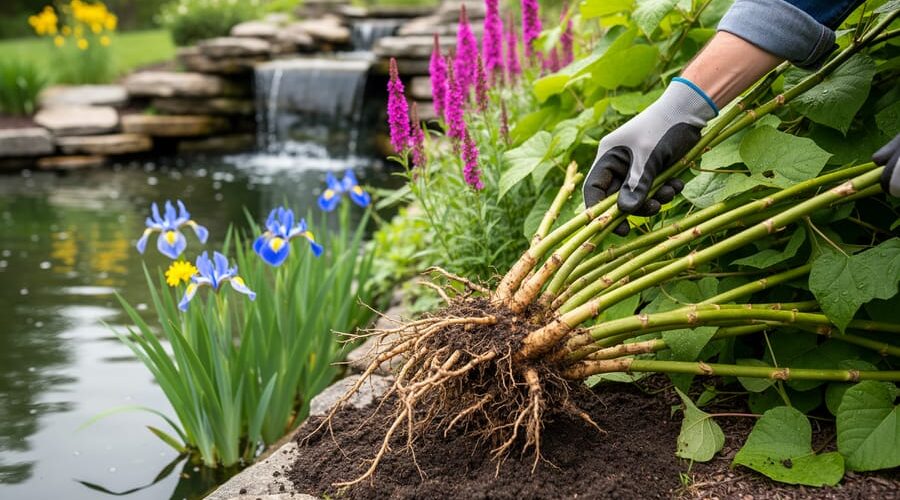
Check your pond edges weekly for fast-spreading plants with hollow bamboo-like stems or glossy heart-shaped leaves—these are telltale signs of Japanese knotweed and lesser celandine taking hold. Pull any suspicious growth immediately while it’s still small, making sure to extract every bit of root, because even a thumbnail-sized fragment can regenerate into a full invasion within weeks.
You know that sinking feeling when you spot something thriving a little too well in your carefully balanced pond? I’ve been there. One season, I noticed what I thought was an attractive addition near my waterfall, only to watch it completely overtake my native iris bed within two months. That aggressive newcomer turned out to be purple loosestrife, one of several Japanese invasive species that can transform your peaceful water garden into a maintenance nightmare.
These invaders aren’t just aggressive—they’re strategic. Species like Japanese knotweed, water primrose, and certain ornamental grasses were originally brought to Western gardens for their beauty and vigor. That same vigor now allows them to outcompete your intentional plantings, clog filtration systems, and create dense mats that suffocate native aquatic life. For pond owners, the challenge is particularly frustrating because our water features create the moist, nutrient-rich conditions these species absolutely love.
The good news? You don’t need expensive professionals or harsh chemicals to reclaim your pond. With proper identification skills and consistent hands-on management, you can protect your water garden while maintaining its natural beauty. Understanding which species pose the greatest threat to your specific setup—and catching them early—makes all the difference between a minor adjustment and a complete pond overhaul.
Why Japanese Species Love Your Pond (And Why That’s a Problem)
Your backyard pond is basically an all-you-can-eat buffet with five-star accommodations for Japanese invasive species. I learned this the hard way when koi I thought were “just growing really well” turned out to be something else entirely, and they had completely taken over my carefully balanced ecosystem in just one season.
Here’s what makes your pond such prime real estate for these uninvited guests: they arrive without their natural enemies. In Japan, these species evolved alongside specific predators, diseases, and competing plants that kept their populations in check. When they show up in North America, it’s like removing the brakes from a car rolling downhill. Japanese knotweed, for example, doesn’t face the same insects and fungi that nibble away at it back home. Without these natural controls, a single root fragment can explode into a dense thicket that chokes out everything else.
The climate factor works in their favor too. Many regions across North America mirror Japan’s temperate conditions perfectly, with similar temperature ranges and seasonal patterns. Your pond provides the moisture-rich environment these species crave, and our mild winters in many areas don’t deliver the knockout punch needed to slow them down.
Then there’s the competition issue. Native species evolved for balance, not domination. Japanese invaders often grow faster, reproduce more aggressively, and grab resources more efficiently. Water primrose can double its coverage in weeks, shading out native plants that local wildlife depends on. Grass carp, while sometimes sold as “pond cleaners,” devour vegetation so thoroughly they leave nothing for native fish and insects.
Preventing invasive species from establishing is always easier than removing them later. Think of your pond ecosystem as a neighborhood where these newcomers are the inconsiderate neighbors who park on everyone’s lawn, blast music all night, and never leave.
The Most Common Japanese Invaders in Riparian Areas
Japanese Knotweed: The Aggressive Root System Destroyer
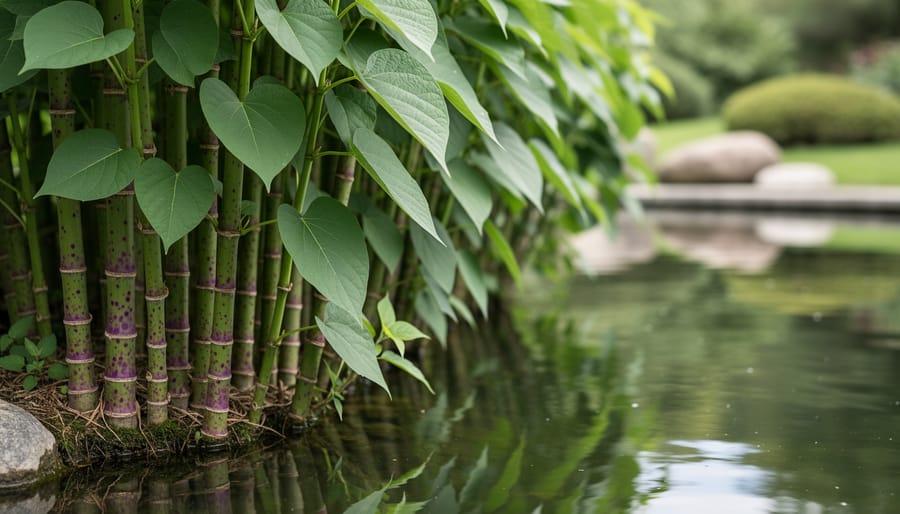
I’ll never forget the day I discovered Japanese knotweed creeping along the edge of my pond. What started as a few bamboo-like stems had turned into a dense jungle in just one season. This invasive plant is hands-down one of the most destructive species you can encounter near your water features.
Japanese knotweed looks like bamboo with hollow, purple-speckled stems that can reach 10 feet tall. The leaves are shield-shaped, about 6 inches long, and the plant produces small white flowers in late summer. But don’t let the pretty appearance fool you – this plant is a nightmare for pond owners.
Here’s why it’s so dangerous: the root system, called rhizomes, can extend 20 feet horizontally and 10 feet deep. These roots are strong enough to crack concrete, damage pond liners, and push through drainage systems. I’ve seen knotweed roots puncture rubber liners like they were tissue paper, causing expensive leaks that are incredibly difficult to repair.
Near ponds, Japanese knotweed creates even more problems. It forms such thick stands that it blocks sunlight from reaching the water, disrupts natural drainage patterns, and crowds out beneficial native plants that help filter your pond naturally. The stems die back in winter but return with a vengeance each spring, growing up to 4 inches per day during peak season.
If you spot anything resembling bamboo near your pond that wasn’t intentionally planted, investigate immediately. Early detection is your best defense against this aggressive invader.
Water Primrose: The Pond Strangler
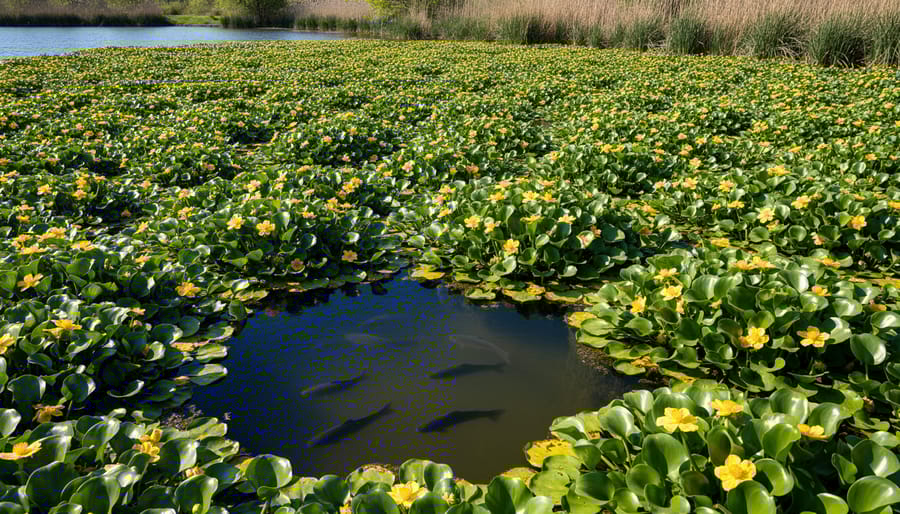
Picture this: You’re admiring your beautiful pond one sunny morning when you notice something odd. What was once a small cluster of yellow flowers near the edge has suddenly spread like a green carpet across a quarter of your water surface. Welcome to your introduction to Water Primrose, one of nature’s most enthusiastic overachievers.
Water Primrose is surprisingly easy to identify once you know what to look for. This aquatic invader sports bright yellow flowers with five petals, each about an inch across, blooming from June through September. The leaves are lance-shaped, glossy green, and grow alternately along reddish stems that can reach up to six feet long. Here’s the kicker: this plant grows both floating on the surface and rooted in shallow water, giving it multiple ways to take over your pond.
The growth rate is honestly jaw-dropping. Under ideal conditions, Water Primrose can double its coverage in just two weeks. I’ve talked with pond owners who went on a two-week vacation and returned to find their once-pristine water feature completely smothered.
The damage goes beyond aesthetics. Dense mats block sunlight from reaching native underwater plants, depleting oxygen levels as those plants die off. Fish struggle in the low-oxygen environment, and beneficial insects lose their habitat. The thick growth also restricts water flow, creating stagnant pockets that attract mosquitoes.
Koi and Goldfish Gone Wild
That gorgeous koi you released into the creek behind your house thinking you were doing it a favor? It might now be wreaking havoc downstream. Here’s something many pond owners don’t realize: when ornamental fish escape or get released into natural waterways, they don’t just disappear into a peaceful retirement. They become ecological troublemakers.
Koi and goldfish are incredibly hardy survivors. Once they’re in rivers, lakes, or streams connected to your pond during overflow or intentional release, they quickly outcompete native fish for food and habitat. These fish can grow much larger in the wild than in your backyard pond, sometimes reaching several pounds. They stir up sediment while feeding, making water murky and destroying underwater plant beds that native species depend on for spawning.
Even worse, they reproduce rapidly. A single goldfish can produce thousands of eggs in a season, and within a few years, you’ve got an entirely new population pushing out local fish like minnows and sunfish.
If your pond connects to natural waterways through drainage systems or during heavy rains, install secure screens or overflow barriers. Never release unwanted fish into the wild. Instead, contact local pet stores, aquarium clubs, or animal shelters for rehoming options. Some communities even host fish amnesty days specifically for this purpose.
Japanese Barberry and Your Pond’s Edge
If you’ve spotted a thorny shrub with small oval leaves taking over your pond’s edge, you’re likely dealing with Japanese barberry. This invasive woody plant loves the moist soil around water features and can quickly crowd out everything else.
Here’s how to identify it: look for dense branches covered in sharp spines, small paddle-shaped leaves that turn brilliant red in fall, and bright red berries dangling beneath the branches in autumn. The shrubs typically grow 3-6 feet tall and form impenetrable thickets.
Why should pond lovers care? Japanese barberry creates several problems for your water feature. Its dense growth blocks access to your pond’s edge, making maintenance a nightmare. The thick canopy shades out native plants that typically filter runoff before it reaches your water, potentially affecting water quality. Wildlife suffers too, as barberry provides poor habitat compared to native shrubs and creates ideal conditions for ticks.
I learned this firsthand when a small barberry patch near my koi pond exploded into a thorny barrier within two seasons. The lack of native vegetation meant more sediment washing into the water during storms, and my usual pond-side wildlife visitors disappeared.
Other Japanese Plants to Watch For
While knotweed often steals the spotlight, a few other Japanese plants deserve your attention as a pond owner. Japanese honeysuckle creates dense tangles that can overwhelm shrubs around your water feature, blocking access and choking out native plants that provide habitat for beneficial insects and birds. You’ll recognize it by its sweet-smelling white and yellow flowers, but don’t let the fragrance fool you—it spreads aggressively through runners and seeds.
Japanese stiltgrass is another sneaky invader that thrives in the moist areas surrounding ponds. This grass forms thick mats that prevent native groundcovers from establishing, and it can completely carpet the area between your pond and garden. Look for its distinctive pale stripe down the center of each leaf.
While purple loosestrife actually hails from Europe, it’s worth mentioning since it often appears in searches about aquatic invaders. Its purple flower spikes are stunning, but a single plant produces millions of seeds that can transform wetland edges into monocultures. If you spot any of these species around your pond, act quickly—early removal is always easier than tackling an established population.
Your Action Plan: Controlling Japanese Invasives Around Your Pond
Step 1: Survey and Identify What You’re Dealing With
Before you can tackle any invasive species problem, you need to know exactly what you’re up against. Start by walking slowly around your entire pond area during daylight hours, looking both in the water and along the banks. Take clear photos from multiple angles of any suspicious plants or fish you spot—close-ups of leaves, flowers, and stems are especially helpful for identification.
I always recommend snapping pictures with your smartphone because you can instantly upload them to free identification apps like iNaturalist or Seek. These tools use image recognition to suggest species names, and the community can verify your findings. You can also survey your pond ecosystem more thoroughly by noting how much area the invasive species covers and whether it’s choking out other plants.
Don’t forget to reach out to local resources too. Your regional environmental office, native plant societies, or water garden clubs can provide expert identification help specific to your area. Document the invasion’s extent by measuring how many square feet it covers or counting individual plants—this baseline will help you track your progress as you work to remove it.
Step 2: Manual Removal Techniques That Actually Work
Getting your hands dirty is often the most effective way to tackle invasive species, and I’ve learned through experience that timing makes all the difference. Here’s what actually works in the real world.
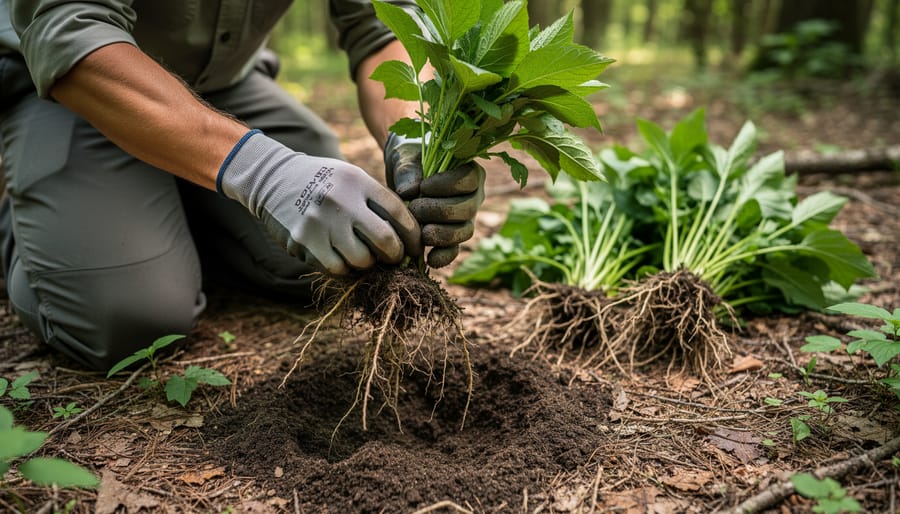
For hand-pulling Japanese knotweed or similar plants, catch them early in spring when the soil is moist. Grip the base firmly and pull steadily upward to get as much root as possible. I always wear thick gloves because some invasive species can irritate skin. The key is persistence – you’ll need to revisit the same spot weekly during growing season since even tiny root fragments can regenerate.
When digging out established plants like purple loosestrife, use a sharp spade to excavate at least 12 inches around and below the plant. Create a circle around the base and work your way underneath the root ball. One trick I’ve found helpful is watering the area the day before – it makes digging much easier and helps keep roots intact during removal.
For woody invasives like Japanese barberry, cutting alone won’t work. After cutting stems at ground level, immediately apply herbicide to the fresh cut stumps (more on this in the next section). Without this step, they’ll resprout vigorously.
Here’s the crucial part everyone overlooks: proper disposal. Never compost invasive species or toss them in natural areas. Bag everything securely and dispose in regular trash, or burn if local regulations permit. I once made the mistake of leaving pulled knotweed in a pile – it rooted right back into the ground within days.
Step 3: Smart Barriers and Prevention Methods
Prevention is always easier than removal, so let’s set up some smart barriers before invasive species become a headache! Think of it as building a fortress around your beautiful pond.
Start by installing your pond liner properly, ensuring it extends at least 30 centimeters above the waterline. This creates a physical barrier that stops aggressive plants like Japanese knotweed from sneaking into your water feature from surrounding soil. I learned this the hard way when knotweed roots penetrated my first pond liner – not a mistake I’ll repeat!
Creating riparian buffer zones around your pond is your next line of defense. These are simply planted areas between your lawn and pond edge, ideally 1-2 meters wide. Fill them with dense native ground covers like native violets or lomandra. These plants act like friendly bouncers, crowding out potential invaders before they reach your pond.
Regular maintenance is crucial too. Check your pond edges monthly for any suspicious new growth. Always clean your pond tools and nets after each use, especially if you’ve been to other water bodies. Those tiny plant fragments clinging to your equipment can introduce invasive species faster than you’d imagine. Keep a dedicated bucket for tool cleaning – it’s a simple habit that prevents massive problems down the track!
Step 4: Eco-Friendly Control Options
Let’s talk about controlling these invasive species without harsh chemicals—your pond’s ecosystem will thank you!
For smaller infestations, good old vinegar works wonders. Mix one gallon of white vinegar with a cup of salt and a tablespoon of dish soap. Spray this directly onto Japanese knotweed or other invasive plants on sunny days. The acid burns the foliage, while repeated applications weaken the root system. I’ve had great success hitting regrowth every week for a month.
Smothering is my go-to for larger patches. Cut plants down to ground level, then cover the area with thick black plastic or old carpet. Weigh down the edges with rocks. This blocks sunlight completely, and most invasives surrender after one growing season. I once smothered a stubborn knotweed patch by my pond’s edge—it took patience, but it worked!
Solarization combines smothering with heat. Lay clear plastic over moist soil during summer months. The sun’s heat literally cooks the roots underneath. This method is perfect for preparing pond-side planting beds.
For aquatic invaders like water lettuce, manual removal is simplest. Skim them out regularly with a pond net before they multiply. Consistency beats chemicals every time, and your fish will appreciate the chemical-free approach!
When to Call in Professional Help
Sometimes DIY efforts just aren’t enough, and that’s perfectly okay. If you’ve tried removing Japanese knotweed or another invasive species multiple times and it keeps bouncing back stronger, it’s time to call in the experts. Large infestations covering more than 100 square feet, mature plants with extensive root systems, or invasive fish populations that have exploded beyond your control are clear signals you need professional assistance.
Professional removal services bring specialized equipment, commercial-grade herbicides used safely, and experience with stubborn invaders. They can also assess hidden rhizome networks underground that you might miss. Many professionals work alongside local conservation groups who often provide free site assessments and can connect you with removal grants or volunteer programs.
Reach out to your county extension office or watershed conservation district. They’ll know the best local resources and may even offer cost-sharing programs for invasive species removal. Remember, you’re not just protecting your pond, you’re helping your entire community’s ecosystem thrive.
Replanting Right: Native Alternatives That Look Just as Good
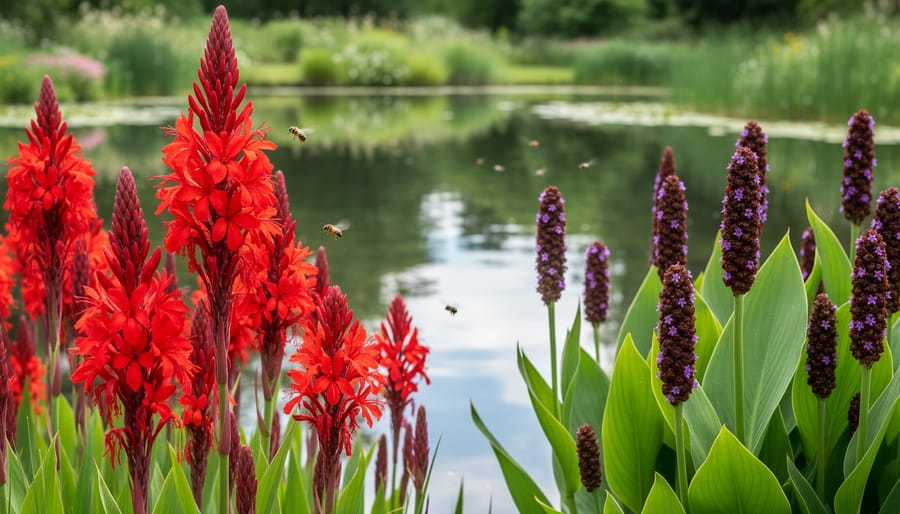
Here’s the good news: you absolutely don’t have to sacrifice beauty when you remove those invasive Japanese species from around your pond. In fact, I’ve found that native pond plants often look even more stunning because they’re naturally suited to your local conditions and attract gorgeous butterflies and birds you won’t see with invasives.
If you’re removing Japanese knotweed or similar upright invaders, try planting native swamp milkweed instead. It grows 3-4 feet tall with beautiful pink flower clusters that monarch butterflies absolutely adore. Plant it in moist soil along your pond edges in spring, and it’ll reward you with blooms all summer long. I planted some three years ago, and now it’s the star of my pond border.
For water edges where you might have pulled out invasive grasses, cardinal flower is absolutely breathtaking with its vibrant red spikes. Hummingbirds go crazy for it. Plant divisions in spring about 12 inches apart in consistently moist soil, and keep them watered during their first season.
If you loved the lush greenery that invasives provided, native ferns like cinnamon fern or royal fern create that same full, tropical feeling without any aggressive spreading. They thrive in dappled shade around ponds and require almost zero maintenance once established.
The secret to success with natives is patience. Unlike invasives that explode overnight, native plants take a season or two to settle in, but once they do, they’re low maintenance superstars that support your local ecosystem. Your pond will thank you, and honestly, so will your neighbors.
Keeping Invaders Out for Good: Long-Term Prevention
The best defense against invasive species is a good offense, and that means staying vigilant year-round. I like to schedule monthly walk-arounds of my pond, checking for any suspicious new plants or changes in water clarity. Spring and fall are especially critical times since that’s when many invasives start their aggressive growth spurts or spread seeds.
Keep a simple notebook or use your phone to photograph your pond regularly. This creates a visual history that makes it easier to spot newcomers before they establish themselves. Trust me, catching a single water lettuce plant is much easier than dealing with a mat covering half your pond.
Get your whole family involved in the monitoring process. When everyone knows what belongs and what doesn’t, you’ve got multiple sets of eyes keeping watch. I turned it into a fun activity with my kids, giving them the title of “Pond Patrol Officers.” They loved checking for intruders and learned about ecosystem balance in the process.
Regular pond edge maintenance creates conditions that favor your chosen plants over invasives. Keep native vegetation healthy and thick around your riparian zone since vigorous native growth naturally crowds out unwanted species.
If you keep fish, purchase only from reputable suppliers and never release aquarium fish into your pond or local waterways. One released goldfish or koi can establish breeding populations that outcompete native species. Creating a balanced, thoughtfully-designed pond ecosystem with native plants and appropriate wildlife gives invasives fewer opportunities to gain a foothold.
Here’s the truth I’ve learned after years of managing my own ponds: Japanese invasive species are serious challenges, but they’re absolutely beatable. You don’t need a degree in ecology or a massive budget. What you need is consistency, the right approach, and a willingness to start now rather than wait until the problem overwhelms you.
Every time I’ve tackled an invasive species issue early, I’ve saved myself months of frustration and protected the pond ecosystem I worked so hard to create. The koi I introduced twenty years ago are still thriving because I stayed vigilant. Your pond is an investment in your property’s beauty and your own enjoyment. The local wildlife and native plants around your water feature deserve protection too.
The best part? You already know what to look for now. This weekend, grab a notebook and spend thirty minutes surveying your pond. Check those shallow areas, peek under overhanging vegetation, and really look at what’s growing along your water’s edge. Catching invaders early means easier removal and less damage to your carefully balanced pond environment. Your future self will thank you for taking action today.