
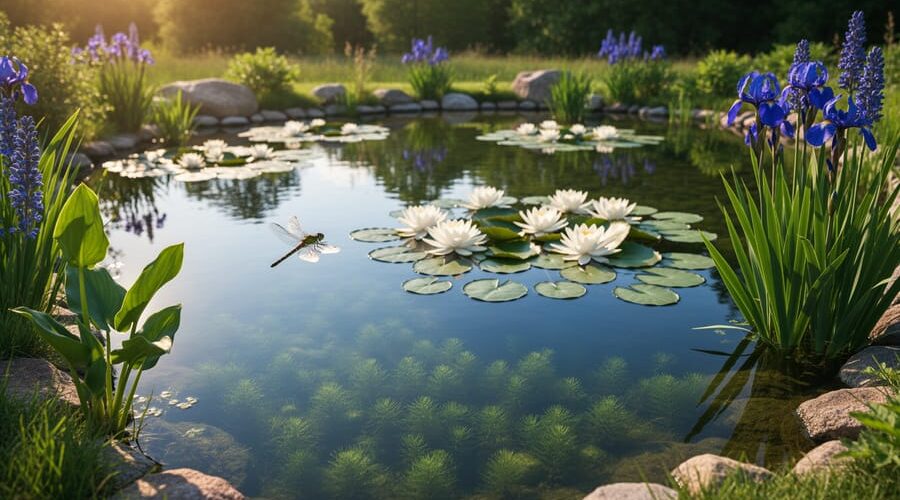
Transform Your Wisconsin Pond into a Thriving Native Ecosystem
Wisconsin’s cold winters and warm summers create unique challenges for pond enthusiasts, but selecting the right plants transforms your water feature into a thriving, low-maintenance ecosystem that survives harsh Midwest conditions. Native aquatic plants naturally adapted to Zone 3-5 climates outperform exotic species every time, requiring less intervention while supporting local wildlife like dragonflies, frogs, and songbirds that depend on indigenous vegetation.
Your pond needs three plant zones working together: deep-water oxygenators like coontail that keep water clear year-round, marginal plants such as blue flag iris and arrowhead that stabilize edges and filter runoff, and floating species like native water lilies that shade the surface and prevent algae blooms during hot July afternoons. This layered approach mimics natural Wisconsin wetlands, creating balance without chemical treatments.
Timing matters significantly in our short growing season. Plant between late May and early July when water temperatures reach 60°F, giving roots eight weeks to establish before fall dormancy. Spring plantings consistently outperform late-season additions, which often struggle through their first winter.
Understanding winterization separates successful Wisconsin pond gardeners from frustrated ones. Hardy natives like pickerelweed and marsh marigold overwinter beautifully in deeper zones where ice won’t crush their crowns, while tropical additions require indoor storage. Choose predominantly cold-hardy species for a pond that returns stronger each spring, reducing yearly replanting costs and effort while building a genuine habitat that belongs in Wisconsin’s landscape.
Why Native Wisconsin Plants Matter for Your Pond
When I first started my pond journey, I made the classic mistake of grabbing whatever looked pretty at the garden center. Big mistake! I quickly learned that choosing native Wisconsin plants instead of exotic varieties makes all the difference between a thriving, low-maintenance pond and a constant battle with struggling plants and algae blooms.
Native Wisconsin pond plants have spent thousands of years adapting to our specific climate. They know how to handle those harsh winter freezes, our unpredictable spring weather, and those hot, humid summers. This means they’ll bounce back year after year without you needing to replicate some tropical paradise conditions or replant every season. Non-native plants, on the other hand, often struggle to survive or require constant pampering with special fertilizers and winter protection.
Here’s something that really surprised me: native plants are absolute magnets for local wildlife. Your pond becomes a hub for dragonflies, butterflies, native bees, and songbirds that have co-evolved with these plants. I’ve watched frogs use my native pickerelweed as shelter while tree swallows feast on insects hovering over my arrowhead plants. When you choose natives, you’re creating a complete ecosystem that supports your pond biodiversity goals naturally.
The maintenance factor is huge too. Native plants develop deep, robust root systems perfectly suited to Wisconsin soils. They resist local pests and diseases without chemical interventions. You’ll spend less time fighting problems and more time enjoying your pond.
Perhaps most importantly, sticking with natives helps prevent invasive species disasters. Plants like purple loosestrife and Eurasian watermilfoil started as “pretty pond plants” but now choke thousands of Wisconsin waterways, costing millions in removal efforts. By choosing natives from the start, you’re protecting not just your pond, but Wisconsin’s entire aquatic ecosystem. It’s a win-win situation that makes pond keeping both easier and more rewarding.
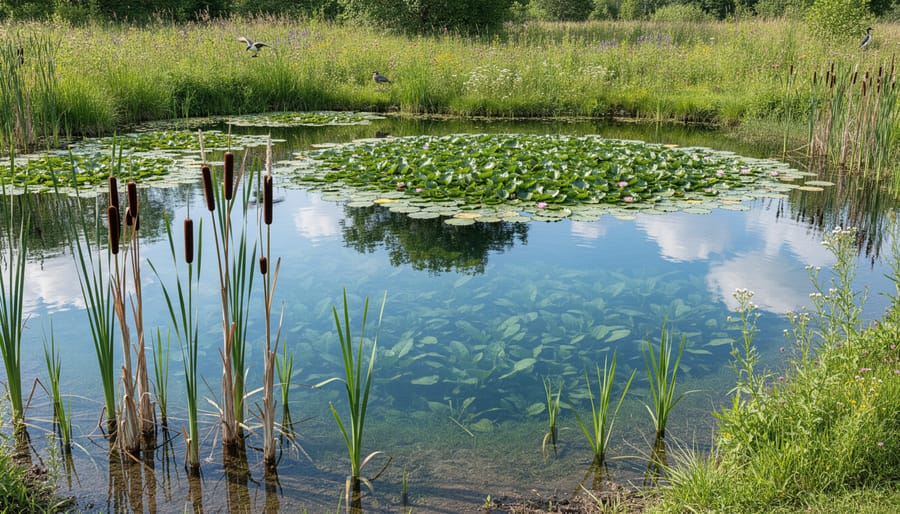
Understanding Your Wisconsin Pond Environment
Water Depth Zones and Plant Placement
Think of your pond like an apartment building with different floors, where each level offers unique living conditions for specific plants. Understanding these zones makes plant selection so much easier!
The deep water zone (18-36 inches deep) is home to your classic floating and submerged plants. This is where hardy water lilies spread their gorgeous blooms across the surface, while underwater oxygenators like native coontail work quietly below to keep water clear. These plants anchor in pots at the bottom but reach upward toward sunlight.
The shallow or marginal zone (2-12 inches deep) is probably the busiest area of your pond. This is where you’ll find cheerful marsh marigolds, elegant native irises, and the architectural beauty of pickerelweed. I love this zone because it’s where you get the most variety and visual interest. Plants here have their roots underwater but their foliage above the surface.
The bog or wetland edge sits right at the waterline, where soil stays consistently moist but isn’t submerged. Cardinal flower, Joe Pye weed, and swamp milkweed absolutely thrive here, attracting butterflies and hummingbirds all summer long.
Finally, the upland border surrounds your pond with regular garden soil. This transition zone softens the pond’s edges with ornamental grasses and moisture-loving perennials that don’t need wet feet but appreciate the nearby humidity. Together, these zones create a complete, thriving ecosystem that looks natural and supports Wisconsin wildlife beautifully.
Sunlight, Soil, and Seasonal Considerations
Understanding how sunlight, soil, and our unique Wisconsin seasons interact with your pond plants is like getting to know the secret recipe for success. Trust me, I learned this the hard way when I first planted sun-loving water lilies in my shaded corner pond, wondering why they barely bloomed!
Most pond plants fall into three sun categories. Full-sun lovers like water lilies and lotus need at least six hours of direct sunlight daily to thrive and flower abundantly. Partial-shade plants such as pickerelweed and marsh marigold do fine with four to six hours. If your pond sits under trees, you’re not out of luck. Shade-tolerant options like cardinal flower and ferns can handle filtered light beautifully.
Soil type matters more for marginal plants than submerged ones. Heavy clay soil, common throughout Wisconsin, actually works wonderfully for most native pond plants since it holds moisture well. Sandy soil drains quickly, so you’ll need to add organic matter or use aquatic planting baskets with appropriate soil mixtures.
Wisconsin’s seasons present our biggest challenge and opportunity. Our cold winters mean choosing hardy plants rated for zones 3-5 that can survive frozen conditions. Spring brings rapid growth as waters warm. Summer is prime bloom time when everything looks spectacular. Fall requires cutting back dying foliage before ice forms, preventing decomposition that depletes oxygen levels. Planning for this seasonal rhythm ensures your plants return stronger each year, creating that established, natural look we all want.
Best Native Wisconsin Pond Plants by Zone
Deep Water Plants (Submerged and Floating)
Now let’s talk about the plants that live beneath the surface and float gracefully on top. These are the unsung heroes of your Wisconsin pond, working overtime to keep your water crystal-clear and your fish happy!
Submerged oxygenating plants are like having tiny air pumps scattered throughout your pond. Coontail (also called hornwort) is absolutely fantastic for Wisconsin ponds because it’s incredibly hardy and doesn’t even need to root in soil. It just floats freely underwater, absorbing nutrients directly from the water while releasing oxygen that fish absolutely love. I’ve watched my koi practically dance around coontail beds on warm summer afternoons. Another excellent choice is elodea (waterweed), which does prefer to anchor itself but spreads nicely once established. Both of these plants help starve out algae by competing for the same nutrients that would otherwise turn your pond green.
For floating plants, you can’t beat our native white water lily. Those gorgeous white blooms opening in the morning are worth the wait, and the broad leaves provide crucial shade that cools the water and reduces algae growth. Fish love hiding beneath lily pads, especially during spawning season. Just remember that water lilies do spread, so you’ll want to plant them in containers if your pond is on the smaller side.
Here’s a tip from experience: aim to cover about one-third to one-half of your pond’s surface with floating leaves. This balance gives you shade benefits without blocking too much light from reaching your submerged plants. Your pond will thank you with clearer, healthier water and happier fish all season long.
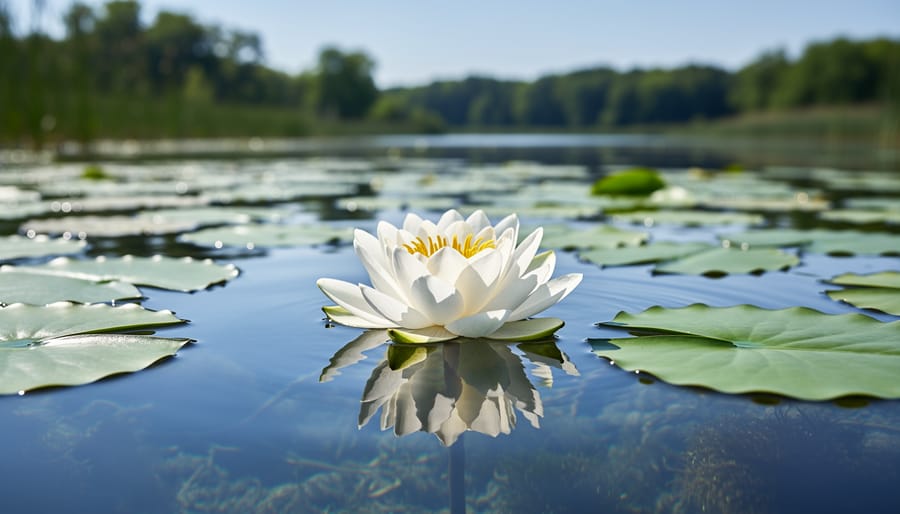
Shallow Water and Marginal Plants
The shallow water zone is where your pond truly comes alive! This transition area, where water depth ranges from just a few inches to about 12 inches, creates the perfect environment for some of Wisconsin’s most beautiful and hardworking native plants.
Let’s start with arrowhead, also called duck potato. You’ll recognize it immediately by its distinctive arrow-shaped leaves that stand proudly above the water. White, three-petaled flowers bloom in summer, and here’s a fun fact: ducks and muskrats absolutely love the tuberous roots. I’ve watched countless mornings as wildlife visits my pond specifically for this plant.
Pickerelweed is another showstopper with its glossy, heart-shaped leaves and stunning purple-blue flower spikes that attract bees and butterflies throughout summer. It’s incredibly easy to grow and spreads nicely without becoming aggressive. Plant it in groups of three or more for real visual impact.
Sweet flag might not have showy flowers, but its sword-like, fragrant leaves add wonderful texture to your pond’s edge. When crushed, the leaves release a pleasant cinnamon-like scent. It’s excellent for water filtration, pulling excess nutrients from the water as it grows.
For gorgeous color, blue flag iris brings vibrant purple-blue blooms in late spring. The tall, elegant flowers rise above the foliage, creating stunning reflections on the water’s surface. Just remember that all parts of this plant are toxic if ingested, so consider placement carefully if you have curious pets.
Don’t overlook marsh marigold, one of the earliest bloomers. Its cheerful yellow flowers appear in early spring, sometimes even before the last snow melts. The bright green, kidney-shaped leaves stay attractive all season long.
All these shallow water plants serve double duty. Their roots create natural filtration systems, removing pollutants and excess nutrients that could otherwise fuel algae growth. Meanwhile, their stems and leaves provide essential hiding spots for fish, tadpoles, and aquatic insects. They’re the hardworking heroes of a balanced pond ecosystem.
Bog and Wetland Edge Plants
The transition zone between water and land is where your pond really comes alive! These bog and wetland edge plants thrive in consistently moist soil and create a beautiful, natural-looking border while serving important ecological functions.
Cardinal flower is an absolute showstopper with its brilliant red spikes that hummingbirds simply cannot resist. Growing 2-4 feet tall, this native perennial blooms from mid-summer through early fall, providing crucial nectar when many other flowers have faded. Plant it in partial shade to full sun along your pond’s edge, and you’ll be rewarded with repeat visits from grateful hummers.
Joe Pye weed is another pollinator magnet that adds impressive height and structure. These beauties can reach 5-7 feet tall, topped with dusty pink flower clusters that butterflies adore. I’ve watched dozens of monarchs and swallowtails feeding on mine simultaneously! They’re incredibly low-maintenance and look fantastic in the back of your planting scheme.
Swamp milkweed deserves special mention as essential habitat for monarch butterflies. The fragrant pink flower clusters appear in summer, and monarch caterpillars depend on the foliage for food. Plus, it helps stabilize pond edges with its spreading root system.
Don’t overlook the humble rushes and sedges, though they might seem plain compared to showy flowers. These grass-like plants are erosion control champions, with extensive root systems that hold soil firmly in place during heavy rains. Soft rush and wool grass create year-round texture while filtering runoff before it enters your pond. Together, these pond plants that support biodiversity transform your pond edge into a thriving habitat that benefits both wildlife and water quality.
Upland Border Plants for Complete Integration
To truly blend your pond into the surrounding landscape, think beyond the water’s edge! I’ve found that native upland border plants create that magical transition zone where your pond feels like a natural part of your yard rather than a standalone feature.
Wisconsin’s native ferns, like lady fern and ostrich fern, absolutely thrive in the slightly moist soil around pond edges. They add gorgeous texture and work beautifully in partial shade. For sunny spots, wild bergamot brings those lovely lavender blooms that butterflies adore, plus it’s incredibly low-maintenance once established.
Don’t overlook native grasses either. Little bluestem and prairie dropseed create gentle movement and year-round interest, even looking stunning when frosted in winter. These grasses need less water than pond plants but handle the occasional splash just fine.
The secret is layering these transitional plants at varying heights, starting with shorter groundcovers closest to the water and gradually building up. This creates a naturalistic flow that makes your pond look like it’s always been there, seamlessly connecting water to landscape.
Creating Biodiversity: How Native Plants Support Wildlife
When you choose native Wisconsin pond plants, you’re not just adding pretty greenery—you’re rolling out the welcome mat for an incredible variety of wildlife! Creating a thriving wildlife pond ecosystem starts with understanding these wonderful plant-animal partnerships.
Let me share what I’ve observed in my own pond. Those pickerelweed stems I planted three years ago? They’ve become apartment buildings for dragonfly nymphs, which spend up to two years underwater before emerging as adults. These nymphs are like tiny underwater guardians, munching on mosquito larvae and keeping your pond naturally balanced.
Fish absolutely love native plants. Bluegills seek shelter among wild celery stems when predators circle overhead, while minnows dart through arrowhead roots. The underwater leaves provide spawning sites where fish attach their eggs, giving the next generation a protected start.
Frogs and turtles depend on native vegetation too. Leopard frogs hide among cattail bases, using them as hunting blinds for insects. Painted turtles climb onto floating water lily pads to bask in the sun, regulating their body temperature. The shallow-water plants create perfect transition zones where these amphibians and reptiles move between land and water.
Birds discover your pond quickly once native plants establish themselves. Goldfinches perch on swaying cattail heads, pulling seeds in late summer. Red-winged blackbirds nest within dense bulrush stands, while herons stalk the margins where vegetation meets open water.
The pollinator party really gets going with native blooming plants. Marsh milkweed attracts monarch butterflies, while swamp rose mallow draws in bumblebees and hummingbirds. Cardinal flower produces nectar that hummingbirds can’t resist, and I’ve counted seven different bee species visiting my blue flag irises on a single morning.
Each native plant you add creates ripple effects throughout your pond community, supporting creatures you’ll see daily and others working quietly beneath the surface. It’s nature’s interconnected web at its finest, right in your backyard.
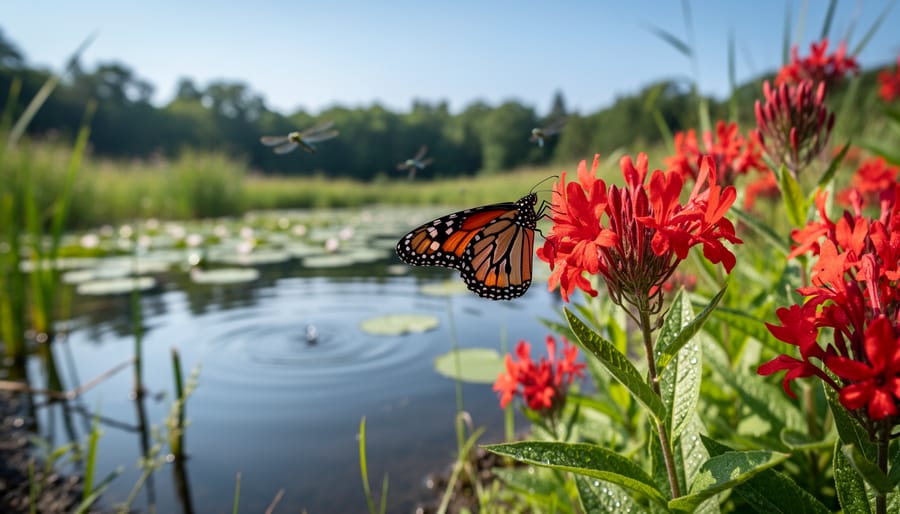
Planting and Establishing Your Native Pond Plants
Best Times to Plant in Wisconsin
Timing is everything when it comes to establishing healthy pond plants in Wisconsin! The best window for planting is after the last frost, typically from mid-May through early July. This gives your plants the entire growing season to establish strong root systems before winter arrives.
I learned this lesson the hard way during my first year of pond gardening when I excitedly planted too early in April. A surprise late frost set everything back by weeks! Now I wait patiently until soil temperatures consistently reach 50 degrees Fahrenheit, which usually happens around Memorial Day weekend across most of Wisconsin.
Early summer planting works wonderfully because the water temperature has warmed enough for plants to actively grow rather than just survive. If you’re adding hardy native species like water lilies or cattails, you can push into August, but they’ll have less time to settle in. Avoid planting after September since plants need at least 6-8 weeks to establish before dormancy.
For tropical varieties that won’t survive our winters anyway, wait until June when water temperatures stay above 70 degrees. These warm-weather lovers will reward your patience with spectacular growth throughout the summer months.
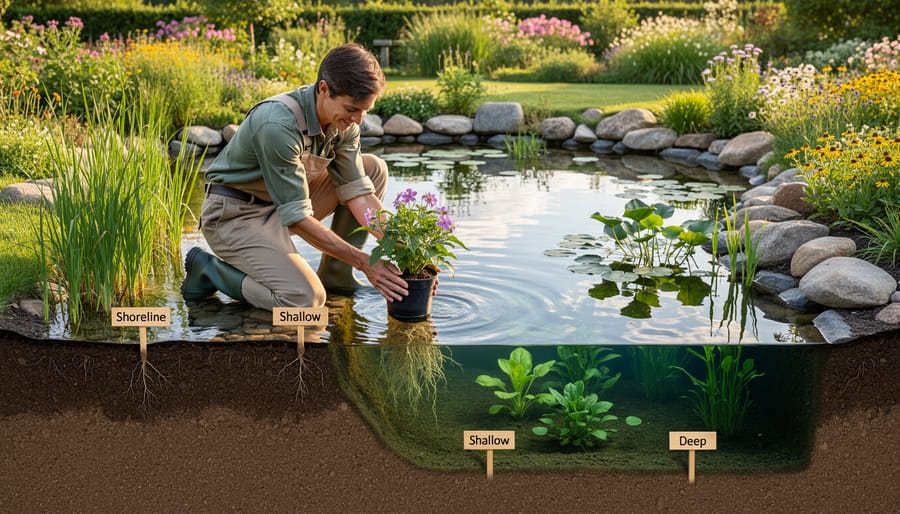
Planting Techniques for Different Pond Zones
Getting your Wisconsin pond plants settled in the right way makes all the difference! Let me walk you through the techniques I’ve learned over years of happy pond planting.
For submerged oxygenators like coontail and waterweed, the easiest approach is bundling. Take 3-5 stems, wrap the bottom inch with a plant-safe weight or lead strip, and gently toss them into deeper water. They’ll root naturally in the sediment. If your pond has a gravel or sand bottom, you can press the weighted bundles directly into the substrate. I remember my first attempt – I was so gentle the plants just floated back up! Don’t be afraid to give them a firm but careful push into the bottom.
Containers work beautifully for flowering plants like hardy water lilies and pickerelweed. Use wide, shallow aquatic baskets lined with burlap or landscape fabric, fill with heavy clay soil or aquatic planting media, and top with pea gravel to prevent soil from floating away. This method gives you flexibility to adjust depths seasonally and makes fall maintenance much simpler.
For edge plants like cardinal flower or blue flag iris, I prefer direct planting into muddy shoreline pockets. Dig a generous hole, work in some organic matter if your soil is sandy, and plant at the same depth they were growing in their nursery pots. Keep the soil consistently moist during establishment – these marginal plants bridge the water and land, creating that natural pond-edge look we all love.
First-Year Care and Patience
Here’s the truth about new pond plants: they need time to settle in and show their best stuff. During that first year, your plants are focusing their energy below the surface, establishing strong root systems rather than putting on a showy display. Don’t worry if growth seems slower than expected—that’s completely normal!
Keep an eye on water levels during hot Wisconsin summers, as evaporation can stress young plants. Top off your pond regularly with dechlorinated water. Remove any yellowing leaves promptly to prevent decay, and watch for uninvited guests like algae or duckweed that might compete with your new additions.
Resist the urge to over-fertilize in year one. Your plants are still adjusting to their new home, and too many nutrients can do more harm than good. Instead, focus on maintaining consistent conditions and protecting plants from harsh winter weather by moving containers to deeper water where they won’t freeze solid. By year two, you’ll start seeing the lush, vibrant growth you’ve been dreaming about—trust the process!
Maintenance and Long-Term Management
Keeping your Wisconsin pond thriving year after year doesn’t require a green thumb—just a little attention and some seasonal know-how! Think of maintenance as a friendly check-in with your aquatic garden rather than a chore.
Spring is when you’ll want to remove any dead foliage you left over winter (which actually provides habitat for beneficial insects and wildlife). I like to gently cut back last year’s growth before new shoots emerge. This is also prime time for dividing overcrowded plants like irises and rushes. If you notice your water lilies pushing up against each other, that’s your signal they need more room.
Summer maintenance is mostly about enjoying your pond while keeping an eye on aggressive spreaders. Some plants, especially certain submerged varieties, can get a bit enthusiastic. Don’t be afraid to thin them out—your fish will appreciate the swimming space! I’ve learned that removing about one-third of overgrown plants every few weeks keeps everything balanced without shocking the ecosystem.
Fall brings one of my favorite tasks: cutting back marginal plants to about three inches above water level. Leave some stems standing for winter interest and wildlife habitat. Remove fallen leaves regularly, as they can decompose and create nutrient imbalances.
The magic ratio to remember is keeping 40-60 percent of your water surface covered with plants. Too much coverage blocks oxygen exchange, while too little allows excessive algae growth from sunlight. Walk around your pond every couple of weeks during growing season—you’ll quickly develop an intuitive sense for when things look right. If open water shrinks too much, it’s trimming time. If algae blooms, consider adding more floating or submerged plants to compete for nutrients.
Avoiding Common Pitfalls
Even with the best intentions, pond enthusiasts can stumble into some common traps that create headaches down the road. Let’s talk about how to avoid these mistakes and keep your Wisconsin pond thriving.
The biggest no-no? Introducing invasive plants. Purple loosestrife might catch your eye with those gorgeous purple spikes, and Eurasian watermilfoil looks harmless enough underwater, but these troublemakers will take over faster than you can say “pond maintenance.” They choke out native plants, upset the ecosystem balance, and create serious invasive species problems that spread to neighboring waterways. Always verify plants are Wisconsin-approved before adding them to your pond.
Overplanting is another rookie mistake I see constantly. It’s tempting to fill every inch with greenery, but your pond needs breathing room. As a general rule, cover no more than 60-70% of your water surface. Too many plants mean too much competition for nutrients, reduced oxygen levels, and murky water that nobody enjoys.
To identify problem plants, watch for aggressive growth patterns like rapid spreading or plants crowding out everything else. Check Wisconsin DNR resources regularly to stay updated on invasive species lists. If you spot trouble, act quickly. Remove invasive plants entirely, roots and all, and dispose of them in sealed bags away from water sources. Never compost them or toss them in natural areas where they might spread.
Balance is your best friend. Mix submerged oxygenators, floating plants, and marginal varieties while monitoring their growth throughout the season. Thin out overgrowth promptly, and you’ll maintain a healthy, beautiful pond that looks intentional rather than chaotic.
Where to Source Native Wisconsin Pond Plants
Finding native Wisconsin pond plants is easier than you might think, and supporting the right sources helps protect wild populations while ensuring you get healthy, locally-adapted specimens.
Start with native plant nurseries that specialize in aquatic and wetland species. Many Wisconsin nurseries grow plants specifically for restoration projects and home ponds. These establishments typically offer expert advice tailored to your region’s conditions. A quick online search for “native plant nursery Wisconsin” plus your county name will reveal local options.
Conservation organizations like the Wisconsin Department of Natural Resources, county land conservation departments, and local chapters of Wild Ones frequently host native plant sales in spring. These events are goldmines for finding unusual species while connecting with fellow water gardening enthusiasts who love sharing tips and experiences.
University extension offices sometimes maintain lists of reputable suppliers and can point you toward resources in your area. They’re particularly helpful for identifying which plants work best in your specific hardiness zone.
Online retailers specializing in native aquatics ship throughout Wisconsin, though I always recommend choosing suppliers that grow plants in similar climate zones. Check reviews and verify they’re selling true native species rather than cultivars or non-native look-alikes.
Here’s something important: please resist collecting plants from wild wetlands or natural ponds. It’s often illegal, can spread diseases, and harms fragile ecosystems. Plus, wild-collected plants typically don’t transplant well anyway. Nursery-grown natives establish much more successfully in your pond and support businesses dedicated to conservation.
Starting your Wisconsin pond doesn’t have to be overwhelming. Begin with just a few native plant species that appeal to you and gradually expand your collection as you gain confidence. Maybe start with a couple of hardy water lilies and some pickerelweed along the edges. There’s something genuinely magical about watching your pond ecosystem come alive over the seasons, transforming from a simple water feature into a bustling native plant paradise that attracts dragonflies, frogs, and songbirds.
I still remember the first summer my Wisconsin pond truly established itself. The native plants had taken root, fish were thriving, and I found myself spending evenings just sitting by the water, watching nature unfold. The best part? Once everything was established, maintenance became minimal. A quick debris cleanup in spring and fall was about all it needed.
The beauty of using native Wisconsin pond plants is that they’re designed for your climate. They don’t require constant fussing, fertilizing, or worrying about winter survival. They simply work with your local environment, creating a sustainable, low-maintenance water feature that gets better with each passing year.
So why wait? Your thriving Wisconsin pond habitat is just a few plants away. Start planning today, and soon you’ll have your own peaceful waterside retreat right in your backyard.