
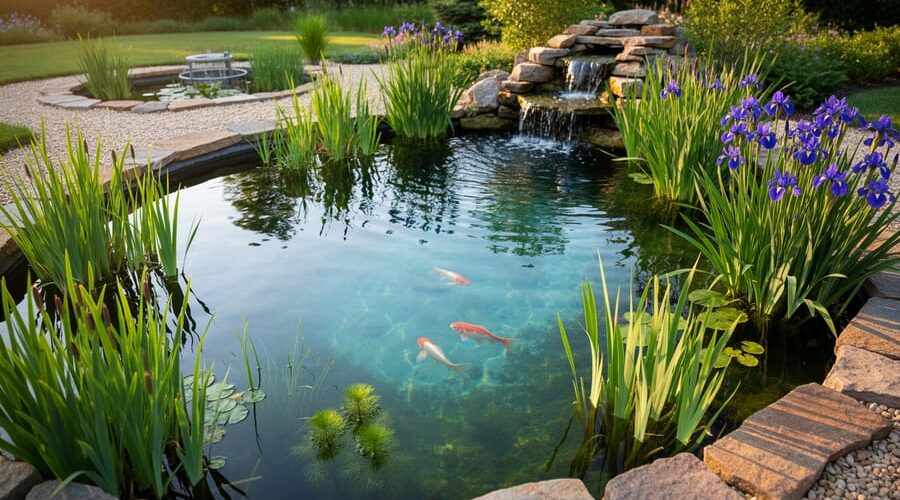
How Enhanced Nutrient Removal Transforms Your Pond Into a Thriving Ecosystem
Reduce excess nutrients in your pond by installing marginal plants like water iris, rushes, and pickerelweed around the edges—their root systems act as natural filters, absorbing nitrogen and phosphorus before these nutrients fuel algae blooms. Plant them densely in the shallow zones where water meets land, aiming for coverage across at least one-third of your pond’s perimeter.
Add submerged oxygenators such as hornwort or anacharis throughout deeper areas. These underwater workhorses consume dissolved nutrients while releasing oxygen, creating conditions that support beneficial bacteria and discourage the green, murky water that frustrates so many pond owners.
Incorporate a protein skimmer or pond vacuum into your maintenance routine to remove decaying leaves, uneaten fish food, and organic debris before they break down into problem-causing nutrients. A quick ten-minute skim every few days prevents weeks of water quality headaches.
Establish a balanced fish population—overcrowding leads to excessive waste production that overwhelms even the best natural filtration. Follow the guideline of one inch of fish per square foot of surface area, and you’ll notice clearer water within weeks.
Introduce beneficial bacteria products during warmer months when biological activity peaks. These microscopic helpers colonize filter media and substrate, converting harmful ammonia and nitrites into less problematic compounds while supporting a thriving ecosystem.
Create a settling chamber or bog filter where water flows slowly through gravel and plant roots. This simple addition removes particulates and provides extra surface area for nutrient-processing bacteria to establish permanent colonies.
Why Nutrients Become Your Pond’s Worst Enemy
The Signs Your Pond Has Too Much of a Good Thing
Your pond will tell you when nutrients have gotten out of hand—you just need to know what to look for. The first warning sign is often that dreaded “pea soup” appearance, where your once-clear water turns a murky green that you can’t see through. This happens when microscopic algae throw a party and multiply like crazy, feeding on excess nutrients.
Next comes string algae, those slimy green strands that drape across rocks and plants like unwanted decorations. While a little is normal, massive mats covering your pond surface mean nutrients are off the charts.
Watch your fish behavior too. If they’re hanging at the surface gasping for air, especially in early morning, it’s a red flag. Algae blooms consume oxygen at night, leaving fish struggling to breathe.
Your nose knows trouble as well. That swampy, rotten-egg smell indicates decomposing organic matter and poor water conditions. Fresh, healthy ponds shouldn’t assault your senses when you walk by.
Finally, take inventory of your aquatic plants. If they’re declining or dying back while algae flourishes, it means algae are hogging all the available nutrients. This imbalance creates a downward spiral that only gets worse without intervention.
What Enhanced Nutrient Removal Actually Does
Think of your pond like a kitchen sink. Basic filtration is like a strainer that catches the big stuff—leaves, debris, and visible particles. It keeps things looking tidy, but it doesn’t handle everything dissolved in the water. Enhanced nutrient removal goes several steps further, targeting the invisible troublemakers: nitrogen and phosphorus.
These nutrients aren’t necessarily bad in small amounts. Your fish produce them naturally through waste, and they’re actually plant food. But here’s the catch—when nitrogen and phosphorus build up faster than your pond can naturally process them, you get what I like to call the “all-you-can-eat buffet effect” for algae. And algae never know when to stop eating.
Enhanced nutrient removal works through a tag-team approach. First, beneficial bacteria act like tiny cleanup crews, converting harmful ammonia (from fish waste) into nitrite, then into nitrate. In a standard setup, the story ends there. But with enhanced removal, specialized bacteria take it one step further, actually converting nitrate into harmless nitrogen gas that simply bubbles away into the air. Think of it like completing the full recycling process instead of just sorting your trash.
The phosphorus part works differently. Since bacteria can’t eliminate phosphorus on their own, enhanced systems use strategic planting zones, special filter media, or naturally occurring chemical processes that bind phosphorus particles, removing them from the water column. It’s similar to using a magnet to pull metal filings from sand—the phosphorus gets trapped and held where it can’t fuel algae growth anymore.
Natural Methods That Supercharge Nutrient Removal
Strategic Planting: Your Pond’s Living Filter
Think of your pond plants as a hungry cleanup crew that works 24/7, and they don’t even ask for wages! When I first learned that certain nutrient-hungry aquatic plants could dramatically reduce algae by simply eating up excess nutrients, I immediately started experimenting with different varieties.
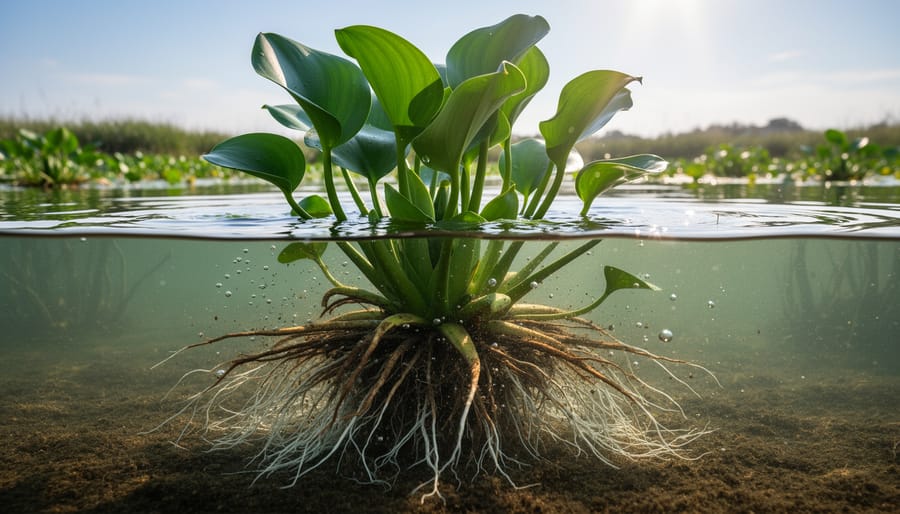
Water hyacinth and water lettuce are absolute champions when it comes to nutrient absorption. These floating beauties send long, feathery roots into the water that act like natural vacuum cleaners, sucking up nitrogen and phosphorus faster than you can say “green water.” I’ve watched them multiply so quickly in my pond that I actually have to thin them out every few weeks during summer. Position these floaters near areas where nutrients enter your pond, like streams or runoff points.
Cattails and rushes planted around your pond’s edges create a living buffer zone. They’re particularly brilliant at intercepting nutrients before they even reach the main pond body. I planted a row of cattails on the side where my garden runoff flows, and the difference was noticeable within weeks.
Watercress deserves special mention if you’ve got moving water. Not only does it absorb nutrients enthusiastically, but you can harvest it for salads! Just ensure it’s safe from any pond treatments you’ve used.
Here’s a seasonal tip I learned the hard way: In colder climates, tropical floaters like water hyacinth won’t survive winter. I now treat them as seasonal workers, introducing them each spring when they’re most needed and composting them in autumn.
Creating a Bog Filter That Works Overtime
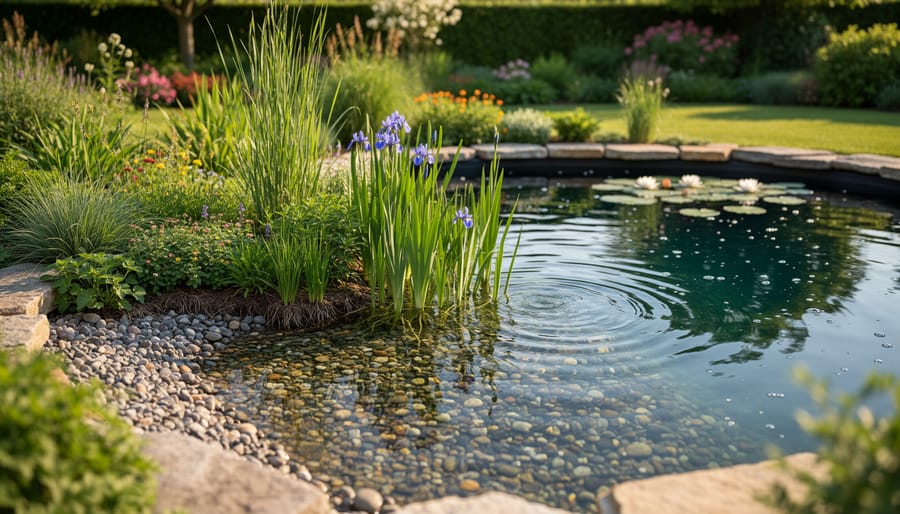
Think of a bog filter as your pond’s hardworking cleaning crew that never takes a coffee break. I installed my first one about five years ago after battling green water every spring, and honestly, it changed everything. The magic happens when water flows through a shallow gravel bed packed with nutrient-hungry plants, where beneficial bacteria work alongside plant roots to grab excess nutrients before they can fuel algae blooms.
Here’s how to build one that actually delivers results. First, position your bog filter where pump-pushed water enters naturally, creating a gentle flow through the system before returning to your main pond. I’ve found that dedicating about 10-20% of your total pond surface area to the bog gives you the best nutrient-grabbing power without taking over your whole backyard.
Start by excavating a shallow area, roughly 12 inches deep. Line it with pond liner, then fill it with pea gravel or river rock. The smaller spaces between gravel particles create tons of surface area where those beneficial bacteria colonies can establish themselves and get to work breaking down fish waste and other organic matter.
Now for the fun part: planting. Pack your bog with moisture-loving plants like iris, cattails, pickerel rush, and arrowhead. Their roots reach deep into that gravel, pulling nitrogen and phosphorus directly from the water while oxygen from the roots feeds the bacteria below. It’s a beautiful partnership.
Install a perforated pipe at the bottom to distribute incoming water evenly across the bog floor. Gravity does the rest, pulling clean water back into your pond. Within a few weeks, you’ll notice clearer water and healthier fish, all thanks to nature doing what it does best.
Beneficial Bacteria: Your Invisible Workforce
Think of beneficial bacteria as your pond’s cleanup crew, working around the clock to tackle those pesky nutrients that cause murky water and algae blooms. These microscopic helpers are absolute game-changers, and getting them established is easier than you might think.
When you add beneficial bacteria products to your pond, you’re essentially introducing millions of helpful microorganisms that feast on excess nutrients like ammonia, nitrites, and phosphates. They break down fish waste, decaying plant matter, and uneaten food before these materials can fuel algae growth. It’s like having an invisible workforce that never takes a day off.
To get started, simply follow the product instructions and add the bacteria directly to your pond or filter system. Most products come in liquid or powder form. I like to add mine near the waterfall or filter outflow where water movement helps distribute them throughout the pond. During the first few weeks, you might not notice dramatic changes, but trust the process. These colonies need time to establish themselves and multiply.
Temperature matters quite a bit here. Beneficial bacteria work best in warmer water, typically above 50 degrees Fahrenheit. During spring and fall, you’ll want to dose more frequently as populations rebuild. In my own pond, I noticed clearer water within about three weeks of consistent applications.
Keep feeding your bacterial workforce regularly, especially after heavy rains, filter cleanings, or medication treatments that might reduce their numbers. With patience and consistency, you’ll build a thriving microbial community that keeps your water crystal clear naturally.
The Right Balance of Fish and Feeding
Think of your fish as dinner guests—too many at the table means not enough to go around, and things get messy quickly! A good rule of thumb is one inch of fish per square foot of pond surface area. This gives your finned friends room to thrive without overwhelming your pond’s natural cleaning crew.
When it comes to feeding practices, less is definitely more. Feed only what your fish can devour in about five minutes, once or twice daily during warmer months. Uneaten food sinks to the bottom and becomes nutrient pollution—exactly what we’re trying to avoid! In cooler weather, reduce feeding as fish metabolism slows down. I learned this the hard way when my overfed koi created a green soup one summer. Now I treat feeding time as quality observation time, watching my fish carefully to gauge their appetite and health while protecting water quality.
Mechanical Upgrades for Serious Nutrient Control
Protein Skimmers and Their Role
Think of protein skimmers as your pond’s early-warning cleanup crew. These clever devices work at the water’s surface, grabbing organic gunk like fish waste, uneaten food, and decomposing plant material before it has a chance to sink and break down into those pesky nutrients that fuel algae blooms.
Here’s the thing: protein skimmers create tiny bubbles that attract organic compounds. These organics stick to the bubbles and rise into a collection cup, where you simply dump them out. It’s like removing the problem before it becomes a problem.
Are they worth it? If you have a heavily stocked koi pond or struggle with persistent foam and yellowing water, absolutely. I added one to my 2000-gallon pond after battling green water for two summers, and the difference was remarkable within weeks. However, if you have a lightly stocked natural pond with good plant coverage, your money might be better spent on adding more marginal plants. Protein skimmers shine brightest in high-bioload situations where mechanical filtration alone can’t keep up with waste production.
UV Clarifiers and Nutrient Management
Let me clear up a common misconception I’ve encountered countless times: UV clarifiers don’t actually remove nutrients from your pond water. I know that might sound surprising, especially if you’ve invested in one hoping it would solve algae problems for good!
Here’s what UV systems actually do. They’re fantastic at killing free-floating algae cells and harmful pathogens as water passes through the UV chamber. This means clearer water and fewer disease risks, which is wonderful. However, those dead algae cells still contain all their nutrients. They either get filtered out mechanically or break down in your pond, releasing those nutrients right back into the water.
Think of it this way: UV clarifiers treat the symptom (green water) but not the underlying cause (excess nutrients). It’s like taking a painkiller for a headache without addressing why you’re getting headaches in the first place.
That said, UV systems play a valuable supporting role in your overall nutrient management strategy. By keeping water clear, they make it easier to see what’s happening in your pond. They reduce the organic load on your filter, allowing beneficial bacteria to work more efficiently on nutrient processing. Plus, clearer water means better light penetration for aquatic plants, which are your true nutrient-removing champions.
The bottom line? Use UV clarifiers as part of a comprehensive approach that includes biological filtration, plant coverage, and regular maintenance. They’re helpful tools, just not miracle workers.
How Better Nutrients Mean Better Biodiversity
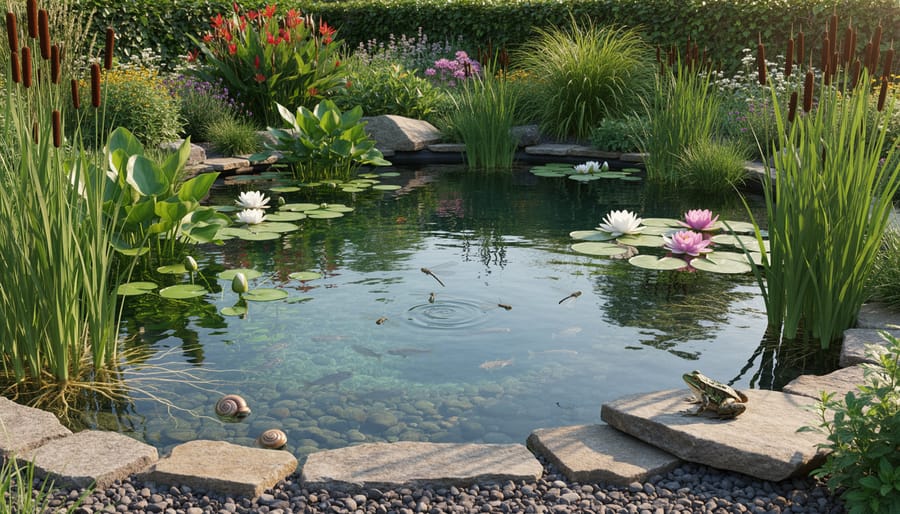
When you successfully remove excess nutrients from your pond, something magical happens—life returns in wonderful abundance. I’ve watched ponds transform from murky, algae-choked waters with just a few struggling goldfish into vibrant ecosystems buzzing with dragonflies, visited by frogs, and home to thriving plant communities. It’s genuinely exciting to witness.
The connection is straightforward: cleaner water with balanced nutrients allows sunlight to penetrate deeper, which encourages native aquatic plants to flourish. These plants become natural habitats for beneficial insects like damselflies and water beetles. Within weeks of implementing enhanced nutrient removal strategies, many pond owners report seeing their first dragonfly larvae—a sure sign the ecosystem is healing.
Fish health improves dramatically too. In one memorable example from my own experience, a friend’s koi went from lethargic and prone to infections in nutrient-rich conditions to active, brightly colored, and breeding successfully after just two months of improved filtration and plant-based nutrient uptake. The difference was like night and day.
Birds take notice as well. Once your water clears and insect populations establish themselves, you’ll likely spot visiting wildlife you never saw before—herons hunting in the shallows, swallows skimming insects from the surface, and even the occasional duck family stopping by.
The before-and-after contrast is often stunning. Where you once had pea-soup green water and perhaps three types of struggling organisms, you might now count fifteen or twenty different species, from snails and freshwater shrimp to native water lilies and emergent plants. If you’re curious about tracking these improvements, measuring biodiversity can be both educational and rewarding.
The bottom line? Better nutrients don’t just mean clearer water—they mean a complete transformation into a balanced, self-sustaining ecosystem that brings joy throughout every season.
Your Action Plan: Where to Start Today
Ready to transform your pond? Let’s start right where you are today, not where you think you should be. I remember standing at my own pond’s edge, feeling overwhelmed by all the advice out there. The truth is, small steps create big changes.
If you’re a beginner dealing with green water or string algae, start here: Add one bunch of submerged plants like hornwort or anacharis this week. Seriously, just one bunch. These underwater workhorses absorb nutrients directly from the water column and you’ll see improvement within days. Next, skim any debris from the surface daily—it takes two minutes and prevents nutrients from breaking down in your water. These two actions alone can shift your pond’s balance.
For those who already have plants established, it’s time to level up. Evaluate your plant coverage—aim for 50-60% of your surface shaded by floating plants or lily pads. Too little? Add more. Too much? Thin them out. Check your filter media and give it a gentle rinse if it’s been more than two weeks. Don’t scrub it clean—you want to keep those beneficial bacteria working for you.
Advanced pond keepers, consider adding a wetland filter or bog garden if space allows. This creates a powerful biological filtration system that mimics nature’s own nutrient removal process.
Remember, you’re not aiming for perfection by next weekend. Work on one improvement each week. I’ve seen ponds transform in a month with this patient approach, and yours will too. The key is consistency, not intensity. Start today with what feels manageable, and build from there.
Here’s the truth I’ve learned after years of playing in pond water: enhanced nutrient removal isn’t some complicated science experiment reserved for professionals. It’s simply about working with nature instead of against it. You’re not fighting your pond—you’re partnering with it.
Every small change you make creates ripples. Adding a handful of aquatic plants today means clearer water next month. Installing that simple filter? You’re setting up years of easier maintenance. Even choosing the right beneficial bacteria can transform your pond’s entire ecosystem. These aren’t dramatic overhauls—they’re gentle nudges in the right direction.
I still remember standing beside my murky, algae-choked pond feeling completely overwhelmed. Now, watching dragonflies hover over crystal-clear water while fish glide beneath blooming lilies, I realize the journey was simpler than I imagined. You don’t need perfection from day one. You need patience, a willingness to observe, and trust in nature’s incredible ability to balance itself when given the right tools.
Your thriving water ecosystem is waiting. Start with one change today, and let nature do what it does best—create beauty from balance.