Why Your Pond Needs Three Stages of Filtration (Not Just One)
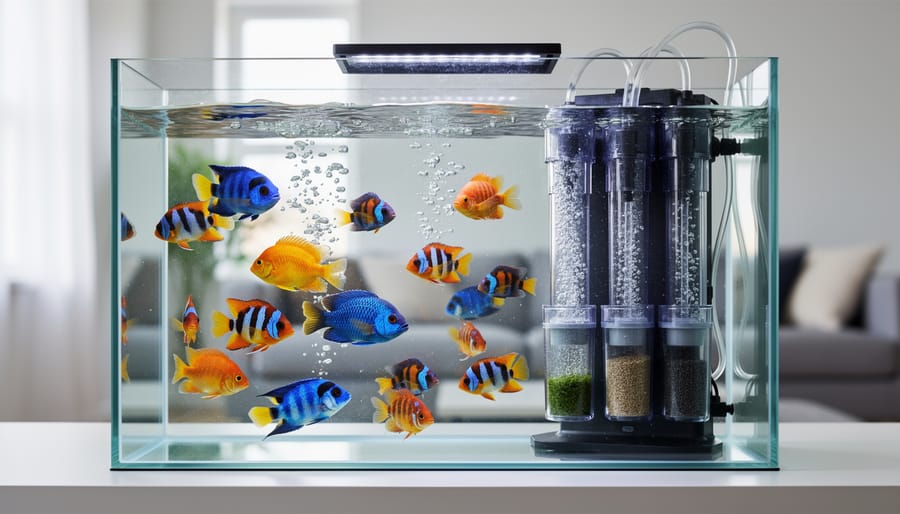
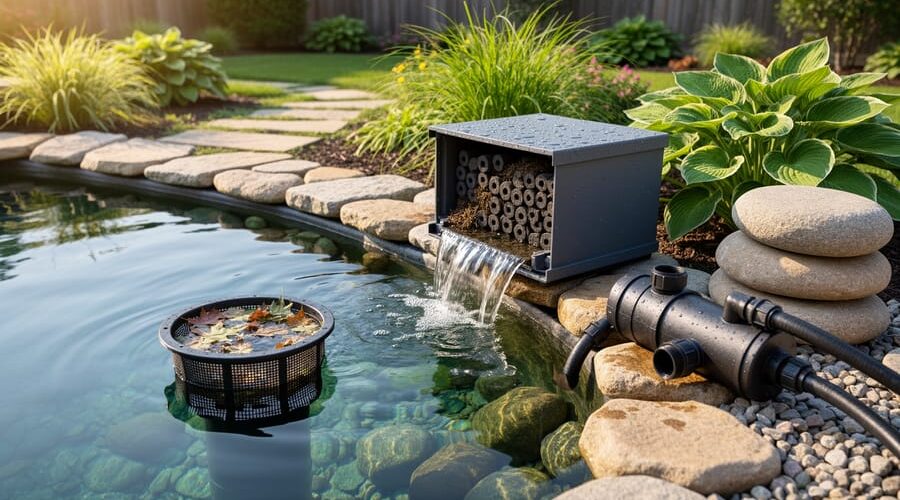
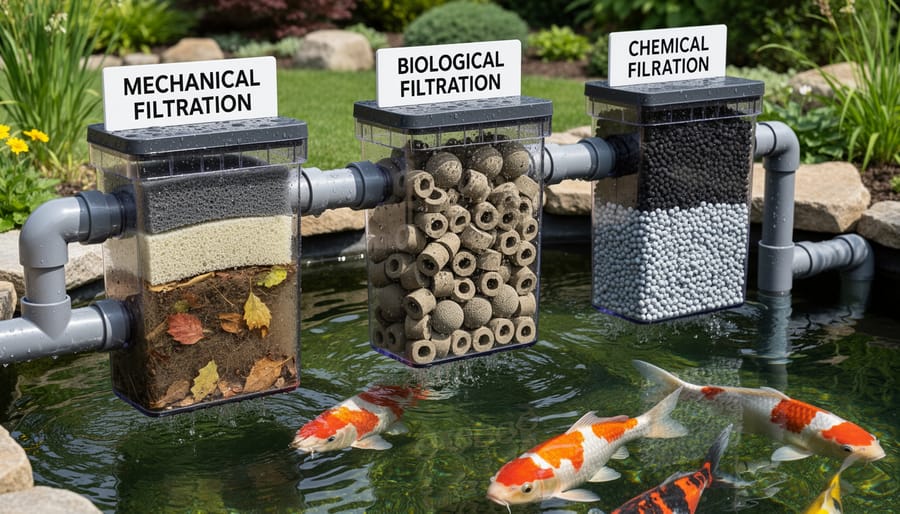
Think of your pond filter like a three-person relay team, where each runner has a specific job to get you across the finish line to crystal-clear water. Stage one catches the big stuff—leaves, fish waste, and debris—using mechanical filtration that works like a sieve. Stage two tackles the invisible troublemakers through biological filtration, where beneficial bacteria break down ammonia and nitrites that cause water quality issues. Stage three polishes everything with chemical or UV filtration, zapping algae and removing microscopic particles that make water look cloudy.
I learned this the hard way when my first pond stayed murky despite running a basic filter 24/7. The single-stage system just couldn’t handle the workload. Once I upgraded to three stages, the transformation took less than a week—suddenly I could see my goldfish clearly at the bottom.
This system isn’t just for fancy koi ponds or massive water features. Whether you have a small backyard pond or an elaborate water garden, understanding these three stages helps you choose the right equipment and troubleshoot problems before they become expensive headaches. You’ll save money on constant water changes, keep your fish healthier, and actually enjoy looking at your pond instead of wondering why it resembles pea soup. Let’s break down exactly how each stage works and how to set up a system that matches your pond’s specific needs.
What Makes a 3-Stage System Different from Basic Filters
When I first started keeping fish in my backyard pond, I thought one simple filter would handle everything. I picked up a basic foam filter at the garden center, dropped it in, and figured I was done. Within weeks, my water was cloudy, algae covered everything, and I could barely see my goldfish. Sound familiar?
Most of us begin with these single-stage filters because they seem straightforward and affordable. The problem is that pond water faces multiple challenges at once. You’ve got visible debris like leaves and twigs floating around. You’ve got invisible dissolved waste from fish producing ammonia. And you’ve got microscopic algae spores turning your water green. A basic filter might catch the leaves, but it’s completely overwhelmed by everything else happening beneath the surface.
Think of it like trying to clean your entire house with just a broom. Sure, you can sweep up the big stuff, but what about the dust, the stains, and the odors? You need different tools for different jobs.
That’s exactly why three-stage systems exist. Each stage tackles a specific type of contamination using the right method for that particular problem. The first stage acts like a net, catching the big chunks before they clog everything up. The second stage is where the real magic happens, using beneficial bacteria to break down toxic chemicals your fish produce. The third stage polishes everything, removing fine particles and sometimes adding extra treatments for crystal-clear results.
By dividing the work among specialized stages, each component can focus on what it does best without getting overwhelmed. The result is healthier fish, clearer water, and honestly, a lot less frustration for you.
Stage One: Mechanical Filtration (Catching the Big Stuff)
What Mechanical Filters Actually Do
Think of mechanical filtration as your pond’s friendly security guard standing at the entrance. Its job is wonderfully straightforward: catch the big stuff before it causes trouble deeper in your system.
When water flows through your mechanical filter, it passes through materials like foam pads, filter brushes, or specialized media with different-sized openings. These physical barriers trap leaves, fish waste, uneaten food, and other debris you can actually see floating around. It’s like using a kitchen strainer, just on a much larger scale.
Here’s why this matters so much: without this first line of defense, all those chunky particles would travel straight to your biological filter, where they’d break down too quickly and create an ammonia spike. Worse yet, they’d clog up the spaces where beneficial bacteria need to live and work. By stopping debris early, mechanical filtration keeps your entire system running smoothly.
The beauty is in its simplicity. You’re not dealing with complex chemistry here, just good old-fashioned physical blocking. Clean these filters regularly, and they’ll protect everything downstream while keeping your water crystal clear.
Common Mechanical Filter Materials
When it comes to mechanical filtration, you’ve got three reliable workhorses to choose from, and each has its strengths depending on your pond setup.
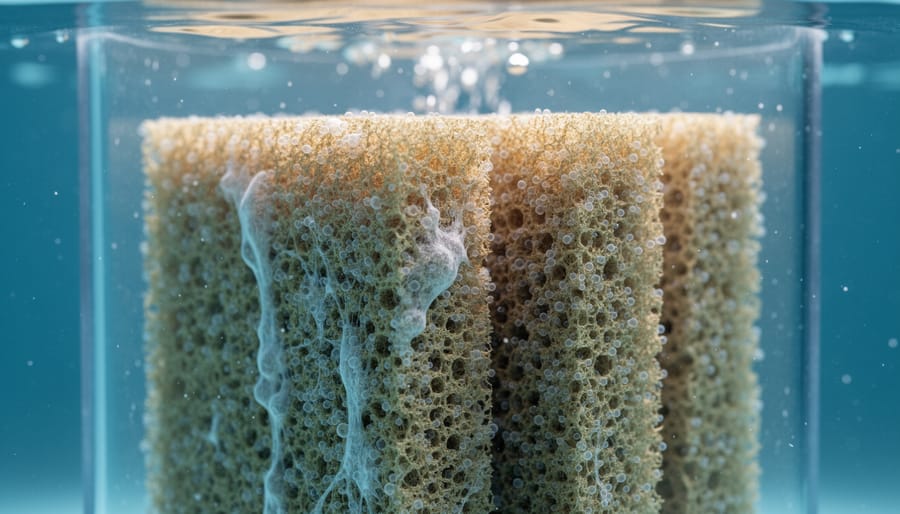
Foam pads are probably the most popular choice among pond owners, and for good reason. These spongy layers trap debris while allowing water to flow through smoothly. They come in different densities, which is key to remember. Coarse foam works great as your first line of defense in larger ponds over 1,000 gallons, catching leaves and bigger particles. Fine foam polishes the water afterward, grabbing those tiny bits that make your pond look cloudy. I’ve found that stacking different foam densities creates a simple yet effective barrier system.
Filter brushes look like giant bottle cleaners, and they’re fantastic for ponds with heavy fish loads. These cylindrical bristle wands provide tons of surface area where beneficial bacteria can colonize while catching debris between the bristles. They’re especially useful in ponds from 500 to 2,000 gallons where koi or goldfish produce lots of waste. The beauty of brushes is how easy they are to clean with just a quick rinse.
Mesh screens or filter bags work wonderfully for smaller ponds under 500 gallons or as pre-filters protecting pump intakes. They’re affordable and simple to maintain, though they need more frequent cleaning than foam or brushes. Think of them as your pond’s safety net, catching everything before it reaches more sophisticated filtration stages.
Stage Two: Biological Filtration (The Invisible Cleanup Crew)
How Beneficial Bacteria Save Your Fish
Here’s what’s really happening in your pond that keeps your fish alive and thriving: an invisible army of beneficial bacteria working around the clock to detoxify the water. This is biological filtration, and honestly, it’s the superhero of your three-stage system.
Think of it this way. Every time your fish eat, breathe, and well, do their business, they release ammonia into the water. Ammonia is incredibly toxic, even in tiny amounts. Left unchecked, it quickly becomes lethal. But here’s where nature shows off its brilliance.
Special bacteria called Nitrosomonas colonize the surfaces in your biological filter, particularly those sponges or bio-balls you’ve added. These friendly microbes consume ammonia and convert it into nitrite. Still toxic, but we’re getting somewhere. Then a second crew of bacteria called Nitrobacter takes over, transforming nitrite into nitrate, which is far less harmful and easily managed through water changes and plants.
This process is called the nitrogen cycle, and it’s absolutely essential for fish survival. Without it, your pond becomes a toxic soup within days, no matter how clear the water looks. That’s why biological filtration isn’t optional, it’s the foundation of healthy pond balance.
The best part? Once established after a few weeks, these bacteria colonies work continuously, handling waste naturally and efficiently. You’re not fighting nature, you’re partnering with it.
Bio-Media Options That Actually Work
Choosing the right bio-media for your third stage can feel overwhelming with so many options out there, but let me share what actually delivers results in real-world pond situations.
Bio-balls are my go-to recommendation for beginners because they’re almost foolproof. Their open lattice design creates tons of surface area while allowing excellent water flow, which means beneficial bacteria can colonize every nook and cranny without clogging issues. I’ve seen ponds transform within weeks once bio-balls were properly established.
Ceramic rings offer even more surface area in a smaller footprint, making them perfect if you’re working with limited filter space. They’re slightly pricier, but their porous structure houses incredible amounts of bacteria. One thing I learned the hard way: stack them loosely! Packing them too tightly restricts flow and creates dead zones where waste accumulates.
Lava rock is the budget-friendly champion that surprises everyone. Its natural porosity rivals expensive media, and it lasts practically forever. I’ve been using the same lava rock in my backyard pond for five years without replacement. Just rinse it thoroughly before use to remove dust.
The key principle across all these options is maximizing surface area while maintaining flow-through design. Water needs to move around and through your media, not just over the top. Think of it like creating a bustling neighborhood for bacteria rather than a congested highway. When choosing media, consider your pump’s flow rate and ensure your biofilter chamber allows water to circulate completely without rushing through too quickly or stagnating.
Stage Three: Chemical/UV Filtration (The Polishing Touch)
Chemical Filtration: When and Why You Need It
Chemical filtration is your secret weapon against stubborn water quality problems that mechanical and biological filters can’t tackle alone. Think of it as the specialized cleanup crew for invisible troublemakers.
Activated carbon is the MVP here, working like a sponge to absorb dissolved nasties from your water. If your pond develops that tea-colored tint or starts smelling funky, activated carbon pulls out the organic compounds causing those issues. It’s especially helpful if you’ve recently treated your fish with medications, as it removes leftover chemicals once treatment is complete. I learned this the hard way after medicating my koi and wondering why the water stayed yellowish for weeks!
Zeolite is another chemical filter worth knowing about, particularly if you’re battling ammonia spikes. This natural mineral acts like a magnet for ammonia molecules, trapping them before they harm your fish. It’s incredibly useful during those stressful periods when your biological filter is establishing itself or recovering after cleaning.
Here’s the thing: you won’t always need chemical filtration running. Most established ponds do just fine with mechanical and biological stages. But having activated carbon or zeolite on standby means you’re prepared when water quality issues pop up unexpectedly.
UV Clarifiers: Your Secret Weapon Against Green Water
If you’ve ever battled that dreaded pea-soup green water, you’ll love this part of your filtration system! UV clarifiers work like magic, using ultraviolet light to zap free-floating algae and harmful pathogens without chemicals. Think of it as nature’s sanitizer.
Here’s how it works: water flows through a chamber containing a UV bulb. As microscopic algae cells pass by, the UV rays damage their DNA, causing them to clump together. Your mechanical filter then easily catches these clumps, leaving you with crystal-clear water. The best part? It’s completely safe for fish, plants, and beneficial bacteria.
Sizing your UV clarifier correctly makes all the difference. The general rule is 10 watts per 1,000 liters of pond water, but bump that up if your pond gets full sun or houses lots of fish. For example, my 3,000-liter pond in full afternoon sun runs perfectly with a 40-watt unit.
Remember, UV bulbs need replacing annually even if they still glow, as their effectiveness drops over time. Mark your calendar when you install yours. Position the UV clarifier after your biological filter for best results, ensuring the water flows at the manufacturer’s recommended rate for proper exposure time.
Matching Your 3-Stage System to Your Pond
Getting your filter size right makes all the difference between crystal-clear water and a constant battle with algae. Let me share a straightforward approach that’s served me well over years of maintaining ponds of all sizes.
Start with the golden rule: your pump should circulate your entire pond volume at least once every two hours. For a 1,000-gallon pond, that means a pump rated at 500 gallons per hour minimum. Your filter system needs to match or exceed this flow rate. I’ve learned the hard way that undersized filters just can’t keep up, no matter how good they are.
Here’s where fish load comes in. If you have a lightly stocked pond with just a few goldfish, you can use the basic formula above. But if you’re keeping koi or have a heavily stocked pond, multiply your pond volume by 1.5 when sizing your filter. So that 1,000-gallon koi pond? You’ll want filtration capacity for 1,500 gallons.
Let me give you a real example from my neighbor’s pond. She has a 2,000-gallon pond with about twenty goldfish and plenty of aquatic plants. We calculated she needed a filter handling at least 1,000 gallons per hour. Since the plants help with natural filtration by consuming excess nutrients, we stayed with the standard formula rather than upsizing. Her water stays beautifully clear.
Plants are your secret weapon, by the way. A well-planted pond with about 40-60 percent plant coverage can sometimes work with slightly smaller mechanical and biological stages because the plants do some heavy lifting. However, never skimp on mechanical filtration, especially if you have fish stirring up debris.
One quick tip: when in doubt, size up. It’s far easier to slow down a pump with a valve than struggle with inadequate filtration. Your fish and your weekend relaxation time will thank you.
Setting Up Your Three Stages (In the Right Order)
Getting your three stages in the correct order is absolutely crucial, and trust me, I’ve seen many well-intentioned pond owners make costly mistakes here. The golden rule is this: always move from coarsest to finest filtration. Think of it like a relay race where each stage passes cleaner water to the next.
Start with your mechanical filter as Stage 1. This is your workhorse that catches leaves, fish waste, and larger debris before anything else. I learned this the hard way when I once placed my biological filter first and watched it clog within days. Position this stage immediately after your pump to catch debris while it’s still in larger chunks.
Stage 2 is your biological filter, which receives the pre-cleaned water from Stage 1. Now that the heavy lifting is done, beneficial bacteria can work their magic without being smothered by debris. This stage needs time and stability to establish its bacterial colonies, so place it where it won’t be disturbed.
Finally, Stage 3 is your UV clarifier or fine polishing filter. This is your finishing touch that handles microscopic algae and remaining particles. Since it works best with already-filtered water, positioning it last ensures maximum effectiveness.
A common mistake is running water too quickly through your system. Maintaining proper flow rates gives each stage time to do its job. Water should move steadily but not rush through like a river rapid.
Always ensure water flows downward when possible, using gravity to your advantage. Mark your connections clearly so future maintenance doesn’t result in accidental reversal. Your pond will thank you with crystal-clear water.
Maintenance That Actually Keeps All Three Stages Working
Here’s the truth about maintenance: each stage has its own rhythm, and understanding that rhythm will save you time, money, and frustration.
Your mechanical filter works the hardest, so it needs the most attention. Check it weekly during peak season (spring and summer) and rinse those filter pads or brush off that screen whenever water flow slows down. I usually give mine a quick rinse every 5-7 days in warmer months. Use pond water, not tap water, for this job. Tap water contains chlorine that can harm beneficial bacteria.
Now, here’s where many pond owners make a costly mistake with biological filtration. Those sponges, bio-balls, or ceramic rings housing your beneficial bacteria should be left alone most of the time. I only give mine a gentle rinse in pond water once every 4-6 weeks, and only if they’re visibly clogged. Over-cleaning destroys the bacterial colonies you’ve worked so hard to establish. Think of it like this: you’re maintaining a microscopic city, not scrubbing a kitchen floor.
Chemical filtration needs replacing, not cleaning. Activated carbon loses effectiveness after 4-6 weeks, so mark your calendar. If you’re using zeolite for ammonia control, recharge it monthly by soaking in saltwater (10 tablespoons salt per gallon) for 24 hours. UV bulbs? Replace them annually, even if they still light up. Their clarifying power diminishes long before they burn out.
Common troubleshooting: If water stays cloudy despite cleaning, your mechanical filter might be too small or your bio-filter needs more time to mature (typically 4-6 weeks). Green water that won’t clear usually means your UV wattage is insufficient for your pond size. Persistent ammonia readings indicate your biological stage needs expansion.
Following these expert maintenance tips keeps all three stages working harmoniously, giving you crystal-clear water with minimal effort.
Here’s the truth: setting up a three-stage filtration system isn’t some complicated science experiment reserved for pond professionals. It’s simply smart, straightforward pond management that pays dividends every single day. You don’t need a degree in engineering or a bottomless wallet. What you need is the right combination of mechanical, biological, and chemical filtration working together as a team.
Think about it this way. You’ve already invested time, energy, and resources into creating a beautiful water feature in your backyard. Why spend your weekends wrestling with algae blooms, murky water, and frustrated fish when a properly designed filtration system can do the heavy lifting for you? Once your three stages are in place and cycling properly, maintenance becomes refreshingly simple. A quick filter pad rinse here, a periodic media check there, and you’re done.
The real reward isn’t just in the clearer water, though that’s certainly satisfying. It’s in those peaceful evenings sitting beside your pond, watching koi glide effortlessly through crystal-clear water, seeing every pebble on the bottom, noticing how the fountain spray catches the sunlight just right. That’s what you signed up for when you built your water feature, and that’s exactly what three-stage filtration delivers.
Your pond will thank you with the kind of clarity that makes visitors stop and ask, “How do you keep it looking so amazing?” And you’ll smile, knowing the secret is simpler than they think.