
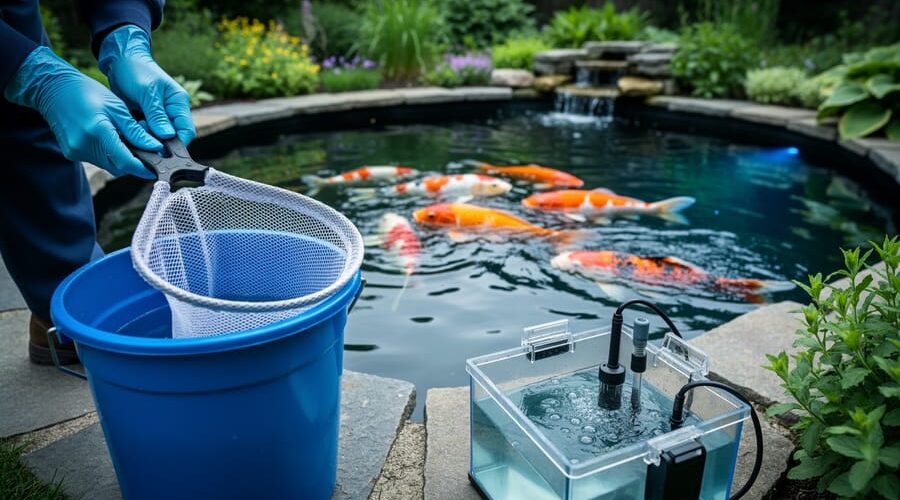
Your Pond Fish Are More Vulnerable Than You Think: Essential Biosecurity for Water Gardens
Your beloved koi just died overnight, and now three more are gasping at the surface. Sound familiar? Or maybe you’re watching your neighbor’s pond struggle with mysterious illness and wondering if your water garden could be next. Either way, you’ve just discovered why aquaculture biosecurity matters—even in backyard ponds.
Biosecurity isn’t some complicated commercial fish farm concept. It’s simply protecting your fish from getting sick in the first place. Think of it as building an invisible shield around your pond that keeps diseases, parasites, and harmful bacteria from crashing your peaceful water garden party.
The reality? Most pond diseases don’t just appear out of thin air. They hitchhike into your ecosystem on new fish, plants, equipment, or even your boots after visiting a friend’s pond. I learned this the hard way when I added “just one beautiful goldfish” from a pet store without quarantining it first. Within two weeks, my entire pond population was fighting a bacterial infection that could have been completely prevented.
Here’s the good news: protecting your pond doesn’t require a laboratory or expensive equipment. Simple habits like quarantining new arrivals, cleaning your nets between uses, and knowing what healthy fish behavior looks like can dramatically reduce your risk of disaster. You don’t need to become a fish veterinarian or turn your backyard into a sterile zone.
This guide breaks down commercial aquaculture biosecurity practices into practical steps that actually work for home water gardens. Whether you’re setting up your first pond or you’ve been keeping fish for years, these straightforward protective measures will help you avoid the heartbreak of preventable outbreaks.
What Biosecurity Really Means for Your Backyard Pond
Let me tell you something that might surprise you: biosecurity sounds like a term you’d hear in a government laboratory, but it’s actually something you’re probably already doing without realizing it. Remember when you washed your hands before handling your pond plants? That’s biosecurity in action!
At its heart, biosecurity for your backyard pond is simply being a good neighbor to your fish and plants. It’s about creating invisible protective barriers that keep the bad stuff out while letting the good stuff thrive. Think of it as building a security system for your pond, except instead of protecting against burglars, you’re protecting against microscopic troublemakers like bacteria, viruses, parasites, and other harmful organisms that can crash your pond’s delicate ecosystem.
Here’s the thing: these invisible threats don’t announce themselves. They hitchhike into your water garden on new fish, plants from the garden center, equipment borrowed from a friend, or even on your own boots after visiting another pond. I learned this the hard way when I brought home some beautiful water lilies from a pond supplier and, within two weeks, noticed my goldfish developing white spots. What seemed like an innocent plant addition had introduced parasites into my carefully balanced pond.
The good news? Biosecurity doesn’t require expensive equipment or a science degree. It’s really about developing smart habits and thinking ahead. When you understand that most pond problems come from outside sources, the solution becomes clear: be intentional about what enters your pond environment.
This approach isn’t about being paranoid or making pond keeping stressful. It’s actually quite the opposite. Once you establish simple biosecurity routines, they become second nature, and you’ll spend far less time treating problems and more time enjoying your beautiful water garden. That’s what we all want, right?
The Biggest Threats to Your Water Garden (And Where They Hide)
Diseases That Hitch a Ride on New Fish
I learned about disease hitchhikers the hard way when I added three beautiful koi from a local seller without quarantining them first. Within two weeks, my entire pond population was fighting ich, and I spent a stressful month nursing everyone back to health. It was a wake-up call that forever changed how I introduce new fish.
The truth is, new fish can carry diseases even when they look perfectly healthy. Koi Herpesvirus, or KHV, is one of the sneakiest threats. Fish can be carriers without showing symptoms, then suddenly an outbreak occurs when stress triggers the dormant virus. KHV spreads rapidly and can be devastating, making it one of the most feared diseases in pond keeping.
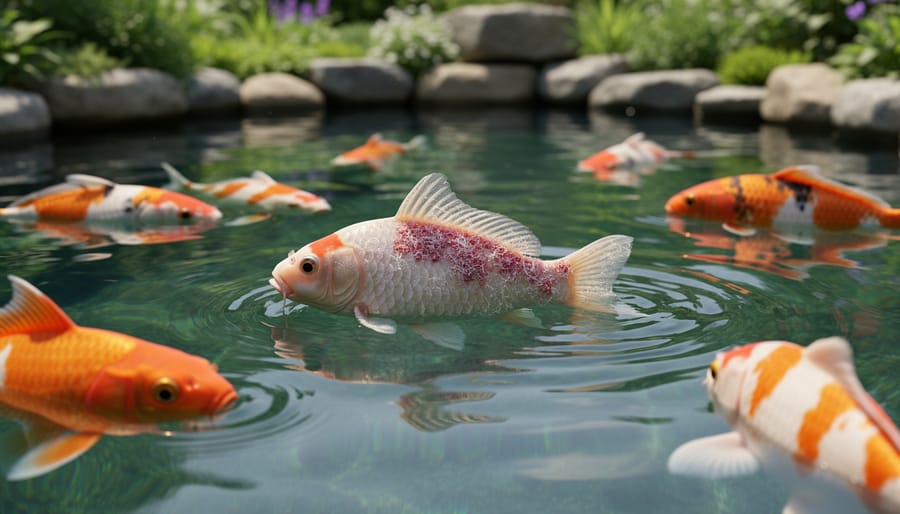
Ich, or white spot disease, is incredibly common. You’ll notice tiny white dots that look like salt grains on your fish’s body and fins. While treatable, ich spreads quickly through water, and by the time you spot it on one fish, others are likely already infected. The parasites that cause ich can hide in a seemingly healthy fish’s gills before becoming visible.
Bacterial infections like Aeromonas and columnaris also travel with new arrivals. These opportunistic bacteria live in most water environments but cause problems when fish are stressed from transport or introduction to new conditions. They can manifest as red sores, fin rot, or cloudy patches.
The common thread? All these diseases enter your pond because microscopic troublemakers don’t require a boarding pass.
Invisible Invaders from Plants and Equipment
Here’s something I learned the hard way: disease doesn’t need new fish to crash your pond party. I once brought home a gorgeous water lily from a friend’s pond, thrilled with my free plant. Within two weeks, my previously healthy goldfish started showing signs of parasites. The culprit? That innocent-looking plant carried microscopic hitchhikers I never saw coming.
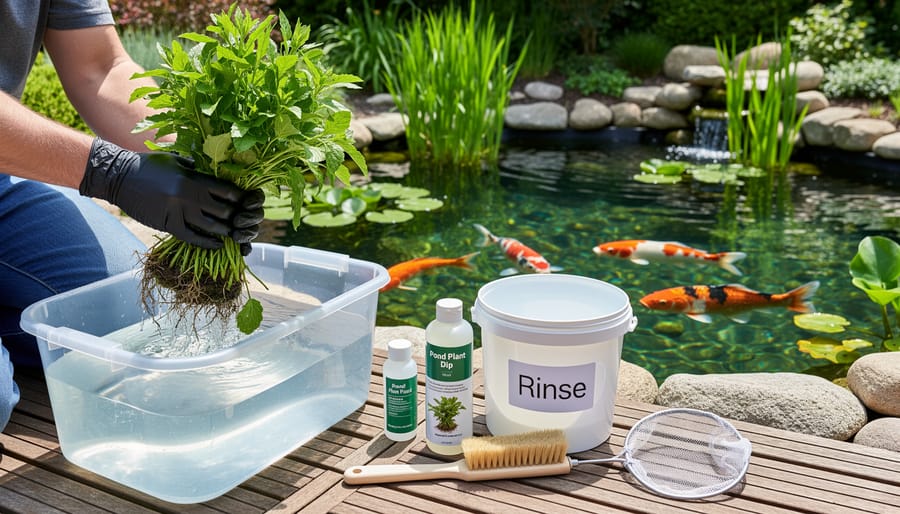
Plants are surprisingly effective disease carriers. Their roots, leaves, and even the water clinging to them can harbor parasites, bacteria, and fungal spores. Before adding any new aquatic plants to your pond, give them a quarantine period in a separate container for at least two weeks. A simple rinse isn’t enough—consider a gentle plant-safe disinfectant dip.
Equipment poses similar risks. That net you borrowed from a fellow pond keeper? It could transfer pathogens between your ponds. Buckets, hoses, thermometers, and testing equipment all deserve attention. I now keep dedicated equipment for my pond and practice what I call “one pond, one net.” If you must share or move equipment between water features, disinfect thoroughly with a diluted bleach solution (rinse completely afterward) or let items dry completely for several days, as many pathogens can’t survive drying.
The Wild Visitor Problem
Here’s something I learned the hard way: your pond isn’t just your fish’s home—it’s an open invitation to the neighborhood wildlife! While wild frogs and visitors add charm to your water garden, they can also bring unwelcome guests in the form of diseases and parasites.
Birds wading through your pond might carry bacteria or parasites on their feet from other water sources. Frogs hopping from pond to pond can spread fungal infections. Even raccoons taking a drink can introduce contaminants. Think of it like guests tracking mud through your house—except these tracks are microscopic troublemakers.
The challenge? You can’t completely fence out nature without losing the magic of your pond. The solution lies in balance: encourage wildlife while protecting your fish through good water quality, regular monitoring, and maintaining robust fish health so they can resist potential infections.
Your Simple Quarantine System (No Fancy Setup Required)
Setting Up a Basic Quarantine Tank
Setting up a quarantine tank doesn’t require fancy equipment or a huge investment. I learned this the hard way after introducing seemingly healthy goldfish to my pond, only to discover they brought parasites along for the ride. Trust me, spending a little time on quarantine setup now saves massive headaches later.
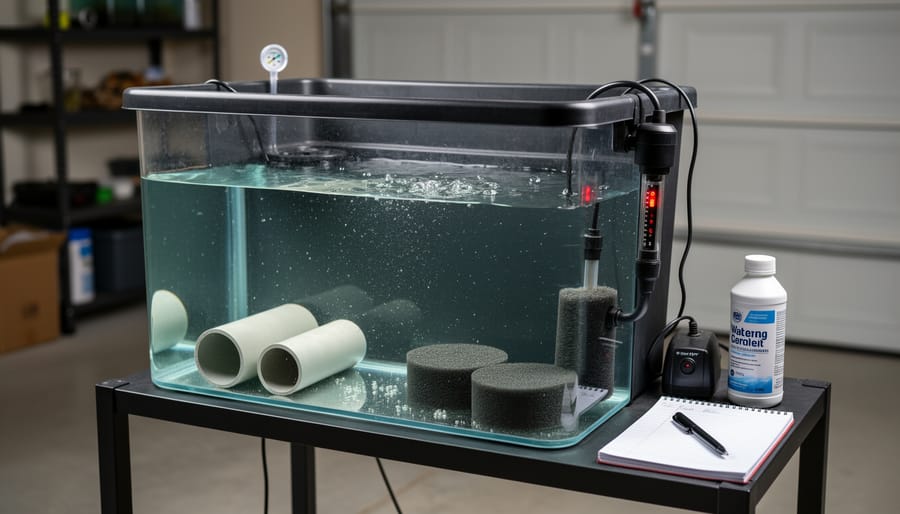
Start with your container. A 50-gallon stock tank from your local farm supply store works perfectly and costs around $40-60. If you’re on a tight budget, kiddie pools work too, though they’re harder to drain. Got a spare aquarium sitting in the garage? Even better! Just make sure it holds at least 20 gallons for smaller fish or 50+ gallons for koi.
Here’s what you’ll need for a functional setup. First, grab a simple sponge filter and air pump. These provide gentle filtration without creating strong currents that stress quarantined fish. You’ll spend about $20-30 for both. Add an aquarium heater if you’re keeping tropical species or quarantining during cooler months.
Don’t forget a basic test kit for ammonia, nitrite, and pH. Since quarantine tanks often lack established beneficial bacteria, you’ll need to monitor water quality closely. Plan on 25-50% water changes every few days initially.
Position your quarantine setup away from your main pond, ideally indoors or in a sheltered area. This prevents cross-contamination and gives you easy access for daily observations. Add a simple cover like netting or plywood to prevent jumpers and keep debris out.
The beauty of this setup? It’s temporary. When not quarantining new arrivals, drain it, clean it, and store it away. No permanent space commitment required.
The 30-Day Quarantine Timeline
Think of quarantine like giving your new fish a gentle introduction period before they join your pond community. Here’s what to expect during those crucial 30 days.
Week 1: The Observation Phase
During the first seven days, your new arrivals are adjusting to their temporary home. Watch them closely during feeding times – are they eating enthusiastically? Check for any visible signs like white spots, frayed fins, or unusual behavior like flashing against surfaces. This is also when stress-related issues often appear, so don’t panic if fish seem a bit shy at first. Keep a simple journal noting what you see each day.
Week 2: The Settling Period
By now, your fish should be eating regularly and showing normal swimming patterns. This is when you’ll want to look for subtler signs of trouble – cloudy eyes, rapid breathing, or staying isolated from tank mates. If everything looks good, you can breathe a bit easier, but don’t let your guard down yet.
Week 3: The Testing Window
Many parasites and diseases have incubation periods of 2-3 weeks, making this a critical observation time. Continue your daily checks and consider testing water parameters to ensure the quarantine environment stays healthy.
Week 4: The Final Countdown
If your fish have made it this far with clean bills of health, congratulations! Spend this last week doing a final thorough inspection. Look under bellies, check gill movement, and ensure everyone’s behaving normally before making the big move to your main pond.
When You Can Skip Quarantine (And When You Absolutely Can’t)
Let’s be real: sometimes you can bend the rules, and sometimes you really can’t. If you’re adding a few pond plants from a trusted local nursery, a full quarantine might be overkill. Same goes for that decorative rock you found (though give it a good rinse!).
But here’s where quarantine becomes non-negotiable: any time you’re introducing new fish, especially from unknown sources, pet stores, or online suppliers. Fish can carry invisible nasties like parasites, bacteria, and viruses that won’t show symptoms immediately. I learned this the hard way when I skipped quarantine on three gorgeous koi and ended up treating my entire pond for ich two weeks later.
Also critical: if you’ve visited another pond or water garden and handled nets or equipment, or if you’re bringing in fish from another hobbyist’s setup. Even healthy-looking fish from experienced keepers can be carriers. The peace of mind from a three-week quarantine period beats the heartbreak and expense of treating a full pond outbreak. Trust me, those extra weeks are worth it when your established fish family stays healthy and happy.
Smart Practices for Everything That Goes Into Your Pond
Treating New Plants Before They Touch Your Water
Before you add those beautiful new water lilies or oxygenating plants to your pond, let’s take a few important precautions. Think of this as giving your plants a wellness check before they join your underwater community. I learned this lesson the hard way when a gorgeous plant I couldn’t resist brought along some unwanted snail hitchhikers that took months to manage!
Start with a thorough visual inspection. Look closely at the leaves, stems, and especially the roots. You’re checking for anything that shouldn’t be there: snail eggs (they look like clear jelly blobs), tiny insects, algae clumps, or damaged tissue that could harbor bacteria. If you spot anything concerning, gently remove it or rinse the plant under running water.
Next comes the saltwater dip, a simple but effective cleaning method. Mix a solution using one tablespoon of non-iodized salt per gallon of dechlorinated water. Submerge your plants for 15-20 seconds, no longer, as extended exposure can damage delicate leaves. This quick dip helps eliminate many common pests and parasites without harming the plant itself.
After treating new plants, rinse them again in fresh dechlorinated water to remove any salt residue. Some pond keepers also trim away any dead or damaged portions at this stage, which promotes healthy new growth and removes potential hiding spots for problems.
This entire process takes just ten minutes but provides tremendous peace of mind and protection for your established pond ecosystem.
The Clean Equipment Rule
Think of your pond equipment like kitchen utensils—you wouldn’t use the same cutting board for raw chicken and fresh salad without a thorough cleaning in between, right? The same principle applies to your nets, buckets, and pond tools. I learned this the hard way years ago when a simple net transfer between ponds introduced an unwelcome parasite problem that took weeks to resolve.
Here’s your game plan for keeping equipment squeaky clean. After each use, start by rinsing everything with a strong spray of fresh water to remove visible debris, algae, and muck. Don’t skip this step—it makes the disinfection process much more effective.
For disinfection, you have several household options. A 10% bleach solution (one part regular household bleach to nine parts water) works wonderfully. Submerge your equipment for at least 10 minutes, then rinse thoroughly until there’s absolutely no chlorine smell. Alternatively, you can use a 2% salt solution, which is gentler but requires a 30-minute soak.
Vinegar fans, rejoice! White vinegar at full strength also makes an excellent disinfectant for smaller items like thermometers and test kits. Let them soak for 15-20 minutes.
Always air-dry your equipment completely before storage. Bacteria and parasites hate dry conditions, so this final step adds an extra layer of protection. Keep a dedicated set of equipment for quarantine tanks separate from your main pond gear—this simple habit prevents cross-contamination and gives you peace of mind.
Choosing Fish and Plants from Safe Sources
Finding healthy fish and plants is like finding a good mechanic—once you discover a reliable source, stick with them! The supplier you choose can make or break your biosecurity efforts, so it’s worth doing some detective work upfront.
Start by visiting potential suppliers in person whenever possible. A reputable fish store or nursery should have clean, well-maintained tanks with clear water and active, alert fish. Take a close look at their holding systems. Are the tanks overcrowded? Do you see any fish with clamped fins, cloudy eyes, or unusual spots? These are red flags that disease might be lurking. I once bought gorgeous koi from a dealer whose tanks looked a bit murky, and sure enough, I ended up battling parasites for months. Trust your gut—if something looks off, walk away.
Ask questions! How long do they quarantine new arrivals? Where do they source their stock? A quality supplier will happily discuss their biosecurity practices. They should quarantine new fish for at least two to three weeks and be willing to share information about disease testing. If they seem evasive or dismissive, that’s your cue to keep shopping.
When buying plants, inspect them carefully for hitchhikers like snails, algae, or decaying matter. Reputable aquatic plant nurseries often treat their stock to remove pests, but it never hurts to ask about their protocols. Online retailers can be convenient, but they’re trickier to evaluate. Look for detailed reviews mentioning fish health on arrival and responsive customer service. Check if they guarantee live arrival and have clear policies about sick or diseased stock.
Consider joining local pond or aquarium clubs where members often share recommendations for trusted suppliers. These communities are goldmines for honest reviews and firsthand experiences. Remember, paying a bit more for quality stock from a biosecure source is far cheaper than treating an entire pond for preventable diseases.
Your Monthly Pond Health Checklist
Think of this monthly checklist as your pond’s wellness appointment—a chance to catch any concerns before they become full-blown problems. I’ve found that setting aside time once a month to really observe what’s happening in your pond has saved me from countless headaches over the years.
Start with your fish, because they’re usually the first to tell you something’s off. Spend at least ten minutes just watching them during feeding time. Are they swimming normally, or is anyone hanging near the surface gulping air? Look for changes in their appetite—fish that suddenly lose interest in food often aren’t feeling well. Check their appearance too: any white spots, frayed fins, red streaks, or unusual bumps? Note if any fish are isolating themselves or rubbing against rocks and plants, which can signal parasites.
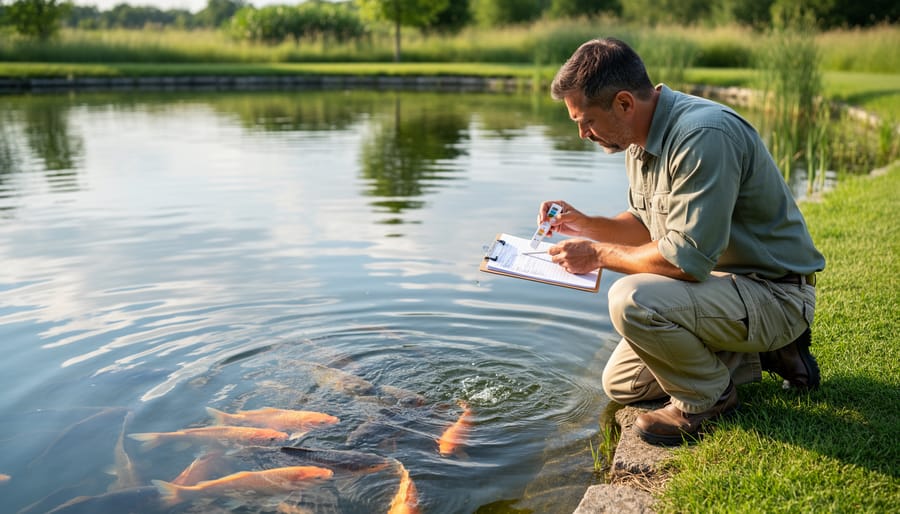
Next, move on to your water quality indicators. Even if your water looks crystal clear, grab your test kit and check ammonia, nitrite, nitrate, and pH levels. I keep a simple notebook by my pond to track these numbers—it helps me spot trends before they become emergencies. While you’re at it, give the water a smell. Healthy pond water has a clean, earthy scent. Anything foul or chemical-like deserves investigation.
Your plants deserve attention too. Examine leaves for yellowing, brown spots, or unusual holes that might indicate pests. Check that your oxygenating plants are still thriving—they’re essential for maintaining healthy water. Look for excessive algae growth on plant surfaces, which often signals a nutrient imbalance.
Don’t forget the bigger picture. Walk around your entire pond perimeter checking for erosion, loose liner edges, or new plants that might drop leaves into the water. Inspect your filtration system and give pump intakes a quick clean if needed.
Finally, keep a running log of everything you observe. When I started doing this, patterns emerged that I’d never noticed before—like seasonal changes that helped me anticipate and prevent problems. Your future self will thank you for these notes when troubleshooting becomes necessary.
When Disaster Strikes: Containing an Outbreak
I’ll never forget the morning I found my prized goldfish hovering listlessly at the surface, their fins clamped tight against their bodies. My heart sank. If you’ve noticed unusual behavior like this, or spotted white patches, red streaks, or cloudy eyes on your fish, you might be dealing with a disease outbreak. Don’t panic—quick, calm action can save your pond.
First, observe carefully. Are multiple fish affected? Are they gasping at the surface, refusing food, or showing visible wounds? These signs warrant immediate attention. Grab a notebook and jot down what you see—this information will be invaluable if you need professional help later.
Your next step is isolation. If you have a quarantine tank or spare container, gently net the affected fish and move them there. Fill it with pond water (not tap water unless properly treated) and add an air stone for oxygen. This protects your healthy fish while you figure out what’s happening. Think of it as sending a sick child to rest in their bedroom while you call the doctor.
Test your water immediately. Grab your test kit and check ammonia, nitrite, nitrate, pH, and temperature. Poor water quality is often the hidden culprit behind disease outbreaks. If levels are off, perform a partial water change—about 25 percent—being careful not to shock your fish with sudden temperature differences.
While treating symptoms with over-the-counter medications can help, don’t rely solely on guesswork. Contact a veterinarian who specializes in fish or your local aquaculture extension office. Many diseases look similar but require different treatments, and misdiagnosis wastes precious time.
Having an emergency response plan before crisis strikes makes these stressful moments much more manageable. Keep emergency contact numbers handy, maintain basic medications, and always have a quarantine setup ready. Your fish—and your peace of mind—will thank you.
Here’s the thing about biosecurity—it’s not about living in fear or becoming paranoid every time you approach your pond. It’s simply about being a thoughtful, responsible pond keeper who cares about the health of your fish and the ecosystem you’ve worked so hard to create.
Think of it like washing your hands before cooking or wearing a seatbelt when you drive. These aren’t dramatic, life-altering actions. They’re small, sensible habits that protect what matters to you. Biosecurity works the same way. You don’t need expensive equipment or a science degree. You just need to be consistent with a few smart practices.
I’ve seen firsthand how devastating a disease outbreak can be, and I’ve also witnessed the incredible difference that simple preventive measures make. The pond keeper who rinses their net after each use, who quarantines new fish for a few weeks, who pays attention to their water quality—that’s the person whose pond thrives year after year.
You’ve already taken the first step by learning about biosecurity. Now it’s time to put that knowledge into action. Start small. Choose just one or two habits from what you’ve learned today. Maybe it’s dedicating a separate net for your quarantine tank, or perhaps it’s committing to a visual health check every morning with your coffee. Whatever you choose, do it consistently.
Your pond—and your fish—will thank you for it. You’ve got this.