
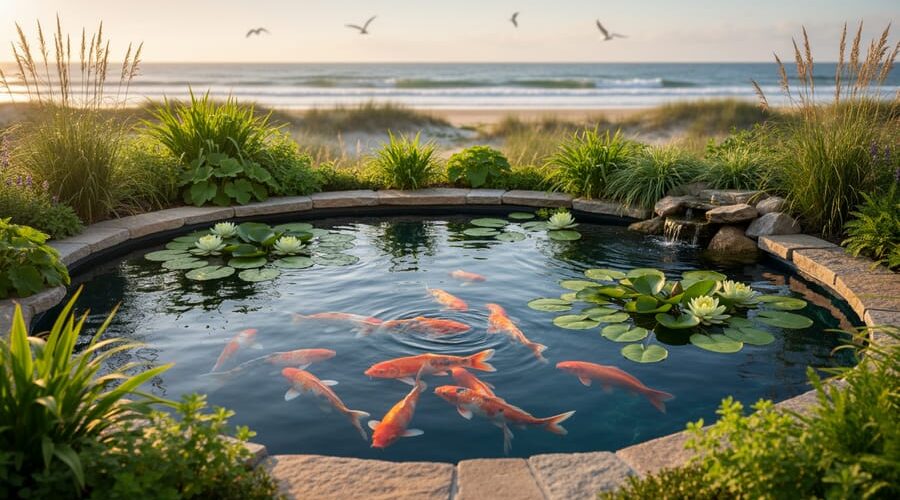
Why Your Backyard Pond Depends on Healthy Ocean Ecosystems
Look through the clear water of your backyard pond, and you’re witnessing the same delicate balance that sustains our vast oceans. The tiny ecosystem thriving in your water garden operates on identical principles as marine aquatic ecosystems—complex networks where every plant, fish, and microorganism plays a crucial role in maintaining water quality and supporting life.
Marine aquatic ecosystems face unprecedented challenges today, from pollution and temperature changes to habitat loss and nutrient imbalances. These aren’t distant problems affecting only oceanographers and marine biologists. The same forces threatening coral reefs and coastal waters can disrupt your pond’s harmony. Understanding how these larger systems work—and fail—gives you powerful insights into creating and maintaining your own thriving aquatic environment.
When algae blooms choke ocean bays, it’s the same excess nutrients causing green water in backyard ponds. When marine dead zones expand due to oxygen depletion, it mirrors what happens when pond systems crash from overstocking or inadequate filtration. The solutions scientists develop for ocean conservation often scale down beautifully to your water garden.
This connection goes both ways. By mastering balanced ecosystems in your pond, you’re learning principles that apply to protecting larger waters. Your success with beneficial bacteria, proper plant coverage, and natural filtration demonstrates conservation in action. Every pond keeper who achieves crystal-clear water without harsh chemicals proves these methods work.
Whether you maintain a small container water garden or an elaborate koi pond, you’re participating in aquatic stewardship. The lessons from marine ecosystems can transform your approach to pond keeping, while your hands-on experience offers genuine understanding of why ocean health matters. Your backyard becomes both classroom and testing ground for sustainable water management.
What Marine Ecosystems Actually Are (And Why Pond Lovers Should Care)
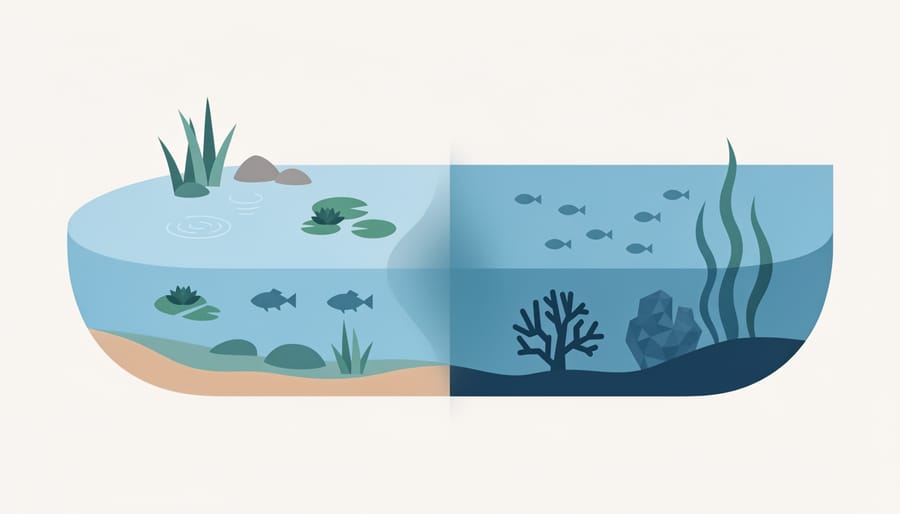
The Building Blocks: From Oceans to Your Pond
If you’ve ever spent time tending to your backyard pond, you’ve already witnessed the magic of aquatic ecosystems at work. The same fundamental building blocks that keep our vast oceans thriving are right there in your own water garden, just on a smaller scale.
Let’s start with the producers. In your pond, these are your water lilies, submerged plants, and that algae you’re constantly managing. In the ocean, think of phytoplankton as tiny floating plants that do the same job, using sunlight to create energy and oxygen. They’re the foundation of everything.
Next come the consumers. Your pond fish, tadpoles, and water beetles are like the ocean’s fish, crabs, and whales. They eat the plants or each other, passing energy up the food chain. I love watching my koi interact with smaller pond life because it reminds me that every creature has a role to play.
Finally, we have the decomposers, the unsung heroes. Those bacteria and tiny organisms breaking down fish waste and dead leaves in your pond? In the ocean, similar microscopic workers recycle nutrients from everything that dies, keeping the system balanced and healthy.
Understanding these three groups helps you see why your pond needs balance, and why the ocean does too.
How Water Connects Everything
Here’s something amazing I realized while building my backyard pond: the water flowing through my garden hose is part of the same incredible cycle that connects me to the ocean! Every drop of water on Earth is constantly moving through what scientists call the water cycle, and it means your little pond and the vast Pacific Ocean are surprisingly connected.
Think about it this way. Water evaporates from the ocean, rises as vapor, forms clouds, and falls as rain. That rain might fill your pond, support your water lilies, and eventually evaporate back into the atmosphere or flow through streams back to the sea. It’s a continuous loop that never stops.
This connection means what happens in the ocean affects us, and believe it or not, our choices at home matter too. When you maintain your pond using eco-friendly practices, like avoiding harsh chemicals or creating natural filtration with plants, you’re participating in a global effort. The same principles that keep marine ecosystems healthy apply to your backyard water garden. You’re not just a pond keeper, you’re part of a worldwide community of water stewards, and that’s pretty special.
The Biggest Challenges Facing Marine Ecosystems Today
Pollution: When the Water Gets Too Dirty to Support Life
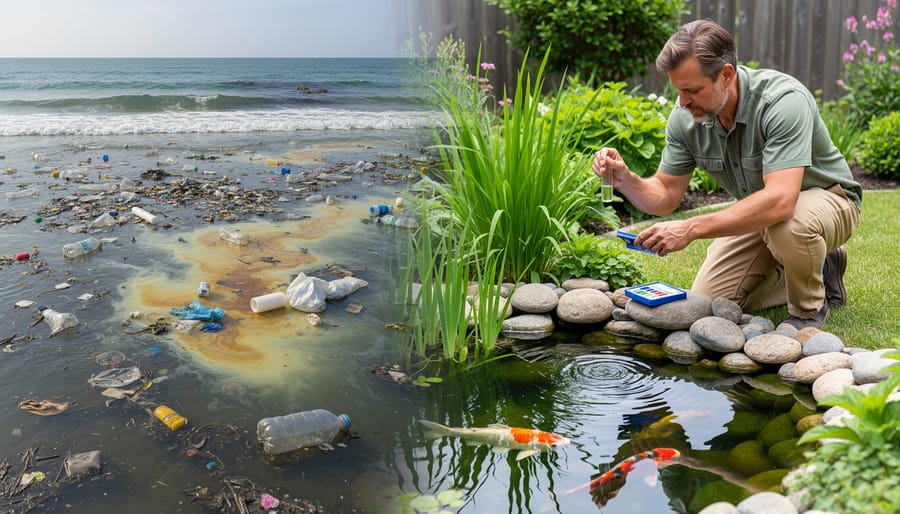
If you’ve ever dealt with murky pond water or struggled with water quality in your backyard feature, you already understand the basics of marine pollution—it’s just happening on a much larger scale! Just as excess nutrients from fish food or garden runoff can trigger pond algae blooms in your water garden, similar problems plague our oceans when fertilizers wash off farmlands and lawns into rivers that eventually reach the sea.
Think about what happens when you overfeed your fish or when leaves decompose in your pond. The water becomes cloudy, oxygen levels drop, and beneficial bacteria struggle to keep up. The ocean faces these same challenges, but with added complications like plastic debris, oil spills, and industrial chemicals. Those plastic bottles and bags we see floating in harbors are like having permanent debris in your pond filter—they never fully break down, creating long-term problems for marine life.
Chemical pollutants pose another threat. Just as you’re careful about what products you use near your pond (avoiding harsh cleaners that could harm your fish), the ocean suffers when industrial chemicals and agricultural pesticides enter the water system. These toxins accumulate in the food chain, affecting everything from tiny plankton to large predators.
The connection to your backyard pond is real. When you practice responsible water gardening by avoiding chemical treatments, properly disposing of debris, and managing nutrient levels, you’re applying the same conservation principles needed for ocean health. Every small action counts, whether it’s in your 100-gallon pond or the vast Pacific Ocean.
Climate Change and Rising Temperatures
If you’ve ever worried about your pond water getting too warm on a scorching summer day, you already understand one of the biggest threats facing our oceans. Just as rising temperatures in your backyard pond can stress fish and promote algae blooms, the world’s oceans are experiencing similar problems on a massive scale.
Ocean warming is happening faster than many scientists predicted. When water temperatures rise even a few degrees, it’s like turning up the thermostat in your pond. Marine creatures that have adapted to specific temperature ranges suddenly find themselves struggling. Coral reefs, often called the rainforests of the sea, are particularly vulnerable—they bleach and die when waters get too warm, much like how your pond plants might wilt in overheated conditions.
But temperature isn’t the only challenge. Ocean acidification works hand-in-hand with warming waters. Remember how maintaining proper pH balance in your pond keeps fish healthy and water clear? The ocean faces a similar issue, but from carbon dioxide absorption. As CO2 dissolves into seawater, it creates carbonic acid, lowering the ocean’s pH. This makes it harder for shellfish, corals, and other creatures to build their protective shells and skeletons.
The good news? Understanding these connections helps us appreciate why every action counts—from managing our own ponds responsibly to supporting broader conservation efforts.
Overfishing and Ecosystem Imbalance
If you’ve ever kept a backyard pond, you know what happens when one fish species takes over or when something wipes out your goldfish population. The same drama plays out in our oceans, just on a much grander scale. When we overfish a species like tuna or cod, it’s like removing all the adult koi from your pond – suddenly, the smaller fish they kept in check multiply out of control, gobbling up resources meant for others.
I learned this lesson firsthand when a heron cleaned out my favorite pond fish. Within weeks, algae exploded and tiny minnows overran the space. The ocean works similarly. Remove too many predators, and prey species dominate. Eliminate too many prey, and predators starve. Each species plays a vital role, like different plants working together in your water garden. When commercial fishing removes millions of fish without considering this delicate balance, entire food chains collapse. Understanding this connection between your pond’s ecosystem and the ocean’s helps us appreciate why sustainable fishing practices matter for everyone’s water worlds.
Habitat Destruction: Losing the Foundation
Think about how coral reefs and seagrass meadows work in the ocean. They’re not just pretty scenery – they’re the foundation that supports entire underwater communities. Fish need places to hide from predators, lay eggs, and find food. When we destroy these structures, everything falls apart.
The same principle applies right in your backyard pond! Just like marine fish depend on coral and seagrass, your pond fish need proper structure to thrive. Without plants, rocks, and sheltered areas, fish become stressed and vulnerable. I learned this the hard way when I started my first pond with just open water – my fish were constantly skittish and hiding at the bottom.
Creating varied depths, adding aquatic plants, and placing rocks strategically gives your fish the security they need. It mimics what nature does in healthy marine ecosystems, just on a smaller scale you can manage right at home.
Solutions That Are Making a Real Difference
Marine Protected Areas: Safe Havens for Sea Life
Think of Marine Protected Areas (MPAs) as nature’s equivalent of the quiet, sheltered corner you create in your backyard pond. Just like you might designate a planted zone where fish can spawn safely without disruption, MPAs are ocean sanctuaries where sea life gets a break from fishing, drilling, and other human activities.
These protected zones work beautifully simple. By restricting certain activities in designated ocean areas, marine life gets the breathing room it needs to reproduce, grow, and rebuild populations. Fish mature to breeding age, coral reefs recover from damage, and entire ecosystems regain their natural balance. It’s like hitting the pause button on human pressure.
You can apply this same principle in your water garden. Consider creating “no-go zones” in your pond where fish and beneficial creatures can hide from predators (including curious cats or herons). Dense plantings of water lilies or submerged vegetation act as protected nurseries. I’ve noticed in my own pond that when I leave one corner completely undisturbed, packed with plants and rocks, the fish population actually thrives better overall.
The results speak for themselves. Studies show that well-managed MPAs see fish populations increase by an average of 400 percent within a decade. That same protective mindset in your pond creates healthier, more resilient aquatic life. By understanding how ocean sanctuaries work, we gain inspiration for creating our own thriving, balanced water ecosystems at home.
Restoration Projects That Are Actually Working
Just like watching a struggling backyard pond bounce back to life after careful attention, marine restoration projects around the world are showing us that damaged ocean ecosystems can recover. These success stories should inspire any water gardener who’s ever nursed a neglected water feature back to health.
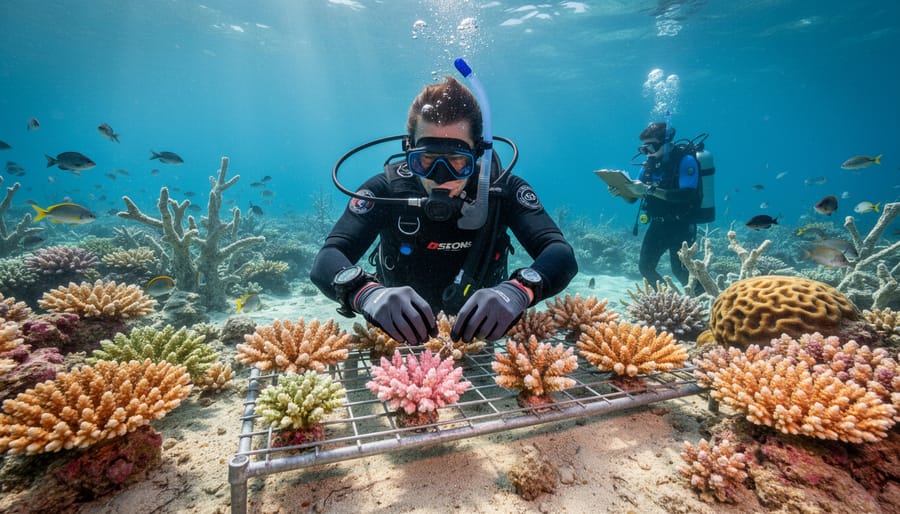
In the Caribbean and Florida Keys, coral restoration nurseries work remarkably like propagating water lilies. Scientists grow coral fragments on underwater structures, then transplant healthy pieces back to damaged reefs. The Coral Restoration Foundation has planted over 200,000 corals, and many are thriving and reproducing. It’s the same principle you use when dividing and replanting pond plants to fill bare spots.
Kelp forest recovery off California’s coast mirrors the way beneficial algae returns to a balanced pond. By removing sea urchin populations that were overgrazing the kelp, entire underwater forests have regrown in just a few years. The kelp now provides shelter and food for countless species, just like how healthy plant growth in your pond creates habitat for fish and beneficial insects.
Mangrove replanting projects in Southeast Asia and Florida demonstrate nature’s resilience when given a chance. These coastal trees, which act like natural filters similar to bog plants in a pond, have been successfully replanted in degraded areas. The Mikoko Pamoja project in Kenya has restored mangrove forests that now protect coastlines and support fish populations. The results prove that with consistent care and the right conditions, even severely damaged aquatic ecosystems can flourish again.
Technology and Innovation in Ocean Health
Just like you’d upgrade your pond pump or install better filtration, scientists and innovators are developing game-changing tools to protect our oceans. The exciting part? Many of these technologies mirror the same principles we use in backyard water gardening.
Eco-friendly fishing methods are revolutionizing how we harvest seafood. Imagine fishing nets with special escape hatches that let young fish swim free, similar to how you’d selectively thin out plants in your pond to keep the ecosystem balanced. These innovations reduce bycatch by letting non-target species escape while keeping intended catches. Circle hooks and trap designs that minimize harm work on the same principle as using gentle netting techniques when moving your koi.
Cleanup technologies are tackling ocean pollution head-on. Floating barriers collect plastic waste much like skimmers remove debris from pond surfaces. Underwater drones patrol reefs, monitoring coral health the way you’d regularly check your pond’s pH and clarity. Some systems even use beneficial bacteria to break down pollutants, essentially scaling up the biological filtration happening in your own pond right now.
Satellite monitoring systems track ocean temperatures, currents, and phytoplankton blooms in real-time. Think of these as high-tech versions of your pond thermometer and water testing kit, just working on a massive scale. Apps and sensors now help commercial fisheries avoid sensitive breeding areas, protecting marine life just as you’d section off spawning zones in your pond during breeding season.
These innovations prove that whether managing a backyard pond or protecting entire oceans, smart technology combined with thoughtful practices makes all the difference.
What You Can Do From Your Own Backyard
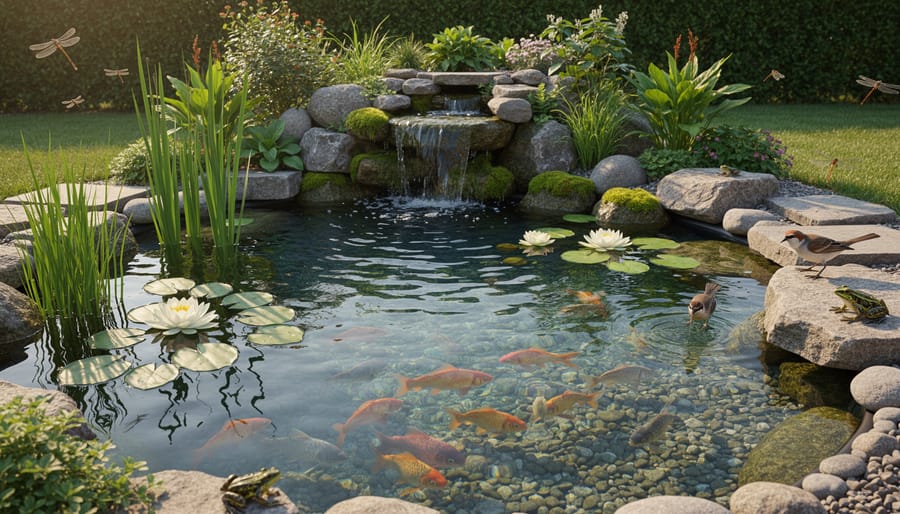
Build a Better Pond Ecosystem
Here’s the thing about marine ecosystems that I find absolutely fascinating—they’re incredibly complex, yet they follow the same basic principles we can apply right in our backyard ponds! The ocean’s health depends on balance, just like your water garden does.
Think about coral reefs for a moment. They thrive because everything works together: fish control algae, plants produce oxygen, and beneficial bacteria break down waste. You can create this same harmony in your pond! Start by choosing native aquatic plants that naturally filter water and provide habitat for helpful insects and microorganisms. In my own pond, adding native water lilies and submerged plants made an incredible difference within just a few weeks.
The key to creating a balanced pond ecosystem is mimicking nature’s approach. Instead of relying solely on mechanical equipment, let biology do the heavy lifting. Incorporate beneficial bacteria, introduce the right number of fish for your pond size, and embrace natural filtration methods like bog filters or planted edges.
Don’t overcrowd your pond with fish—it’s tempting, I know! Marine conservationists understand that overpopulation leads to ecosystem collapse, and the same applies to your backyard. Start small, observe how your pond responds, and adjust accordingly. You’ll be amazed at how a well-balanced pond practically takes care of itself!
Small Changes That Reduce Your Impact
You don’t need to overhaul your entire lifestyle to make a difference. Small, thoughtful changes in how you manage your pond can have ripples of positive impact that extend far beyond your backyard.
Start with what goes into your pond. Choose phosphate-free fertilizers for plants around your water feature, as phosphate runoff feeds algae blooms both in your pond and in waterways downstream. When I switched to organic options for my pond plants, I noticed healthier water quality within weeks. Select eco-friendly pond treatments and natural bacteria products instead of harsh chemicals that can harm beneficial microorganisms.
Be mindful about new plants and fish you introduce. Research species before purchasing to ensure they’re not invasive in your region. A single goldfish released into the wild can disrupt entire local ecosystems, so never release pond inhabitants into natural waterways.
Proper waste disposal matters too. Net out debris regularly and compost it rather than letting it decompose in your pond, which releases excess nutrients. Install a simple rain garden or gravel filter between your lawn and pond to catch runoff before it enters the water.
These straightforward steps protect not just your pond, but also the larger aquatic world we’re all connected to.
Share What You’ve Learned
You’ve gained valuable insights into how marine ecosystems work, and now you can be part of the solution! Share your newfound knowledge with friends and neighbors who have ponds or aquariums. Talk about how the same principles that protect our oceans apply right in your backyard water garden. Encourage others to skip harsh chemicals, plant native species, and create balanced ecosystems.
Consider supporting ocean conservation organizations or participating in local waterway cleanup events. Even small actions matter, whether it’s reducing plastic use or being mindful of what goes down your drains. Your pond is a perfect teaching tool for kids and visitors, showing them how delicate ecosystems maintain themselves when we give them the right conditions.
Remember, every healthy pond you create is a tiny victory for water conservation awareness. By connecting your passion for water gardening to the bigger picture of marine health, you’re helping build a community that truly understands how all water systems are interconnected.
Here’s the truth that connects us all: whether it’s the vast Pacific Ocean or your charming backyard pond, the same fundamental principles keep these ecosystems thriving. You’ve learned how balance, biodiversity, and water quality matter just as much in your small aquatic paradise as they do in the world’s oceans. The exciting part? You have the power to make a real difference right in your own backyard.
Every time you test your pond water, add beneficial plants, or choose natural solutions over harsh chemicals, you’re practicing the same conservation principles that protect our oceans. Think of your pond as a miniature marine ecosystem where you’re the guardian. Start small today: maybe introduce one new native plant, check your filtration system, or simply spend a few minutes observing the wildlife your pond attracts.
Your water garden is more than just a beautiful feature; it’s a living classroom and a personal contribution to understanding aquatic health. So grab your test kit, roll up your sleeves, and dive into creating your own thriving ecosystem. The ocean may seem far away, but its lessons are right there in your garden, waiting for you to apply them.