
Why Water Gardeners Are Swapping Plants (And How to Join In)
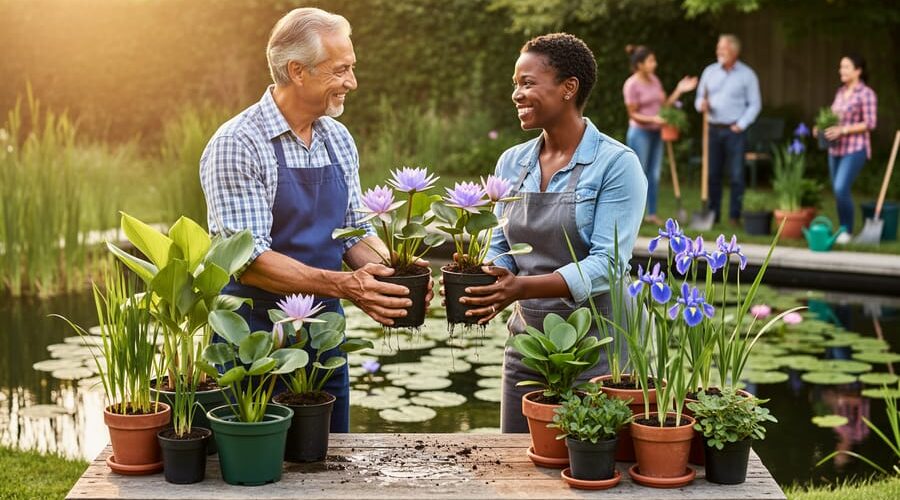
Join your local water gardening community or online aquatic plant groups where members regularly trade divisions, cuttings, and surplus plants from their ponds and water features. Plant swapping transforms what would be discarded growth into treasured additions for fellow enthusiasts while building connections with people who share your passion for water gardening.
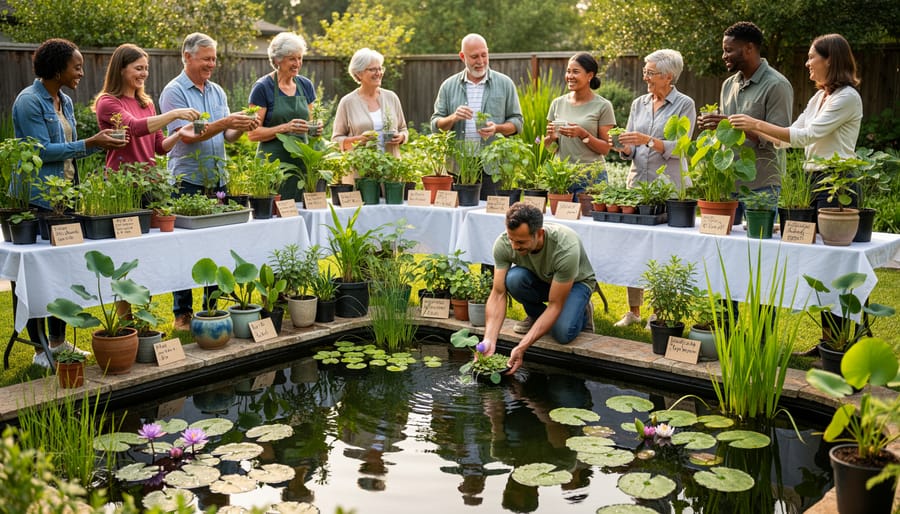
Search Facebook groups, garden club listings, and community boards for established plantswap events in your area, or check with local nurseries that often host seasonal exchanges. These gatherings let you bring excess water lilies, marginal plants, or floating varieties and leave with new specimens that would cost significantly more at retail.
Prepare plants for swapping by dividing overgrown clumps, ensuring roots remain moist during transport, and labeling each variety with its name and growing requirements. Clean all plants thoroughly to remove algae, debris, and any potential hitchhikers before sharing them with others.
Verify that plants you’re offering and accepting are non-invasive in your region, as some aquatic species spread aggressively and damage natural waterways. Check your state’s invasive species list before participating in any exchange to protect local ecosystems.
Document what you receive with photos and notes about care requirements, then follow up with fellow swappers about how plants are thriving in their new homes. This ongoing connection creates a support network where you can troubleshoot challenges, share propagation tips, and arrange future trades as your collections expand. Plant swapping costs nothing but rewards you with diversity, community, and the satisfaction of sustainable gardening practices.
What Makes Water Plant Swapping Different
The Plants Water Gardeners Love to Trade
Water gardeners have discovered that certain aquatic plants are absolute swap superstars, and it’s easy to see why. These plants share one magical quality: they grow enthusiastically and multiply quickly, meaning you’ll have plenty to share without depleting your own collection.
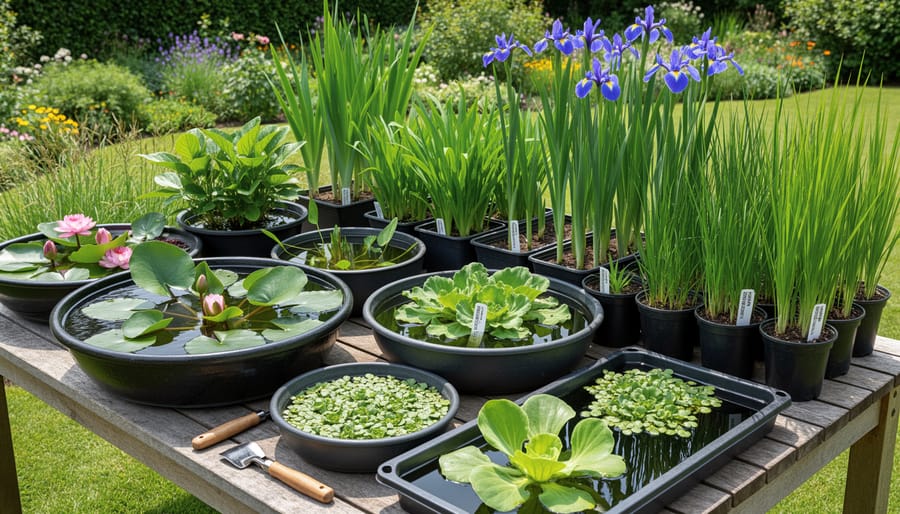
Water lilies top most swap wishlists, especially hardy varieties that return year after year. Miniature varieties like ‘Pygmaea Helvola’ are particularly popular because they thrive in container ponds and smaller spaces. I’ve seen entire swaps organized around lily divisions in late spring when gardeners thin their established plants.
Floating plants are swap favorites because they’re incredibly generous growers. Water lettuce and water hyacinth reproduce so rapidly that you’ll literally be scooping out handfuls by midsummer. These make perfect starter plants for newcomers since they require zero planting effort.
Marginal plants like iris, arrowhead, and pickerel rush divide readily and tolerate a range of water depths, making them ideal trading candidates. They’re also forgiving plants that help beginners build confidence.
Oxygenating plants such as hornwort and anacharis are swapped by the bundle. These underwater workhorses keep your pond healthy while spreading generously, so you’ll always have extras to share.
The best swap plants share common traits: they’re vigorous without being invasive, they adapt well to different pond conditions, and they divide or propagate easily. This means everyone walks away with healthy starts that have excellent chances of thriving in their new homes.
What You Shouldn’t Swap
Before you start trading, let’s talk about what should stay out of your swap bag. This is super important for keeping our waterways and ponds healthy!
First up: invasive species are a big no-no. Plants like water hyacinth, parrot feather, and certain types of water lettuce might look gorgeous, but they can take over natural water systems faster than you can say “oops.” These aggressive growers choke out native plants and disrupt entire ecosystems. Always check your local regulations before swapping any aquatic plant, as what’s fine in one region might be banned in another.
Here’s a helpful tip from my own experience: if a plant is listed as invasive in your state or county, skip it entirely, even if someone offers it for free. The short-term savings aren’t worth the long-term environmental impact or potential fines.
Also avoid trading diseased or pest-infested plants. Nobody wants to bring aphids or root rot home! If you’re unsure whether a plant is healthy, it’s perfectly okay to politely decline. Responsible swapping means protecting everyone’s water gardens, and good swappers will totally understand your caution.
Finding Your Local Water Gardening Plant Swap
Online Communities and Forums
The beauty of aquatic plant swapping is that much of it happens online, making it easy to connect with fellow water gardeners from your couch! Facebook has become the go-to hub for plant swap communities. Search for groups like “Aquatic Plant Swap” or “Pond Plant Trading” along with your region or state name. Many have hundreds or thousands of members actively posting available plants and arranging exchanges.
Reddit communities, particularly subreddits focused on ponds and aquatic gardening, also host regular swap threads. Local gardening forums and sites like Nextdoor can help you find swaps right in your neighborhood, which is perfect since you can skip shipping costs and meet face-to-face.
Before diving in, take time to vet any group you join. Look for active moderation, clear rules about plant identification, and members who ask questions about invasive species. Established groups typically require introductions and have posting guidelines. Red flags include groups with no rules, members selling aggressively rather than swapping, or anyone discouraging questions about plant origins.
I’ve found my best connections through local Facebook groups where members share photos of their ponds and genuinely love talking plants. The friendships you build often last longer than the plants themselves! Start by observing conversations before posting to get a feel for the community’s vibe and expectations.
Local Pond Clubs and Garden Centers
Your best bet for finding organized plant swaps is checking with local pond clubs and independent garden centers in your area. Many water gardening societies host seasonal swap events, usually in spring and fall when plants are most ready to divide. A quick online search for “water gardening club” plus your city name often works wonders, or ask at your local garden center if they know of any groups.
Garden centers sometimes organize their own swap days or allow community groups to use their space. These events create a win-win situation since attendees often purchase supplies while they’re there.
At in-person swaps, expect a casual, friendly atmosphere. Bring your plants in buckets or bags with water, and label them if possible. Most swaps operate on an honor system where you contribute what you can and take what you need. Experienced water gardeners are usually happy to chat about care requirements and share growing tips. You’ll likely find everything from common water lettuce to rarer lotus varieties. Don’t be shy about asking questions or admitting you’re new to water gardening. Everyone started somewhere, and the community thrives on helping newcomers succeed.
Preparing Your Plants for a Successful Swap
Dividing and Potting Water Plants
Getting your aquatic plants ready for swapping is easier than you might think! Whether you’re preparing water lilies, irises, or rushes, the key is creating portable, healthy divisions that’ll thrive in their new homes.
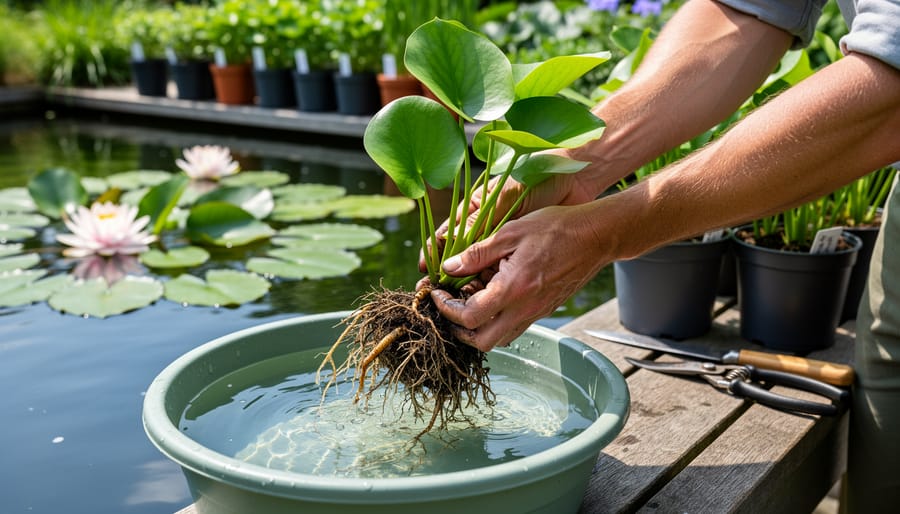
Start with dividing water plants during their active growing season, typically spring or early summer. For water lilies, gently remove the plant from its container and rinse away the soil. Look for natural divisions in the rhizome, those thick horizontal stems. Using a sharp, clean knife, cut sections that include at least one growing point and a few roots. Each division should be about the size of your fist.
Marginal plants like irises and sedges are even simpler. Pull apart the clumps with your hands, making sure each section has roots and shoots attached. Don’t worry if you’re a bit rough, these plants are surprisingly resilient!
For transport-friendly potting, use aquatic planting baskets lined with burlap or landscape fabric. Fill with heavy clay-based soil or specialized aquatic compost, not regular potting mix, which floats and makes a mess. Press the soil firmly around your division, leaving the crown just above the soil line.
Top with pea gravel to prevent soil from washing away during transport. Keep divisions moist but not waterlogged until swap day. Label each pot clearly with the plant name and any special care instructions. Your fellow swappers will appreciate the extra effort!
Transport Tips for Aquatic Plants
Getting your aquatic plants safely to a swap event is easier than you might think! The key is keeping them wet and happy during the journey, which I’ve learned through plenty of trial and error at my local swaps.
Start by selecting sturdy, leak-proof containers with lids. Clear plastic food containers work wonderfully, and I always save yogurt tubs and takeout containers for this exact purpose. For smaller plants like floaters or cuttings, sandwich bags filled with water do the trick perfectly. Just make sure to squeeze out excess air and double-bag them for extra security.
Place your plants in their containers with plenty of pond water or dechlorinated tap water. The water cushions them during transport and keeps roots from drying out. If you’re traveling more than thirty minutes, add a damp paper towel around the roots for extra moisture insurance.
Timing matters more than you’d expect! Try to prepare your plants the morning of the swap rather than the night before. This keeps them fresher and reduces stress. On hot days, consider adding an ice pack wrapped in newspaper to your transport bag, keeping temperatures stable without freezing your precious plants.
Label each container with the plant name and any special care notes. Your fellow swappers will appreciate the thoughtfulness!
Swap Day Etiquette and Strategy
The Unwritten Rules of Plant Swapping
Plant swapping thrives on mutual respect and generosity. The golden rule? Always bring healthy, pest-free plants to share. I learned this the hard way when I once brought water lettuce that had tiny aphids hiding underneath—not my proudest moment! Now I quarantine and inspect everything before swap day.
Fair trading doesn’t mean equal size necessarily. A small but rare dwarf papyrus cutting might swap beautifully for a generous handful of common duckweed. It’s about perceived value and what each person needs. Be honest about what you’re offering—if your plant is invasive in your region, say so upfront. Some swappers specifically want fast-growers, while others appreciate the warning.
Communication makes you a valued member. If someone requests a specific plant and you can propagate it, follow through. Answer questions about care honestly, including any quirks your plants have. I always mention that my water hyacinths grow like crazy in summer but need indoor wintering here.
Don’t show up empty-handed repeatedly expecting freebies. If you’re new and plant-poor, offer seeds, pots, or simply your enthusiasm and willingness to help organize. The community spirit flourishes when everyone contributes something, even if it’s just friendly conversation and genuine appreciation.
What to Ask Before You Swap
Before you finalize any swap, have a friendly chat with your trading partner to avoid surprises down the road. Start by asking about the plant’s light requirements—does it need full sun, partial shade, or can it handle your pond’s specific conditions? Find out how quickly it spreads, because some water plants are enthusiastic growers that can take over a small pond in a single season. Ask if it’s ever been treated with chemicals or fertilizers, especially important if you have fish or other wildlife. Check whether it dies back completely in winter or stays evergreen in your climate zone. Don’t be shy about requesting photos of the parent plant so you can see exactly what you’re getting. Finally, and this is crucial, confirm that the plant isn’t invasive in your area. A quick question now saves headaches later and helps build trust within the swapping community.
Starting Your Own Water Garden Plant Swap
Ready to bring water plant swapping to your local community? Organizing your own event is easier than you might think, and it’s incredibly rewarding to see neighbors connecting over their shared love of aquatic gardening!
Start by choosing a suitable venue. Community centers, library meeting rooms, or even someone’s backyard work wonderfully. If you’re involved in a community water garden, that’s an ideal location. Pick a date at least 4-6 weeks out, giving people time to prepare plants and spread the word.
Promotion is key to success. Create a simple flyer or social media post explaining the concept, date, time, and what to bring. Post in local gardening groups, community bulletin boards, and neighborhood forums. Don’t forget your local pond supply store—they often welcome community event announcements.
Set some basic ground rules to keep things running smoothly. Ask participants to label their plants clearly with names and care requirements. Create a check-in table where people register what they’ve brought. I usually suggest one plant in, one plant out, but stay flexible for newcomers.
Make the environment welcoming by providing tables for displaying plants, buckets of water for keeping plants healthy, and maybe some refreshments. Consider having a brief introduction where everyone shares their water gardening experience—it helps break the ice!
Have information sheets ready about invasive species in your region. This educates participants while protecting local waterways. You might also keep a simple sign-up sheet for future swaps—once people experience their first one, they’ll be eager for the next!
Remember, your first swap doesn’t need to be perfect. Start small, learn as you go, and watch your community of water gardeners grow.
I’ll never forget the afternoon I traded a clump of water iris with a fellow pond enthusiast and ended up sitting by her backyard pond for two hours, swapping stories and troubleshooting each other’s algae problems. That single plant exchange sparked a friendship that’s enriched my water gardening journey more than any expensive equipment ever could. This is the real magic of plant swapping—it’s not just about free plants, though that’s certainly a wonderful perk. It’s about connecting with fellow water gardeners who share your passion, learning from their experiences, and becoming part of something bigger than your own backyard pond.
Whether you’re hesitant about dividing your first water lily or excited to share your overflowing water lettuce, there’s a place for you in the plant swapping community. Start small—reach out to a local pond society, post in an online group, or simply chat with that neighbor whose water garden you always admire. Your next favorite aquatic plant and maybe even a lifelong gardening friend could be just one swap away.