
Transform Your Pond into a Healing Sanctuary with Garden Therapy
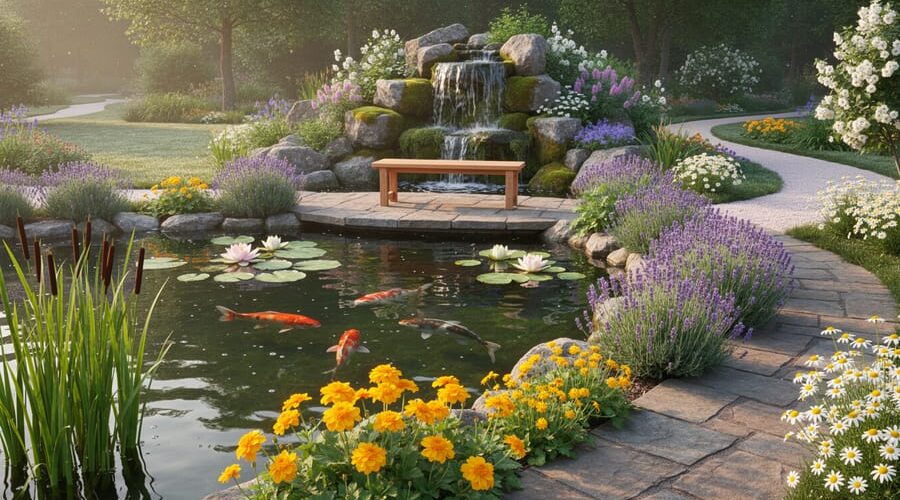
Position your meditation bench within direct sight of moving water—the sound of a waterfall or fountain activates your parasympathetic nervous system within 3-5 minutes, measurably lowering cortisol levels. Plant lavender, jasmine, and chamomile in clusters along pathways where brushing against foliage releases calming aromatics during evening walks. Create shallow ledges at 6-8 inches deep specifically for marginal plants like sweet flag and marsh marigold, which provide textured visual focal points that reduce mental fatigue better than open water alone.
Your wellness garden works because it engages all five senses simultaneously. Morning dew on lotus leaves catches light differently than afternoon sun on lily pads, giving your brain novel stimuli that interrupts rumination patterns. The cool air rising from pond surfaces in summer creates a microclimate 5-10 degrees cooler, making your space genuinely more comfortable for extended outdoor sitting. Fish watching—particularly koi—induces a light meditative state similar to watching flames, with the added benefit of building a daily routine that gets you outside regardless of mood.
The transformation happens gradually. You’ll notice after two weeks that you naturally gravitate toward your pondside seat during stressful moments. By month two, you’ll have established viewing patterns, favorite times of day, and seasonal rhythms tied to bloom cycles and fish behavior. This isn’t about creating Instagram-worthy perfection. It’s about building a living space that actively supports your mental health through deliberate sensory design and accessible daily rituals.
What Makes a Pondside Wellness Garden Different
The Science Behind Water and Wellness
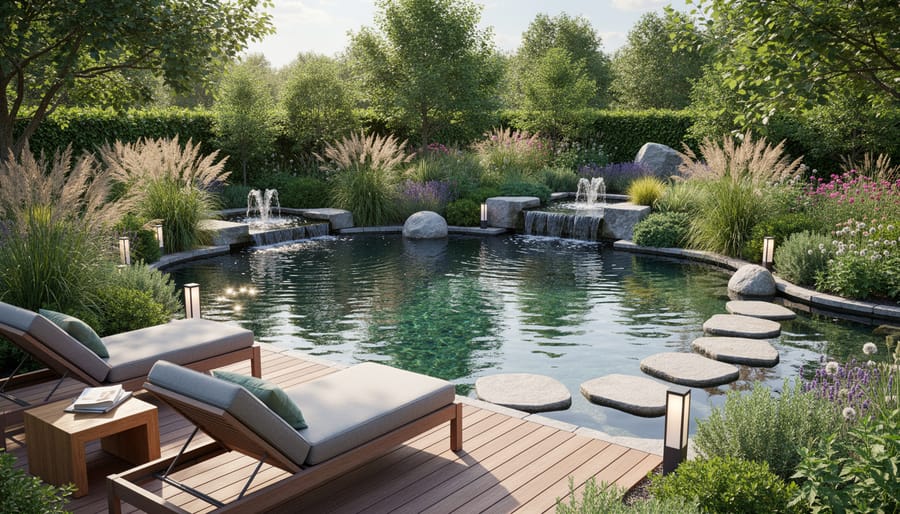
There’s something almost magical about sitting beside water, isn’t there? That sense of calm that washes over you isn’t just in your imagination—it’s backed by solid science. Researchers have found that being near water actually triggers a relaxation response in our brains, lowering cortisol levels (that’s your stress hormone) and slowing your heart rate. It’s called the “blue space effect,” and it’s just as powerful as being surrounded by greenery.
Think about the last time you felt truly relaxed. Chances are, water was nearby—maybe a beach vacation, a lakeside cabin, or even a bubble bath. Your pond creates this same therapeutic environment right in your backyard. The gentle sound of trickling water masks distracting noises from traffic or neighbors, helping your mind settle and focus. I’ve noticed that my best creative ideas often pop up during my morning coffee by the pond, when my brain finally has space to wander.
The benefits go beyond just feeling good in the moment. Studies show that regular time near water can improve sleep quality, boost mood, and even strengthen your immune system. For those dealing with anxiety or depression, a pondside wellness practice can be a gentle, accessible form of daily therapy. You’re not just building a pretty water feature—you’re creating a personal healing space that works for you 24/7.
Five Elements of a Therapeutic Water Garden
Creating a truly therapeutic water garden involves engaging all your senses and inviting nature to join you. Let me walk you through the five essential elements that transform an ordinary pond into a wellness sanctuary.
The sound of moving water is your foundation. Whether it’s a gentle bubbling fountain or a cascading waterfall, that rhythmic splashing naturally masks neighborhood noise and creates what I call an “audio cocoon.” I’ve noticed that within minutes of sitting beside my own pond, my breathing automatically slows to match the water’s rhythm. You don’t need anything fancy—even a simple spitter or small recirculating pump can work wonders.
Visually, water gardens offer dynamic beauty that constantly shifts. The mirror-like reflections of clouds drifting across the surface provide a natural meditation focus, while colorful koi or goldfish add playful movement that pulls you into the present moment. I’ve spent countless afternoons simply watching fish glide through the water, and it never gets old.
Don’t overlook scent—aquatic plants like water lilies and lotus blossoms release subtle fragrances that enhance your experience without overwhelming. Hardy water irises and flowering marginals add layers of gentle aromas throughout the growing season.
The touch element is about interaction. Trailing your fingers through cool water, handling smooth river stones during maintenance, or feeling the texture of plant leaves creates tangible connection to your space.
Finally, attract wildlife by incorporating varying water depths and native plantings. Dragonflies, butterflies, and birds visiting your pond bring it alive, reminding you that you’ve created something bigger than just a backyard feature—you’ve built a thriving ecosystem that nurtures both you and nature.
Designing Your Pondside Wellness Space
Choosing the Right Location Around Your Pond
Finding the perfect spot for your wellness garden seating takes a bit of thoughtful observation, but trust me, it makes all the difference in how often you’ll actually use the space. Start by spending a few mornings and evenings by your pond, simply noticing where you naturally gravitate. Do you prefer being right at the water’s edge, or does a slight elevation give you that peaceful overview you’re craving?
When positioning your seating, aim for spots that offer unobstructed views of the water without casting shadows across the pond during peak sunlight hours. This protects beneficial algae and keeps your pond ecosystem balanced. I’ve found that placing a meditation bench about three to five feet back from the water’s edge gives you that immersive feeling while keeping the pond itself undisturbed.
Consider the sun’s path throughout the day. Morning sun with afternoon shade often creates the most comfortable retreat, especially during summer months. Privacy matters too for true relaxation. Use existing shrubs or plant tall ornamental grasses to create natural screens without blocking pond circulation or creating excessive leaf drop into the water. Keep pathways wide enough for easy access, especially if you plan morning walks while dew is still on the grass.
Plants That Heal: Selecting Therapeutic Flora
The right plants transform your pond from a simple water feature into a living wellness retreat. I’ve discovered that choosing flora with therapeutic properties creates layers of healing—visual beauty, soothing scents, and even gentle sounds as breezes rustle through the leaves.
Start with lavender along your pond’s edge. This purple powerhouse isn’t just gorgeous; its calming aroma reduces anxiety and promotes better sleep. Plant it in well-drained soil about 12-18 inches from the water’s edge, where you can brush against it during your pondside walks and release that stress-melting fragrance.
Mint thrives in the moist conditions near water and offers instant refreshment. Touch a leaf, inhale deeply, and feel your mind sharpen. I keep mine in containers to prevent it from taking over—trust me on this one! Fresh sprigs also make wonderful additions to your evening tea as you unwind by the pond.
For in-water options, water iris brings vertical elegance with its sword-like leaves and stunning blooms. These hardy plants need shallow water, about 2-6 inches deep, and their presence creates natural focal points that draw your eye and calm your thoughts.
Lotus flowers are the ultimate symbol of tranquility and new beginnings. Watching their blooms unfold each morning becomes a meditation in itself. They prefer still water and full sun, rewarding your patience with breathtaking flowers that seem to float on the surface like nature’s own stress-relief tablets.
Creating Comfortable Gathering Spots
Think of your pondside wellness garden as an outdoor living room where you’ll want to spend hours unwinding. Start by creating comfortable gathering spots with weather-resistant seating positioned to capture the best pond views. I’ve found that placing a curved bench about six feet from the water’s edge creates that sweet spot where you can hear the fountain without feeling dampness.
Add a simple pergola or sail shade to provide relief during sunny afternoons while maintaining that breezy, open feeling. Natural stone or gravel pathways work beautifully, guiding visitors around your pond while protecting plant roots and preventing muddy boots. Keep paths wide enough for comfortable strolling, about three to four feet across.
Consider adding a small side table near your favorite sitting spot for morning coffee or an evening journal. The goal is making your space so inviting that stepping outside becomes effortless, turning daily pond visits into a cherished ritual rather than an occasional treat.
Daily Wellness Rituals by Your Pond
Morning Meditation and Mindful Fish Feeding
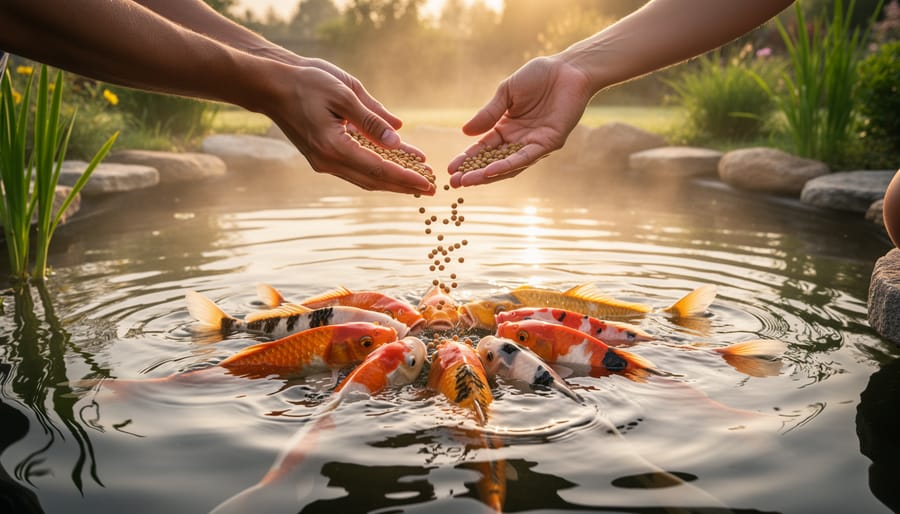
I’ve discovered that my morning fish feeding has become the most calming part of my day, and it all started when I slowed down enough to truly be present with my pond. Instead of rushing through it, I now use this simple task as a grounding ritual that sets a peaceful tone for hours ahead.
Here’s how you can transform feeding time into a mindfulness practice. First, arrive at your pond five minutes early and simply stand at the water’s edge. Take three deep breaths, noticing the coolness of the morning air and any sounds around you. Before reaching for the fish food, observe the water’s surface—is it still or rippling? Are your fish already gathering in anticipation?
As you sprinkle the food, do it slowly and deliberately. Watch each pellet hit the water and notice how your fish respond. Their movements, the gentle splashing, the way light catches their scales—these small details anchor you in the present moment. Incorporating these pond meditation practices into your routine creates a consistent touchpoint for daily reflection.
Finish by setting one intention for your day while watching your fish eat. This simple ritual turns an everyday chore into a meaningful wellness practice that nourishes both your fish and your spirit.
Afternoon Garden Therapy Sessions
There’s something wonderfully grounding about rolling up your sleeves and tending to your pond in the afternoon hours. I’ve found that hands-on pond maintenance isn’t just about keeping things tidy—it’s one of the most therapeutic activities you can build into your daily routine.
Start with simple skimming. Using a pond net to remove fallen leaves and debris creates an instant sense of accomplishment. The gentle sweeping motion across the water’s surface becomes almost meditative, and you’ll notice how quickly your breathing slows and synchronizes with the rhythm of the task.
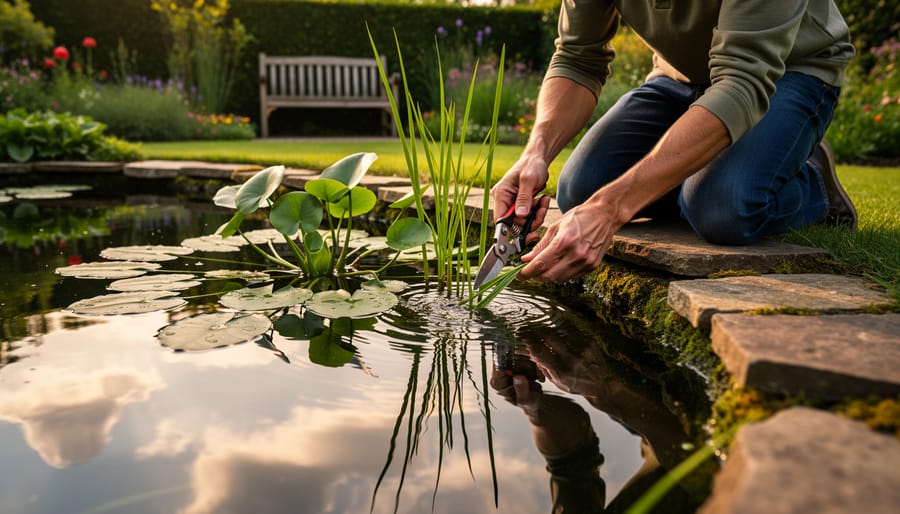
Aquatic plant pruning offers another layer of purposeful engagement. Trimming back overgrown water lilies or thinning out excess marginal plants gives you tangible results while keeping your hands busy and your mind focused. There’s real satisfaction in stepping back to admire cleaner, healthier plant growth.
Don’t overlook the therapeutic value of weeding around your pond’s edges. Pulling unwanted plants requires just enough concentration to quiet racing thoughts, while the physical movement releases tension. These aren’t chores—they’re opportunities to practice mindful presence while caring for your living ecosystem. The combination of gentle exercise, fresh air, and visible progress creates a natural mood boost that lasts well beyond your garden session.
Evening Reflection and Journaling
As daylight fades, your pond transforms into one of the most inviting evening reflection spaces you could ask for. The combination of gentle water sounds and diminishing light naturally signals your mind to shift into contemplation mode.
I’ve found that dedicating just 15-20 minutes around sunset creates a powerful daily ritual. Bring a simple notebook and settle into your favorite spot beside the water. Let yourself watch the ripples for a few minutes before writing anything down.
Try these prompts to get started: What surprised me today? What am I grateful for in this moment? What did I notice in my pond today that I hadn’t seen before? The last question beautifully connects your inner reflection with your outer environment.
Don’t worry about perfect prose or complete sentences. Your pondside journal is for you alone, a place to capture fleeting thoughts and feelings. Many pond owners find that the water’s movement helps thoughts flow more freely onto the page, making evening journaling feel less like a chore and more like a natural conversation with yourself.
Seasonal Wellness Practices
Your wellness garden becomes a year-round companion when you embrace the unique gifts of each season. In spring, channel renewed energy into planting therapy—getting your hands in the soil as you nestle marginal plants into place releases stress and creates tangible hope. I find those first moments dividing water iris particularly grounding after a long winter.
Summer invites playful interaction with your pond. Dangle your feet in the shallows during morning meditation, or simply watch dragonflies skim the surface while sipping iced tea. The sound of moving water naturally cools both body and mind.
Autumn cleanup becomes a mindfulness practice when approached intentionally. Rather than rushing through cutting back spent foliage, move slowly and observe what you’ve created. Notice seed heads feeding goldfinches, appreciate the changing reflections.
Winter offers unexpected rewards through wildlife observation. Keep a journal of visiting birds at your pond’s edge, or photograph ice formations. Even dormant, your water garden connects you to nature’s rhythms and provides peaceful contemplation when you need it most.
Enhancing the Therapeutic Experience
Sound Elements: Waterfalls and Fountains
There’s something magical about the sound of moving water—it drowns out neighborhood noise, slows your breathing, and creates an instant sense of calm. If you’ve ever sat beside a babbling brook and felt your stress melt away, you already know the therapeutic power of water sounds.
The good news? You don’t need an elaborate setup to bring this wellness element to your existing pond. A simple recirculating pump connected to a fountain head creates gentle bubbling sounds that transform your space. I started with just a basic spray fountain in my small pond, and the difference was immediate—my morning coffee by the water became genuinely restorative instead of just pleasant.
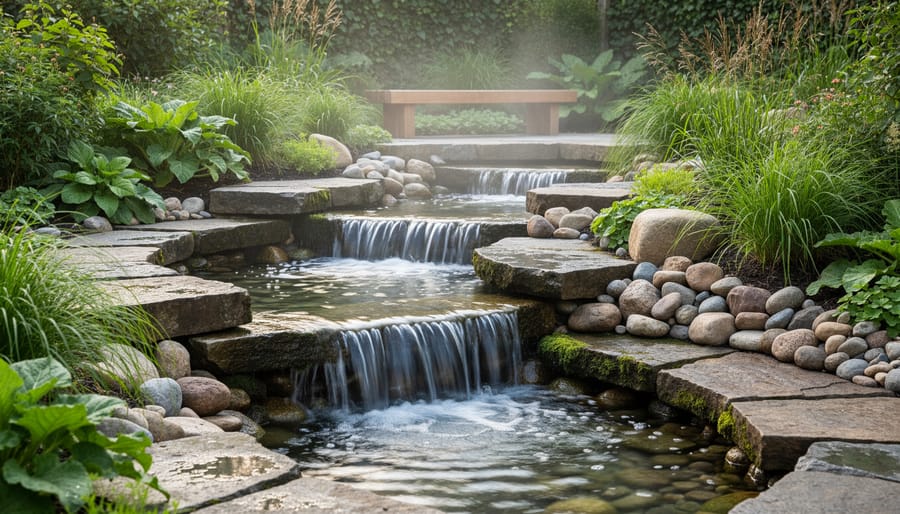
For a more natural waterfall effect, stack flat rocks at your pond’s edge and direct water over them using flexible tubing. The water cascading over textured surfaces creates those soothing rippling sounds. Adjust the pump flow rate until you find your perfect sound—some days you might want energizing splashes, other times a gentle trickle.
Position your water feature where you’ll hear it from your favorite sitting spot, and consider adding multiple smaller fountains rather than one loud feature for fuller sound coverage.
Lighting for Evening Rituals
As the sun sets, your wellness garden transforms into a soothing sanctuary with the right illumination. I’ve discovered that gentle lighting extends the therapeutic benefits of my pond well into the evening, perfect for unwinding after hectic days.
Solar-powered lights are my go-to recommendation for beginners. They’re safe, affordable, and require zero wiring. Position them along pathways and behind plants to create soft, dappled shadows that dance on the water’s surface. For underwater magic, explore various pond lighting options that are specifically designed to be fish-friendly and waterproof.
When placing lights, think layers. Low-level path lights guide your way, uplights highlight favorite plants or water features, and floating lights add enchanting movement. Always check that fixtures are rated for outdoor use and keep electrical connections well away from water.
My favorite evening ritual involves sitting by my softly lit pond with herbal tea, watching the gentle glow ripple across the water. It’s pure meditation without trying.
Wildlife as Wellness Partners
Your wellness garden truly comes alive when you invite nature’s helpers to share the space with you! Attracting wildlife to your pond creates a living meditation experience that changes with each season.
Start simple by adding shallow edges to your pond where birds can safely drink and bathe. I’ve found that a flat rock placed just below the water surface becomes a favorite butterfly perch by midsummer. Plant native flowers around your pond’s margin to draw pollinators, and leave a small brush pile nearby for beneficial insects and small creatures to shelter.
Frogs are particularly wonderful wellness partners. Their evening chorus provides natural sound therapy, and watching them hunt insects becomes surprisingly calming. Create entry points with gently sloping rocks or a pebble beach area.
The magic happens when you sit quietly and simply observe. You’ll notice dragonflies patrolling at dusk, butterflies visiting blooms, and birds taking their morning baths. This wildlife watching becomes a mindfulness practice that grounds you in the present moment.
Making Wellness Gardens Work Year-Round
Winter Wellness at the Pond
Winter transforms your pond into a completely different wellness experience, and I’ve found it just as rewarding as the growing season. When ice forms, I bundle up with my morning tea and watch the intricate patterns emerge as temperatures shift. It’s like nature’s meditation mandala, changing daily.
Keep your wellness routine alive by placing a bird feeder near your viewing spot. Watching cardinals and chickadees visit becomes your new pond observation practice, and you’re supporting local wildlife through the harsh months. I keep a simple journal noting which birds appear and how the ice shifts, connecting me to seasonal rhythms.
This dormant period is perfect for planning your spring wellness additions. Sketch out where you’d like a meditation bench, research native plants for next season, or design a simple path improvement. I use winter afternoons to flip through pond magazines and mark ideas that resonated during last year’s practice.
Even frozen, your pond remains a wellness anchor. The key is adapting your rituals rather than abandoning them, letting each season teach you something different about stillness and observation.
Low-Maintenance Wellness Features
Creating a wellness garden shouldn’t add stress to your life. If you’re short on time or dealing with physical limitations, focus on solutions that work with your lifestyle, not against it.
Start with native plants around your pond that thrive without constant attention. Choose perennials that return year after year and require minimal pruning. I’ve found that hostas, sedges, and ferns create a lush, calming atmosphere while practically caring for themselves.
Consider installing a timer for your pond pump and adding an automatic fish feeder if you keep koi or goldfish. These simple devices mean you can travel or take breaks without worry. For lighting, solar-powered path lights eliminate wiring hassles and create evening ambiance automatically.
Keep wellness rituals simple too. A five-minute morning coffee by the pond counts. So does tossing food to your fish while dinner cooks. Even pulling one or two weeds during a phone call adds up over time without feeling like a chore. The goal is consistency, not perfection. Your wellness garden should nurture you, not demand constant attention.
You don’t need to transform your entire pond overnight. Start with just one simple ritual that speaks to you. Maybe it’s five minutes of morning observation with your coffee, or an evening walk around the water’s edge to decompress after work. Your wellness garden isn’t about perfection or following someone else’s blueprint. It’s about discovering what brings you peace and building on that foundation.
The beautiful truth is, you’re already ahead of the game. That pond you’ve been caring for? It’s already a healing space. Every time you’ve checked on your fish, adjusted your pump, or simply sat beside the water, you’ve been practicing wellness. Now you’re just being more intentional about it.
Your wellness garden will grow and change with you, just like your plants do with the seasons. Some rituals will stick, others you’ll outgrow, and that’s exactly how it should be. There’s no finish line here, only the ongoing practice of connecting with nature and yourself.
Take that first step today. Choose one small thing. Light a candle by the water tonight. Plant one fragrant herb tomorrow. The journey of a thousand peaceful moments begins with a single breath beside your pond.