
How Water Gardens Shaped the Stories We Love
Look at your backyard pond on a quiet morning, watching ripples spread across the surface, and you’re witnessing the same symbol that has captivated writers for thousands of years. Water in literature carries meanings far richer than hydrogen and oxygen—it represents rebirth, purification, the flow of time, emotional depths, and life’s constant transformation. Every fountain you’ve installed, every waterfall you’ve designed, connects to these timeless themes that authors use to explore the human experience.
Understanding water symbolism transforms how you appreciate both great literature and your own water features. When Shakespeare’s characters face stormy seas or peaceful streams, these aren’t random settings—they’re carefully chosen symbols that mirror internal struggles and growth. The koi pond in your garden shares this symbolic language, representing prosperity and perseverance in Eastern traditions, while your bubbling fountain echoes the literary motif of renewal that appears in everything from ancient myths to modern novels.
This connection between literary water symbolism and practical water gardening enriches both pursuits. Recognizing how authors use water to convey meaning helps you design more intentional, emotionally resonant outdoor spaces. Your weekend project of adding a small waterfall becomes an artistic statement about movement and change. That meditation spot beside your pond gains deeper significance when you understand its literary parallels to reflection and self-discovery. By exploring how writers harness water’s symbolic power, you’ll discover fresh inspiration for creating water features that speak to something profound in everyone who experiences them.
Why Water Captivates Writers and Artists
The Mirror Effect: Reflection and Self-Discovery
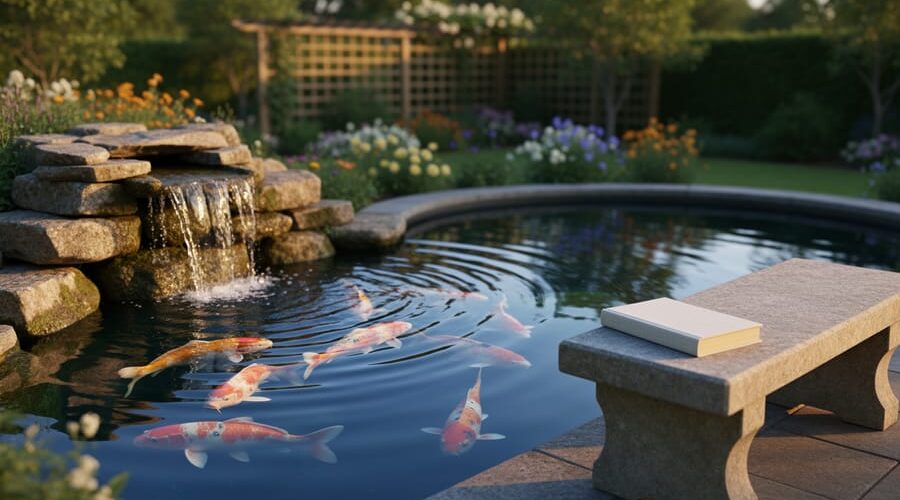
Ever noticed how a perfectly still pond acts like nature’s mirror? That reflective quality has captivated writers for centuries, making water a powerful symbol for self-discovery and truth. Just as you might peer into your own garden pond and see your reflection gazing back, literary characters often encounter still water at crucial moments of revelation.
Think of it like this: when your pond water is calm and clear, you can see everything beneath the surface and above it. Writers use this same concept brilliantly. In classic fairy tales like Snow White, the evil queen’s mirror reveals uncomfortable truths. Similarly, historical reflecting pools in palace gardens weren’t just decorative—they symbolized clarity of thought and honest self-examination.
Modern stories continue this tradition. Characters pause beside lakes or fountains when they need to confront who they really are. The stillness demands honesty, just as maintaining clear pond water requires dedication and care from us gardeners. When you’re working on your water feature and catch your own reflection, you’re participating in this ancient symbolic tradition—using water’s mirror-like quality as a moment for genuine contemplation and connection with yourself.
Movement and Flow: Life’s Journey in Motion
There’s something magical about watching water move through your garden, isn’t there? That constant flow reminds us that nothing stays still—and writers have been captivating readers with this idea for centuries. When you see your fountain’s water dancing or your stream meandering through stones, you’re witnessing the same imagery that poets and novelists use to represent life’s journey and the passage of time.
Think about it: a stream never returns to the same spot twice, just like we can’t step back into yesterday. This flowing quality makes water gardens perfect metaphors for change and growth in literature. Herman Hesse’s Siddhartha learns life’s greatest lessons sitting beside a river, understanding that everything flows and transforms. The river becomes his teacher, showing him that resisting change is futile.
In your own garden, moving water creates this same sense of continuity and transformation. That little rill you built last spring? It’s constantly changing—different light, seasonal debris, varying water levels—yet it remains recognizably itself. Writers tap into this paradox all the time. Virginia Woolf used the image of waves to explore how consciousness flows and shifts. T.S. Eliot’s river represented both destruction and renewal.
Next time you’re maintaining your water feature, take a moment to appreciate how it mirrors your own life’s journey—always moving forward, carrying experiences downstream, yet somehow remaining beautifully constant.
Famous Water Gardens That Inspired Literary Masterpieces
Monet’s Water Garden and the Birth of Impressionism
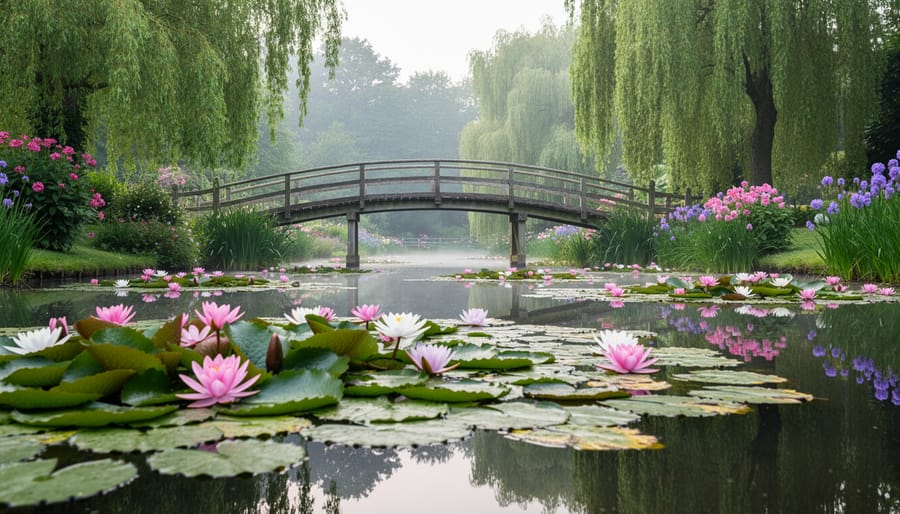
In 1883, Claude Monet purchased a property in Giverny, France, and what he did next changed the art world forever. He didn’t just paint water gardens—he actually built one himself, complete with a Japanese-style bridge, exotic water lilies, and carefully positioned willows. This hands-on approach might sound familiar to you as a water gardener! Monet spent years experimenting with plant placement, water flow, and reflections, essentially creating a living canvas before he ever picked up a brush.
What makes this fascinating for us is how his garden became a bridge between visual art and literature. French writers visiting Giverny were so captivated by the interplay of light on water that they began describing it in their novels and poems. Suddenly, literary descriptions of water became more dynamic, focusing on how sunlight dances across the surface at different times of day rather than just static reflections.
This connection between Impressionist water art and literature shows us something powerful: your own pond or water feature isn’t just decoration. It’s a living artwork that shifts with every changing cloud and season. Monet understood that water gardens are never truly finished—they evolve constantly, just like the stories we tell about them. When you adjust your plant arrangements or watch morning light hit your pond’s surface, you’re participating in the same creative process that inspired an entire artistic movement.
Japanese Gardens and the Haiku Tradition
If you’ve ever sat beside your pond watching koi glide beneath the surface, you’ve experienced the same quiet observation that inspired centuries of Japanese haiku poetry. The connection runs deep—Japanese water garden traditions didn’t just create beautiful spaces; they fundamentally shaped how poets captured fleeting moments in words.
Traditional haiku masters like Basho often composed their verses while contemplating garden ponds, where still water became a mirror for reflection—both literal and philosophical. Notice how a single ripple breaks the surface when a fish rises? That simple movement embodies the haiku principle of finding profound meaning in the smallest natural events. The careful placement of stones around your pond, the way water trickles over rocks, or how morning light catches the surface—these aren’t just design choices. They’re the same elements Japanese poets transformed into seventeen-syllable observations about existence, change, and beauty.
When you arrange your own water garden, you’re participating in this literary tradition. Each stone placement and plant choice creates those moments of stillness that make us pause and truly see what’s before us—exactly what haiku poetry invites readers to do.
The Romantic Era’s Garden Ponds
The Romantic poets and Victorian novelists absolutely adored their ornamental garden ponds! During this period, having a decorative water feature wasn’t just about beauty—it represented a connection to nature and deep emotion that defined the era.
If you’ve ever read Jane Austen’s novels, you might remember those leisurely walks beside estate ponds where characters had their most intimate conversations. These weren’t accidental settings. In works like Pride and Prejudice, ponds and lakes at grand estates like Pemberley symbolized wealth, yes, but also emotional depth and reflection. The still water mirrored the inner lives of characters working through their feelings.
The Romantic poets took this even further. Wordsworth and Coleridge saw garden ponds as places where heaven and earth touched. They’d describe how clouds reflected on the surface, creating a kind of portal between worlds. Pretty magical stuff!
For your own pond, think about recreating this contemplative atmosphere. The Victorians loved placing benches beside their ponds for quiet reflection. Adding water lilies or creating calm, mirror-like surfaces can capture that same romantic spirit. When you sit beside your pond after a long day, you’re participating in a tradition centuries old—using water as a place to pause, reflect, and reconnect with what matters most.
Common Water Garden Elements and Their Literary Meanings
Lotus and Water Lilies: Symbols of Rebirth
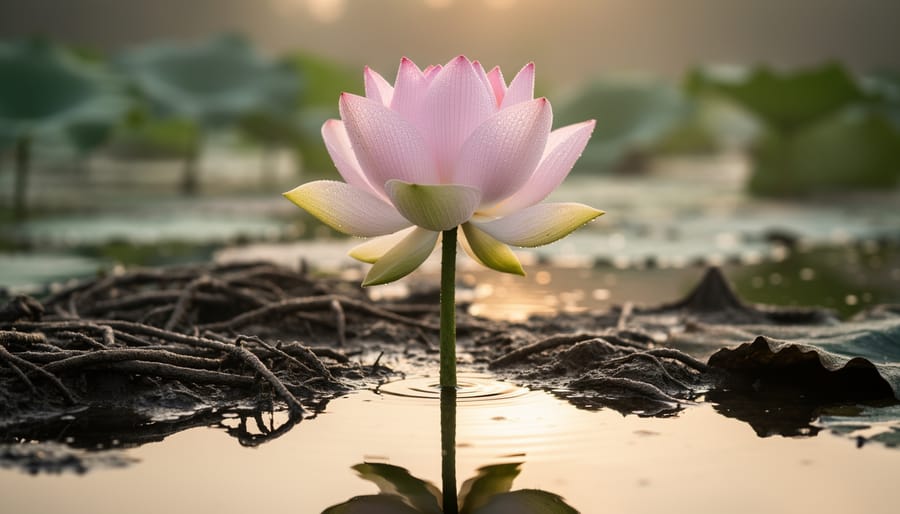
If you’ve spent any time admiring your pond plants, you’ve probably noticed how your lotus rises fresh and clean each morning, no matter how murky the water below. That daily resurrection isn’t lost on cultures worldwide. In ancient Egypt, the blue lotus symbolized the sun’s rebirth each dawn, while Buddhist traditions see the lotus as spiritual enlightenment emerging from muddy waters of earthly existence.
Water lilies carry similar weight in literature. Monet didn’t just paint them for their beauty—he captured their meditation on transformation and peace. In Greek mythology, nymphs transformed into water lilies, representing the boundary between earthly and divine realms. Native American stories often feature water lilies as gifts from the spirit world, bridging our reality with something greater.
Here’s what makes these plants perfect symbols: they’re rooted in darkness but bloom in light. When you’re choosing plants for your own pond, consider this layered meaning. Your hardy water lilies aren’t just filtering water and looking gorgeous—they’re carrying thousands of years of human storytelling. Next time you deadhead spent blooms, remember you’re tending the same flowers that inspired philosophers, poets, and painters to contemplate life’s biggest questions.
Koi Fish: Perseverance and Transformation
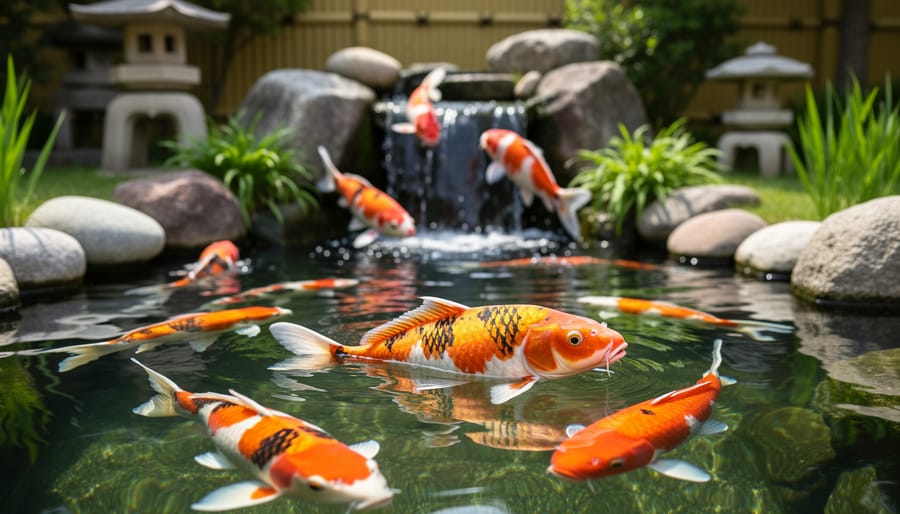
If you’ve ever watched your koi glide through your pond, you’ve witnessed living symbols that have inspired storytellers for centuries. In Asian literature, particularly Japanese and Chinese traditions, koi fish represent perseverance through adversity and remarkable transformation. The most famous legend tells of koi swimming upstream against powerful currents, eventually reaching the Dragon Gate waterfall where they transform into dragons—a story that appears in countless poems, folktales, and modern novels.
What makes this symbolism so powerful is how it mirrors what we actually observe in our own ponds. Koi are survivors. They endure winter cold, adapt to changing water conditions, and grow stronger year after year. Writers have used this natural resilience as a metaphor for human struggle and personal growth. In contemporary fiction, you’ll find koi representing characters who face overwhelming obstacles but continue pushing forward, much like those legendary fish swimming upstream.
When you’re sitting beside your pond watching your koi navigate around rocks and plants, you’re connecting with the same imagery that has moved readers across cultures for generations. That’s the beautiful intersection of water gardening and storytelling—the themes aren’t just abstract literary devices, they’re swimming right there in your backyard, reminding you daily that transformation comes through persistent effort.
Fountains and Waterfalls: Energy and Renewal
There’s something magical about moving water that writers have captured for centuries. In literature, fountains and waterfalls represent far more than pretty garden features—they symbolize life’s constant renewal and the cleansing power of nature itself.
Think about the fountain in T.S. Eliot’s poetry or the cascading waters in romantic landscapes. These aren’t just decorative elements. Writers use them to show characters finding fresh starts or washing away past troubles. When a character pauses by a fountain, it often marks a turning point—a moment of clarity or transformation.
If you’ve ever stood beside your own backyard waterfall, you know that feeling. The sound alone seems to wash stress away, doesn’t it? That’s exactly what authors tap into. The constant movement represents vitality and energy that never runs dry, much like the human spirit’s ability to bounce back.
In garden literature especially, fountains serve as focal points where characters gather, reflect, and make important decisions. The splashing water becomes a metaphor for life’s persistence—always moving forward, always refreshing itself. When you’re planning your own water feature, remember you’re creating not just a lovely sight, but a symbol of renewal that writers have celebrated for generations.
Still Ponds: Mystery and the Unconscious
Have you ever gazed into your pond on a perfectly still day and felt like you were looking into another world? That’s exactly the feeling writers tap into when they use calm, deep water as a symbol. In literature, still ponds and lakes represent the mysterious parts of ourselves we don’t fully understand—what psychologists call the unconscious mind.
Think of how your pond’s surface acts like a mirror when the water is calm. You see reflections, but you can’t quite see what’s beneath. Writers use this same idea brilliantly. In classic tales, characters often peer into still waters during moments of self-discovery or before major revelations. The dark, quiet depths suggest hidden truths waiting to be discovered.
This symbolism makes perfect sense when you consider your own water garden. Even though you know what’s in there—your plants, fish, and rocks—there’s always something slightly unknowable about those shadowy depths. That gentle mystery is part of what draws us to water features. Writers throughout history have recognized this universal human response, using still water to create atmosphere and suggest that not everything is meant to be fully revealed.
Bringing Literary Magic to Your Own Water Garden
Creating a Meditation Space Around Your Pond
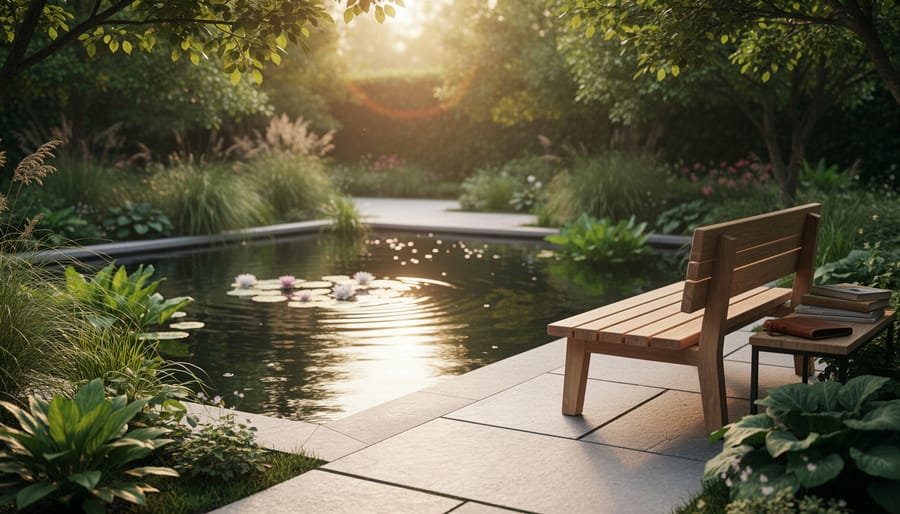
Creating a contemplative retreat near your pond doesn’t require elaborate construction. Start by positioning a comfortable bench or chair where you can observe the water’s surface without distractions. I’ve found that placing seating about six to eight feet from the water’s edge offers the perfect viewing distance while maintaining a sense of intimacy with the space.
Frame your meditation spot with plants that enhance tranquility rather than demand constant attention. Low-maintenance ornamental grasses, ferns, and hostas create soft boundaries without blocking your view. Consider the rustling sounds they’ll make in the breeze, adding another sensory layer to your experience.
The same qualities that drew literary giants to waterside contemplation can transform your garden into a place of refuge. Keep pathways simple and uncluttered, leading naturally to your seating area. spiritual water garden spaces work best when elements feel intentional yet effortless.
Add subtle lighting for evening reflection sessions using solar path lights or low-voltage fixtures. The interplay of light on water that inspired countless poets becomes your nightly show. Remember, this space should invite you to linger, notebook optional, letting the water work its timeless magic on your thoughts and creativity.
Plant Choices That Tell a Story
Just as writers carefully choose words to convey meaning, you can select aquatic plants that carry symbolic weight in your water garden. This approach transforms your pond from a simple landscaping feature into a living narrative with personal significance.
Water lilies are perhaps the most story-rich choice available. In many Eastern traditions, they represent spiritual enlightenment and rising above muddy circumstances, since their pristine blooms emerge from murky pond bottoms. When I planted my first water lily, I loved watching it follow this journey from underwater root to floating flower—it genuinely felt meaningful.
Lotus plants carry similar symbolism but with even deeper roots in literature and philosophy, representing purity, rebirth, and the soul’s journey. They’re surprisingly easy to grow in containers if you’re working with limited space.
For edges and margins, consider irises, which take their name from the Greek messenger goddess who traveled on rainbows. In Japanese culture, they symbolize courage and good news. Papyrus connects your garden to ancient Egyptian stories and the dawn of written language itself.
The beauty of symbolic plant choices is that they create layers of meaning only you might fully appreciate. Your garden becomes a personal meditation on themes that resonate with you, whether that’s renewal, peace, transformation, or simply the interconnectedness of all living things.
Adding Personal Meaning Through Garden Art
Your water garden becomes truly yours when you add elements that speak to your personal story and literary loves. Think about placing stones with meaningful words etched on them—perhaps “renewal” near where water flows, echoing rebirth themes from your favorite novels. I once added a small Buddha statue beside my pond after reading Hermann Hesse, and it transformed the space into something deeply personal.
Consider sculptures that represent characters or symbols from literature that resonates with you. A simple bird figure might honor Coleridge’s albatross, while a bench positioned for reflection creates your own Walden-inspired retreat. These living art elements don’t need to be expensive—even painted rocks or driftwood arrangements tell your story.
Start small. Choose one literary work that moves you and find one object that represents it. Place it where you’ll see it during garden maintenance. As you weed or check water levels, these touchstones remind you why you created this space. Your garden becomes more than beautiful—it becomes a reflection of the stories and symbols that matter most to you.
Modern Water Gardens in Contemporary Literature
The beautiful tradition of water gardens in literature hasn’t faded away—it’s thriving in contemporary writing! Modern authors and poets continue to use water features as powerful symbols, just as writers have done for centuries. What’s exciting is that these contemporary works often reflect the same gardens many of us are creating in our own backyards today.
In Ruth Ozeki’s novel “A Tale for the Time Being,” a Japanese zen garden with its carefully maintained pond becomes a place of meditation and connection across time. The still water mirrors the character’s internal journey, much like how you might find yourself pausing beside your own pond, watching the reflections change throughout the day. It’s that same contemplative quality we seek when we build these spaces.
Contemporary poetry collections frequently feature backyard water gardens as settings for personal transformation. Poets like Mary Oliver and Billy Collins have written about observing life around small ponds—the dragonflies, the changing seasons reflected in water, the quiet moments of watching koi glide beneath lily pads. These aren’t grand estate fountains but intimate garden features that everyday people tend and cherish.
Even in speculative fiction, water gardens appear as sanctuaries. In N.K. Jemisin’s award-winning works, cultivated water spaces represent hope and renewal in dystopian settings. The act of maintaining these gardens becomes an act of resistance and beauty-making.
What this tells us as water gardeners is meaningful. The pond or fountain you’re planning or maintaining isn’t just landscaping—it’s part of a living literary tradition. When you design your water feature, you’re creating a space that resonates with the same symbolic power that writers have celebrated across generations.
The next time you step outside to check on your pond, take a moment to really see it. That water reflecting the sky, those ripples spreading from a dragonfly’s touch, the quiet sound of your fountain—these aren’t just pleasant features of your backyard. You’ve created something that connects you to centuries of human expression, a living symbol that writers and artists have been drawn to since the beginning of storytelling.
Your water garden tells stories too. It speaks of renewal each spring when the water comes alive again. It mirrors the changing seasons and your own reflections as you tend it. The fish you feed, the plants you nurture, the way the light dances differently each day—these are the same mysteries that inspired poets and novelists to write about water as transformation, truth, and the flow of time.
So go ahead and get your hands muddy adjusting that filter or planting new lilies. But while you’re there, listen to what your pond is saying. You’re not just a gardener maintaining a landscape feature—you’re part of a beautiful tradition of people who’ve found meaning in water’s endless movement and reflection.