
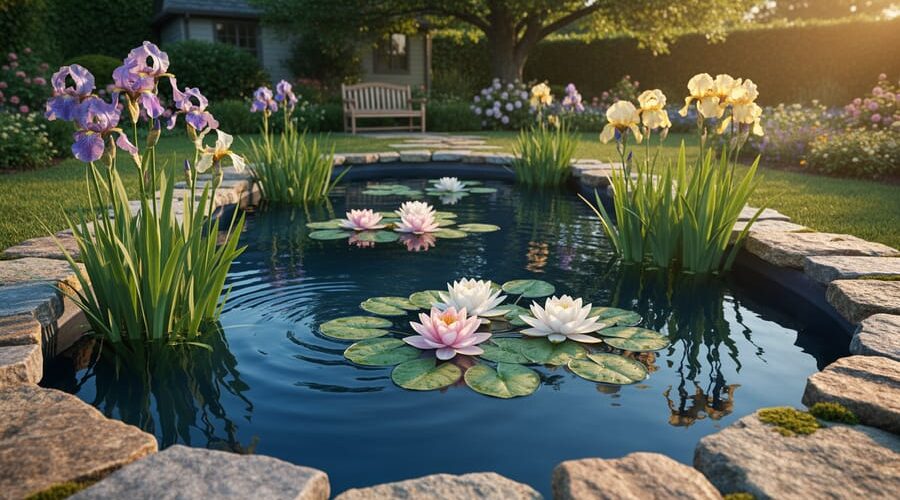
How Childe Hassam’s Water Garden Changed Art Forever (And What It Means for Your Pond Today)
When American Impressionist Childe Hassam painted his luminous water garden scenes in the early 1900s, he captured something water gardeners still chase today: that magical interplay of light dancing across still water, surrounded by flourishing plants and reflective beauty. His paintings weren’t just pretty pictures—they were masterclasses in composition, color harmony, and understanding how water transforms a garden space into something transcendent.
You don’t need to be a museum curator to appreciate what Hassam got right about water gardens. His work reveals timeless design principles that translate directly to your backyard pond. He understood that water gardens succeed when they balance structure with wildness, when reflections matter as much as the plants themselves, and when sunlight becomes part of the design rather than an afterthought.
Whether you’re planning your first small pond or reimagining an existing water feature, Hassam’s artistic vision offers surprisingly practical guidance. His paintings show us how to layer plantings for depth, use color to create focal points, and position water features to maximize their reflective qualities. He painted water gardens as living, breathing spaces that changed with the seasons and the hours—exactly what makes them so captivating in real life.
Let’s explore how this master’s eye can inform your water gardening choices, turning artistic inspiration into concrete design decisions that make your pond not just functional, but genuinely beautiful.
Who Was Childe Hassam and Why His Water Gardens Matter
The Artist Behind the Canvas
Frederick Childe Hassam was one of America’s most celebrated painters, and if you’ve ever admired water gardens, you’ll love discovering how he captured their magic on canvas. Born in 1859 in Massachusetts, Hassam became a leading figure in American Impressionism, bringing the light-filled style of French masters like Monet to American subjects.
During the early 1900s, Hassam became fascinated with garden scenes, particularly those featuring water elements. His water garden paintings weren’t just pretty pictures – they were studies in how light dances across water, how reflections create depth, and how plants interact with their watery surroundings. He painted these serene scenes during summers spent in New England, where he’d observe how lily pads floated, how shadows played across pond surfaces, and how garden paths invited visitors to linger.
What makes Hassam’s water garden work so inspiring for today’s pond enthusiasts is his ability to show us what makes these spaces feel peaceful and inviting. He understood that a successful water garden isn’t just about the water itself – it’s about creating a complete environment where every element works together in harmony.
When Art Met Water: Hassam’s Garden Period
Picture this: it’s the early 1900s, and American Impressionist Childe Hassam has just discovered his artistic paradise. After years of painting bustling city streets and coastal scenes, Hassam spent his summers at Celia Thaxter’s island garden in Maine, where he became captivated by water-side plantings and reflective pools. This period, roughly from 1890 to 1910, marked his most prolific water garden phase.
What makes this story so relatable for us water gardeners is that Hassam wasn’t painting formal estates or grand fountains. He painted intimate garden spaces where flowers met water naturally, much like the backyard ponds we create today. He’d set up his easel right at the water’s edge, capturing how light danced across lily pads and how blooms reflected in still water.
Hassam worked during America’s own water gardening boom, when homeowners were first experimenting with aquatic plants and ornamental ponds. His paintings documented real gardens created by real people who simply loved the magic that happens when you combine plants with water—sound familiar?
The Magic of Hassam’s Water Garden Paintings
Light Dancing on Water: What Hassam Captured
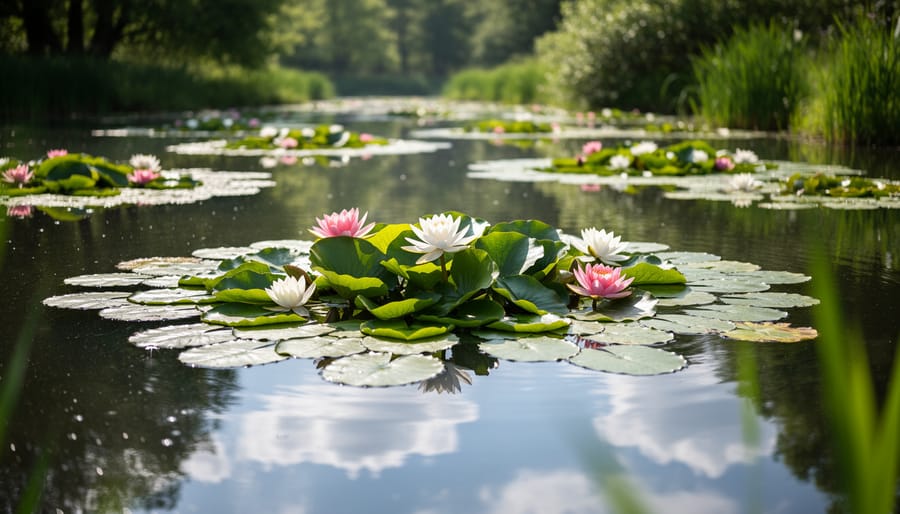
If you’ve ever stood by your pond on a sunny morning, you’ve witnessed the magic Hassam captured so brilliantly. He had this amazing ability to paint water as it actually behaves—something that’s trickier than it sounds! Rather than painting water as a flat blue surface, he showed us the dance happening right there on top.
Look closely at his water garden paintings, and you’ll notice how he layered quick brushstrokes to show ripples catching sunlight. Those shimmering patches of gold and white? That’s exactly what you see when a breeze moves across your pond on a summer afternoon. He understood that water is never static—it’s constantly reflecting the sky, nearby plants, and shifting clouds.
Hassam also captured those mysterious dark patches where tree shadows fall across the water, creating contrast with the brilliant sparkles nearby. Any pond owner knows this interplay intimately. One moment your water looks emerald green in the shade, the next it’s blazing with reflected sunlight.
What makes this relevant to your own water garden is recognizing that placement matters tremendously. Position your pond where it catches changing light throughout the day, and you’ve created your own living Hassam painting—one that transforms with every passing hour and season.
The Plants That Stole the Show
When you study Hassam’s water garden paintings closely, you’ll notice he had favorite botanical stars that kept appearing on his canvas—and here’s the exciting part: you can grow these same beauties in your own pond!
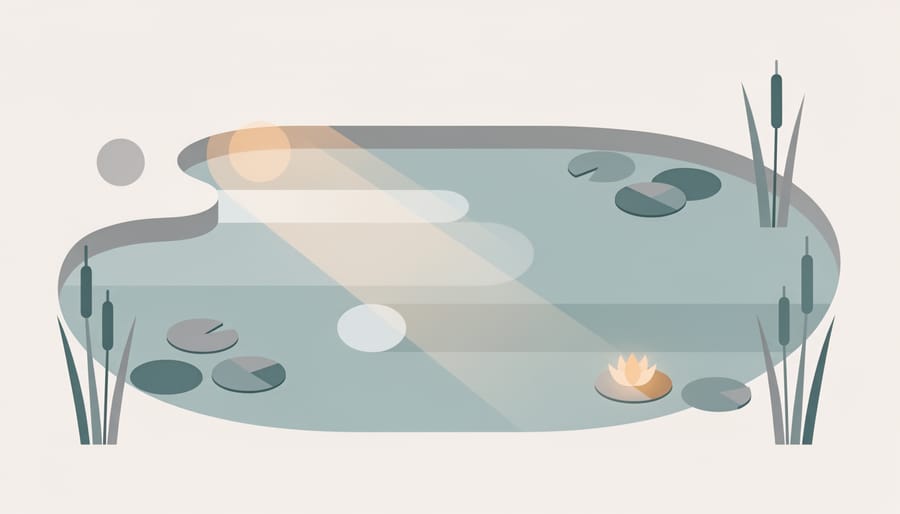
Water lilies absolutely dominate his work, and it’s easy to see why. These floating gems were having their moment in American gardens during the early 1900s, and Hassam captured their dinner-plate leaves and delicate blooms with visible affection. For your pond, hardy water lilies are surprisingly easy to grow. They’ll give you that classic Impressionist look without demanding expert care.
Irises make frequent appearances along his painted pond edges, their sword-like leaves creating vertical interest against horizontal water surfaces. Japanese iris and yellow flag iris were period favorites that still thrive today. Plant them in shallow water or boggy edges for that authentic early-century garden aesthetic.
Lotus flowers, with their architectural presence and sculptural seed pods, occasionally graced his scenes. While slightly more particular about conditions than water lilies, they’re manageable for intermediate gardeners and create that stunning “rising above the water” effect Hassam loved to paint.
The wonderful thing about these plants? They’re still readily available at garden centers and pond suppliers, making it entirely possible to recreate a living version of a Hassam masterpiece right in your backyard.
Water Gardens in the Broader Artistic Movement
From Monet to Hassam: An American Take on Water
While Claude Monet famously captured his elaborate water garden at Giverny with its Japanese bridges and floating lily pads, Childe Hassam brought a distinctly American sensibility to water scenes. The difference is fascinating and can inspire your own pond design choices!
Monet’s water gardens were carefully constructed retreats, almost fantasy spaces where he could control every lily and reflection. His paintings feel dreamlike and immersive, as if you’re floating in the water itself. Hassam, on the other hand, painted water gardens as Americans encountered them—more natural, less manicured, and often integrated into everyday landscapes. His water scenes include working fountains in city parks, coastal tide pools, and modest backyard ponds that real people could actually create.
This American approach was less about perfection and more about capturing light dancing on water in authentic settings. Where European Impressionists often painted secluded garden sanctuaries, Hassam showed how water features could enhance ordinary American life. This perspective is perfect for today’s water gardeners! You don’t need a massive estate to create beauty. Understanding how water gardens shaped watercolor art helps us appreciate that even modest ponds can become stunning focal points worth celebrating.
Why Artists Fell in Love with Water Gardens
Water gardens offered something magical to artists like Hassam: a subject that changed constantly yet remained peaceful. Think about your own pond on a breezy afternoon—the way light dances across ripples, how reflections blur and sharpen, the interplay between what’s above and below the surface. These same qualities mesmerized Impressionist painters.
Artists were drawn to water gardens because they represented a perfect blend of human creativity and natural beauty. Unlike wild landscapes, water gardens showed intentional design while still feeling organic and alive. Every viewing angle told a different story depending on the time of day, season, or weather.
For modern water gardeners, this artistic legacy matters because it reminds us that our ponds aren’t just functional features—they’re living canvases. When you position that water lily or choose where sunlight hits your pond, you’re making the same artistic decisions Hassam made with his brushstrokes. Your water garden becomes both a personal sanctuary and an ever-changing work of art that you can enjoy every single day.
How Water Gardens Influenced Literature and Poetry
Literary Reflections: Writers Who Found Inspiration in Water
Water has long captivated writers, offering endless metaphors for life, change, and inner peace. Just as Childe Hassam painted water gardens to capture moments of stillness, authors have woven aquatic settings into their most memorable works. Water gardens inspired writers like Frances Hodgson Burnett, whose beloved novel The Secret Garden features a transformative pond that mirrors the characters’ emotional healing. Virginia Woolf often used water imagery to explore consciousness and reflection in her modernist works.
These literary connections remind us that your backyard pond isn’t just a landscape feature. It’s a space for contemplation and renewal, much like the garden retreats that inspired generations of creative minds. When you’re designing your water garden, consider how it might become your own sanctuary for quiet reflection. The gentle sound of moving water, the mirror-like surface reflecting clouds, and the life thriving within create an environment that nourishes both body and spirit.
The Poetry of Ripples and Lily Pads
Hassam captured something truly magical in his water garden paintings—the way light dances across ripples and transforms ordinary lily pads into shimmering jewels. When you look at his work, you’ll notice how he painted water not as a static surface but as living poetry. Those concentric circles spreading from a fallen leaf, the way lily pads overlap like nature’s own abstract composition, the mysterious reflections that turn the sky into underwater art—these are the moments we often miss when we’re too busy maintaining our ponds.
Think about your own water garden for a moment. Have you ever stopped during your morning coffee to watch how sunlight breaks into a thousand sparkles on moving water? That’s exactly what Hassam was celebrating. He understood that water gardens aren’t just about plants and fish—they’re about capturing fleeting moments of beauty. His brushstrokes remind us that even a small backyard pond can offer endless visual poetry if we take time to truly see it.
Bringing Hassam’s Vision to Your Backyard
Design Principles from the Canvas to Your Pond
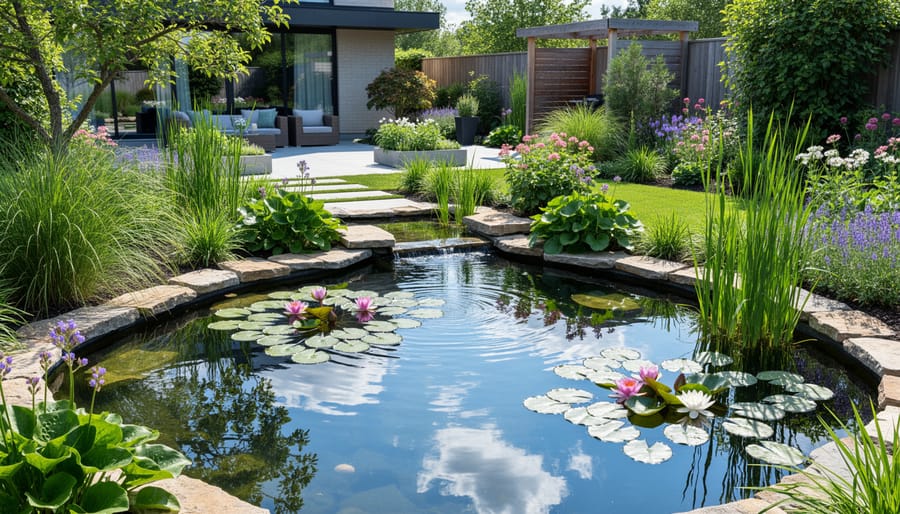
Hassam’s impressionist masterpiece offers more than visual inspiration—it’s a blueprint for creating stunning water gardens. Let’s translate his artistic genius into practical design principles you can apply to your own pond.
Start with balance, just as Hassam did. Notice how his painting distributes visual weight across the canvas? Your pond needs the same thoughtful arrangement. Place larger rocks or plantings on one side and balance them with clusters of smaller elements on the other. This creates harmony without rigid symmetry—nature’s way of achieving equilibrium.
Color harmony is your next consideration. Hassam used complementary colors that enhanced rather than competed with each other. Choose water plants with foliage and blooms that work together beautifully. Soft yellows of water irises pair wonderfully with purple pickerel rush, while white water lilies create peaceful contrast against deep green pads.
Every memorable painting has a focal point, and so should your pond. This might be a stunning water lily, an elegant fountain, or an artfully positioned stone. Draw the eye naturally to this feature, just as Hassam guided viewers through his composition.
The principles of traditional water garden design echo these timeless artistic concepts. By thinking like an artist, you’ll create a pond that’s both functional and breathtakingly beautiful—your own living impressionist masterpiece.
Plants That Create That Impressionist Look
Let me share my favorite plants for creating that dreamy Impressionist atmosphere Hassam captured so beautifully!
Water lilies are your stars here. Hardy varieties like ‘Marliacea Chromatella’ with its soft yellow blooms or ‘Pink Sensation’ mirror those dappled color patches in Hassam’s brushwork. Plant them in wide, shallow containers using heavy clay soil, positioning the crown just at soil level. They need at least six hours of sunlight daily to really shine. I’ve found that starting with one lily per 15-20 square feet of water surface prevents overcrowding.
Irises add those vertical accents you see throughout Impressionist paintings. Japanese irises and Louisiana irises thrive at pond margins in consistently moist soil. Their sword-like foliage creates beautiful reflections, while blooms in purples, whites, and yellows provide that painterly color variety. Plant them in spring, spacing them about 18 inches apart.
Lotus flowers bring dramatic height and exotic beauty. They’re surprisingly easy once established. Use large containers filled with heavy loam, plant tubers horizontally about 4 inches deep, and keep water levels 2-6 inches above the soil. Their large leaves and stunning blooms create focal points that shift with the light, just like Hassam’s shifting perspectives captured changing moments throughout the day.
Capturing Light and Reflection in Your Water Garden
Want to recreate that magical shimmer Hassam captured so beautifully? It’s all about being strategic with your positioning. Place your water garden where it catches morning or late afternoon light—these golden hours create the same luminous quality Hassam loved. Think about sight lines too. I learned this the hard way when I tucked my first pond behind a fence. Once I relocated it where I could see it from my kitchen window, those light-dancing moments became part of my daily joy.
Depth matters more than you’d think. Shallow edges reflect sky and clouds like a mirror, while deeper sections absorb light and create contrast—that interplay of bright and dark that makes Hassam’s painting so captivating. Add a light-colored gravel bottom in shallow areas to bounce light back up through the water.
Design choices enhance reflection too. Still water reflects better than moving water, but a gentle fountain creates sparkle without losing that mirror effect. Keep some open water surface free of plants—at least a third—so you have room for those gorgeous reflections. Position white or pale-colored water lilies to catch and reflect light, just like in Hassam’s masterpiece.
Why Water Gardens Still Captivate Us Today
There’s something timeless about water gardens that continues to draw us in, just as it captivated Childe Hassam over a century ago. When I sit by my own pond in the evening, watching the light dance across the water’s surface, I understand exactly what those Impressionist painters were chasing. The magic hasn’t faded one bit.
Today’s water garden enthusiasts are essentially continuing a tradition that artists like Hassam celebrated through their work. We’re still mesmerized by the interplay of light and water, the vibrant reflections, and the peaceful atmosphere these spaces create. The difference is that now we can bring this living canvas right into our backyards.
Modern water gardening has exploded in popularity partly because we’re rediscovering what those artists always knew: water transforms a space completely. Whether you’re installing a small container pond on your patio or designing an elaborate koi pond, you’re creating your own masterpiece that changes throughout the day and seasons, just like Hassam’s paintings captured different moments in time.
The connection between treating your water garden as art and maintaining it as a healthy ecosystem isn’t contradictory. In fact, understanding the artistic principles that inspired painters helps us design more beautiful, harmonious spaces. We’re not just installing pumps and filters; we’re composing with color, texture, light, and movement.
This enduring appeal reminds us that some pleasures are truly universal and timeless, connecting us across generations through our shared appreciation of nature’s beauty.
When you step back and look at your pond, think about how Childe Hassam saw his water gardens over a century ago. He didn’t just paint water and plants; he captured light dancing across the surface, reflections that turned the ordinary into something magical, and moments of pure tranquility that still speak to us today. Your water garden is following in that same artistic tradition, whether you realize it or not.
Every time you position a water lily, choose where to place a stone, or decide which plants frame your pond’s edge, you’re making artistic decisions. You’re composing a living painting that changes with the seasons, the time of day, and the quality of light. Hassam understood that water gardens are never truly finished; they’re always evolving, always offering something new to discover. Your pond is doing exactly the same thing.
Don’t get too caught up in perfection or worry that your backyard feature doesn’t look like a museum piece. Hassam painted gardens that were real, lived-in spaces, not pristine showrooms. The beauty was in their authenticity and the life they contained. Your pond, with its occasional algae bloom or visiting frog, is just as worthy of appreciation.
So grab your work gloves, tend to your pond, and take a moment to really see what you’ve created. You’re not just maintaining a water feature; you’re cultivating a masterpiece that would make any Impressionist proud. Embrace the joy of creating something beautiful and functional, something that feeds both your practical needs and your soul.