
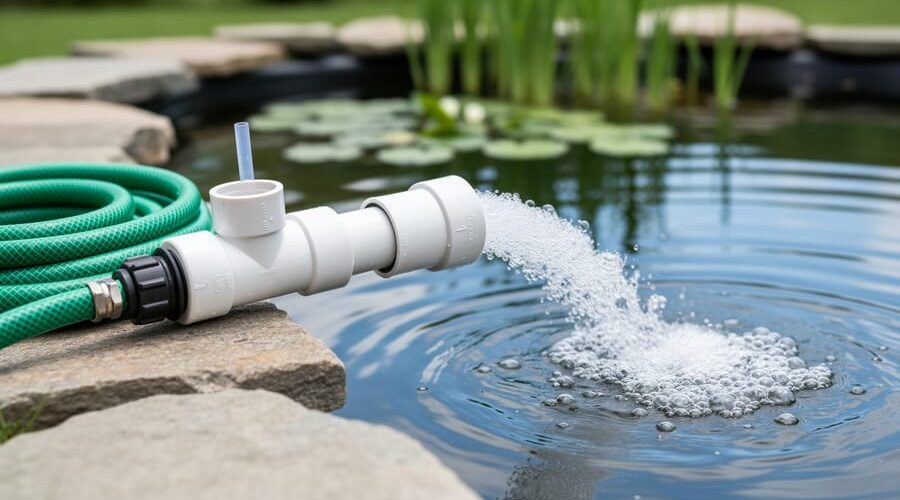
Build a Venturi Pump That Actually Works for Your Water Feature
Build your own venturi pump in an afternoon using common PVC pipe fittings from any hardware store. Cut a 1-inch PVC pipe at precise angles to create a narrowed throat section, attach a T-junction at the constriction point, and connect your suction line to draw water or air through the side port while your main water supply flows through the center channel.
Start by understanding this simple principle: when water speeds up through a narrow section, it creates lower pressure that pulls fluid from a side inlet. This means you can aerate pond water, remove debris, or create circulation without electricity or moving parts that break down. I discovered this when my pond pump died during a summer heat wave, and my fish were gasping at the surface. Within two hours, I had a functioning venturi aerator running off my garden hose.
Most DIY venturi pumps fail because builders ignore three critical measurements: the inlet diameter, throat diameter, and the diffuser angle. Get these wrong, and you’ll move nothing but disappointment through your pipes. Get them right, and you’ll create strong suction that rivals commercial pumps costing ten times more.
This guide walks you through selecting the correct pipe sizes, cutting precise angles with basic tools, assembling components in the right sequence, and testing your pump’s performance. You’ll also learn how to troubleshoot weak suction, adjust flow rates, and optimize your design for specific applications like pond skimming or water circulation.
What Makes a Venturi Pump Different (And Why Your Pond Might Need One)
Picture a garden hose with your thumb partially covering the end. The water shoots out faster and farther, right? That’s essentially how a venturi pump works, but instead of just creating speed, it creates suction that pulls air or water from a secondary source into the flow. It’s beautifully simple physics happening right before your eyes.
Unlike traditional electric pumps that move water through impellers and motors, a venturi pump has no moving parts beyond the flowing water itself. As water rushes through a narrow throat in the venturi tube, it speeds up dramatically. This acceleration creates a low-pressure zone that literally sucks air or additional water into the system through a side port. Think of it as nature’s vacuum cleaner, powered entirely by water pressure you already have available.
For pond enthusiasts, this design offers some compelling advantages. First, venturi pumps excel at aeration. That side port can draw ambient air directly into your pond water, creating millions of tiny bubbles that boost oxygen levels for healthier fish and beneficial bacteria. I discovered this when my koi seemed sluggish on hot summer days, and a simple venturi setup transformed their activity levels within days.
Second, they’re perfect for supplementing existing circulation systems without adding another electric pump to your power bill. If you already have water flowing from a waterfall or filter return, a venturi attachment can enhance that flow’s effectiveness.
Third, they create gentle, natural-looking movement rather than harsh jets, ideal for planted ponds where delicate vegetation needs circulation without being battered.
However, let’s be realistic about limitations. Venturi pumps won’t replace your main circulation pump. They need existing water pressure to function, typically requiring at least 20-30 PSI to work effectively. They’re not suitable as standalone pumps for draining ponds, moving large volumes quickly, or situations where you lack a primary water source. If your pond has no existing pump system, you’ll need to start with conventional equipment first. Think of venturi pumps as enhancement tools rather than primary workhorses, and you’ll find them incredibly valuable additions to your water feature toolkit.
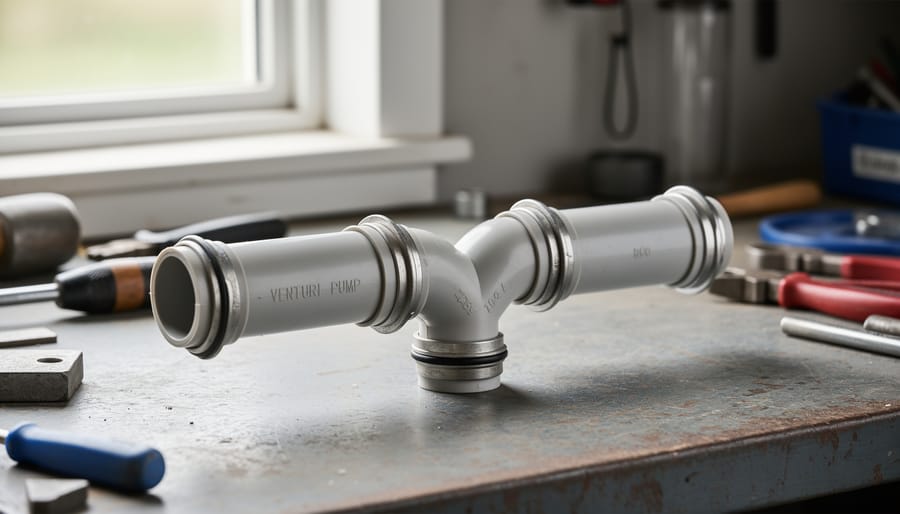
Understanding the Three Critical Parts of Your Venturi Design
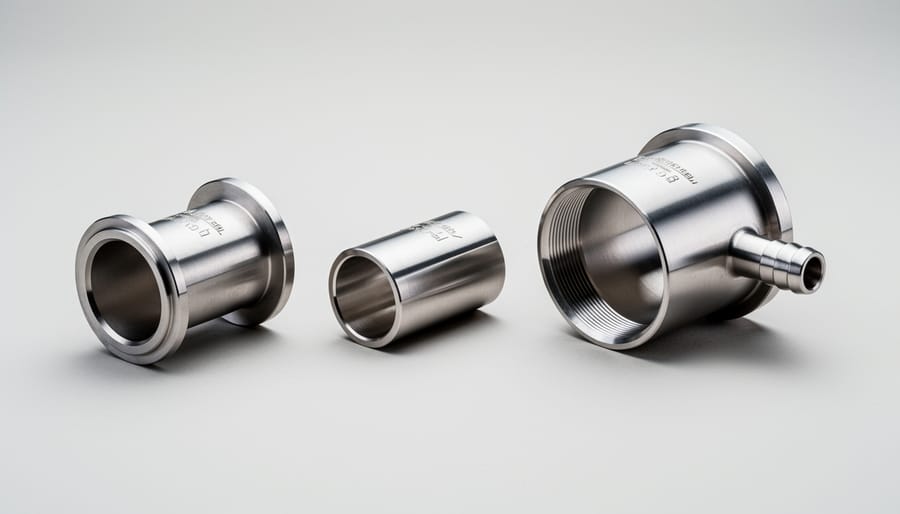
The Inlet: Getting Water Flowing
Getting water flowing into your venturi pump is like giving it a strong, steady heartbeat – without proper inlet design, the whole system struggles. Let’s talk about setting up that crucial first connection.
Your inlet pipe should match your water source – typically garden hose connections (3/4 inch) work perfectly for most backyard projects. I learned this the hard way when I first tried using a too-small inlet on my koi pond aerator. The pump wheezed along like it was gasping for air!
For sizing, your inlet diameter should be at least as wide as your water supply line, never smaller. Think of it like drinking through a straw versus a wide-mouth bottle – bigger openings let water flow freely without resistance.
Now, here’s the magic number: you need at least 20-30 PSI (pounds per square inch) of water pressure for a DIY venturi to work effectively. Most municipal water supplies easily provide 40-80 PSI, which is perfect. If you’re using a garden pump, check its specifications to ensure it meets this minimum.
Consistency matters tremendously. Fluctuating pressure creates inconsistent suction, defeating your purpose. Consider adding a pressure gauge at your inlet – they’re inexpensive and help you monitor performance. Stable, adequate pressure transforms your venturi from temperamental to trustworthy, keeping your water feature thriving beautifully.
The Throat: Where the Magic Happens
This is where the real action happens, folks! The throat is the narrowed middle section of your venturi pump, and understanding it will transform your water feature from so-so to spectacular.
Here’s the simple science: when water rushes through this narrowed passage, it speeds up dramatically. Think of it like putting your thumb over a garden hose opening—same amount of water, smaller space, faster flow. As the velocity increases, something counterintuitive happens: the pressure actually drops. This pressure drop creates the suction effect that pulls air or water into your system.
For pond applications, I’ve found through plenty of trial and error that a proven ratio works beautifully without needing engineering calculations. If your inlet pipe is 1 inch in diameter, make your throat about half that size—around 0.5 inches. This 2:1 ratio gives you excellent suction without restricting flow too much.
The throat should be relatively short, typically 2 to 3 times its own diameter in length. So for that 0.5-inch throat, you’re looking at about 1 to 1.5 inches long. Too short and you won’t build enough velocity; too long and friction starts working against you.
I remember my first attempt—I made the throat way too long and barely got any suction. After shortening it to just over an inch, the difference was night and day. Water came roaring through, creating that satisfying whoosh sound that tells you it’s working perfectly.
The Diffuser and Suction Port: Pulling It All Together
Here’s where the magic happens! The diffuser is the expanding section right after your narrow throat, and it’s what creates that wonderful suction we’re after. As water rushes through the throat and enters this widening chamber, it slows down and pressure drops. Think of it like traffic spreading out after a narrow bridge – suddenly there’s room to breathe, and that creates a vacuum effect.
Your suction port should sit right at the beginning of the diffuser, precisely where the throat meets the expansion. This is the sweet spot where pressure is lowest. Position it at a 90-degree angle to your main water flow for best results.
Now, here’s what trips up most first-timers: diffuser angle matters tremendously! Aim for a gentle expansion of about 5-7 degrees. Go steeper, and water actually separates from the walls, creating turbulence that destroys your suction. I learned this the hard way when my first pump gurgled pathetically because I made a 15-degree cone – way too aggressive!
Keep your diffuser length about 6-8 times the throat diameter. Too short, and you lose recovery pressure. Too long, and friction eats your gains. Getting this balance right means the difference between a pump that sips air weakly and one that pulls with authority.
Materials You’ll Need (And What Works Best for Water Gardens)
Let me walk you through everything you’ll need to build your venturi pump. I’ve made these dozens of times, and I’ve learned that having the right materials from the start saves so much frustration later.
For the main body, you’ll want Schedule 40 PVC pipe. I recommend 3/4-inch diameter for most backyard water gardens, though you can go up to 1-inch if you have a larger pond or stronger water source. Schedule 40 is pond-safe, UV-resistant, and handles outdoor conditions beautifully. You’ll need about 18 inches total, so one 2-foot section works perfectly.
For fittings, grab two threaded PVC adapters that match your pipe diameter, one PVC tee fitting, and a reducing bushing. The reducing bushing is your secret weapon here, it creates that crucial narrow throat where the magic happens. Look for a reducer that goes from your main pipe size down to about half that diameter.
When it comes to sealants, skip the regular plumber’s putty and invest in aquarium-safe silicone or PVC cement specifically labeled as fish-safe. These products won’t leach chemicals into your pond water. Teflon tape for threaded connections is always a smart addition.
Budget-conscious builders can often find PVC remnants at hardware stores for pennies on the dollar. Just ensure they’re clean and crack-free.
Tool-wise, you’ll need a hacksaw or PVC cutter for clean cuts, a drill with various bit sizes, sandpaper or a deburring tool, and a measuring tape. Don’t have a PVC cutter? A hacksaw and some elbow grease work just fine. The key is making straight, clean cuts.
For upgrades, consider brass fittings instead of plastic for connection points. They’re pricier but incredibly durable and give your project a professional look. Clear PVC sections also make fantastic viewing windows to watch your venturi in action, which is both educational and satisfying.
Building Your Venturi Pump: Step-by-Step
Step 1: Preparing and Measuring Your Components
Alright, let’s get hands-on! Gather your PVC components and lay them out on a clean workspace. Start by cutting your main pipe sections to the lengths you determined earlier. I like to use a fine-tooth saw and a miter box to keep cuts perfectly straight—crooked cuts can affect water flow later.
Next, measure and mark where you’ll drill the suction port on the throat section. This is typically about one-third of the way through the narrowest part of your venturi. Use a permanent marker to make a clear dot where your drill bit will enter. Double-check this measurement because drilling in the wrong spot is the most common mistake I see beginners make.
Before you grab the PVC cement, here’s my best tip: dry-fit everything first! Push all your components together without glue and check that water can flow smoothly from inlet to outlet. Look for any gaps or misalignments. Hold it up to eye level and inspect those connections. This test run has saved me countless times from permanent mistakes. If something doesn’t fit quite right, now’s the time to sand down rough edges or adjust your cuts. Take a photo of your dry-fitted assembly—it’ll be your reference guide during final assembly.
Step 2: Creating the Throat Section
The throat is where the magic happens in your venturi pump – it’s the narrow section that speeds up water flow and creates that vacuum effect. Getting this part right makes all the difference between a pump that works beautifully and one that disappoints.
The easiest approach for most DIYers is using reducer fittings or adapters. Head to your local hardware store and grab PVC reducers that gradually narrow your pipe diameter. For example, if you’re working with 1-inch PVC, you might reduce down to 1/2-inch at the throat. The key word here is gradually – you want smooth transitions, not abrupt changes that create turbulence and kill your vacuum effect.
When connecting these pieces, pay special attention to the interior surfaces. Any ridges, bumps, or rough spots will disrupt water flow. Before gluing, run your finger through each connection point. If you feel a lip where pieces meet, carefully sand it smooth with fine-grit sandpaper. I learned this lesson the hard way when my first venturi barely worked – turns out a tiny ridge was causing enough turbulence to ruin the vacuum.
For those feeling more adventurous, heat-forming PVC is another option. Using a heat gun, you can carefully soften and compress a section of pipe to create your throat. Work slowly, rotating constantly, and maintain even pressure. This method creates the smoothest possible interior but requires practice and patience.

Step 3: Installing the Suction Port
Now comes the exciting part where your venturi pump really takes shape! The suction port is where your pump will draw in the water or air you want to move, so getting this step right is essential.
First, measure carefully to find the sweet spot for your intake hole. This should be positioned right where the throat section transitions into the diverging cone, typically about one-third of the way through the throat. Mark this spot clearly with a marker, then use a drill bit that matches the diameter of your barbed fitting or threaded connector. A standard 3/8-inch or 1/2-inch fitting works great for most pond applications.
When drilling, go slowly and steadily to avoid cracking PVC pipe. A step bit works wonderfully here if you have one available. Once your hole is clean and smooth, test-fit your barbed fitting. It should slide in snugly without forcing.
Here’s where I learned an important lesson the hard way: don’t skip the sealant! Apply plumber’s tape or pipe thread sealant generously to threaded fittings before screwing them in. For barbed fittings, a small bead of waterproof silicone around the base creates that crucial airtight seal. Press the fitting firmly into place and wipe away excess sealant.
Let everything cure according to the product instructions before testing. A proper seal here makes all the difference in your pump’s suction power.
Step 4: Assembling and Sealing
Now comes the exciting part where your venturi pump takes shape! Start by doing a complete dry fit of all your pieces without any adhesive. This lets you check alignment and make sure everything fits snugly. Mark each connection point with a pencil so you know exactly where the glue goes.
When you’re ready to glue, work in a well-ventilated area and have everything within reach. Apply PVC primer to both the inside of the fitting and outside of the pipe, then quickly follow with PVC cement. Push the pieces together with a slight twist and hold for about 30 seconds. You’ll see a bead of cement squeeze out, which means you’ve got a good seal.
Here’s a tip from my own experience: assemble your venturi in sections rather than trying to glue everything at once. I learned this the hard way when I rushed through assembly and ended up with a crooked joint that leaked constantly! Give each section about 15 minutes to set before moving to the next connection.
After completing assembly, let your pump cure for a full 24 hours before testing. This wait time is crucial for a watertight seal. Once cured, run water through it over a bucket to check for leaks. Look for drips at every joint, and if you spot any moisture, mark it and add an extra layer of cement after the pump dries completely.
Testing and Troubleshooting Your Design
Now comes the exciting part – seeing if your creation actually works! Let me walk you through testing your venturi pump so you can dial in that perfect performance.
Start by connecting your pump to a clean water source and placing your suction tube into a separate container of water. Turn everything on and watch the suction line. You should see bubbles or water movement within 10-15 seconds. If nothing happens after 30 seconds, you’ve got troubleshooting to do.
To measure suction strength, try lifting the suction tube higher above the pump. A well-designed venturi should pull water from at least 2-3 feet above the pump level. For flow rate testing, time how long it takes to fill a gallon container. Compare this to your pump’s rated output – you should achieve about 30-40% efficiency with a basic design.
The most common problem I encounter is weak or no suction. First, check for air leaks by running your fingers along all connections while the pump operates. You’ll feel or hear escaping air. Tighten those fittings with thread seal tape or replace worn washers. Another culprit is misaligned tubes – your suction tube needs to enter exactly at the narrowest point of the venturi throat. Even a quarter-inch off makes a huge difference.
If you’re getting inconsistent flow, your inlet diameter might be restricting water supply. Try widening it slightly or ensuring your supply pump can deliver adequate pressure. Remember, venturi pumps need strong, consistent water pressure to create that critical vacuum effect.
For real-world optimization, experiment with different suction tube diameters. I’ve found that going one size smaller than my initial guess often improves performance dramatically. Also, keep your suction line as short as practical – every extra foot reduces efficiency.
Don’t get discouraged if your first attempt isn’t perfect. Adjust one variable at a time, test thoroughly, and keep notes. Your patience will pay off with reliable, maintenance-free water circulation.
Real-World Applications for Your Water Feature
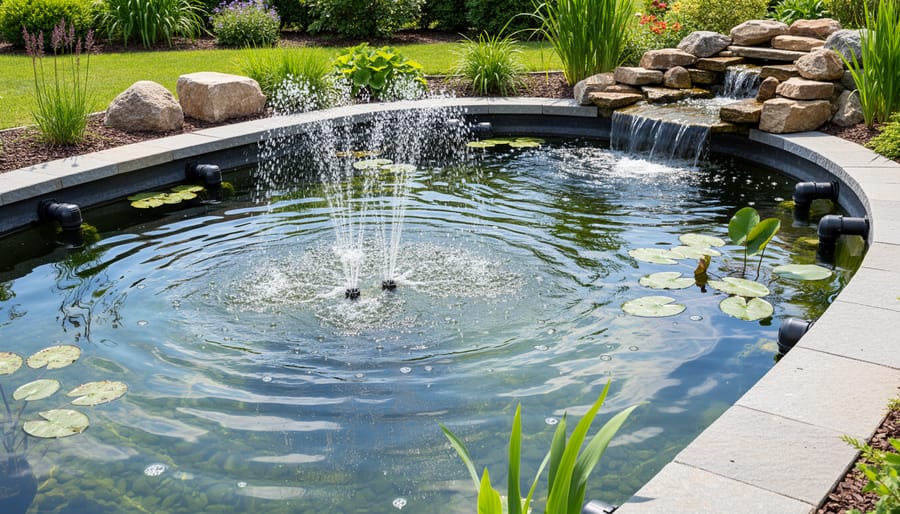
Boosting Aeration Without Extra Electricity
Here’s what makes this approach absolutely brilliant for pond keepers: your venturi pump naturally pulls oxygen-rich air into the water stream without running separate aerators. I discovered this game-changer during a hot summer when my goldfish were gasping at the surface. By positioning the venturi intake just above the water line, the negative pressure sucks air through and creates millions of tiny bubbles as it mixes with the pumped water. This aeration happens automatically whenever your pump runs, meaning no additional equipment or electricity costs. The beauty is that warmer water holds less oxygen, but that’s exactly when your pump works hardest to circulate water, providing more aeration when fish need it most. For fish ponds, aim the output toward the surface to maximize oxygen exchange. I’ve seen noticeable improvements in water clarity and fish activity within days of adding venturi aeration to existing circulation systems.
Creating Secondary Flows and Circulation
One of the coolest benefits of your venturi pump is creating movement in those stubborn dead zones around your pond. I discovered this by accident when I noticed my venturi output was gently stirring up debris that had been sitting in a corner for weeks! Simply position your venturi’s outlet toward these stagnant pockets, and the water flow will prevent buildup while keeping fish healthier.
You can also split your venturi output using a simple T-connector to feed multiple areas simultaneously. This works beautifully for DIY water features like small bubbling rocks or powering small decorative features without installing additional pumps. The secret is keeping your runs relatively short, about 3-6 feet maximum, since venturi pressure isn’t as strong as your main pump. Experiment with different outlet positions until you find what creates the most appealing circulation patterns in your unique space.
Mixing Additives and Treatments Evenly
Here’s where your DIY venturi pump really shines! Once you’ve got it running, you can use that powerful suction effect to introduce treatments throughout your entire pond system. Instead of dumping liquid fertilizers or treatments in one spot and hoping they spread out, your venturi does the hard work for you.
Here’s how it works: Set up a small reservoir or bucket near your venturi inlet where the suction occurs. Add your beneficial bacteria, pond dyes, or fertilizers to this container, then run a small tube from the reservoir into the venturi’s suction port. The vacuum created naturally draws the treatment into the water flow, mixing it evenly as it travels through your pump and distribution system. I’ve used this method for years to dose my pond with beneficial bacteria during spring startup, and it’s eliminated those frustrating dead zones where treatments never seemed to reach. Just remember to dilute concentrated products first and start with lower flow rates until you get the dosing right.
Optimizing Flow: Getting the Most from Your DIY Pump
Once you’ve built your venturi pump, a few smart tweaks can make a world of difference in performance. Think of it like tuning a musical instrument – small adjustments create beautiful results!
Start by examining your pressure source. Your venturi pump is only as good as the water pressure feeding it. I learned this lesson when my first setup barely moved water – turned out my garden hose had a kink halfway down the path! Ensure your supply line delivers consistent, strong pressure. If you’re using a standard garden hose, consider upgrading to a larger diameter hose to reduce friction loss over long distances.
Next, look at restrictions in your inlet and outlet lines. Every bend, reducer, or narrow section slows down flow. Keep these lines as straight and wide as possible. When I repositioned my pump’s outlet hose to eliminate just two unnecessary curves, I gained nearly 30 percent more flow – it was remarkable!
Positioning matters more than you might think. Place your venturi pump as close to the water source as practical. The shorter the distance water needs to travel through the inlet tube, the easier it works. Also, keep the outlet hose end below the pump itself when possible – gravity becomes your helpful assistant.
Energy considerations are worth thinking about too. Calculate your actual water movement by timing how long it takes to fill a bucket. Divide the bucket volume by the time, and you’ll know your gallons per minute. This helps you determine if you’re using energy efficiently compared to a small electric pump.
Finally, consider seasonal adjustments. Water viscosity changes with temperature – your pump moves water more easily in summer than winter. You might need slightly higher pressure during colder months to maintain the same flow rates. Regular cleaning of the nozzle and throat prevents mineral buildup that gradually reduces efficiency over time.
You’ve now got everything you need to create your own venturi pump and bring fresh movement to your pond or water feature. The beauty of building your own pump is that you’re not locked into expensive commercial options, and you can customize the design to fit exactly what your water garden needs. Whether you’re looking to add gentle circulation to keep your pond healthy or create an eye-catching fountain display, the venturi principle puts that power in your hands.
Don’t worry if your first attempt isn’t perfect. I remember my early experiments resulted in more dribbles than dramatic water jets, but each tweak taught me something valuable. That’s the spirit of DIY – learning by doing. Start with a simple single-nozzle design using readily available PVC fittings. Get comfortable with how the pieces fit together and how adjusting the intake affects performance. Once you see water flowing through your creation, you’ll gain confidence to try more ambitious projects.
As you experiment, you’ll discover what works best for your specific setup. Maybe you’ll find that a slightly wider throat gives you the flow rate you want, or perhaps angling your pump differently creates the perfect water pattern. Each pond is unique, and now you have the knowledge to build solutions tailored to yours. Start simple, have fun with the process, and watch your water garden come alive.