
Why Your Pond Water Won’t Clear (And What Suspended Sediments Really Mean)
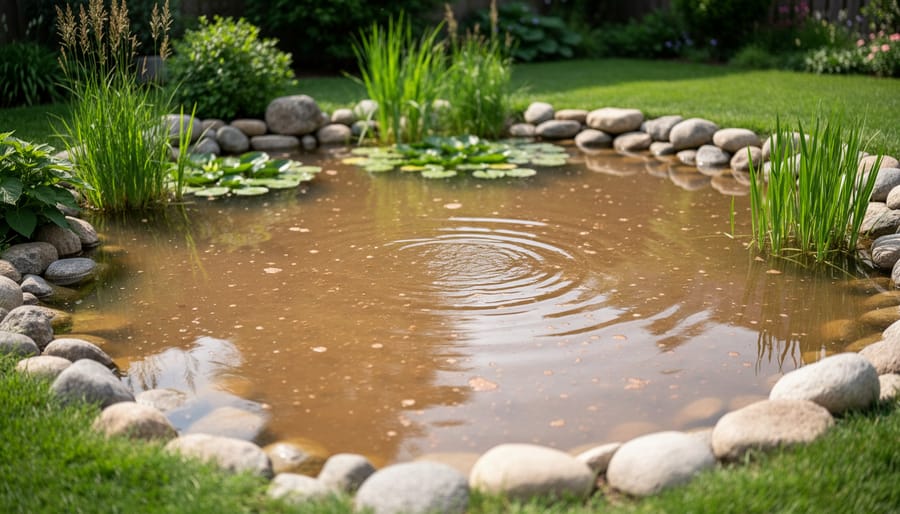
You’ve just added new fish or plants to your pond, and within hours the crystal-clear water you worked so hard to achieve has turned into murky soup. Or maybe you’ve noticed your pond looks like chocolate milk after every rainstorm. What you’re seeing is suspended sediments—tiny particles of clay, silt, organic matter, and debris floating throughout the water column, refusing to settle.
Unlike algae blooms that turn water green, suspended sediments create a brown, gray, or tan cloudiness that filters can’t seem to catch. These microscopic particles are so light they stay suspended in the water for days or even weeks, driven by water movement, fish activity, and pond circulation. The frustration doubles when you realize your filter is running perfectly, yet the water clarity doesn’t improve.
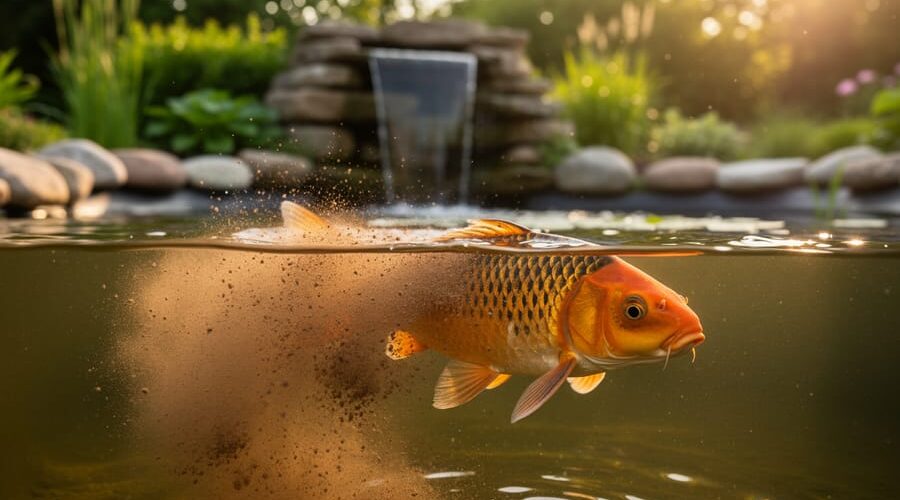
Understanding what suspended sediments are and where they come from transforms this problem from a mystery into something you can actually fix. These particles enter your pond through multiple pathways: runoff from surrounding soil, decomposing plant material, fish waste breaking down, and even beneficial bacteria doing their job of processing organic matter. Bottom-dwelling fish like koi and goldfish are particularly skilled at stirring up settled sediments as they forage.
The good news? Once you identify your specific sediment sources, you can implement targeted solutions that restore clarity and keep your pond looking its best year-round.
What Are Suspended Sediments? (The Simple Explanation)
Think about the last time you stirred up the bottom of a pond or even kicked up sand at the beach. Remember how the water suddenly turned cloudy and murky? That cloudiness you saw was suspended sediments in action.
In the simplest terms, suspended sediments are tiny particles that float around in your pond water instead of settling at the bottom where they belong. These particles can be bits of clay, silt, decomposed plant material, fish waste, algae, or even microscopic organisms. They’re so small and light that they stay suspended in the water column, creating that frustrating cloudiness that makes your beautiful pond look like a mud puddle.
Here’s a relatable way to picture it: suspended sediments work like dust particles floating in a sunbeam streaming through your window. You can’t see individual dust specks easily, but together they make the air look hazy. In your pond, millions of these microscopic particles create that same effect in water.
You’ll often notice suspended sediments after heavy rain when runoff washes soil and debris into your pond. Fish activity is another common culprit, especially if you have koi or goldfish that love to forage along the bottom, stirring up all that settled material. Even a strong wind can churn up your pond and get those particles dancing through the water again.
The frustrating part? Unlike leaves or sticks you can simply net out, suspended sediments are too small to catch with regular pond tools. They just keep floating around, making your water look dirty even when it might be relatively clean otherwise. Understanding what these particles are is your first step toward getting that crystal-clear water you’re after.
Where Do Suspended Sediments Come From in Your Pond?
Natural Sources You Can’t Always Control
Mother Nature has her own way of keeping your pond interesting! Let’s talk about the natural contributors to cloudiness that are simply part of having a living, breathing water feature.
Wind is probably the sneakiest culprit. It carries dust, pollen, leaves, and all sorts of debris directly into your pond. After a particularly breezy day, you might notice your crystal-clear water has taken on a hazy appearance. Similarly, rainfall doesn’t just add water to your pond – it brings runoff from surrounding surfaces, washing soil particles and organic matter into your aquatic haven.
Here’s something many pond owners don’t realize: algae doesn’t just grow – it also dies and breaks down. When microscopic algae cells decompose, they create tiny particles that float suspended in the water column, contributing to that murky look.
If you keep koi or goldfish, you’ve got natural excavators! These bottom-feeders love rooting around in substrate and stirring up sediment as they search for food. The more active your fish population, the cloudier things can get. This is especially noticeable in a healthy koi pond ecosystem with energetic, well-fed fish.
Decomposing leaves, flower petals, and other organic debris also contribute their share of suspended particles as they slowly break down.
The good news? All of these are completely normal occurrences in any outdoor pond. They’re signs of an active, natural environment rather than a serious problem requiring immediate panic.
Human-Made Sources You Can Fix
The good news? Most cloudy pond water stems from issues you have complete control over. Let’s walk through the common culprits and how to fix them.
If your pond was built without proper edge barriers or settling zones, you’re fighting an uphill battle. Exposed soil around pond edges gets kicked up by rain, foot traffic, or playful pets. The fix is straightforward: install stone edging, pond liner extensions, or plant dense vegetation around the perimeter to create a natural buffer. Even a simple gravel shelf can work wonders.
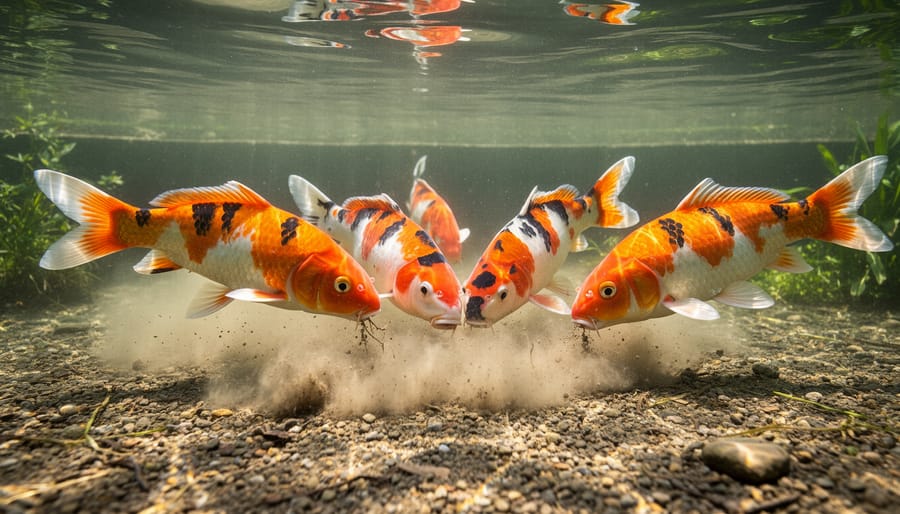
Overstocking is another frequent troublemaker. Too many fish means too much waste, which breaks down and creates cloudy particles floating throughout your water. A general guideline is one inch of fish per square foot of surface area, but honestly, less is often more when you’re starting out. If you’ve gone overboard, consider rehoming some fish or upgrading to a larger pond.
Overfeeding goes hand-in-hand with overstocking. That extra food your fish don’t eat? It decays and contributes directly to suspended sediments. Feed only what your fish can consume in about five minutes, once or twice daily. I learned this the hard way after weeks of battling murky water, only to realize I was being too generous at feeding time.
Your filtration system might simply be inadequate for your pond size. Mechanical filters trap particles before they circulate, while biological filters break down waste. If you’re running a small filter on a large pond, upgrading is essential.
Finally, nearby construction, landscaping, or even fresh mulch can introduce sediments through runoff. Create diversions or temporary barriers during these activities to protect your pond. Sometimes the solution is as simple as redirecting a downspout or adjusting your yard’s drainage pattern.
Why Suspended Sediments Matter for Your Pond Health
How Murky Water Affects Your Fish
When your pond water looks like chocolate milk, your fish are dealing with more than just an eyesore. Suspended sediments create a challenging environment that affects their health in several important ways.
The most immediate concern is reduced oxygen levels. Those tiny particles floating in the water make it harder for oxygen to dissolve properly, and your fish need to work overtime just to breathe. You might notice them gasping at the surface or hanging out near waterfalls and fountains where oxygen is slightly better.
Gill irritation is another serious issue. Imagine trying to breathe through a dusty room all day, every day. That’s what your fish experience as sediment particles scrape against their delicate gill tissues. Over time, this constant irritation can lead to inflammation and make them more vulnerable to infections and diseases.
The stress factor shouldn’t be underestimated either. Fish rely heavily on their vision to find food, avoid predators, and navigate their environment. When visibility drops to just a few inches, they become disoriented and anxious. This chronic stress weakens their immune systems, making them susceptible to all sorts of health problems they’d normally fight off without trouble.
What It Does to Your Plants and Pond Balance
When suspended sediments cloud your pond, they create a cascade of problems that go far beyond aesthetics. Think of these floating particles as tiny curtains blocking the sun from reaching your underwater plants and beneficial algae. Just like your garden flowers need sunlight to thrive, aquatic plants depend on those rays penetrating the water to photosynthesize and grow.
I learned this lesson the hard way in my first pond. After a heavy rain washed soil into the water, my beautiful submerged plants started looking pale and weak within just a week. The sediment layer was literally starving them of light, and I watched helplessly as they struggled to survive.
Here’s where things get really interesting for building a thriving pond ecosystem. When your beneficial plants can’t photosynthesize properly, they produce less oxygen. This affects your fish, beneficial bacteria, and the entire food chain. Meanwhile, the sediments themselves can smother plant roots and settle on leaf surfaces, further reducing their ability to function.
The natural balance you’ve worked so hard to create starts tipping. Beneficial algae that compete with problematic types for nutrients also suffer from reduced light. Your pond’s self-cleaning mechanisms weaken, making it harder to maintain crystal-clear water naturally. It’s a domino effect where one problem triggers another, turning your peaceful water feature into a constant maintenance challenge.
Smart Strategies to Manage Suspended Sediments
Quick Fixes That Work Right Away
Sometimes you need that water crystal-clear fast, whether you’re hosting a garden party this weekend or just can’t stand looking at the murk anymore. Let’s talk about solutions that work quickly.
First, ease up on feeding your fish. I know it’s tempting to watch them gobble up those pellets, but uneaten food and fish waste are major cloudiness culprits. Cut feeding in half for a few days and you’ll likely notice improvement. Your fish won’t starve – promise!
Next, consider beneficial bacteria products. These living helpers break down organic matter that’s causing the cloudiness. Think of them as your pond’s cleanup crew, working around the clock to restore balance. Add them according to package directions, and you’ll often see clearer water within 48 hours.
For really stubborn cloudiness, water clarifiers or flocculants can be game-changers. These products bind tiny floating particles together, making them heavy enough to sink or get caught in your filter. It’s like giving all those microscopic troublemakers a group hug before sending them packing. They’re safe when used correctly, but always follow instructions carefully.
Need temporary crystal-clear water for tomorrow’s party? Here’s my emergency trick: run your filter continuously for 24 hours and add a clarifier the night before. You can also do a partial water change – about 25 percent – which provides instant improvement while you tackle the underlying cause.
Upgrade Your Filtration System
If your pond consistently struggles with suspended sediments despite regular maintenance, it might be time to upgrade your filtration system. Think of it as giving your pond a more powerful set of lungs to breathe with!
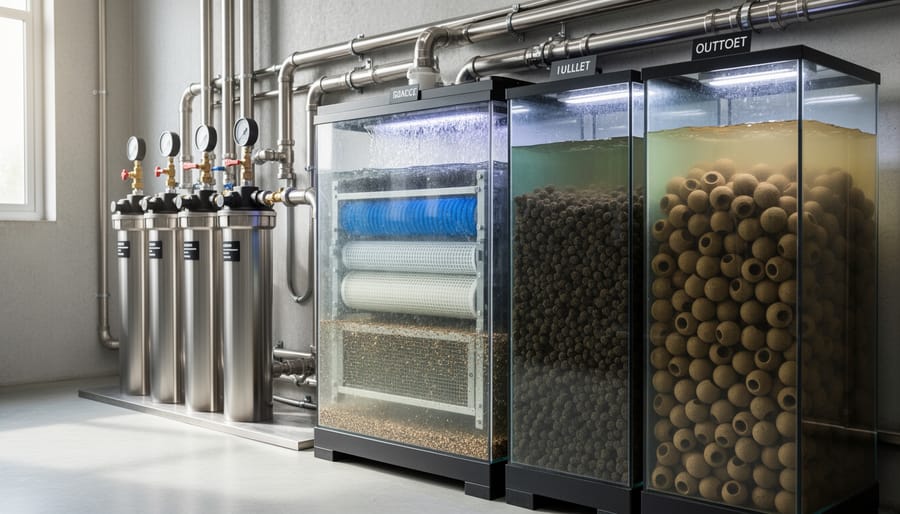
Let’s break down the two main types of filtration in simple terms. Mechanical filtration is like a coffee filter – it physically catches particles as water flows through foam pads, filter mats, or brushes. This is your first line of defense against visible cloudiness. Biological filtration, on the other hand, is where beneficial bacteria colonize special media and break down dissolved waste that you can’t even see. Both work together like a dream team to keep your water crystal clear.
So when should you upgrade? If your water clears up temporarily but clouds over within days, or if you’ve added more fish or plants recently, your current filter is likely overwhelmed. A good rule of thumb is choosing a filter rated for at least 1.5 times your pond’s volume – so for a 1000-gallon pond, look for systems rated for 1500 gallons or more.
For DIY-friendly options, pressurized filters are fantastic because they’re self-contained and easy to clean with a simple valve turn. Box filters offer more customization – you can stack different media types to target specific problems. I started with a basic box filter in my first pond and gradually added mechanical stages as I learned what my pond needed. The beauty of modular systems is you can start small and expand as your confidence grows.
Create Natural Barriers and Buffer Zones
Creating natural barriers around your pond is like giving it a protective hug that filters out sediments before they reach the water. Let me walk you through some wonderful techniques that’ll work wonders for your pond’s clarity.
Start by establishing planted buffer zones around your pond’s perimeter. Plant natural pond plants like cattails, rushes, and sedges in a ring about 2-3 feet wide around the edges. These plants act as living filters, capturing soil particles and slowing water flow before it enters your pond. I’ve found that spacing them about 12 inches apart gives them room to establish while still creating an effective barrier.
Next, consider adding a bog filter system. Dig a shallow basin alongside your pond, line it with gravel and aquatic plants, and direct water through it before letting it flow back. This creates a natural filtration system that catches suspended particles beautifully.
Strategically placing rocks and gravel also makes a huge difference. Position larger stones where water typically enters your pond to break up the force of incoming water and allow sediments to settle. Create a gradual gravel slope at entry points rather than steep drops.
For managing runoff, rain gardens are game-changers. Install these planted depressions in areas where water naturally flows toward your pond. They’ll capture sediment-heavy runoff during storms and filter it naturally before it reaches your water feature. Position them about 10 feet from your pond for best results.
Maintain a Healthy Pond Ecosystem
The best approach to dealing with suspended sediments? Stop them before they start! Think of your pond like your home—a little regular care beats a major cleanup any day.
Start with smart fish stocking. Overcrowded ponds mean more waste, more stirred-up muck, and cloudier water. A good rule of thumb is one inch of fish per square foot of pond surface. I learned this the hard way after rescuing too many goldfish from a friend’s aquarium!
Build up your beneficial bacteria population—these microscopic helpers are your pond’s cleanup crew. They break down organic waste before it becomes suspended sediment. Add bacterial supplements monthly during warmer months and after water changes. You can explore more natural pond solutions that work with your ecosystem rather than against it.
Create a maintenance rhythm: remove debris weekly, trim dying plants before they decompose, and clean filters every two weeks during peak season. In autumn, use netting to catch falling leaves—one afternoon of prevention saves weeks of cloudiness later.
Adjust your approach seasonally. Spring brings algae blooms, summer means more feeding and waste, autumn requires leaf management, and winter needs minimal intervention. By staying one step ahead, your pond stays crystal clear year-round.
When to Take Action (And When to Let Nature Work)
Here’s the thing about sediment in your pond: not every cloudy day is a call to action. I learned this the hard way after spending a small fortune treating what turned out to be a perfectly normal spring thaw murkiness that would have cleared on its own in a week!
Let’s talk about when to roll up your sleeves and when to grab a cup of coffee and watch nature do her thing.
If your water is cloudy but your fish are acting normal, swimming actively, and coming up to feed, you’re probably fine. Healthy aquatic plants growing steadily? Another good sign. Seasonal changes, especially after spring ice melt or autumn leaf drop, naturally stir things up. Give it 7 to 10 days. Mother Nature has been settling sediments for millions of years without any help from us.
However, take action if you notice fish gasping at the surface, especially in early morning. This suggests sediment is clogging their gills or depleting oxygen. Plants turning brown or struggling to grow might indicate sediment is blocking sunlight they desperately need. If your water stays chocolate-milk murky for more than two weeks despite calm weather, something’s wrong.
Here’s my simple test: fill a clear glass with pond water and let it sit on your counter for 24 hours. If the sediment settles and the water above looks relatively clear, nature can handle it. If it stays stubbornly cloudy, you’ve got suspended particles that need intervention.
Trust your observations more than your worries. Your pond will tell you what it needs if you learn to listen to these natural signals.
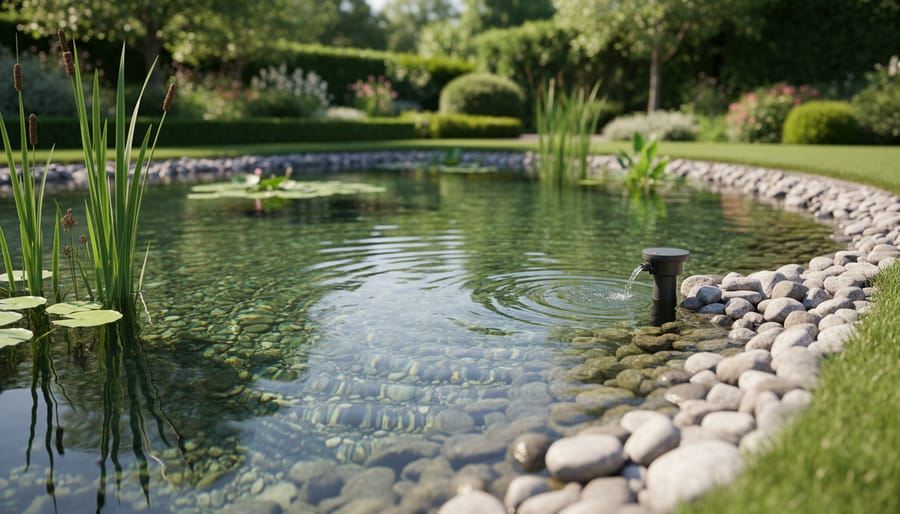
Here’s the truth: achieving crystal-clear water in your pond is absolutely possible, but it won’t happen overnight. I know how frustrating it can be to stare at murky water day after day, wondering if you’ll ever see the bottom again. But trust me, with patience and the right approach, you’ll get there.
You don’t need to tackle everything at once. Start with one or two strategies that make the most sense for your situation. Maybe that’s adding a filter upgrade or introducing some beneficial plants. Remember, every pond has its own personality and unique challenges. What works perfectly for your neighbor might need tweaking for yours, and that’s completely normal.
The journey to clear water is just that, a journey. Some days will show more progress than others. But imagine yourself relaxing beside your beautiful, sparkling pond, watching the fish glide by and seeing every stone on the bottom. That moment is worth the effort, and it’s waiting for you.