
Why Organic Sediment Is Suffocating Your Pond (And How to Fix It)
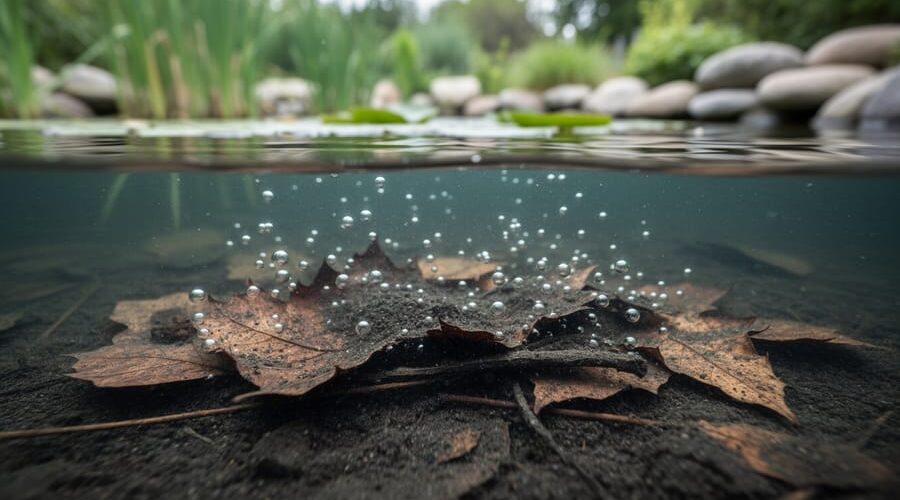
Look at the bottom of your pond right now. That dark, mucky layer isn’t just harmless dirt – it’s organic sediment, a buildup of decomposed leaves, fish waste, uneaten food, and plant material that can quietly sabotage your pond’s health. This accumulation acts like a slow-release pollution system, consuming oxygen, fueling algae blooms, creating murky water, and releasing unpleasant odors that turn your peaceful water feature into a maintenance headache.
Understanding organic sediment is your first step toward a thriving, crystal-clear pond. Unlike inorganic sediment (clay, sand, or rock particles), organic sediment is biological – it breaks down, consumes resources, and directly impacts the delicate balance of your pond ecosystem. When sediment layers exceed two inches, you’ll notice declining water clarity, struggling fish, and explosive plant growth in all the wrong places.
The good news? Managing organic sediment doesn’t require harsh chemicals or expensive equipment. Through natural bacterial treatments, strategic aeration, beneficial plant selection, and proper seasonal maintenance, you can control sediment buildup while supporting a healthy, self-sustaining pond environment. Let’s explore how this hidden layer affects your water garden and discover practical, eco-friendly solutions you can start using today.
What Exactly Is Organic Sediment?
Where Does It Come From?
Understanding where organic sediment comes from is like solving a mystery in your own backyard! The truth is, your pond collects organic material from multiple sources, and knowing them helps you manage buildup more effectively.
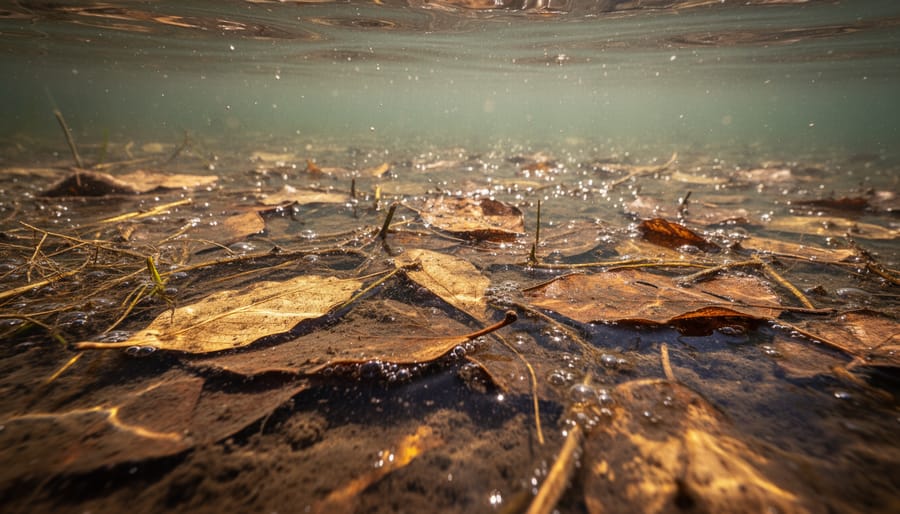
Let’s start with the most obvious culprit: those beautiful trees hanging over your pond. While they provide lovely shade, their falling leaves, twigs, pollen, and seeds drift down into the water throughout the year. Come autumn, this becomes especially noticeable as leaves pile up on the surface before eventually sinking.
If you have fish, they’re contributing too. Overfeeding is surprisingly common among enthusiastic pond owners (I’ve been guilty of this myself!). Uneaten fish food sinks to the bottom and decomposes, adding to the sediment layer. Fish waste also contributes significantly to organic buildup.
Your aquatic plants play a dual role. While they’re beneficial for pond health, dying leaves, spent flowers, and decaying stems all settle on the pond floor. This is a natural part of their lifecycle, but it still adds material that needs breaking down.
Don’t overlook what’s happening around your pond. Grass clippings, garden debris, soil erosion, and fertilizer runoff from nearby lawns can wash into your water feature during rainstorms. Even dust and airborne particles settle on the water’s surface over time.
Finally, there’s the natural decomposition cycle itself. Algae die off, microorganisms complete their lifecycles, and all this biological activity creates a continuous supply of organic matter that gradually accumulates at the bottom.
The Good, The Bad, and The Sludgy
Here’s the truth about organic sediment: it’s not all bad! In fact, a thin layer of organic material on your pond bottom is perfectly natural and even supports a healthy pond ecosystem. Think of it like the forest floor, where decomposing leaves feed the soil and create habitat for beneficial organisms. Your pond works the same way.
The problem starts when organic sediment accumulates faster than it can break down naturally. Picture this: every fallen leaf, uneaten fish food, and decaying plant matter adds to the pile. When I first started pond keeping, I didn’t realize how quickly this buildup sneaks up on you! Before long, that beneficial layer becomes a thick, oxygen-depleting sludge blanket.
So what’s the sweet spot? Generally, less than an inch of soft sediment is manageable and even helpful. Beyond that, you’re creating conditions for algae blooms, foul odors, and stressed fish. The goal isn’t to have a sterile, sediment-free pond, but rather to maintain balance. Regular monitoring and gentle management keep things in the healthy zone without disrupting the natural processes your pond relies on.
How Organic Sediment Quietly Damages Your Pond
Oxygen Depletion: The Silent Killer
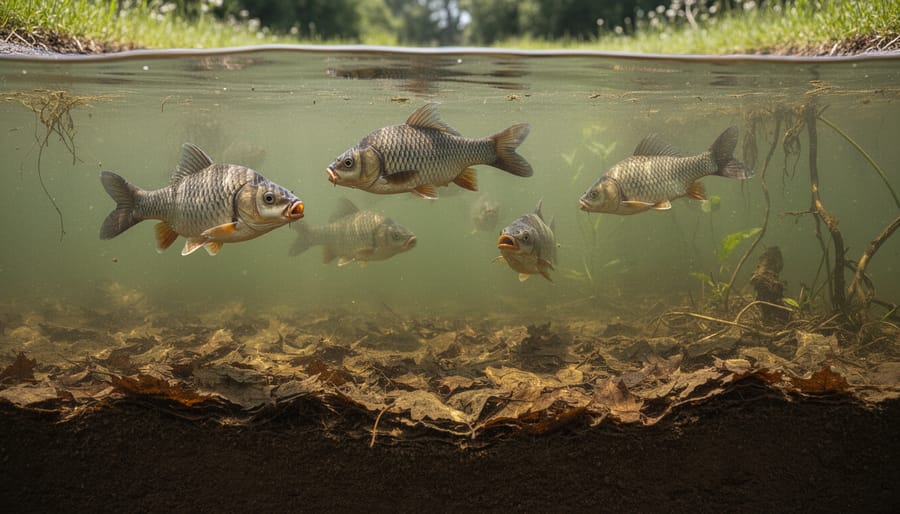
Here’s what makes organic sediment particularly dangerous for your pond friends: as bacteria break down all that muck at the bottom, they’re essentially breathing in oxygen and breathing out carbon dioxide, just like we do. The problem? They consume massive amounts of oxygen in the process, and that oxygen comes directly from your pond water.
Think of it like having too many guests in a small room with the windows closed. Eventually, things get stuffy. In your pond, when oxygen levels drop too low, fish literally gasp for air at the surface. You might notice them congregating near waterfalls or fountain sprays where water mixes with air.
This becomes especially critical during two key times. First, on hot summer days when warm water naturally holds less oxygen anyway. Second, overnight when your pond plants switch from producing oxygen during the day to consuming it at night. I’ve learned this the hard way after finding fish struggling at dawn on muggy August mornings.
These oxygen-starved areas are called dead zones, and they can develop surprisingly quickly in ponds with heavy sediment buildup. The good news? Once you understand what’s happening, you can take steps to prevent this silent threat.
Nutrient Overload and Algae Blooms
Here’s something I’ve seen countless times in my own ponds, and maybe you’ve noticed it too: as organic sediment builds up on your pond bottom, it becomes a nutrient factory working overtime. That muck layer slowly breaks down, releasing nitrogen and phosphorus into the water column. These nutrients are like an all-you-can-eat buffet for algae.
The tricky part? This creates what I call the “green cycle of doom.” Excess nutrients trigger algae blooms that turn your crystal-clear pond into pea soup. When that algae eventually dies off, it sinks to the bottom, adding even more organic material to your sediment layer. More sediment means more nutrients released, which feeds more algae growth, and round and round we go.
You’ll notice the water gets progressively cloudier, sometimes with that distinctive green tint or floating mats of stringy algae. The whole ecosystem gets thrown out of balance. Breaking this cycle requires removing the source, that nutrient-rich sediment layer, rather than just treating the symptoms. Understanding this connection is your first step toward reclaiming your pond’s clarity.
Toxic Gas Release
As organic sediment breaks down in the oxygen-poor zones at the bottom of your pond, it creates some pretty nasty byproducts you’ll definitely want to know about. When beneficial bacteria can’t access oxygen, they switch to anaerobic decomposition, which produces toxic gases like hydrogen sulfide and methane. You might recognize hydrogen sulfide by its telltale rotten egg smell, especially noticeable on warm days or when you’re doing maintenance work. These gases don’t just create an unpleasant experience for you and your neighbors. They actually dissolve into the water column, where they can seriously harm your fish by damaging their gills and reducing the oxygen available to them. Methane bubbles rising to the surface are another warning sign that decomposition has gotten out of hand. The good news is that regular sediment management can prevent these conditions from developing in the first place, keeping your pond fresh and your fish healthy.
Spotting Sediment Trouble Before It’s Too Late
The good news? Your pond will give you plenty of warning signs before sediment becomes a serious issue. I learned this the hard way when I ignored the early clues in my backyard pond and ended up facing a much bigger cleanup project than necessary. So let’s walk through what to watch for.
Start with a simple visual check. Is your water losing its clarity? If you can’t see more than a few inches below the surface, or if the water has taken on a murky, tea-colored appearance, sediment is likely building up. Next, look at the bottom. Can you actually see it? If dark, sludgy material is clearly visible or if you notice unusual mounding in certain areas, that’s accumulated sediment calling for attention.
Here’s an easy test: Take a stick and gently probe the pond bottom. If it sinks more than two or three inches into soft, mucky material, you’ve got significant buildup. Now check your nose. Does your pond smell unpleasant, especially on warm days? That swampy, rotten egg odor signals decomposing organic matter releasing gases.
Watch your fish behavior too. Are they gasping at the surface or hanging out near waterfalls and fountains? They’re seeking oxygen that sediment decomposition is stealing from the water. Similarly, if algae blooms keep returning despite your best efforts, excess nutrients from sediment breakdown are likely feeding them.
Finally, observe your plants. Healthy aquatic plants should thrive, but if they’re struggling or covered in stringy algae, poor water quality from sediment could be the culprit. Catching these signs early means easier fixes and happier pond life all around.
Sustainable Ways to Manage Organic Sediment
Prevention: Stop Sediment at the Source
The best way to deal with organic sediment? Stop it before it even reaches your pond! Think of it as the ultimate preventive care for your water feature. I learned this the hard way after spending countless weekends scooping muck when I could have been relaxing by my pond instead.
Let’s start with the biggest culprit: falling leaves. Installing pond netting before autumn hits is honestly a game-changer. Drape fine mesh netting over your pond surface from late summer through fall, securing the edges with rocks or stakes. It catches leaves before they sink and decompose. Sure, you’ll need to clear the netting regularly, but it’s way easier than dealing with the sludge later.
Next up, think strategically about your landscaping. I love trees as much as anyone, but planting deciduous trees directly over your pond is asking for trouble. Instead, position trees and shrubs at least 10 feet away from the water’s edge. Opt for evergreens or low-leaf-drop varieties nearby. If you already have overhanging branches, consider some careful pruning to reduce leaf fall.
Your fish feeding habits matter too. Only feed what your fish can consume in about five minutes. Uneaten food sinks straight to the bottom, adding to your sediment problem. During cooler months, reduce feeding frequency since fish metabolism slows down significantly.
Finally, maintain a buffer zone around your pond. Keep grass clippings away during mowing, and consider creating a gravel or stone border to catch debris before it washes in during rain. These simple steps work together like a defense system, dramatically reducing the organic material entering your pond and making your maintenance routine so much easier.
Biological Solutions: Let Nature Do the Heavy Lifting
Here’s where things get exciting – you can recruit an army of tiny helpers to tackle organic sediment naturally! Think of it as building your pond’s own clean-up crew that works around the clock.
Beneficial bacteria are absolute game-changers, and I wish I’d discovered them sooner in my own pond journey. These microscopic workers break down organic matter before it becomes problematic sediment. You’ll find them in liquid or powder form at most pond supply stores. I add mine monthly during warm months when bacterial activity peaks, simply pouring it around the pond edges. The bacteria colonize on surfaces and get to work digesting leaves, fish waste, and other organic debris. It’s like having invisible janitors working 24/7!
Your filtration system becomes even more powerful with biological media – those spongy blocks or ceramic rings that provide surface area for beneficial bacteria to live. Unlike mechanical filters that just trap debris, biological filters actually transform waste into less harmful substances. Make sure your filter runs continuously during growing season so these bacterial colonies stay alive and active.
Now for the fun part – living helpers! Trapdoor snails are fantastic little vacuum cleaners, munching through soft organic debris without harming plants. I’ve watched mine systematically work across my pond bottom like tiny bulldozers. Bottom-feeding fish like certain goldfish varieties naturally forage through sediment, keeping it stirred and preventing compaction.
These natural pond solutions work together beautifully – bacteria break things down, snails clean surfaces, and fish prevent buildup. Best of all, once established, this biological system maintains itself with minimal intervention from you. Nature really does know best!
Manual Removal: When and How to Get Your Hands Dirty
Sometimes your pond needs a hands-on approach, and honestly, there’s something satisfying about physically removing that sludgy buildup. I’ll never forget the first time I vacuumed my pond—watching all that muck disappear felt like giving my fish a brand-new home!
Let’s start with timing. Early spring or late fall works best, when your pond inhabitants are less active and water temperatures are cooler. Avoid the peak breeding season in late spring, as you don’t want to disturb nesting fish or developing tadpoles.
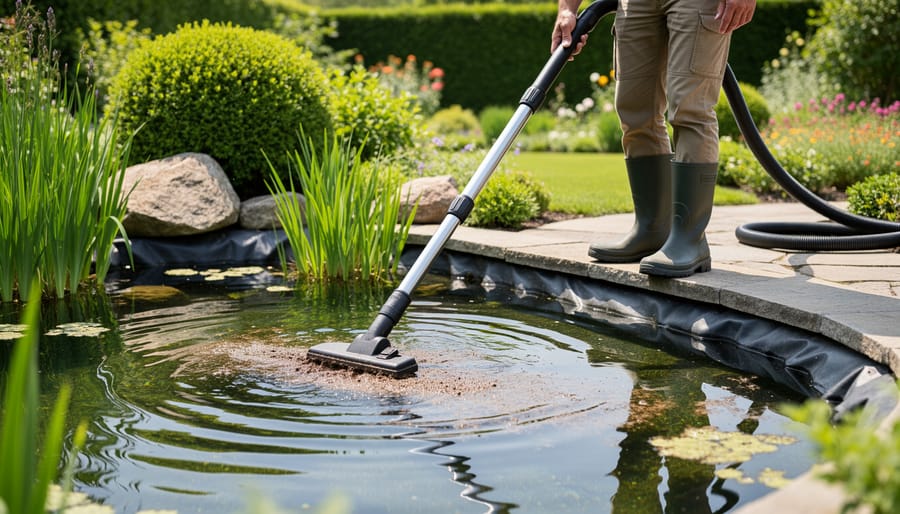
For pond vacuums, begin in one corner and work systematically across the bottom. Hold the nozzle about an inch above the sediment layer, moving slowly to avoid stirring up more than necessary. Work in 30-minute sessions to prevent stressing your fish, and never remove more than one-third of the sediment in a single session. Your beneficial bacteria live in that muck too, so leaving some behind maintains your pond’s biological balance.
Nets work wonderfully for surface debris before it sinks and becomes sediment. Make this a weekly habit—just five minutes of skimming prevents pounds of future sludge.
For smaller ponds or tight corners, a simple bucket and garden trowel does wonders. Wade in carefully (I wear old sneakers for grip), scoop gently, and deposit the sediment around garden plants. They’ll love the nutrient boost!
As for frequency, most ponds benefit from manual removal twice yearly. High-fish-load ponds or those with overhanging trees might need quarterly attention. Watch your water clarity—if it’s declining despite regular maintenance, increase your removal schedule. Remember, consistency beats intensity every time.
Smart Aeration: Your Sediment-Fighting Secret Weapon
Think of aeration as your pond’s personal trainer—keeping everything moving and healthy! When you add oxygen to your pond, you’re creating the perfect environment for beneficial bacteria to thrive. These microscopic helpers are absolute champions at breaking down organic sediment, but they need oxygen to do their job effectively.
Without proper aeration, the bottom of your pond can develop anaerobic zones—areas where oxygen-starved bacteria produce toxic gases like hydrogen sulfide (that rotten egg smell). Not good! An aerator prevents this by circulating oxygenated water throughout your pond, speeding up the natural decomposition process significantly.
For best results, place your diffuser near the deepest part of your pond, but not directly in thick sediment deposits. You want to create circulation without stirring up a muddy mess. I learned this the hard way when my first diffuser placement turned my crystal-clear water into chocolate milk overnight!
Seasonal tip: Run your aerator year-round if possible, but it’s especially critical during hot summer months when oxygen levels naturally drop. During winter in freezing climates, keep at least one area ice-free to allow gas exchange. Your pond—and those hardworking bacteria—will thank you for the consistent oxygen supply!
Creating Your Year-Round Sediment Management Plan
Managing organic sediment isn’t a one-and-done task—it’s a year-round dance with the seasons! I’ve learned this firsthand after forgetting to prepare my pond one autumn and spending the entire spring dealing with murky water. Let me walk you through what to tackle each season so you can maintain a thriving pond ecosystem all year long.
Spring is your action season. As temperatures rise and things start growing again, remove any accumulated winter debris before it breaks down. This is the perfect time to rake out leaves and add beneficial bacteria to jumpstart decomposition of existing sediment. Check your plants and divide overgrown specimens—they’ve been storing nutrients all winter that would otherwise feed algae.
Summer calls for maintenance mode. Monitor algae growth weekly, as warm weather accelerates everything. Top up evaporated water, but do it gradually to avoid shocking your ecosystem. Trim back aggressive plants before they die back and add to your sediment load. If you notice cloudy water, add barley straw or increase aeration before problems escalate.
Autumn is preparation time. This is honestly the most important season for sediment control. Install pond netting to catch falling leaves before they sink and decompose. Cut back dying plants rather than letting them collapse into the water. Remove as much organic matter as possible now, and you’ll thank yourself come spring. I also add cold-water beneficial bacteria during this transition period.
Winter means observation and light maintenance. Remove any debris that blows onto the pond surface. Keep a small area ice-free if you have fish, ensuring adequate oxygen exchange. Use this quieter season to plan any major improvements for spring, like adding more plants or upgrading your filtration system.
Common Mistakes That Make Sediment Worse
We’ve all been there – trying to do right by our ponds only to discover we’ve accidentally made things worse! Let me share some incredibly common mistakes that can turn a minor sediment situation into a major headache.
First up is overfeeding our finned friends. I get it, watching fish eagerly gobble up their food is one of the joys of pond ownership. But here’s the thing: uneaten food sinks straight to the bottom and becomes tomorrow’s muck. A good rule of thumb is to feed only what your fish can consume in about five minutes. Anything more is just future sediment.
Fall cleanup procrastination is another biggie. Those gorgeous autumn leaves floating on your pond might look picturesque, but they’re sediment bombs waiting to happen. Once they sink and start decomposing, you’re stuck with all that organic material breaking down throughout winter. Trust me, spending an afternoon with a skimmer net in October beats dealing with thick sludge in spring.
Chemical treatments can be tempting quick fixes, but over-relying on them often backfires. They might clear the water temporarily, but they don’t address the root cause and can actually kill beneficial bacteria that naturally break down organic matter. It’s like painting over rust instead of treating it.
Finally, there’s the well-meaning but misguided attempt to stir up sediment thinking it’ll just disappear. Disturbing sediment without proper removal just releases trapped nutrients and debris back into your water column, creating cloudy water and potentially triggering algae blooms. If you’re going to tackle sediment, commit to actually removing it, not just relocating it.
Managing organic sediment in your pond doesn’t have to feel overwhelming or complicated. The beauty of pond care is that even small, consistent efforts make a noticeable difference. You don’t need to tackle everything at once or invest in expensive equipment right away. Start with just one or two strategies that feel manageable for your schedule and budget. Maybe that’s adding a few beneficial bacteria treatments this month and introducing some floating plants next season. Every step you take moves you closer to a healthier, more balanced pond.
The rewards are absolutely worth it. Picture crystal-clear water where you can actually see your fish swimming happily below the surface. Imagine fewer algae problems, less time spent cleaning, and a pond that practically takes care of itself because you’ve created the right natural balance. That’s not just a dream, it’s completely achievable with patience and the right approach.
Remember, you’re not alone in this journey. Thousands of pond owners have faced the same challenges and found solutions that work. Trust the process, celebrate small victories, and enjoy watching your pond transform into the beautiful, thriving ecosystem you envisioned.