
Build a Pond That Loves the Planet Back: Your Low-Carbon Water Garden Blueprint
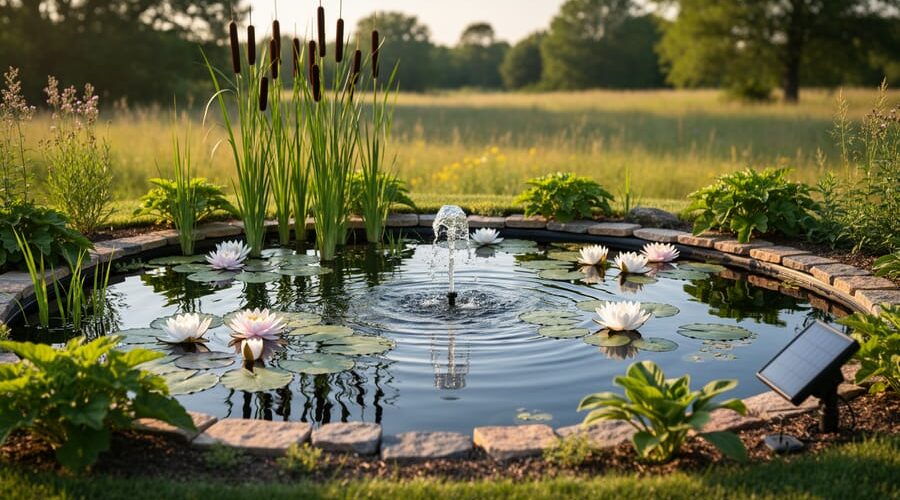
Choose native aquatic plants that naturally filter water without chemical interventions, reducing your pond’s environmental footprint while creating a self-sustaining ecosystem. Plants like water lilies, cattails, and submerged oxygenators absorb excess nutrients that would otherwise fuel algae growth, eliminating the need for harsh treatments.
Position your pond to capture natural rainwater runoff instead of relying solely on municipal water sources, cutting down on treated water consumption and associated energy costs. A thoughtful location that works with your landscape’s natural contours also minimizes excavation needs and reduces the carbon impact of construction.
Skip synthetic liners when possible and opt for clay-based or bentonite solutions that integrate seamlessly with surrounding soil, or select EPDM rubber liners free from harmful plasticizers. These materials biodegrade naturally over time or can be recycled, unlike PVC alternatives that release toxins as they deteriorate.
Install a solar-powered pump to circulate water and maintain oxygen levels without drawing from the electrical grid. This single upgrade can eliminate hundreds of pounds of carbon emissions annually while keeping your pond healthy and your operational costs near zero.
Creating an eco-friendly pond isn’t about sacrificing beauty for sustainability. It’s about working with nature’s intelligence rather than against it. When you design with the environment in mind from day one, you’ll build a thriving aquatic habitat that requires less intervention, fewer resources, and practically maintains itself. The pond becomes a living example of how human creativity and ecological responsibility can create something truly remarkable in your own backyard.
What Makes a Pond Truly Eco-Friendly?
Beyond Just Looking Natural
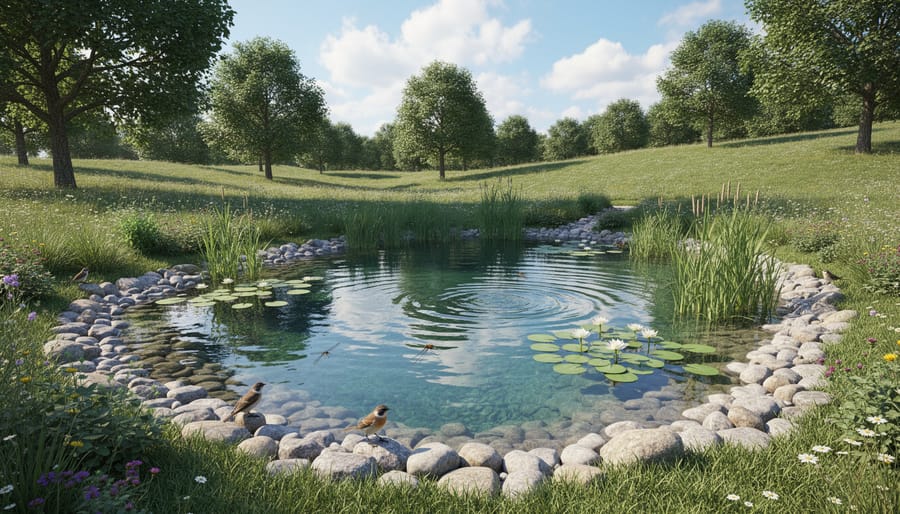
When most people hear “eco-friendly pond,” they picture a natural-looking pond with rocks, plants, and maybe a few fish swimming around. While that rustic charm is lovely, being truly eco-friendly goes much deeper than appearances. It’s really about the bigger picture: how much water your pond uses, the energy required to keep it running, and the environmental footprint it leaves throughout its entire existence.
Think of it this way: you could have a gorgeous, wild-looking pond that guzzles electricity with an oversized pump and requires constant chemical treatments. On the flip side, a more formal-looking pond might use solar power, recycle rainwater, and support beneficial bacteria that keep everything balanced naturally. The second option is the eco-friendly winner, even if it doesn’t look as “natural.”
The key is considering your pond’s impact from day one through the years ahead. What materials will you use? How much energy will your equipment consume? What happens to waste products? These questions matter far more than whether your pond has perfectly placed boulders. An eco-friendly approach means making choices that minimize resource consumption and environmental harm while still creating the beautiful water feature you’re dreaming of.
The Lifecycle Approach (Simply Explained)
Think of your pond as having a complete life story, from birth to eventual transformation. The lifecycle approach simply means considering the environmental footprint at every chapter of that story, not just the present moment.
When you’re planning your pond, start by thinking about the materials you’ll use. Will those rocks come from a local quarry or travel thousands of miles? Are your liner options recyclable or destined for landfill decades from now? These upfront choices matter because building a thriving ecosystem begins with responsible material selection.
During your pond’s daily life, the lifecycle view asks different questions. How much energy does your pump consume over months and years? Are your maintenance products breaking down naturally or accumulating in the environment? I learned this lesson when I switched to a solar-powered aerator. Yes, the initial cost stung a bit, but calculating the energy savings over five years made the environmental benefit crystal clear.
Finally, consider the endgame. Ponds aren’t always forever. Perhaps you’ll eventually redesign your garden or move homes. Can your pond materials be repurposed? Will removal cause soil contamination? Planning for these possibilities now prevents headaches later.
This big-picture thinking transforms pond ownership from a simple hobby into genuine environmental stewardship, where every decision contributes to a lighter footprint on our planet.
Designing Your Pond With Carbon in Mind
Smart Site Selection
Before you grab that shovel, take a morning coffee walk around your yard and really observe the landscape. The perfect spot for your eco-friendly pond is already telling you where it wants to be. Look for natural low points where water tends to collect after rain. These spots minimize excavation work, which means less soil displacement, lower equipment costs, and reduced carbon footprint from the get-go.
Watch how sunlight moves across potential locations throughout the day. A site with partial shade, perhaps from existing trees, helps keep water temperatures stable and reduces algae growth naturally. This means you’ll use less energy for filtration and aeration later. However, avoid placing your pond directly under trees, as falling leaves create extra maintenance and organic debris.
Check the natural drainage patterns by observing where water flows during storms. Positioning your pond to catch gentle runoff can reduce the need for supplemental water sources, though you’ll want to avoid spots that collect heavy runoff carrying lawn chemicals or sediment.
Consider proximity to your home too. A visible pond encourages daily observation, helping you catch small issues before they become big problems. Plus, shorter hose runs for initial filling mean less water waste during setup.
Size and Depth That Work With Nature
Getting your pond dimensions right from the start makes all the difference in creating a self-sustaining ecosystem. Here’s what I’ve learned works beautifully with nature rather than against it.
Depth matters more than you might think. Aim for at least 18-24 inches at the deepest point, which helps maintain stable water temperatures year-round. This depth protects beneficial bacteria and gives fish a cozy refuge during hot summers and cold winters. Shallower areas around the edges create perfect zones for marginal plants that naturally filter your water.
For surface area, bigger generally means better balance. A pond under 100 square feet can struggle to stay stable, while 150-200 square feet or more creates enough volume to handle natural fluctuations in temperature and nutrient levels. Think of it like a big pot of soup versus a small cup – the larger volume doesn’t heat up or cool down as quickly.
The magic ratio I always recommend is roughly 2 feet deep for every 8-10 feet of surface length. This proportion encourages natural circulation patterns and gives you varied habitats without requiring pumps running constantly. You’ll notice the difference immediately – clearer water with far less fussing on your part.
Natural Filtration Design
Nature provides incredible built-in water cleaning systems, and you can harness these powerful processes right in your own pond! The secret lies in creating dedicated zones where plants and beneficial bacteria work together to filter out impurities naturally.
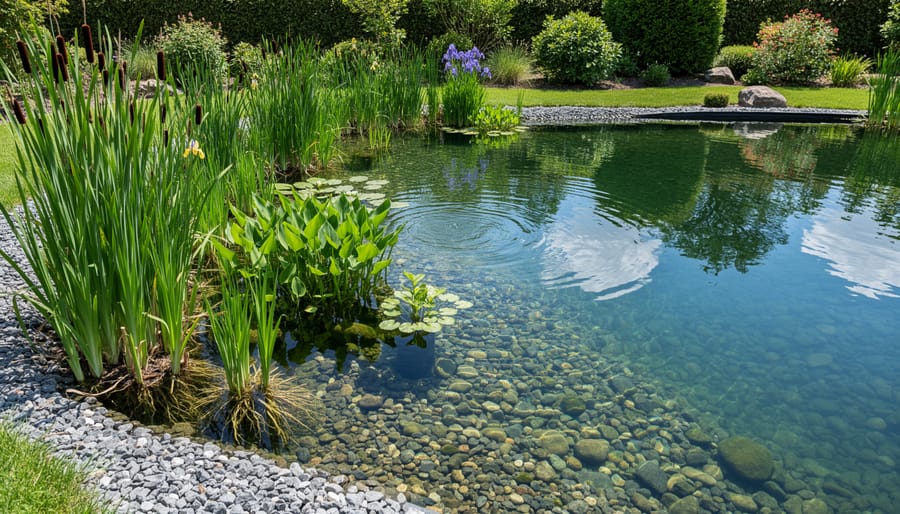
Start by designing a bog garden or wetland area connected to your pond. This shallow zone, typically 6-12 inches deep, becomes home to water-loving plants like rushes, irises, and pickerel weed. As water flows through their root systems, these plants absorb excess nutrients that would otherwise fuel algae growth. I’ve watched my own bog garden transform murky water into crystal-clear streams within weeks, all without plugging in a single device.
Plant your pond edges generously too. Marginal plants act as living filters, their roots creating surfaces where beneficial bacteria colonize and break down organic waste. Think of them as tiny cleanup crews working around the clock.
Create a dedicated biological filtration zone using gravel beds planted with submerged vegetation. Water passes slowly through these areas, allowing natural processes to remove toxins and suspended particles. These natural pond solutions eliminate the need for energy-hungry pumps and chemical treatments while supporting a thriving ecosystem that practically maintains itself.
Choosing Low-Carbon Materials
Pond Liners: The Good, the Better, and the Best
Choosing the right liner is like picking the foundation for your dream home—it matters! Let’s break down your options so you can make a confident, earth-conscious choice.
EPDM (rubber) liners are the workhorses of the pond world. They typically last 20-30 years, resist UV damage beautifully, and once their life is done, many can be recycled into playground surfaces or roofing materials. The production process does use petroleum-based materials, but their longevity means you’re not replacing them frequently. I’ve used EPDM in three of my own ponds, and they’ve been reliable companions through countless seasons.
RPE (reinforced polyethylene) liners are the lighter, newer cousins. They’re incredibly puncture-resistant and have a slightly smaller production footprint than EPDM. While recycling options are still developing, their 20-year lifespan makes them a solid middle-ground choice for most backyard projects.
Natural bentonite clay liners are the purists’ dream—completely natural, biodegradable, and they actually improve over time as they settle. They work beautifully in larger ponds where you’ve got stable soil conditions. The catch? They need specific soil types and consistent water levels to perform well. If you’re going completely natural with your earth-friendly pond materials, clay deserves serious consideration.
My recommendation? For most DIY pond builders, EPDM offers the best balance of durability, environmental responsibility, and ease of installation. Save your receipt—knowing your liner’s recyclability options makes future decisions easier!
Rocks, Edging, and Hardscaping Choices
Your hardscaping choices make a bigger environmental difference than you might think! When I built my first pond, I hauled in decorative rocks from a garden center across town, not realizing the fuel costs and quarrying impact. Now I know better.
Start by sourcing local stone whenever possible. Check with local landscapers, quarries, or even farmers who might have fieldstone available. You’ll slash transportation emissions and often save money too. Better yet, scout your own property for rocks hiding under brush or partially buried. I’ve found some beautiful specimens just digging around!
Reclaimed materials are your eco-friendly best friend. Old bricks, broken concrete pieces, and salvaged pavers create unique, characterful edging while keeping materials out of landfills. Visit demolition sites, architectural salvage yards, or browse online marketplaces. That weathered stone from a demolished building tells a story while reducing demand for new materials.
If you need fresh materials, skip traditional concrete when possible. Its production releases substantial CO2. Instead, consider natural stone stacked without mortar, allowing water and wildlife to pass through gaps. Timber edging from sustainably harvested wood offers another attractive option, though it requires periodic replacement.
For steep banks, coir logs or natural fiber mats stabilize soil beautifully while breaking down slowly to nourish plants. They work wonderfully and look completely natural once vegetation fills in.
What to Avoid (And Why)
Let’s talk about what you’ll want to skip when building your eco-friendly pond. First up, traditional concrete has a surprisingly hefty carbon footprint due to cement production. If you need structure, consider recycled concrete or better yet, natural clay liners that work with your landscape rather than against it.
PVC pond liners seem budget-friendly, but they’re petroleum-based and don’t break down. EPDM rubber liners are a much better choice since they last decades longer and contain fewer harmful chemicals. I learned this the hard way when my first PVC liner cracked after just three years!
Skip those brightly colored plastic decorations and fountain features. Not only do they look artificial, but they degrade in sunlight and leach microplastics into your water. Natural rocks, driftwood, and native plants create stunning visual interest without the environmental baggage.
Be cautious with treated lumber for edging or bridges. The chemicals can leach into your pond ecosystem. Untreated cedar, stone, or composite materials made from recycled content work beautifully instead.
Finally, avoid non-native plants and fish. They might seem exotic, but escapees can wreak havoc on local waterways. Stick with species that naturally belong in your region for a truly sustainable water garden.
Energy-Smart Equipment Choices
Right-Sizing Your Pump
Here’s a reality check from my own experience: I once ran a 3000-gallon-per-hour pump in my 500-gallon pond because I thought bigger meant better. My electricity bill told a different story, and my fish weren’t any happier swimming in that unnecessary current!
Calculating your actual pump needs is simpler than you think. Start with your pond’s volume in gallons, then aim to circulate it once every two hours for a healthy ecosystem. So a 1000-gallon pond needs just a 500-gallon-per-hour pump. Factor in about 10 percent extra if you have a waterfall or need to push water uphill.
The energy savings are impressive. Switching from my oversized pump to a properly sized 300-gallon-per-hour model cut my pump’s energy use by nearly 60 percent. That’s roughly $45 saved annually, and over the pump’s 10-year lifespan, we’re talking $450 plus the reduced environmental impact.
Don’t forget about head height either. Measure the vertical distance from your pump to where water exits. Every foot of height requires additional pump power, so choose accordingly. Most pump packages include helpful charts matching gallons-per-hour to various head heights, making selection straightforward even for first-timers.
Solar-Powered Options That Actually Work
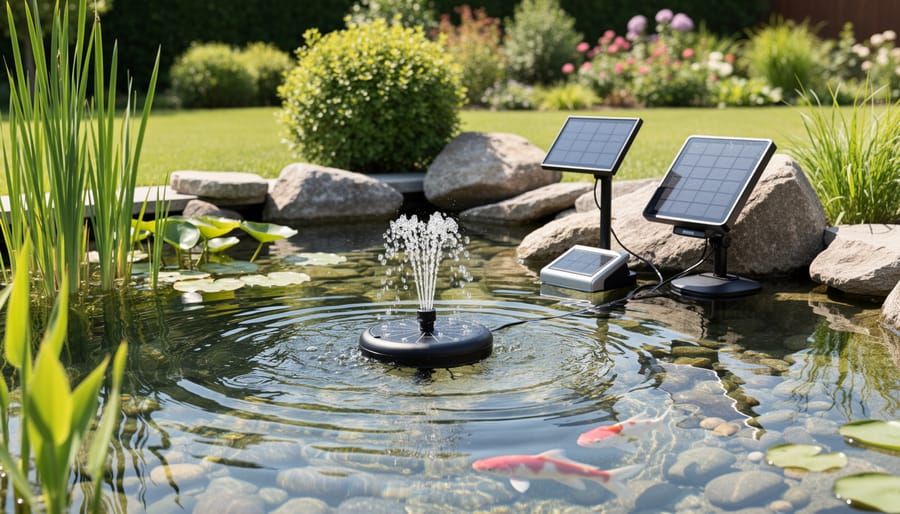
Solar technology has come a long way, but let’s be honest about what actually performs well in pond applications. Solar-powered pumps work beautifully for small fountains and circulation in ponds under 500 gallons, especially if you live in sunny climates. I’ve had great success with solar aerators that keep my goldfish happy during summer months. The catch? They only work when the sun shines, which means cloudy days leave your pond without circulation.
For lighting, solar options are fantastic. Modern solar pond lights provide ambient illumination without any electrical hassle, and they’ve become remarkably reliable. I’ve installed several around my water garden, and they consistently perform for 6-8 hours after a full charge.
Here’s my recommendation: consider hybrid systems. Use solar for supplemental aeration and accent lighting, but maintain a traditional electric pump as your primary circulation source. This approach gives you the environmental benefits of solar while ensuring your pond stays healthy even during extended cloudy periods. Battery backup systems bridge the gap nicely, storing solar energy for nighttime operation. Think of solar as your eco-friendly helper rather than your sole power source, and you’ll avoid disappointment.
Timers and Smart Controls
You don’t need your pump running 24/7 to keep your pond healthy, and that’s where simple timers become your eco-friendly best friend. I learned this the hard way after watching my electricity bills climb while my fish swam happily in water that was being over-filtered. Most ponds only need pumps running 8-12 hours daily during warmer months.
Basic plug-in timers cost less than $15 and instantly reduce your energy consumption by half or more. Set your pump to run during daylight hours when plants are actively oxygenating the water. During cooler seasons, you can dial it back even further to 4-6 hours daily. Your pond’s ecosystem will adjust beautifully.
For those ready to level up, solar-powered timers eliminate grid electricity entirely while providing the same scheduling benefits. Smart plugs take it another step further, letting you control equipment from your phone and adjust schedules based on weather conditions. On cloudy days when algae growth slows, reduce pump time. During hot spells, increase circulation.
The beauty of this approach is its simplicity. You’re not compromising water quality; you’re optimizing it while slashing energy waste. Start with a basic timer this weekend and watch both your pond and wallet thrive.
Plant Selection for Natural Balance
Native Plants as Your Secret Weapon
Here’s your secret: natural pond plants are like hiring a maintenance crew that works for free! Once established, these native beauties practically care for themselves because they’ve evolved to thrive in your local climate and water conditions.
I’ve watched native water lilies, rushes, and sedges transform problem ponds into balanced ecosystems. They’re incredibly efficient at absorbing excess nutrients that would otherwise fuel algae blooms, essentially starving out the troublemakers. Their root systems create natural filtration zones while providing shelter for frogs, dragonflies, and beneficial insects.
The real magic happens when native plants outcompete invasive species naturally. Instead of constantly battling weeds, you’re working with plants that already know how to win in your environment. They require no fertilizers, minimal pruning, and actually get tougher with each season.
Plus, local wildlife recognizes these plants as food and habitat sources. You’ll notice more butterflies, birds, and pollinators visiting your pond because you’re speaking their language. It’s gardening that works with nature instead of against it, creating a truly self-sustaining water feature.
Creating Self-Sustaining Plant Communities
Think of your pond plants like a natural apartment building, with each level serving a specific purpose. Start with submerged plants like hornwort and anacharis at the bottom. These underwater workhorses oxygenate the water and compete with algae for nutrients, keeping your pond clear without chemicals.
Next, add floating plants such as water lettuce or dwarf water lilies in the middle zone. They provide shade that naturally cools the water and reduces algae growth. I’ve found that covering about 40-60% of the surface creates the perfect balance.
Finally, position marginal plants like cattails, iris, and pickerelweed around the edges. These beauties filter runoff, stabilize pond banks, and create wildlife habitat. Their roots absorb excess nutrients that would otherwise feed algae.
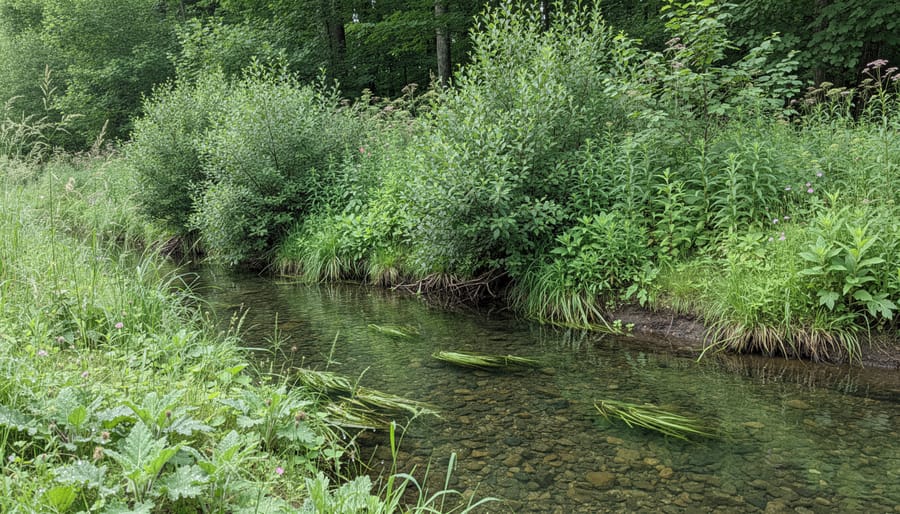
Here’s the magic: when you layer these three plant types together, they form a self-regulating system. The plants work as a team, naturally filtering water, controlling algae, and supporting beneficial bacteria. After the initial establishment period of about six weeks, you’ll spend minimal time maintaining your pond. It becomes a thriving ecosystem that largely takes care of itself, giving you more time to simply enjoy watching dragonflies and frogs move in.
Low-Impact Maintenance Practices
Working With Nature’s Cycles
Your pond naturally shifts gears throughout the year, and learning to work with these rhythms rather than against them saves time, money, and helps your ecosystem thrive. In spring, you’ll notice algae blooms as water warms up—this is completely normal and usually resolves itself as beneficial bacteria populations catch up and plants start actively growing. Resist the urge to over-clean during this phase.
During summer, algae and plants compete for nutrients, creating a natural balance. This is when nature does most of the heavy lifting for you. Fall brings leaves and debris, which you should remove to prevent excess organic matter buildup, but don’t obsess over every single leaf—some provide shelter for overwintering creatures.
Winter is rest time. Your pond goes dormant, and so should you. Ice coverage is natural and actually insulates the water below. The key is knowing when intervention truly helps versus when we’re just making ourselves feel productive. That spring murkiness? Give it three weeks before taking action. Plants looking scraggly in fall? They’re preparing for dormancy, not dying. By observing these patterns for a full year, you’ll develop an intuition for what’s genuinely concerning versus what’s just nature doing its thing.
Chemical-Free Water Quality Management
Keeping your pond water crystal-clear without reaching for chemicals might sound challenging, but nature’s got your back! I learned this lesson after years of battling green water with products that left me feeling guilty about what I was washing into the surrounding environment.
The secret lies in creating balance. Think of your pond as a mini-ecosystem where everything works together. Beneficial bacteria are your invisible helpers, breaking down fish waste and decaying matter naturally. You can boost these good bacteria by adding biological filter media or simply being patient as they colonize your pond surfaces over time.
Aquatic plants are absolute superstars for chemical-free water management. Submerged plants like hornwort and water milfoil absorb excess nutrients that would otherwise feed algae blooms. Floating plants such as water lettuce create shade, which naturally suppresses algae growth by limiting sunlight penetration. I’ve found that covering about 60% of your pond surface with plants keeps water remarkably clear.
Aeration is another game-changer. A solar-powered fountain or simple waterfall increases oxygen levels, supporting fish health and beneficial bacteria while making algae struggle to thrive. These water sustainability strategies work beautifully together.
For algae that does appear, introduce algae-eating fish like plecos or use barley straw, which releases natural compounds that inhibit algae growth as it decomposes. Regular manual removal of string algae, while tedious, prevents problems from escalating without any environmental cost whatsoever.
Real Numbers: What Your Choices Actually Save
Let me give you some real numbers that show exactly what your eco-friendly pond choices accomplish. When I switched to a solar-powered pump for my 1,000-gallon pond, I calculated I was preventing about 876 pounds of carbon dioxide emissions annually compared to running a conventional electric pump. That’s equivalent to planting nearly 14 tree seedlings each year, just from one simple swap.
Here’s another eye-opener: choosing local stone for your pond edging instead of imported materials can save up to 40 pounds of CO2 per ton of stone when you factor in transportation. For a typical pond border using about half a ton of stone, that’s like taking a 100-mile car trip off your carbon footprint.
Rain barrels connected to your pond system deliver impressive savings too. A 55-gallon rain barrel can capture around 1,300 gallons during an average growing season. That’s 1,300 gallons your municipal water system doesn’t need to treat and pump to your home, saving roughly 13 kilowatt-hours of energy and preventing about 10 pounds of CO2 emissions.
Natural filtration through plants instead of UV clarifiers means zero electricity consumption for that function. If you’re running a UV filter 12 hours daily during summer, you’re using approximately 200 kilowatt-hours annually, which translates to about 140 pounds of CO2 in many regions.
These aren’t just feel-good numbers. Over your pond’s 20-year lifespan, these choices compound into thousands of pounds of prevented emissions and conserved resources. You’re creating something beautiful while making a measurable difference, one gallon and one kilowatt at a time.
Getting Started: Your First Steps
Ready to create your own backyard oasis while helping the planet? Whether you’re starting from scratch or giving your existing pond a green makeover, the journey begins with three simple but impactful steps.
Start by choosing your location wisely. I learned this the hard way when my first pond ended up under a massive oak tree—beautiful, but the falling leaves turned maintenance into a full-time job! Look for a spot that gets 4-6 hours of sunlight daily but isn’t directly under deciduous trees. Natural shade from surrounding plants works better than tree cover. Walk around your yard at different times of day to see where water naturally collects. Working with your landscape’s existing drainage patterns means less digging and fewer materials.
Next, skip the plastic liner if possible. For new ponds, consider a clay-lined design or bentonite seal, which creates a naturally waterproof barrier that actually improves over time. If you’re retrofitting an existing pond with a deteriorating liner, this is your perfect opportunity to transition to something more sustainable. Yes, it requires more initial effort, but you’ll never need to replace it. For smaller projects or tight budgets, EPDM rubber liners offer a reasonable compromise—they last 20-30 years and don’t leach harmful chemicals.
Finally, establish your plant zones before adding water. Divide your pond into marginal shallows, transitional shelves, and deeper zones. This might sound complicated, but it’s really just creating different depth levels—like steps going into a pool. Native aquatic plants are your secret weapon for crystal-clear water without filters or chemicals. Start with easy-care natives like pickerelweed, water lilies, and hornwort. These workhorses filter water naturally while providing habitat for beneficial insects and wildlife.
Remember, you don’t need to implement everything at once. Even one eco-friendly choice makes a difference, and you can always add more sustainable features as you go.
Creating an eco-friendly pond isn’t about making compromises or settling for less. It’s actually the opposite. When you choose sustainable practices, you end up with a healthier, more vibrant, and genuinely more beautiful water garden. I’ve seen this transformation in my own pond, where natural filtration systems produce clearer water than any chemical treatment ever did, and native plants attract wildlife I never expected to see in my backyard.
Here’s what I want you to remember: every single choice you make adds up. That recycled liner you install, the rain barrel you connect, the native plants you choose instead of exotic ones—each decision creates ripples of positive change. Your pond doesn’t exist in isolation. It’s part of a larger ecosystem, and when you design it thoughtfully, it becomes a genuine environmental asset rather than just a pretty feature.
The beauty of sustainable pond keeping is that it actually gets easier over time, not harder. Natural systems find their balance. Your local plants adapt and thrive without constant fussing. Native fish populations stabilize. The wildlife that visits becomes more diverse. You’ll spend less time fighting algae and more time enjoying your water garden.
Your pond can be your personal sanctuary and an environmental success story at the same time. It can be the peaceful retreat where you unwind after work and a vital habitat for local wildlife. There’s no sacrifice required—just thoughtful planning and a willingness to work with nature instead of against it. Start with one sustainable change today, and watch how it transforms not just your pond, but your entire relationship with your outdoor space.