
Transform Your Pond into a Year-Round Wellness Retreat
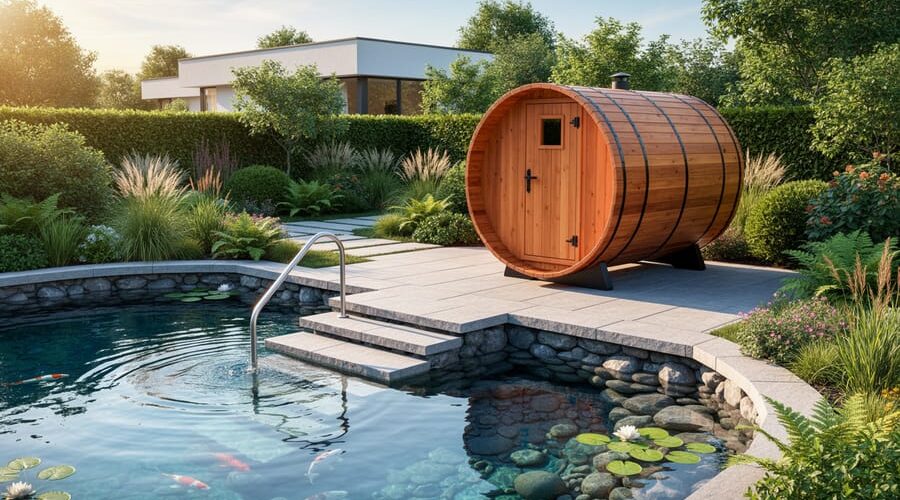
Transform your existing pond into a therapeutic powerhouse by adding a sauna and cold plunge circuit right at the water’s edge. Position a compact barrel sauna or prefab sauna kit within 10-15 feet of your pond’s cleanest section, creating a natural cold plunge station where you already maintain water quality. Use the hardscaping you’ve likely installed around your pond—stone patios, deck areas, or gravel paths—as the perfect foundation for your sauna placement, eliminating the need for extensive site preparation.
Leverage your pond’s existing filtration system to designate a dedicated entry zone for cold plunging. Install simple handrails or stone steps at a gradual slope, similar to beach-style pond entries you might have seen in natural swimming pools. Your biological filters and skimmers already working to keep pond water crystal clear will serve double duty, maintaining the pristine conditions needed for safe hydrotherapy sessions. This integration makes your pond work harder without additional complicated equipment.
Design a seamless circuit between heat and cold by creating a clear pathway with non-slip surfaces. Stone pavers, textured concrete, or wooden boardwalks guide you safely between the sauna’s intense heat and your pond’s refreshing embrace. This setup transforms your water garden from a visual feature into an immersive meditation and wellness retreat, where the therapeutic benefits of contrast therapy meet the tranquility you’ve already cultivated in your backyard oasis.
Why Your Pond is Already Halfway to a Home Spa
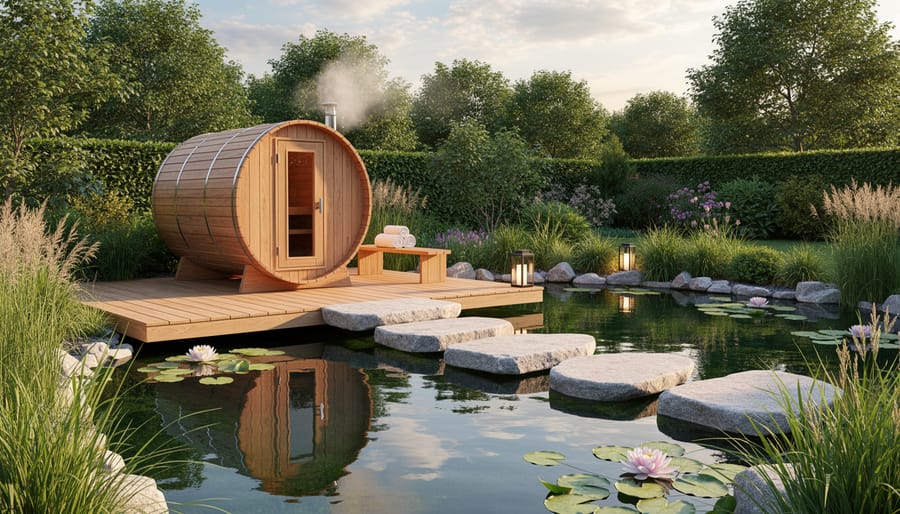
Your Pond’s Natural Temperature Control
Here’s the wonderful thing about using your pond for cold plunge therapy: nature does most of the temperature work for you! Unlike indoor cold plunge tubs that require constant refrigeration, your pond naturally maintains different temperatures throughout the year based on the seasons.
During spring and fall, pond temperatures typically hover between 50-65°F, which is absolutely perfect for cold plunge benefits. Your body gets that invigorating cold shock without extreme discomfort. I remember my first autumn plunge in my backyard pond – the 58-degree water felt bracing but manageable, and I noticed my energy levels stayed elevated for hours afterward.
Winter brings the coldest temperatures, sometimes dipping into the 35-45°F range in many regions. This is when your pond delivers the most intense cold therapy experience. Even a brief 30-second dip provides powerful benefits. Summer poses the only challenge, as surface temperatures can warm to 70-80°F. However, deeper ponds often maintain cooler temperatures below the surface, and early morning plunges still offer refreshing contrast after your sauna session.
The beauty of this system is its zero energy cost and minimal maintenance. Your pond naturally cycles through optimal cold plunge temperatures for three seasons each year, making it an incredibly sustainable wellness solution.
The Water Quality Advantage You Already Have
Here’s the exciting news: if you’ve been managing a pond, you’re already halfway to mastering cold plunge water care! Think about it – you’ve been dealing with water chemistry, filtration systems, and seasonal maintenance for years. All those skills translate beautifully to your cold plunge setup.
Remember how you learned to balance your pond’s pH levels and monitor water clarity? That same knowledge applies to keeping your plunge water crystal clear and safe. The filtration system you use to keep your pond healthy works on identical principles for cold plunge water. You already understand the nitrogen cycle, beneficial bacteria, and how to prevent algae growth – these are the exact same challenges in cold plunge maintenance.
The main difference? Cold plunges are actually easier. You’re working with a smaller volume of water, no fish waste to manage, and consistent temperatures that slow bacterial growth. If you can keep koi happy and healthy, maintaining pristine plunge water will feel like a breeze. Many pond owners discover they can even use similar testing kits and treatment approaches they already have on hand.
Understanding the Sauna and Cold Plunge Combo
How Heat and Cold Work Together
Think of contrast therapy like giving your body a gentle wake-up call. When you sit in a hot sauna, your blood vessels expand and rush closer to your skin’s surface, kind of like opening all the windows in your house on a warm day. Your heart rate picks up, you start sweating, and your muscles relax deeply.
Then comes the exciting part. When you step into cold water, everything reverses. Those blood vessels quickly contract, sending blood rushing back to protect your vital organs. It’s similar to how your pond plants respond to seasonal temperature changes, adapting and strengthening with each cycle.
This back-and-forth creates what I like to call a “circulation workout” for your body. The alternating temperatures get your blood pumping efficiently without any actual exercise. Many pond owners tell me this reminds them of the natural temperature fluctuations their water gardens experience throughout the day and how it keeps the ecosystem vibrant.
The beauty of this practice is its simplicity. You’re not doing anything complicated—just moving between hot and cold. Each session typically involves three to five rounds of this contrast, spending about ten to fifteen minutes in the heat and one to three minutes in the cold. Your body does all the hard work, responding naturally to these temperature changes just as it’s designed to do.
The Pondside Experience vs. Indoor Spas
There’s something magical about stepping from a heated sauna directly into the cool embrace of your own pond that you simply can’t replicate indoors. While commercial spas have their place, creating a pondside hydrotherapy circuit transforms your backyard into a personal healing sanctuary that engages all your senses.
Indoor facilities offer temperature-controlled environments, but they lack the natural elements that make outdoor wellness truly special. When you plunge into your pond, you’re surrounded by the aquatic plants you’ve nurtured, the sounds of trickling waterfalls, and the sight of dragonflies skimming the surface. The changing seasons add variety to your experience that no sterile indoor pool can match. A crisp autumn morning plunge feels entirely different from a summer evening dip, and both are invigorating in their own ways.
The privacy factor matters too. Your pondside setup means no membership fees, no driving across town, and no waiting for equipment. You control the schedule, the ambiance, and who shares the space. Plus, you’ve already invested time and care into your water garden. Integrating a sauna nearby maximizes that investment, creating a cohesive outdoor retreat that indoor spas simply cannot offer. The connection to nature, combined with the therapeutic benefits, makes your backyard pond the perfect cold plunge partner for your sauna sessions.
Planning Your Pondside Hydrotherapy Circuit
Choosing the Right Location Near Your Pond
Finding the perfect spot for your sauna near your pond is like planning the layout of a new garden bed – it takes a bit of thought, but getting it right makes all the difference! Start by considering how far you want to walk between your hot sauna and that refreshing cold plunge. I learned this the hard way during my first setup when I placed the sauna too far from the water. Trust me, you’ll want a quick path of 10-30 feet maximum, ideally with comfortable footing for bare feet.
Privacy matters more than you might think. Position your sauna where you can relax without feeling exposed to neighbors or street traffic. Natural screening from existing trees or tall grasses works beautifully, and you can always add plantings later to create your own secluded retreat.
Drainage is crucial – remember, you’ll be dripping wet walking back and forth. Choose slightly elevated ground that naturally slopes away from your sauna foundation. This prevents water from pooling around the structure and keeps everything cleaner and safer.
Think about accessibility year-round. Will you use this in winter? Make sure you can easily clear snow from the path to your pond. Also consider electricity needs if you’re planning an electric sauna heater. Running power lines underground requires planning, so factor this into your location decision early.
Finally, position your sauna entrance to face your pond for that inspiring view – after all, that beautiful water feature should be part of the experience!
Deciding Between Natural Pond Plunge or Dedicated Cold Plunge
If you’re lucky enough to already have a pond, you might be wondering whether you can just use it for your cold plunge or if you should build something separate. Let me share what I’ve learned from my own experience.
Your natural pond has some wonderful advantages. The water temperature fluctuates naturally with the seasons, giving you authentic cold therapy without any equipment. There’s something magical about sliding into your own ecosystem after a sauna session, surrounded by plants and perhaps even friendly koi. Plus, you’re maximizing what you already have, which is budget-friendly and space-efficient.
However, natural ponds come with considerations. Water quality varies throughout the year, and you’ll need to ensure it’s safe for regular immersion. Algae blooms, murky water, and wildlife activity can make some folks hesitant. The depth might not be ideal, and you can’t control the temperature when it gets too warm in summer or freezes in winter.
A dedicated cold plunge, on the other hand, gives you consistent water quality and temperature control. You can use filtration systems and chillers to maintain that perfect 50-55 degree range year-round. It’s also easier to keep clean and requires less maintenance than a full pond ecosystem.
My recommendation? If your pond is clean, accessible, and at least three feet deep, try it first. You can always add a dedicated plunge later if needed. Many pond lovers end up with both, using the pond for leisurely soaks and a dedicated plunge for quick therapeutic dips.
Sauna Options That Fit Water Garden Aesthetics
When planning your pondside retreat, choosing the right sauna style makes all the difference. Barrel saunas bring rustic charm that naturally complements water gardens with their rounded cedar construction and compact footprint. They nestle beautifully among landscaping and won’t overwhelm your pond view. Shed-style saunas offer more interior space and traditional rectangular designs that blend seamlessly with existing garden structures. These work wonderfully if you’ve already got a tool shed or gazebo nearby. For DIY enthusiasts, outdoor sauna kits provide the perfect middle ground between custom builds and pre-assembled units. They arrive with pre-cut materials and clear instructions, letting you customize finishes to match your pond aesthetic. I’ve found that natural wood tones, stone pathways connecting your sauna to your cold plunge, and strategic placement that frames rather than blocks your water view creates the most harmonious setup.
Building or Adapting Your Cold Plunge Area
Using Your Existing Pond for Cold Plunging
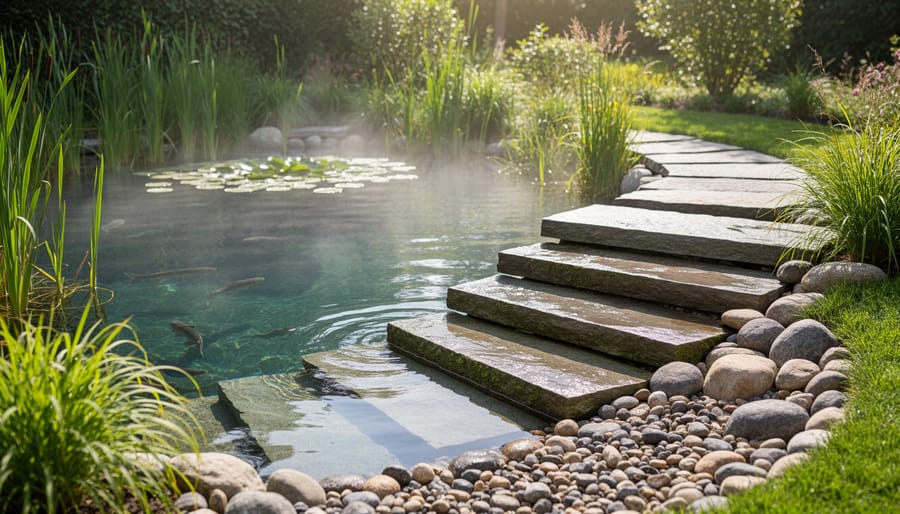
The wonderful news is that your existing pond can absolutely double as your cold plunge destination! I’ve transformed several ponds this way, and each time, I’m amazed at how naturally they adapt to this dual purpose.
Start by choosing your entry point carefully. Look for an area with a firm bottom and away from delicate plantings or where fish tend to gather. In my own pond, I picked a shallower section near some large rocks – it became the perfect natural transition zone. You’ll want to create a designated path to this spot so you’re not trampling different areas each time.
Adding steps or a sturdy ladder makes all the difference for safety and comfort. Pond-safe ladders designed for swimming ponds work beautifully here. I installed a three-step wooden ladder secured to large flat stones, and it’s been rock-solid for years. Make sure whatever you choose won’t leach chemicals into your water or have sharp edges that could damage your liner.
Here’s something important I learned the hard way: let your fish know you’re coming! A little splashing before entry gives them time to move away. Fish are surprisingly adaptable, and mine quickly learned to keep their distance during my plunge sessions.
Consider adding a non-slip mat or textured stepping stones leading to your entry point. These prevent slips on wet surfaces and help contain any debris you might track in. I also keep a brush nearby for a quick foot rinse before entering.
Temperature monitoring is essential. A floating pond thermometer helps you track conditions and plan your plunges accordingly. Remember, you’re sharing this space with living creatures, so maintaining the pond’s ecosystem should always come first.
Adding a Separate Cold Plunge Pool
If you’re starting from scratch or want a dedicated cold plunge separate from your pond, you’ve got some fantastic options that won’t break the bank. I’ve helped countless friends set up their first cold plunge pools, and the beauty is that you can make this as simple or sophisticated as you like.
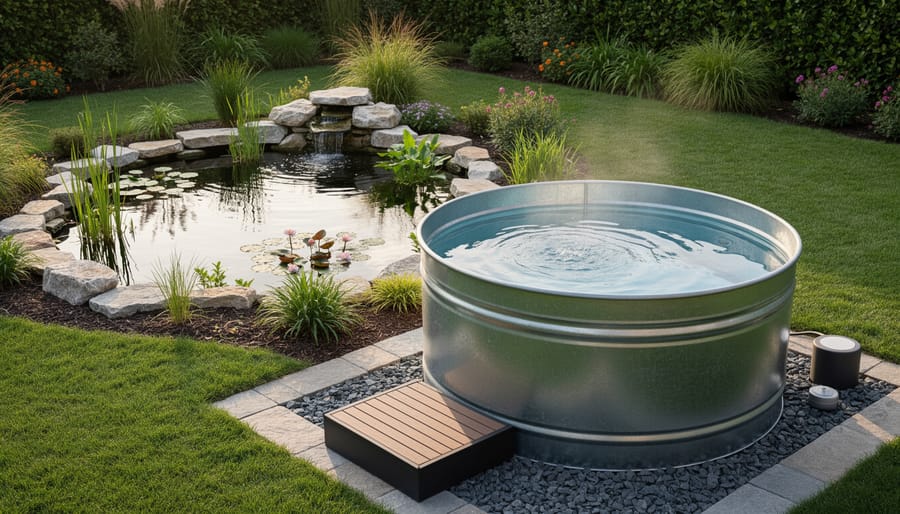
Stock tanks are my go-to recommendation for beginners. These galvanized metal or plastic tanks, originally designed for livestock, make perfect cold plunge pools. A 300-gallon stock tank (about 6 feet across) gives you plenty of room to fully submerge. They’re surprisingly affordable, usually between $400-800, and installation is basically just finding level ground and filling it up. I’ve seen people transform these with wooden surrounds that make them look like custom installations.
Pre-formed pond liners offer another DIY-friendly route. These rigid shells, typically used for ornamental ponds, work beautifully as plunge pools. The kidney-shaped or rectangular versions provide more depth than width, which is perfect for cold therapy. Installation involves digging a hole slightly larger than the form, creating a sand base, and backfilling around the edges. The process takes a weekend, not weeks.
For filtering, keep it simple. A basic pond pump with a cartridge filter will keep water clean between uses. Run it a few hours daily, and you’ll maintain crystal-clear water. Add a drain valve at the bottom for easy water changes every few weeks, and you’re set.
The real magic happens when you position your cold plunge near your sauna, creating that invigorating hot-cold circuit. Whether you choose a stock tank tucked beside your deck or a pre-formed pool nestled into your landscape, you’re building something special that’ll serve you for years.
Maintaining Water Quality for Both Fish and Plunging
Keeping Your Pond Fish-Friendly and Human-Safe
Here’s the thing about combining your sauna ritual with pond plunges—you’re sharing that water with fish, frogs, and beneficial bacteria that keep your ecosystem thriving. I learned this the hard way when I noticed my goldfish acting sluggish after a week of daily plunges. Turns out, body oils and sweat residues were affecting water chemistry.
Start by showering quickly before each plunge to minimize contaminants entering your pond. Test your water weekly using a basic pond test kit, paying special attention to pH and ammonia levels. If you’re plunging daily, you might notice slight pH fluctuations—completely normal, but worth monitoring.
Timing matters too. I schedule my cold plunges for mid-morning when fish are most active and adaptable. Avoid evening plunges when fish are settling down, as the disturbance can stress them unnecessarily.
For natural water treatment, increase your beneficial bacteria dosage slightly to handle the extra organic load from human use. Adding more aquatic plants also helps—they’re nature’s best filters and contribute to protecting aquatic ecosystem balance.
Remember, a healthy pond means a healthier plunge experience for you. When your fish are thriving, you know the water quality is spot-on for both of you.
Year-Round Water Temperature Management
Managing your cold plunge temperature throughout the seasons doesn’t require expensive equipment if you work with nature rather than against it. During spring and fall, most ponds naturally hover in that ideal 50-60°F range for cold therapy, making these perfect seasons to start your practice.
Summer presents the biggest challenge when you’re looking for that bracing cold sensation. I’ve found that positioning your plunge area in a shaded spot makes a tremendous difference. Those tall oak trees near my pond? They keep my plunge pool a good 10-15 degrees cooler than direct sun areas. Strategic landscaping with shade-providing plants works wonders. If your pond runs shallow, consider creating a deeper pocket specifically for cold plunges, since deeper water stays naturally cooler.
Winter opens exciting possibilities for the truly dedicated. In most climates, your pond will naturally reach perfect cold plunge temperatures, though you’ll need to maintain a small ice-free zone. A simple pond aerator or small fountain keeps a section open without heating the water. Just remember to start gradually as temperatures drop and always prioritize safety over extreme temperatures.
Creating the Complete Circuit Experience
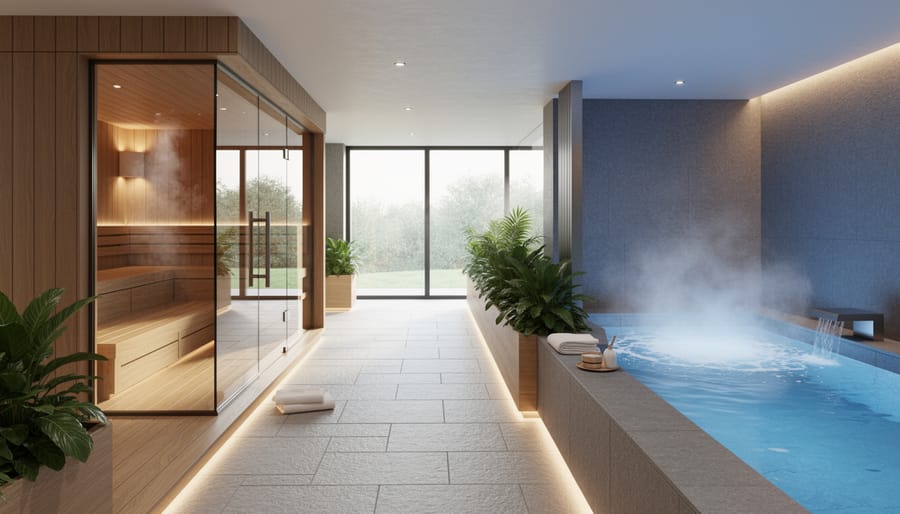
Pathways and Landscaping Between Stations
Creating a seamless pathway between your sauna and cold plunge isn’t just about safety, it’s an opportunity to extend your water garden’s beauty! I learned this after my first winter, when I realized slippery stepping stones between my pond plunge and cedar sauna were more hazardous than relaxing.
Start with non-slip materials that complement your pond’s aesthetic. Textured flagstone or river rock set in decomposed granite works wonderfully and blends naturally with waterside environments. Space stones close enough for comfortable barefoot walking, about 12 to 18 inches apart. Edge your pathway with low-growing ground covers like creeping thyme or moss, which soften the look while preventing erosion.
Consider lighting for evening sessions, incorporating solar-powered path lights that mimic the gentle glow of fireflies. This practical addition enhances the nighttime retreat atmosphere you’ve worked so hard to create. Position them along pathway edges rather than directly in the walking path.
For drainage, slope pathways slightly away from both structures to prevent pooling. A small channel lined with decorative pebbles can direct runoff back toward your pond, completing the water cycle beautifully while keeping walkways dry and safe.
Adding Rest and Relaxation Zones
Your hydrotherapy circuit needs comfortable spots to rest between hot and cold sessions. I’ve learned that proper recovery time is just as important as the plunge itself! Start by positioning a weatherproof bench or loungers within easy reach of both your sauna and pond. Choose materials like teak or composite decking that handle moisture beautifully.
Consider adding an outdoor shower near your pond entrance. It’s perfect for rinsing off before entering your pristine water and adds convenience. I installed a simple solar shower beside mine, and it’s been a game-changer.
Create dedicated relaxation zones with shade structures or pergolas. These viewing spots let you enjoy your water garden while your body regulates temperature between sessions. Add a small table for refreshments, and you’ve transformed your pondside into a complete wellness retreat that rivals any spa.
Real Stories from Pond Owners Who Made the Switch
When Sarah from Minnesota first mentioned adding a sauna near her koi pond, her family thought she was crazy. But after completing her project last spring, she says it’s transformed their backyard into a year-round retreat. “I started simple,” Sarah explains. “I built a small cedar barrel sauna about fifteen feet from my pond edge. The hardest part was running electricity safely, but once that was done, everything else fell into place naturally.”
Her favorite part? Taking those few steps from the sauna’s heat straight into the cool pond water. “My koi don’t even scatter anymore when I slide in. They’ve gotten used to the routine!” She notes that winter sessions are especially magical, with steam rising off the water’s surface.
Meanwhile, Tom in Oregon took a different approach with his established water garden. Rather than building a traditional sauna, he installed a compact infrared unit in his existing garden shed. “I already had a structure twenty feet from my pond with power running to it. Why reinvent the wheel?” He added a stone path from the shed to a designated entry point at his pond, complete with a handrail for safety.
Tom’s advice for fellow pond owners? Start with what you have. “Don’t overthink it. Your pond already does the hard work. You just need heat nearby and a safe way to get in and out of the water.”
Both Sarah and Tom agree that the combination has deepened their connection to their ponds. What started as ornamental features became central to their daily wellness routines, proving that sometimes the best upgrades work with nature, not against it.
Here’s the exciting part: you already have everything you need to get started. That beautiful pond you’ve been nurturing isn’t just a visual centerpiece anymore—it’s your personal wellness retreat waiting to happen. You’ve already mastered water quality, circulation, and seasonal maintenance. Those same skills translate directly into creating a safe, inviting cold plunge experience.
Think about it. You understand how water behaves through different seasons. You know your pond’s depth and accessibility. You’re comfortable working around water features. These aren’t small things—they’re exactly the foundation you need to transform your pondside area into a hydrotherapy circuit.
Start small if the whole concept feels overwhelming. Maybe begin with just adding a simple sitting area near your pond this season. Next spring, consider a basic outdoor shower for rinsing. Test the waters, literally, during warmer months when a quick dip feels refreshing rather than intimidating. As you grow comfortable with the routine, you can explore adding a sauna structure or improving your entry points.
The beauty of this approach is that there’s no rush and no single right way to do it. Your pond has been teaching you patience and observation for years. Apply that same gentle, exploratory mindset to creating your wellness space. Each small addition builds on the last, and before you know it, you’ll have created something truly special—a place where your love of water gardening meets genuine self-care.