
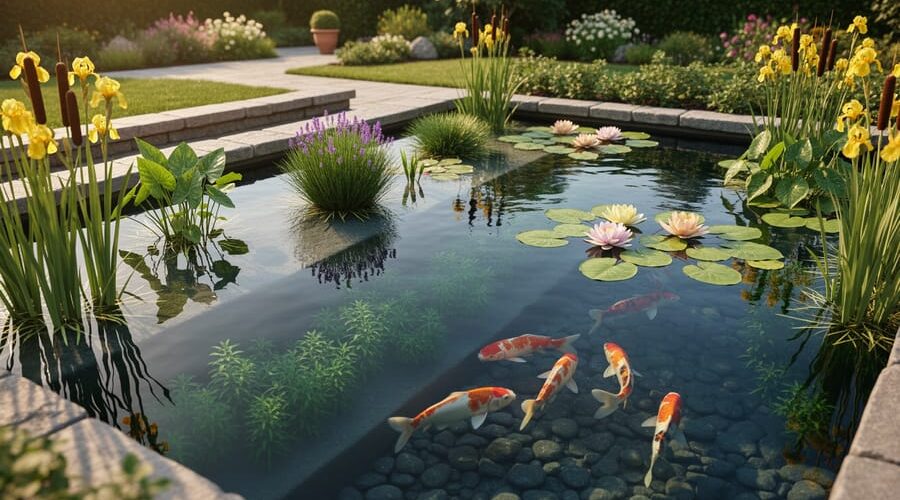
Where Each Plant Thrives: Mastering the Five Zones of Your Pond
Picture your pond as a series of shelves descending into deeper water, each level creating a distinct home for different plants. Understanding these five aquatic zones transforms pond building from guesswork into strategic design, letting you create thriving habitats where plants naturally flourish at their ideal depths.
The marginal zone starts at the water’s edge, typically 0-6 inches deep, perfect for irises and cattails that anchor your pond’s perimeter. Moving deeper, the shallow water zone at 6-12 inches welcomes hardy plants like pickerel rush and arrowhead. The mid-depth zone between 12-18 inches becomes prime real estate for water lilies, whose roots need this sweet spot to send flowers skyward. The deep water zone, running 18-36 inches, houses submerged oxygenators that work quietly below the surface keeping your water crystal clear. Finally, the bottom zone beyond 36 inches provides essential depth for fish to overwinter and maintains stable water temperatures year-round.
Each zone serves a purpose beyond just plant placement. These graduated depths create visual interest, support diverse wildlife, improve water quality, and ensure your pond functions as a balanced ecosystem rather than just a water-filled hole. When you excavate shelves during construction, you’re literally building the foundation for this layered approach. Get the zones right from the start, and plant selection becomes intuitive. Miss them, and you’ll struggle with plants that never quite thrive because they’re fighting their placement rather than thriving in it.
Why Aquatic Zones Matter for Your Pond Design
Understanding aquatic zones is like having a secret blueprint for pond success. When I built my first pond, I made the classic rookie mistake of treating it like one big swimming pool. I planted everything at random depths, and within weeks, my shallow-water irises were drowning while my water lilies struggled to reach the surface. That’s when I learned that nature has a plan, and working with it makes everything easier.
Here’s why these zones matter so much for your pond design. First, plant health depends entirely on proper depth placement. Just like you wouldn’t plant tomatoes in the shade, you can’t expect marsh plants to thrive in three feet of water. Each plant species has evolved for specific water depths, and respecting these preferences means less plant loss and more vibrant growth.
Water quality improves dramatically when you design with zones in mind. Different depths create natural filtration layers. Shallow zones with emergent plants act as biological filters, removing excess nutrients before they fuel algae blooms. Deeper zones provide oxygen circulation and temperature stability. It’s like having a built-in maintenance crew working around the clock.
Ecosystem balance becomes almost automatic when zones are properly established. Wildlife naturally finds its preferred habitat. Frogs appreciate shallow edges for breeding, dragonfly nymphs need varied depths for development, and fish seek deeper zones for temperature refuge during hot summers.
Finally, maintenance becomes significantly easier. Knowing your zones helps you anticipate seasonal changes, plan cleanings efficiently, and troubleshoot problems faster. Instead of guessing why plants aren’t thriving, you’ll understand exactly what each area needs. Trust me, this knowledge transforms pond keeping from frustrating guesswork into confident, enjoyable stewardship.
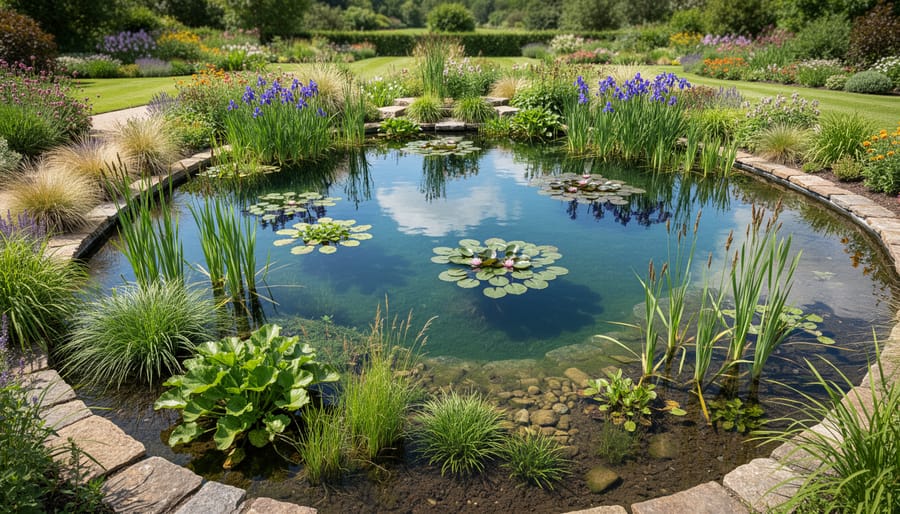
Zone 1: The Bog Zone (Marginal or Littoral Zone)
Best Plants for Your Bog Zone
Your bog zone is where nature really shows off! I’ve found that iris and marsh marigolds are absolute champions here—they thrive in that consistently moist soil and reward you with gorgeous blooms. Japanese iris varieties are particularly stunning and surprisingly easy to care for.
For a textured look, try cardinal flower with its brilliant red spikes, or pickerel rush with purple flower clusters that hummingbirds adore. I always include marsh marigold for early spring color—it’s one of the first things blooming when everything else is just waking up.
Here’s my practical tip: plant in spring or early fall when roots have time to establish. Space them about 12-18 inches apart since they’ll spread naturally. Mix in some compost with your soil before planting—bog plants love rich, organic matter. Water generously for the first month, though honestly, in the bog zone, they’ll usually stay moist on their own.
Don’t forget foliage plants like canna lilies or elephant ears for dramatic height and texture. These stunning water plants create that lush, tropical vibe everyone loves while keeping your pond edges looking naturally beautiful year-round.
Designing Your Bog Shelf
Creating your bog shelf is easier than you might think! Start by building a ledge about 6-12 inches wide around your pond’s perimeter, positioned 0-6 inches below the water surface. I learned the hard way that wider shelves work better—they give you more planting space and look more natural.
Use rocks, bricks, or dedicated pond shelving to create this platform. Make sure it’s sturdy enough to hold soil-filled planting baskets without collapsing. If you’re working with a flexible liner, fold it to create a natural shelf before backfilling with soil or gravel.
Position your bog shelf where it gets good sunlight—most bog plants are sun lovers! I like to create mine on the south or west side of the pond for maximum growing power. Consider making sections at slightly different heights too. This gives you flexibility with plant choices and creates visual interest.
Pro tip: edge your bog shelf with larger rocks to prevent soil erosion and give it a finished look. The rocks also provide convenient stepping spots when you’re tending your plants later. Trust me, your knees will thank you!
Zone 2: The Shallow Marginal Zone
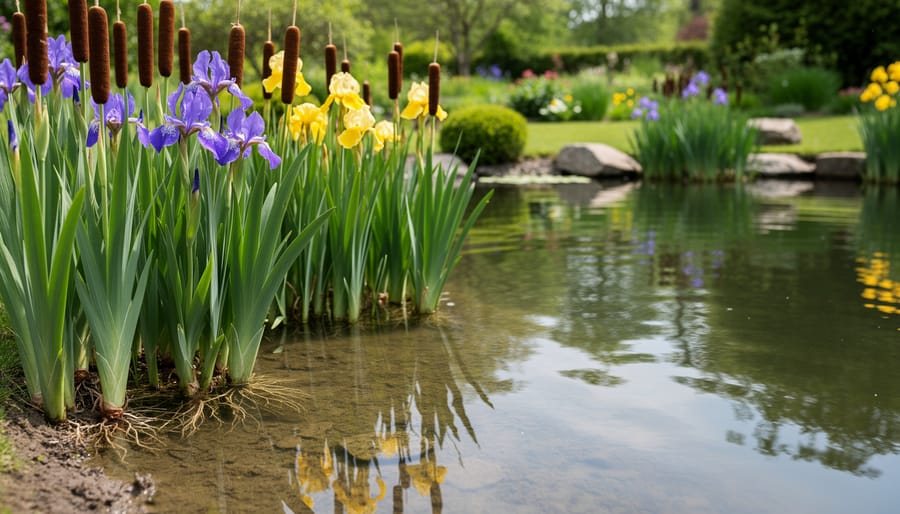
Top Performers for Shallow Margins
The shallow margins, typically ranging from 0-6 inches deep, are your pond’s welcoming committee! This zone is perfect for those gorgeous plants that thrive in water while keeping their crowns above the surface.
Let me introduce you to some absolute champions for this zone. Pickerel Rush produces stunning purple flower spikes and tolerates muddy conditions beautifully. Simply plant it in heavy clay soil or aquatic planting mix, and it’ll reward you with vibrant blooms all summer. Cardinal Flower is another showstopper with brilliant red flowers that hummingbirds adore. Keep it consistently moist, and you’ll have a pollinator paradise.
For a softer touch, try Sweet Flag with its grass-like foliage and pleasant fragrance when crushed. It’s incredibly forgiving and handles partial shade well. Arrowhead is equally easy-going, sporting distinctive arrow-shaped leaves and delicate white flowers.
Care is straightforward for these marginals. Use fabric plant baskets filled with heavy loam, place them on your shallow shelf, and they’ll establish quickly. Divide them every few years to maintain vigor, and trim back dead foliage in autumn. That’s genuinely all there is to it!
Creating Shelves at the Right Depth
Getting your shelf depth right from the start will save you so much frustration later. Trust me, I learned this the hard way when I had to drain and reshape my first pond because my marginal shelf was too deep for my plants to thrive!
The key is building your shelves in terraced steps as you dig. Start with your marginal zone shelf at 0-6 inches deep and about 12-18 inches wide. This gives you plenty of room to position plant pots and baskets without them tipping over. As you move inward and downward, create your next shelf at 6-18 inches for shallow aquatics, making it slightly narrower at around 10-12 inches wide.
Here’s a helpful tip: use a marked measuring stick as you dig to constantly check your depths. I keep a painted PVC pipe with depth markings right by my work area. It’s amazing how easy it is to misjudge underwater depths when you’re standing in mud!
Make your shelf edges gradual rather than sharp drop-offs. A gentle slope of about 45 degrees helps prevent soil erosion and makes it easier to place plants securely. If you’re using a liner, these gradual transitions also reduce stress points that could cause tears over time. Consider the mature size of your plants too and give them room to spread without crowding each other out.
Zone 3: The Deep Marginal Zone
Plants That Love This In-Between Depth
This deeper marginal zone is perfect for plants that need a little more water over their crowns but still want their roots firmly established in soil. I’ve had great success with water irises here, especially the Japanese iris varieties that absolutely thrive in 6-10 inches of water. Their gorgeous blooms are worth every bit of effort!
Arrowhead plants are another fantastic choice for this depth. They’re incredibly adaptable and produce lovely white flowers throughout summer. I also recommend cardinal flower if you want to attract hummingbirds to your pond. The vibrant red blooms are absolutely stunning against the water.
For foliage interest, try lizard’s tail or water forget-me-not. Both spread nicely without becoming invasive and handle this in-between depth beautifully. These plants create that natural transition from your shallower bog areas to the deeper water zones, giving your pond that professional, layered look we’re all after.
Strategic Placement Tips
When designing your pond, think of the zones as a natural staircase leading from your yard into the water. Start by sketching your layout with the shallowest zones closest to viewing areas where you can enjoy colorful marginal plants up close. Position the littoral shelf where morning or afternoon sun hits, since many popular plants here love light.
Create visual flow by layering plant heights. Place tall rushes and cattails in the marginal zone as your backdrop, medium-height flowering plants in the littoral shelf as your middle layer, and floating plants that drift across the limnetic zone as your accent pieces. This creates depth and interest from every angle.
For ecosystem health, distribute plants throughout all zones rather than clustering everything in one area. Your marginal and littoral zones handle most of the natural filtration, so don’t skimp on planting there. The profundal zone might seem empty, but it’s working hard breaking down organic matter. Keep at least 20% of your pond’s surface as open water in the limnetic zone for oxygen exchange and to prevent that overcrowded look.
Zone 4: The Deep Water Zone
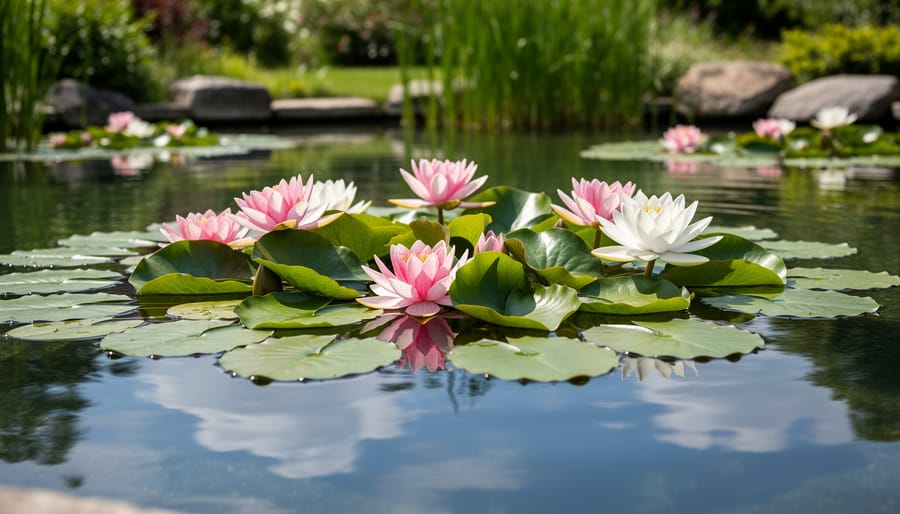
Water Lilies and Floating-Leaved Beauties
This is where the magic happens! Water lilies steal the show in Zone 4, sitting perfectly at depths of 18-36 inches. When planting water lilies, always use sturdy mesh planting baskets, typically 10-12 inches wide. I’ve learned the hard way that skimping on basket size means stunted growth and fewer blooms.
Choose hardy varieties like Pink Sensation or Chromatella for year-round color, or tropical types if you’re in warmer climates. The trick is positioning the basket so the lily crown sits just below the soil surface. Fill your basket with heavy clay-based aquatic soil, not regular potting mix, which floats away and clouds your water.
Floating heart plants and water hawthorn also thrive here, offering alternatives if lilies feel too ambitious for your first pond. These beauties need less fussing and still deliver gorgeous surface coverage. Remember, floating-leaved plants naturally shade your pond, keeping water cool and reducing algae growth. Aim to cover about 40-60 percent of your water surface for the best balance between beauty and pond health.
How Deep Is Deep Enough?
Here’s the thing about pond depth – it’s not just about digging a hole and calling it a day! Different aquatic plants and fish have specific depth requirements, and getting this right from the start will save you headaches later.
For marginal plants that thrive in your shallow zones, you’ll want water depths between 0-6 inches. These guys are happy with wet feet but don’t want to be fully submerged. Your bog and moisture-loving plants do best here.
Moving deeper, floating and submerged plants generally prefer 12-18 inches of water. This gives them enough depth to anchor properly while still getting adequate sunlight. If you’re planning to keep fish, this is your absolute minimum depth – though honestly, I’d recommend going deeper.
For a healthy fish population, especially if you live in an area with cold winters or hot summers, aim for at least 24-30 inches in your deepest zone. This depth allows fish to escape temperature extremes by moving to more comfortable water layers. If you’re keeping koi, you’ll want to go even deeper – around 3-4 feet – since these beauties need more vertical space and better temperature stability.
Remember, creating multiple depth zones isn’t just trendy – it’s practical biology that keeps your entire ecosystem balanced and thriving year-round.
Zone 5: The Open Water Zone
Here’s a question I get all the time from pond enthusiasts: “Do I really need to leave open water in the middle, or can I fill my whole pond with beautiful plants?” I totally understand the temptation to maximize every inch with greenery, but trust me, that open water zone is absolutely essential for a healthy, thriving pond.
Zone 5, your Open Water Zone, is the deepest part of your pond, typically starting around 2 feet and going as deep as you’ve built. This is the plant-free center that might seem empty at first glance, but it’s actually working overtime for your pond’s health. Think of it as the lung and exercise room for your aquatic ecosystem.
Why does this open space matter so much? First, it’s crucial for proper water circulation and oxygenation. Without adequate open water, your pond can develop stagnant pockets where oxygen levels drop and water quality deteriorates. Your filtration system needs this space to effectively move water throughout the entire pond. Second, if you’re keeping fish, they absolutely need this swimming room. Koi and goldfish are active swimmers who require space to exercise, display natural behaviors, and thrive. Consider fish compatibility when planning your layout.
A good rule of thumb is maintaining at least 50-60% of your pond surface as open water. I’ve seen too many ponds where enthusiastic gardeners filled every available space, only to struggle with algae blooms, poor fish health, and murky water. The open zone also helps with temperature regulation during hot summers, giving fish a cooler refuge in the deeper water. Balance is everything in pond design!
Putting It All Together: Planning Your Pond Layout
Now comes the fun part—bringing all five zones together into a cohesive, thriving pond ecosystem! When I designed my first backyard pond, I sketched it out on graph paper about a dozen times before I was happy with the balance. That planning paid off tremendously.
Start by thinking in proportions rather than exact measurements. A good rule of thumb is to dedicate about 10-15% of your pond to the emergent zone, 20-25% to the shallow marginal shelf, 15-20% to the submergent zone, 30-35% to the open water zone, and the remaining space to your deep zone. Of course, these percentages flex depending on your goals—wildlife ponds benefit from more shallow areas, while koi ponds need generous deep zones.
Grab some paper and sketch your pond from a bird’s-eye view and in cross-section. The cross-section is especially helpful for visualizing those stepped shelves that create distinct zones. Mark the depth of each shelf clearly. This simple drawing becomes your blueprint when you’re standing in a muddy hole wondering where that next shelf should go!
Here are some mistakes I’ve learned from (the hard way): Don’t make your marginal shelves too narrow—aim for at least 30 centimeters wide so plants have room to spread and you can actually work with them. Avoid creating only vertical drops, which limit planting opportunities and look unnatural. Don’t position all your shallow zones on one side; distribute them around the perimeter for visual balance and better ecosystem function.
Consider sun exposure too. Your pond design should account for which areas receive full sun versus shade throughout the day, as this influences plant placement within each zone.
Remember, there’s no perfect formula—your pond is unique to your space, budget, and vision. Trust your instincts and enjoy the creative process!
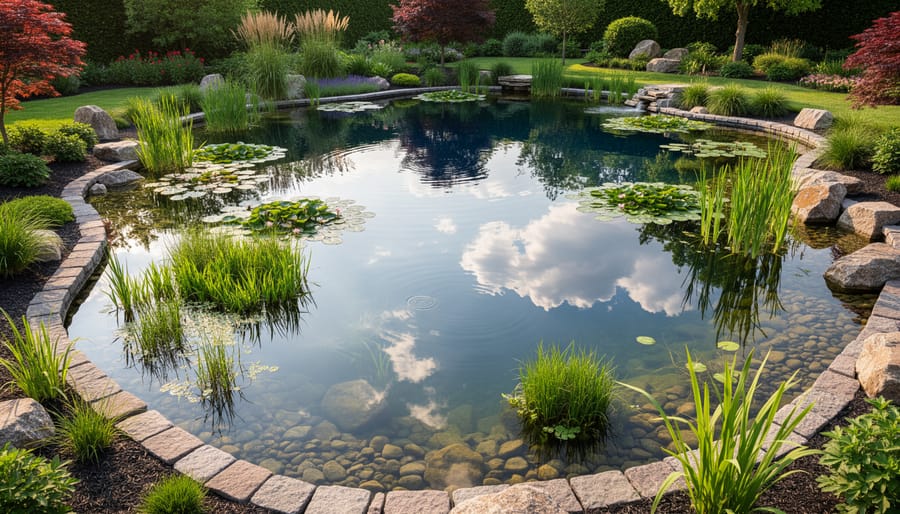
Here’s the wonderful truth about pond zones: nature already knows what it’s doing. When you work with these five aquatic zones instead of against them, you’ll find your pond practically takes care of itself. Plants placed at their preferred depths grow stronger, filter water more efficiently, and require less fussing from you. That’s a win all around!
Take some time this weekend to really observe your pond. Notice where algae tends to grow, where water naturally stays clearer, and which areas seem to attract the most wildlife. Your pond is already telling you its story. Maybe that shallow corner stays warmer and would be perfect for marginal plants, or perhaps that deeper section could use some oxygenating plants to balance things out.
Don’t worry if your pond doesn’t fit the textbook descriptions perfectly. Every pond has its own personality shaped by sunlight, soil, and local conditions. The key is understanding the basic principles of these zones, then adapting them to what you’ve got. Start with one zone at a time, add plants gradually, and watch how your ecosystem responds. Before you know it, you’ll have created a thriving aquatic world that’s both beautiful and balanced.