
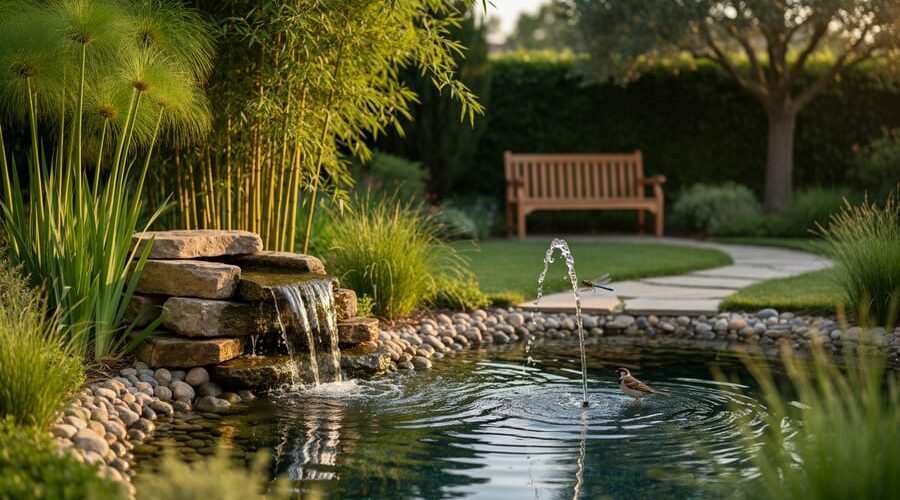
Transform Your Pond Into a Natural Symphony of Soothing Sounds
Close your eyes next to a thriving water garden, and you’ll hear something remarkable: the gentle trickle of a fountain, the rhythmic splash of a small waterfall, the soft rustle of ornamental grasses swaying in the breeze, and if you’re lucky, the melodic chirping of birds drawn to your mini-ecosystem. These aren’t random sounds—they’re carefully orchestrated elements of a natural soundscape that transforms your outdoor space from a simple backyard into a peaceful sanctuary.
Creating this auditory experience doesn’t require expensive equipment or professional installation. Position a simple spitter fountain near seating areas to mask neighborhood noise while generating soothing water sounds. Plant papyrus, bamboo, or tall sedges around your pond’s perimeter—their leaves create pleasant whispers with every breeze. Add a shallow beach area with pebbles where water laps gently against the stones, mimicking natural shorelines.
The real magic happens when wildlife discovers your space. Frogs provide evening concerts, dragonflies buzz past on summer afternoons, and songbirds visit for drinking and bathing. Each element builds upon the others, creating layers of natural sound that change throughout the day and season.
Your water garden becomes more than something beautiful to look at—it becomes an immersive sensory experience that helps you genuinely disconnect from daily stress. The soundscape you create will be uniquely yours, shaped by your feature choices, plant selections, and the wildlife your environment naturally attracts.
Why Natural Sounds Matter in Your Outdoor Space
There’s something almost magical about sitting by a pond and hearing the gentle trickle of water mixed with bird songs and rustling leaves. These aren’t just pleasant background sounds—they’re actually working wonders for your wellbeing and your outdoor space.
Research shows that natural sounds can lower stress hormones, reduce blood pressure, and help you feel more grounded and present. When you create a water garden with a bubbling fountain or small waterfall, you’re building your own personal stress-relief station right in your backyard. I’ve watched countless visitors to my pond literally exhale and relax their shoulders the moment they hear the water flowing.
But the benefits go beyond just relaxation. Natural soundscapes act as an acoustic blanket, effectively masking those annoying background noises like traffic, neighbors’ conversations, or distant lawnmowers. The consistent, soothing sound of moving water creates a privacy buffer that makes your outdoor space feel like a true retreat.
Here’s another bonus: natural sounds attract wildlife. Birds are drawn to the sound of moving water because it signals a safe drinking and bathing spot. Once they arrive, you’ll enjoy their cheerful chirping and watch them splash around. Add some rustling ornamental grasses around your pond, and you’ve got a symphony of natural music that changes with every breeze.
Think of your water garden as the anchor of your outdoor sanctuary. It’s not just a visual feature—it’s the heart of a complete sensory experience that transforms your yard into a place where you actually want to spend time. The combination of sight and sound creates an immersive environment that helps you disconnect from daily pressures and reconnect with nature, right at home.
The Foundation: Water Features That Sing
Waterfalls and Cascades
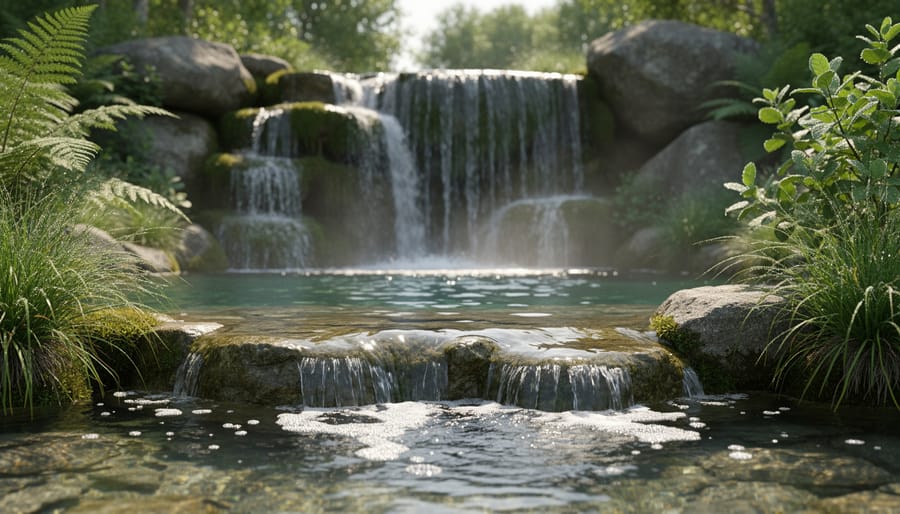
The sound profile of your waterfall depends entirely on three key factors: height, rock placement, and water flow rate. A tall waterfall creates that dramatic rushing sound we all love, while a shorter cascade produces gentler, more soothing tones. I’ve found that even a two-foot difference in height can completely transform the auditory experience.
Rock placement is where you can really get creative. Smooth, flat rocks create a sleek sheet of water with a softer, continuous sound. Position jagged or staggered rocks in the water’s path, and you’ll generate delightful splashing and burbling effects. Try experimenting with different configurations during installation to find your perfect sound.
Water flow rate is your volume control. A robust pump pushing more gallons per minute creates vigorous rushing water, ideal if you want to mask neighborhood noise. Dial it back for a gentle trickle that invites quiet contemplation. Many pond enthusiasts install adjustable pumps specifically for this flexibility.
The beauty is that you’re not locked into one soundscape. Add or reposition a few rocks, adjust your pump settings, and suddenly you’ve created an entirely new auditory experience. Start with what feels right, then fine-tune as you spend time enjoying your space.
Fountains and Bubblers
Fountains and bubblers offer wonderful variety in the sounds they create, from gentle whispers to lively splashes. I’ve found that choosing the right style really depends on your space and the mood you want to set.
Tiered fountains produce a cascading sound as water flows from level to level, creating that classic, relaxing ripple effect. They’re perfect for larger ponds and create a sophisticated focal point. Bubbler fountains, on the other hand, generate a softer, gurgling sound that’s incredibly peaceful. These work beautifully in smaller spaces or container water gardens where you want subtle background ambiance without overwhelming conversation.
Spray fountains shoot water upward, creating a more dynamic, energizing sound with their splashing patterns. Bell fountains create a smooth, dome-shaped water flow that produces a gentle, consistent hiss—perfect for meditation spaces.
When choosing your fountain, consider your pond size first. A powerful spray fountain in a small pond will sound loud and chaotic, while a tiny bubbler in a large pond might get lost. Think about placement too. Position fountains away from seating areas if you want peaceful conversation, or closer if you’re masking unwanted neighborhood noise. My favorite approach? Start with a smaller, adjustable fountain so you can experiment with water flow and sound levels until you find your perfect match.
Streams and Moving Water Channels
There’s something magical about designing a stream that sounds like it’s been flowing through your yard for decades. I learned this lesson when I created my first meandering channel – I’d made it perfectly straight, and while the water flowed, it sounded monotonous and artificial. Nature doesn’t work in straight lines, and your ears know the difference!
The secret to authentic-sounding streams is creating variety in water movement. Start by designing a winding path with gentle curves rather than sharp angles. These meanders naturally create different flow speeds – faster water on the outside of bends, slower on the inside. This variation produces layers of sound, from gentle gurgles to livelier babbles.
Width and depth changes are your friends here. Narrow your channel in some spots to create faster, higher-pitched sounds, then widen it elsewhere for slower, deeper tones. I like to add shallow riffles over smooth stones every few feet, which creates that delightful tinkling sound we associate with natural brooks.
Consider the channel bottom carefully. Mixing different sized stones – from pebbles to fist-sized rocks – creates pockets where water can swirl and dance. Larger rocks placed strategically will split the flow, adding complexity to the soundscape.
For the most natural effect, aim for a gentle slope of about one to two inches per ten feet. Too steep and you’ll get rushing white water; too flat and the sound becomes barely audible. You’re looking for that peaceful, constant murmur that makes you want to sit nearby with a good book.
Living Sound Creators: Plants and Wildlife
Attracting Birds to Your Water Garden
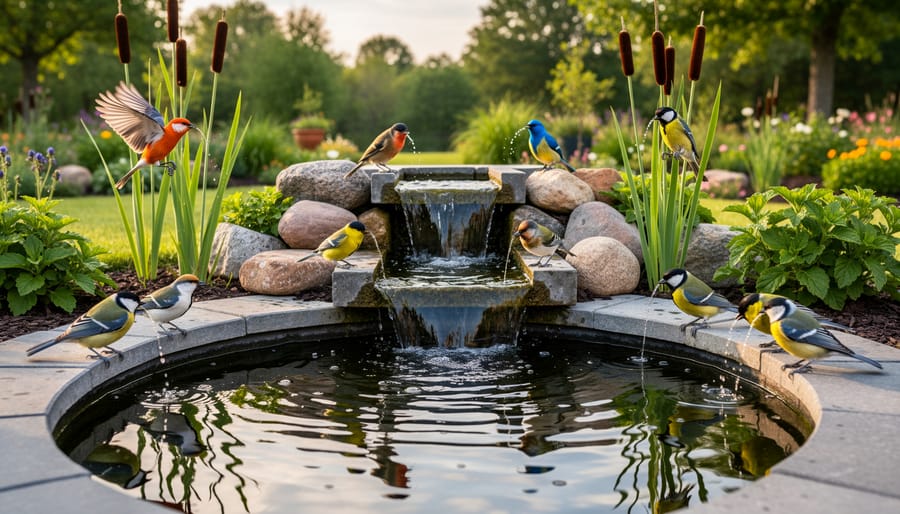
Birds are naturally drawn to water, and with a few thoughtful design choices, you’ll transform your pond into a avian paradise filled with cheerful songs. Start by creating multiple water access points at varying depths. Shallow edges or gently sloping beach areas let smaller songbirds safely drink and bathe, while deeper sections accommodate larger species.
Add flat rocks or driftwood pieces partially submerged near the water’s edge to serve as natural perches. Birds love these staging areas where they can survey their surroundings before taking a dip. I’ve noticed in my own garden that a simple flat stone placed just an inch below the surface becomes the neighborhood’s favorite birdbath.
Plant selection makes a huge difference too. Native shrubs and perennials around your pond’s perimeter provide shelter, nesting sites, and natural food sources. Berry-producing plants like elderberry or viburnum are especially attractive to songbirds. Incorporate cattails and tall grasses in shallow areas for cover.
Consider installing a gentle fountain or bubbler. The sound of moving water acts like a dinner bell for birds, advertising your garden as a reliable water source. Even a small recirculating feature creates irresistible ripples that catch their attention from remarkable distances.
The Chorus of Frogs and Beneficial Wildlife
There’s nothing quite like sitting by your pond on a warm evening, listening to the cheerful chorus of frogs singing their hearts out. These delightful amphibians are nature’s musicians, and creating a welcoming habitat for them adds incredible life to your water garden’s soundscape.
To invite frogs and other sound-producing creatures, focus on creating safe, comfortable spaces. Add shallow areas with gently sloping edges where frogs can easily enter and exit the water. Tuck in some flat rocks and logs around the pond’s perimeter to provide sunbathing spots and hiding places. Frogs love dense plantings, so include native grasses and groundcovers near the water’s edge where they can shelter during the day.
Attracting wildlife doesn’t mean sacrificing pond health. Maintain good water quality with proper filtration and regular maintenance. Avoid using chemicals or pesticides anywhere near your pond, as amphibians have extremely sensitive skin. Instead, embrace natural solutions like beneficial bacteria and aquatic plants that keep water balanced.
Leave some leaf litter and natural debris in designated areas around your pond. This creates microhabitats for insects, which become food sources for frogs and birds, completing your living soundscape ecosystem.
Rustling Plants and Wind-Responsive Vegetation
The gentle whisper of leaves and grasses responding to the breeze adds a soothing layer to your pond’s soundscape that you’ll absolutely love. I’ve discovered that the right plants can transform even the quietest days into a peaceful symphony.
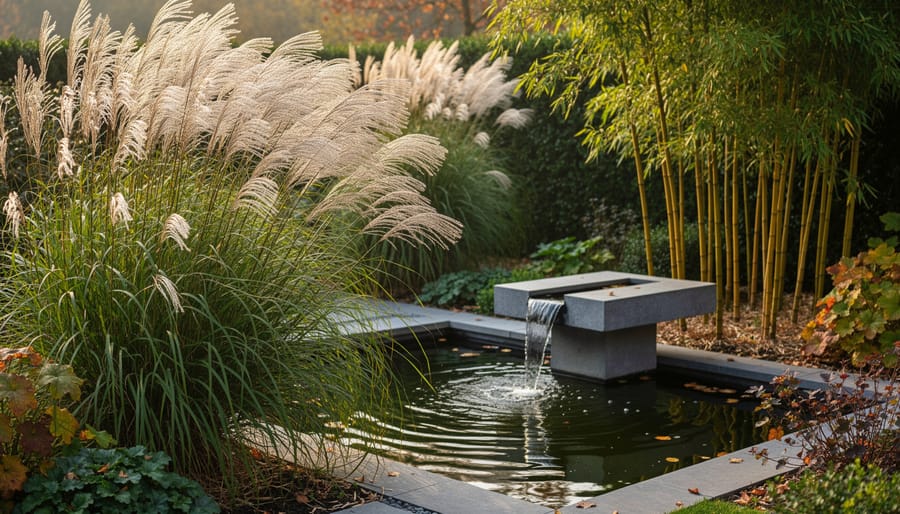
Ornamental grasses are your best friends here. Try planting feather reed grass or maiden grass near your pond’s edge—their slender blades create a soft rustling that’s incredibly calming. I positioned some along my pond’s north side, and every light breeze brings that lovely swishing sound that feels like nature’s own white noise machine.
Bamboo is another fantastic choice, though I recommend going with clumping varieties like golden bamboo to keep things manageable. The hollow stems produce a distinctive clicking and rustling that’s music to the ears without being overwhelming.
For leafy perennials, consider hostas with their broad leaves or Japanese forest grass with delicate foliage that dances in the wind. Papyrus also works beautifully if you’re in warmer zones—its umbrella-like tops create wonderful movement and sound.
Position these plants where prevailing winds will catch them, typically on the windward side of your pond. Group them in clusters rather than single plantings for fuller, richer sounds that’ll make your water garden feel like a true natural retreat.
Designing Your Sound Layers
Creating Foreground, Midground, and Background Sounds
Think of your soundscape like a beautiful painting – it needs layers to feel real and interesting! The secret is positioning sound elements at different distances from where people typically gather.
Your foreground sounds are the closest and most detailed. These are the gentle splashes right at your pond’s edge, maybe from a small bubbler or the soft trickle of water over nearby stones. You’ll hear these clearly, and they create an intimate, soothing foundation.
For the midground, place features like a small waterfall or fountain about 10-20 feet away. These sounds should be noticeable but not overwhelming – think of them as the supporting cast that adds richness without stealing the show. The rustling of ornamental grasses or the buzz of visiting bees around flowering marginals fit perfectly here.
Your background sounds are the furthest away – perhaps a larger cascade at the far end of your pond or the wind chimes hanging from a distant tree. Birds singing from nearby branches also work wonderfully as background elements. These sounds drift in and out of your awareness, adding mystery and making your space feel larger.
By arranging sounds at these three distances, you’ll create a natural soundscape with real depth that draws people in and keeps them discovering new audio details each time they visit.
Seasonal Sound Considerations
Your water garden’s soundscape transforms beautifully with each season, offering different acoustic experiences throughout the year. In spring, returning frogs create cheerful choruses while increased water flow from melting ice adds energy to your pond. Summer brings the gentle hum of dragonflies and the louder calls of active wildlife. As autumn arrives, falling leaves create soft plinks on water surfaces, and migrating birds add new voices to your garden.
Planning for year-round interest means embracing these changes rather than fighting them. Position evergreen grasses near your pond so winter winds create rustling sounds when other plants have died back. Keep a small section of your water feature running through winter if possible, as the contrast between ice and flowing water creates magical tinkling sounds.
Consider how outdoor lighting extends your soundscape enjoyment into evening hours during shorter winter days. I’ve found that accepting seasonal silence periods actually makes spring’s return of sound even more delightful. Your soundscape doesn’t need constant noise, just thoughtful variety throughout the year.
Avoiding Common Soundscape Mistakes
I’ve learned from experience that even the most beautiful water feature can become an annoyance if you make a few common mistakes. Let me help you sidestep these pitfalls so your soundscape brings joy rather than frustration.
The biggest culprit? Overly loud pumps and waterfalls. I once installed a gorgeous cascading waterfall only to realize it sounded more like Niagara Falls than a gentle brook. The key is adjustable flow. Start with lower settings and increase gradually until you find that sweet spot where the sound enhances rather than dominates your space. Remember, you can always add more flow, but once you’ve installed an oversized pump, you’re stuck with the noise.
Another trap is relying on just one sound source. A single fountain, no matter how lovely, becomes monotonous after a while. Layer your sounds by combining moving water with rustling grasses, wind chimes positioned strategically, and spaces that invite birds and insects. This creates depth and keeps the soundscape interesting throughout the day.
Placement matters more than you might think. I’ve seen people position water features right under bedroom windows or near outdoor seating areas without considering how the sound travels. Walk around your yard at different times and really listen before committing to a location.
Finally, don’t neglect maintenance. Clogged filters, low water levels, and debris buildup transform peaceful burbling into annoying grinding or sputtering. Set reminders to check your features regularly, especially during peak season.
Practical Steps to Get Started
Ready to bring your natural soundscape to life? Let’s break this down into manageable steps that won’t overwhelm your weekend or your wallet.
Start by walking through your outdoor space at different times of day. Listen carefully to what’s already there. Do you hear traffic noise? Where does the wind naturally move through? Which spots feel the quietest? Grab a notepad and sketch a simple map, marking sunny areas, shaded spots, and where you’d most enjoy sitting. This assessment helps you understand what sounds you want to enhance and what you might want to mask.
Next, prioritize based on your budget and comfort level. If you’re just dipping your toes in, begin with a small bubbling fountain or a basic bird bath. These cost-effective projects create immediate sound while attracting wildlife. I started with a simple terracotta pot fountain on my patio, and the gentle trickling transformed my morning coffee routine entirely.
For those ready to tackle more ambitious projects, consider installing a small pond with a recirculating pump. The sound possibilities multiply when you add different spillway materials or create varying water depths. Even adding smart technology like programmable pumps can help you adjust water flow and sound intensity throughout the day.
Plant native grasses and bamboo varieties along pathways where they’ll catch the breeze. Position larger water features away from property boundaries where sound travels best into your space rather than your neighbor’s yard. Start small, listen to the results, then build from there.
Your pond is more than just a beautiful focal point in your garden—it’s a living concert hall, and you’re the conductor. Every ripple, splash, rustle, and chirp comes together to create a symphony that’s uniquely yours. The best part? You don’t need an advanced degree in landscape design or a hefty budget to make it happen.
Think about starting small. Maybe it’s adding a single fountain to introduce that gentle bubbling sound, or planting a few ornamental grasses along the edge that whisper in the breeze. Perhaps you’ll hang a simple bird feeder nearby to invite your first feathered performers. Each small change you make creates an immediate impact, transforming your outdoor space one sound at a time.
I still remember the first time I sat by my pond after adding just a small waterfall feature. Within days, I noticed frogs calling in the evening and dragonflies buzzing overhead. Those simple additions opened up an entire world of natural sound I hadn’t even realized was missing.
The beauty of creating a natural soundscape is that it’s never truly finished—your pond will continue evolving with the seasons, surprising you with new sounds and visitors. So grab your notebook, sketch out one or two ideas that excite you most, and take that first step. Your backyard concert awaits, and trust me, it’s going to sound absolutely amazing.