
How the Four Types of Biodiversity Keep Your Pond Alive and Thriving
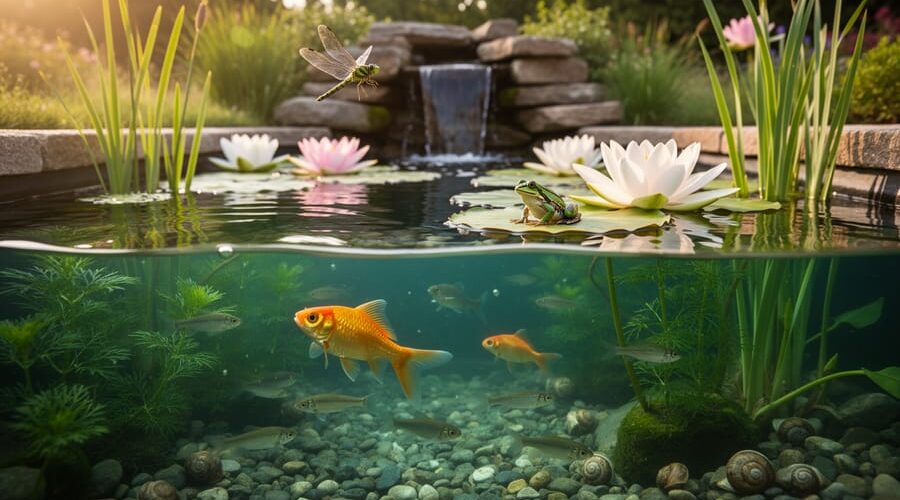
Stand at the edge of your pond right now and count what you see: fish swimming, dragonflies hovering, plants swaying, maybe a frog hiding among the lily pads. Each living thing you’ve spotted represents one piece of a complex puzzle that determines whether your water garden thrives or struggles. Your pond’s biodiversity isn’t just about having lots of different creatures—it’s about understanding how four specific components work together to create a self-sustaining ecosystem that practically maintains itself.
Think of biodiversity as having four distinct layers: the species themselves, the genetic variety within those species, the different habitats they occupy, and the functional roles each organism plays. When I first learned this framework, my struggling pond transformed from a maintenance headache into a balanced paradise. The green water cleared, algae stopped taking over, and I spent less time cleaning and more time enjoying.
Most pond owners focus solely on adding fish and plants, missing the bigger picture. Understanding these four components means you’ll know exactly which elements your pond lacks and how to address imbalances before they become problems. Whether you’re battling persistent algae, losing fish to poor water quality, or simply wanting a more vibrant ecosystem, mastering these biodiversity components gives you a roadmap to success without expensive products or endless maintenance.
What Biodiversity Really Means in Your Water Garden
When I first started my water garden journey, I thought biodiversity just meant cramming in as many different plants and fish as possible. Spoiler alert: that approach led to algae blooms, struggling fish, and a lot of frustration! It turns out biodiversity is much more nuanced and, honestly, more exciting than I initially realized.
Think of your pond as a neighborhood rather than just a collection of residents. True biodiversity means having the right mix of life forms that actually support and balance each other. It’s not about quantity—it’s about quality and variety working in harmony. You might have twenty goldfish, but if that’s all you’ve got swimming around with a couple of water lilies, your pond is actually pretty limited in terms of biodiversity.
In aquatic ecosystems, biodiversity operates through four essential components that each play a unique role. These components work together like instruments in an orchestra—each one contributes something different, and when they’re all present, you get a beautiful, balanced result.
The four components are genetic diversity, species diversity, ecosystem diversity, and functional diversity. Before your eyes glaze over at those scientific terms, let me promise you this: understanding these concepts will transform how you approach your pond. Each component addresses a different aspect of pond health, from the variety of species you choose to how those species interact and fulfill different roles.
Getting these four components right means less maintenance, clearer water, healthier fish, and a pond that practically takes care of itself. Let’s break down what each one means for your water garden.
Species Diversity: The Foundation of a Balanced Pond
Why Your Pond Needs More Than Just Goldfish
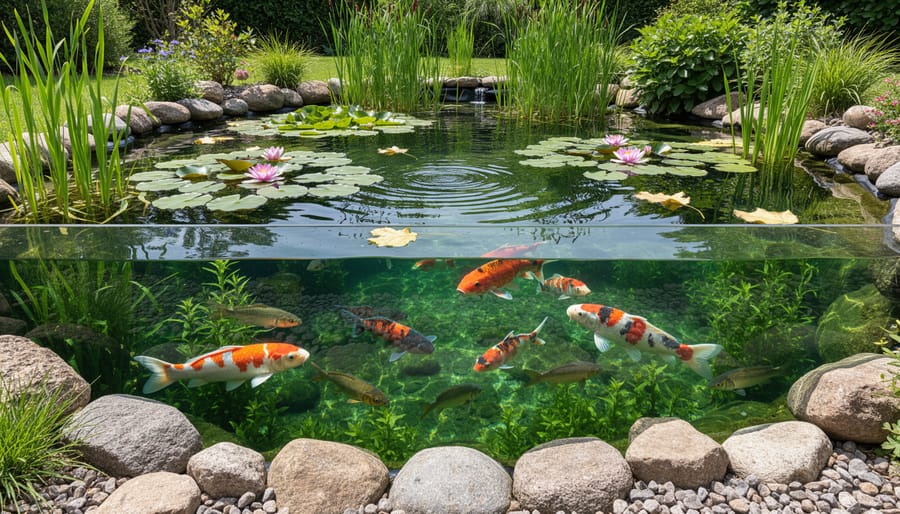
Think of species diversity as creating a balanced team where each member brings unique talents. In your pond, this means moving beyond the classic goldfish-only approach to building a community of different organisms that work together beautifully.
Let me share what happened with my own pond. I started with just goldfish and ornamental grass around the edges. Pretty, but I spent every weekend battling green water and muck. Then I discovered the magic of variety. I added some small native fish like white cloud minnows, introduced water lettuce and hornwort below the surface, and planted irises along the margins. Within weeks, the transformation was remarkable.
Here’s why diversity matters practically. Different fish species occupy different water levels and eat different foods, meaning less competition and healthier inhabitants. Various pond plants serve distinct purposes: submerged plants like elodea oxygenate water and provide fish shelter, floating plants like water hyacinth shade the surface and starve algae of sunlight, while marginal plants like rushes filter runoff and soften pond edges.
Don’t overlook the tiny heroes either. Beneficial insects like water beetles and dragonfly larvae control mosquitoes naturally. Microorganisms you cannot even see form the foundation of natural filtration, breaking down fish waste and dead plant material into nutrients plants can use.
The practical payoff is substantial: clearer water with less intervention, reduced algae blooms, fewer disease outbreaks, and a pond that essentially maintains itself. Each species fills a niche, creating what I call a “self-cleaning ecosystem” where everyone contributes to overall health. Your pond becomes not just a water feature, but a thriving miniature world.
Finding the Sweet Spot: How Many Species Should You Include?
Here’s the truth I learned the hard way: more isn’t always better when it comes to pond species. During my first year of water gardening, I crammed fifteen fish species into my modest 500-gallon pond, thinking I was creating an underwater paradise. Instead, I created a stressed-out mess where nobody thrived.
Let’s break this down by pond size so you can avoid my mistakes. For small ponds (under 500 gallons), start simple with 2-3 fish species and 3-4 plant varieties. Think a handful of goldfish, maybe some mosquitofish, paired with water lilies, cattails, and floating plants. This gives you diversity without overwhelming your ecosystem.
Medium ponds (500-1500 gallons) can comfortably support 3-5 fish species and 5-7 plant types. You might add koi alongside your goldfish, introduce snails as cleanup crew, and expand your plant palette with submerged oxygenators and marginal plants.
For larger ponds (over 1500 gallons), you can explore 5-8 fish species and 8-12 plant varieties, creating distinct zones with different depths and habitats.
Here’s my golden rule: start with half of what you think your pond can handle. Watch how everything settles in over a season. Notice which plants spread enthusiastically and which fish establish territories. You can always add more species gradually, but removing excess creates stress for everyone involved.
Remember, a peaceful pond with fewer thriving species beats a crowded one with struggling inhabitants every single time.
Genetic Diversity: Why Your Fish Need Family Variety
The Problem With Breeding the Same Fish Together
Think of it this way: if you only invited cousins to every family reunion, things would get a bit strange after a few generations, right? The same thing happens with fish. When you breed the same koi or goldfish together repeatedly, you’re creating what we call inbreeding, and it’s not doing your pond any favors.
Here’s what happens in real-world terms. Fish from the same genetic background are like copies of the same blueprint. If that blueprint has a weakness, every single fish shares it. I learned this the hard way when a friend gave me some gorgeous koi from his pond. Beautiful fish, all related. One mild winter, the temperature fluctuated more than usual, and nearly all of them struggled while my other fish adapted just fine. Their limited genetic toolkit simply couldn’t handle the change.
Disease resistance works similarly. Imagine a virus sweeping through your pond. If all your fish share identical immune systems, that virus finds an easy target. But when you have genetic variety, some fish naturally resist the disease better than others. They survive, reproduce, and pass along those hardy genes.
Temperature changes are especially telling. During hot summers or cold snaps, genetically diverse fish populations have individuals better suited to handle extremes. Some might thrive in warmer water while others handle the cold beautifully. This variety acts like an insurance policy for your pond, ensuring at least some fish weather whatever nature throws their way.
How to Maintain Genetic Health in Your Pond
Keeping your pond’s gene pool healthy doesn’t require a biology degree, just some thoughtful planning! Think of it like building a diverse recipe collection rather than making the same dish over and over.
When adding fish to your pond, resist the temptation to buy everything from one convenient source. I learned this the hard way when all my goldfish from a single supplier turned out to be closely related, and I noticed they weren’t as robust as I’d hoped. Instead, purchase your koi or goldfish from at least two or three different breeders or pet stores. This simple step introduces varied bloodlines, giving your pond population better overall health and resilience.
Before introducing any new fish, always quarantine them for two to three weeks in a separate container. This protects your existing pond community from potential diseases while giving you time to observe the newcomers. I use a large plastic tub with an air stone, keeping it simple but effective.
For plants, choose different cultivars of your favorites rather than filling your pond with identical water lilies. Mix hardy varieties with tropical ones if your climate allows, and don’t forget those unsung heroes like native submerged plants that add genetic diversity below the surface.
When sourcing new specimens, ask suppliers about their breeding practices. Reputable dealers will happily discuss their stock origins and can guide you toward unrelated individuals. Start slowly, introducing just a few new fish each season rather than overhauling your entire population at once. This gradual approach helps maintain balance while steadily improving genetic diversity.
Ecosystem Diversity: Creating Different Habitats in One Pond
The Three Essential Zones Every Pond Needs
Think of your pond like an apartment building where different creatures prefer different floors. Creating distinct depth zones is one of the smartest moves you can make for a thriving pond ecosystem. Each zone supports unique plants and wildlife, and together they create a complete, balanced environment.
The shallow margins, ranging from soil level to about 6 inches deep, are your pond’s bustling main street. This is where marginal plants like iris, rushes, and pickerelweed thrive with their roots in water but stems reaching skyward. Frogs love laying eggs here because the warm, sun-soaked water helps tadpoles develop quickly. Dragonfly nymphs hunt in the shallows, and beneficial bacteria colonize every surface, breaking down organic matter. When I built my first pond, I skipped this zone entirely and wondered why I never saw frogs. Lesson learned!
The mid-depth zone, typically 6 to 18 inches, is where your water lilies and submerged oxygenating plants flourish. Fish cruise through here during warm afternoons, and aquatic insects find shelter among the stems. This zone acts as a transition area, moderating temperature changes and providing escape routes for small creatures.
The deep zone, at least 24 inches or deeper, serves as your pond’s anchor. It maintains stable temperatures year-round, gives fish a winter refuge, and prevents complete freezing in cold climates. Water snails often congregate here, and beneficial anaerobic processes occur in the deeper sediments.
To create these zones, excavate your pond in terraced steps rather than a bowl shape. Start by marking out your zones with spray paint, then dig progressively deeper levels. Create shelves about 12 inches wide for each transition. This stepped approach gives every creature its perfect home.
Adding Extras: Rocks, Logs, and Hiding Spots
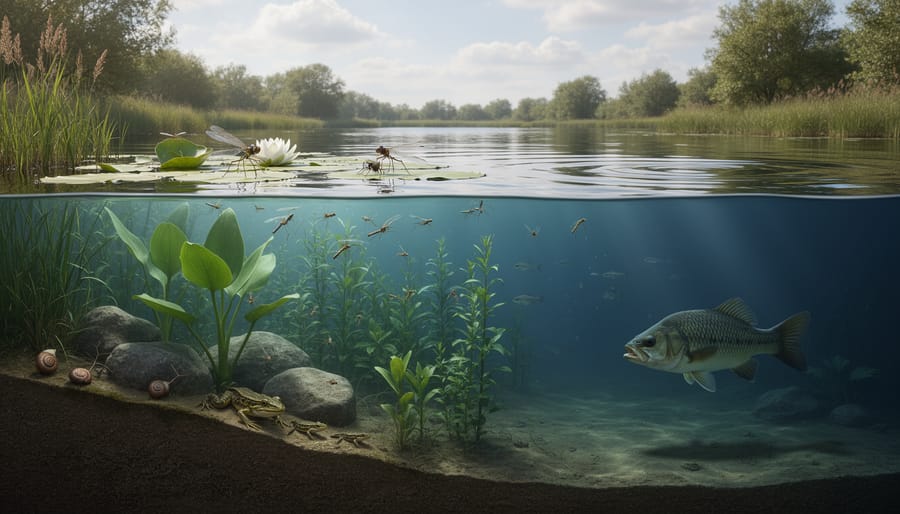
Think of rocks, logs, and hiding spots as the furniture and décor of your pond—they’re not just attractive features, they’re essential real estate for countless organisms! I learned this lesson when I added a simple pile of river rocks to my pond’s shallow area. Within weeks, I noticed dragonfly nymphs tucked between crevices and tiny fish fry darting in and out for safety.
Start with rock piles in various sizes. Larger boulders create vertical interest and sun-basking spots for frogs, while smaller rocks stacked loosely provide spaces where beneficial bacteria colonize surfaces. These bacteria are your invisible helpers, breaking down waste and supporting natural algae control. Position rocks at different depths—some fully submerged, others partially exposed—to accommodate different species’ preferences.
Submerged logs are absolute gold for biodiversity. They become living habitats as they slowly decompose, hosting insect larvae, providing spawning surfaces, and offering fish crucial shelter from predators. Choose hardwoods like oak or maple that break down slowly. Anchor them securely with rocks or stakes so they don’t float.
Don’t forget substrate variety. Instead of uniform gravel, create zones with sand, pebbles, and clay. Different bottom-dwellers prefer different textures—some fish sift through sand for food, while certain beneficial worms thrive in clay-rich areas.
The beauty is that once you place these features, nature does the work, transforming simple materials into thriving microhabitats that support your pond’s biodiversity web.
Functional Diversity: Making Sure Everyone Has a Job
The Pond’s Workforce: Who Does What
Think of your pond as a bustling workplace where every creature has a specific job to keep things running smoothly. Understanding these roles helps you appreciate why each living thing matters and how they work together to create a healthy ecosystem.
Let’s start with the oxygen producers – your aquatic plants. These green employees work the day shift, pumping fresh oxygen into the water through photosynthesis. Submerged plants like hornwort and anacharis are your star performers here, creating those tiny bubbles you see rising to the surface. They’re essentially running the pond’s air conditioning system, making sure everyone can breathe comfortably.
Next up are your pest control specialists – the fish. Mosquito fish and goldfish are particularly good at this job, gobbling up mosquito larvae before they become flying nuisances. They’re like your pond’s security team, patrolling constantly and keeping unwanted visitors under control. I’ve watched my goldfish dart around at feeding time, and they’re incredibly efficient at finding every last larva hiding in the plants.
Your maintenance crew consists of snails and other bottom-dwellers. These tireless workers scrape algae off rocks and plant leaves, keeping surfaces clean and preventing green buildup from taking over. Japanese trapdoor snails are especially good employees – they work steadily without reproducing out of control.
Finally, we have the decomposition department – beneficial bacteria. These microscopic workers break down fish waste, dead plant material, and uneaten food, converting harmful substances into less toxic forms. They’re the ultimate recycling team, turning yesterday’s waste into nutrients for tomorrow’s plant growth. Without them, your pond would quickly become overwhelmed with debris and dangerous ammonia levels.
Identifying and Filling Gaps in Your Pond’s Ecosystem
Think of yourself as a pond detective! Grab a notebook and spend time observing your pond at different times of day. What’s thriving? What’s struggling? This simple exercise reveals so much about what your ecosystem needs.
If you’re battling excessive algae that turns your water pea-soup green, you’ve got a clear signal: your pond needs more plant diversity. Floating plants like water lettuce and submerged plants like hornwort compete with algae for nutrients, naturally keeping it in check. I learned this the hard way after fighting algae blooms for two summers before adding more vegetation!
Murky, cloudy water usually means you need more natural filtration helpers. Freshwater mussels and certain snail species act as living filters, constantly processing water through their bodies. Add bog plants like cattails or irises in shallow areas to create biological filtration zones.
Notice fish gasping at the surface? Your oxygen-producing plants might be overwhelmed. Introduce more oxygenators like anacharis or add a fountain to increase surface agitation.
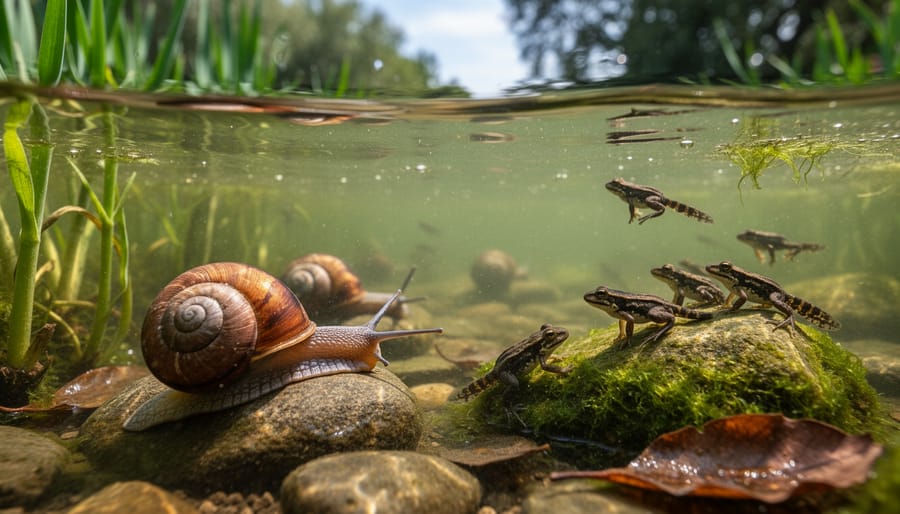
Here’s a quick assessment trick: if any single species dominates your view, something’s out of balance. Healthy ponds showcase variety. Too many mosquito larvae? You need surface-feeding fish. Debris piling up? Introduce more detritivores like certain snail species or tadpoles.
The beauty of biodiversity is that nature wants to balance itself. Your job is simply identifying what’s missing and providing it. Start with one adjustment, observe for a few weeks, then make your next move. Patience pays off!
Putting It All Together: Your Year-Round Biodiversity Action Plan
Now that you understand the four components of biodiversity, let’s create a practical plan you can follow throughout the year. I’ve broken it down by season so nothing feels overwhelming, and you can tackle projects when they naturally fit into your pond’s rhythm.
Spring is your planning and planting season. Start by taking inventory of what survived winter and identifying gaps in your species diversity. This is the perfect time to add new native plants around your pond edges and in shallow areas. Introduce tadpoles or fish if your pond needs them, making sure you’re choosing species native to your area. Check that you have at least three different structural zones: deep water, shallow margins, and boggy edges. Clean out about half your pond if needed, but leave some debris for beneficial microorganisms.
Summer focuses on observation and minor adjustments. Watch which areas attract the most wildlife and take notes. Add floating plants if algae becomes problematic, creating genetic diversity while solving practical issues. Install a small log pile near the water’s edge for amphibians and insects. This is also when you’ll see the functional diversity in action, so observe who’s eating what and which creatures are helping control pests naturally.
Fall is preparation time. Let seed heads stand instead of cutting everything back. Those seeds provide food, and the stems offer winter shelter. Add some submerged plants if you haven’t already, ensuring overwintering habitat for aquatic invertebrates. Reduce feeding if you have fish, allowing them to adapt to cooler temperatures naturally. This encourages them to forage on natural pond foods, supporting your ecosystem’s functional diversity.
Winter requires minimal intervention, which is actually perfect for biodiversity. Resist the urge to tidy up. Those fallen leaves and standing stems are housing countless organisms that will jumpstart your pond’s spring activity. Keep a small area ice-free if possible for gas exchange, but otherwise, let nature do its work.
The key is consistency, not perfection. Each small action builds upon the last, gradually strengthening all four biodiversity components in your pond ecosystem.
Here’s the truth I’ve learned after years of watching ponds evolve: you don’t need a perfect ecosystem. You just need a balanced one. Understanding the four components of biodiversity—genetic diversity, species diversity, ecosystem diversity, and functional diversity—gives you a framework, not a rigid checklist. Your pond doesn’t require every possible plant species or the rarest fish genetics to thrive. It needs thoughtful attention to variety within each component.
Start small if you’re feeling overwhelmed. Add one native plant this season. Introduce a second fish variety next year. Create just one shallow shelf for amphibians. These aren’t monumental tasks, but they create ripples of positive change throughout your entire pond ecosystem. I’ve watched struggling ponds transform within months simply because someone added diversity in strategic places.
Next time you visit your pond, look at it differently. Notice how dragonflies patrol certain areas while bees visit specific flowers. Watch how some fish prefer the depths while others cruise the shallows. That’s biodiversity at work—a living, breathing community you’ve helped create. You’re not just maintaining water; you’re nurturing a complex world where countless organisms depend on the balance you provide. That’s something worth celebrating.