

How to Get the Best Bids from Pond Contractors (Without Overpaying)
Request multiple quotes from at least three specialized subcontractors for each component of your pond project—excavation, electrical work, plumbing, and landscaping—to establish realistic price benchmarks before committing to any contractor. Break down your project into distinct phases with clear specifications for each task, including exact measurements, materials required, and expected timelines, which allows subcontractors to provide accurate bids rather than inflated estimates that pad costs.
Compare itemized bids line-by-line instead of looking only at total prices, since one subcontractor might charge fairly for labor but markup materials excessively, while another does the opposite. Verify that each bidder includes identical scope elements—like liner installation, filtration systems, and cleanup—because missing items in lower bids often resurface as expensive change orders mid-project.
Understanding how professional contractors manage this bidding process gives you tremendous leverage whether you’re hiring a general contractor for your water garden or coordinating specialized trades yourself. The strategies contractors use to evaluate subcontractors, negotiate fair pricing, and avoid costly surprises translate directly into smarter decisions for your pond project. You’ll discover where money gets wasted in typical bids, which questions separate qualified professionals from amateur installers, and how to structure agreements that protect your investment while keeping your dream water feature on budget and on schedule.
Why Understanding the Subcontractor Bidding Process Saves You Money
When I first considered building my backyard pond, I thought hiring a contractor meant they’d do everything themselves. But here’s the reality: most pond contractors act as general contractors, coordinating specialists who handle different parts of your project. Understanding how they find and choose these subcontractors can save you hundreds or even thousands of dollars.
The subcontractor bidding process is straightforward. A general contractor sends out project details to several specialists—maybe an excavation company, an electrician for pump installation, or a waterproofing expert for liner work. Each subcontractor submits a bid stating what they’ll do and how much they’ll charge. The contractor reviews these bids, comparing price, experience, and reliability, then selects the best fit. They typically add their markup (usually 15-30%) to coordinate everything.
Here’s where your money-saving opportunity lies. Pond projects almost always need subcontractors because they involve diverse skills. You’ll likely need someone with heavy machinery for digging, a licensed electrician for outdoor outlets and pump circuits, perhaps a plumber for water features, and specialists for tasks like installing pond liners or building rock formations. No single person masters all these trades.
When you understand this process, you gain two advantages. First, if you’re hiring a contractor, you can ask informed questions: “Who are your subcontractors? Can I see their individual bids? What’s your coordination fee?” This transparency helps you budget smartly and spot inflated markups.
Second, you might choose to act as your own general contractor, hiring subcontractors directly. I did this for my pond’s electrical work and saved 20% by eliminating the middleman markup. You’ll invest more time coordinating schedules and ensuring quality, but the financial savings can be substantial. Even if you only self-manage one or two specialists while hiring a contractor for the rest, you’re leveraging insider knowledge to keep more money in your pocket.

What Happens Behind the Scenes: The Subcontractor Selection Journey
Creating the Scope of Work (What Needs Doing)
Before you can compare bids from different subcontractors, you need a crystal-clear picture of what work actually needs doing. Think of this as creating your pond project’s recipe – you wouldn’t start baking without knowing exactly what ingredients you need, right?
Start by breaking your pond project into distinct tasks. For a typical backyard pond, this might include excavation (how deep and wide?), underlayment installation, liner placement, filtration system setup, plumbing runs from pump to waterfall, electrical hookups for pumps and lighting, and hardscaping around the edges. Each task represents a potential subcontractor specialty.
Let’s get specific with measurements and details. Instead of saying “dig a hole,” your scope should state “excavate 10 feet by 8 feet, with a deep zone of 3 feet and a shallow shelf at 18 inches.” For electrical work, specify “install GFCI outlet within 10 feet of pump location, run conduit underground from house panel” – and don’t forget to check local permits and regulations for electrical requirements.
The more detailed your scope, the more accurate your bids will be. Vague descriptions like “install waterfall” lead to wildly different interpretations and pricing. Instead, specify “construct 4-foot-wide waterfall with 18-inch drop using provided stone, include underlayment and flexible spillway.” This precision helps subcontractors give you honest, comparable quotes while protecting you from surprise costs later.
Requesting Bids from Multiple Subcontractors
When professional contractors tackle a big pond project, they don’t just pick one person for each job and hope for the best. They typically reach out to at least three specialists for every major task, whether it’s electrical work, plumbing, or landscaping. This competitive approach helps them find the sweet spot between quality and cost.
Here’s what contractors provide when requesting bids: detailed project specifications, accurate site measurements, a clear scope of work, timelines with specific start and completion dates, and any special requirements like working around existing water features or utilities. They’ll often include photos or site plans to eliminate guesswork.
For pond owners, you can follow this same strategy. When you need specialized work like installing a pump system or building a waterfall, contact multiple specialists rather than going with the first person you find. Give each one the same information so you’re comparing apples to apples. Share your pond dimensions, water volume, current equipment, and what you’re hoping to achieve.
Typical timelines matter too. Most contractors give subcontractors about one to two weeks to submit bids, which accounts for site visits and calculations. If you’re managing your own project, respect this timeframe. Rushing specialists often leads to inflated “hassle premiums” or missed details.
Remember, the lowest bid isn’t always the best choice. Look for specialists who ask thoughtful questions about your pond’s ecosystem and demonstrate genuine understanding of water garden needs.
Comparing Bids (It’s Not Just About the Lowest Price)
When you’re comparing bids for your pond project, it’s tempting to just pick the lowest number and move on. I learned this lesson the hard way when I chose a contractor solely based on price for my first waterfall installation. The finished product looked great initially, but within six months, the liner was leaking and the pump failed. Here’s what I wish I’d known about evaluating bids properly.
Experience matters tremendously, especially with water features. Ask each subcontractor about their specific experience with ponds. Have they worked with similar water volumes? Do they understand filtration systems? A contractor who usually builds swimming pools might miss critical details that someone experienced with natural pond ecosystems would catch immediately.
Check the warranty terms carefully. A two-year warranty on workmanship tells you the contractor stands behind their work. One-year warranties or vague guarantees are red flags. Also look at material warranties. Quality pond liners should come with at least 20-year guarantees.
Timeline matters too. The lowest bid might come from someone juggling too many projects who’ll leave yours half-finished for weeks. Ask about their schedule and when they can commit to starting and completing your project.
Finally, review the materials list. Are they proposing contractor-grade pumps or bargain models that’ll burn out quickly? Quality materials cost more upfront but save you headaches and money down the road. The best bid balances fair pricing with proven expertise and reliable materials.
Cost Strategies Contractors Use (And How You Can Too)
Timing Your Project to Get Better Bids
Here’s something I learned after years of building ponds: timing really is everything when it comes to getting great bids from subcontractors. Just like how you wouldn’t plant water lilies in January, you shouldn’t hire excavators during their busiest season and expect bargain rates.
Most excavation companies are swamped from late spring through summer with commercial projects and pool installations. But come late fall and winter? They’re actively looking for work to keep their equipment running and their teams employed. That’s your golden opportunity. I’ve seen homeowners save 15-20% simply by scheduling their pond excavation during these slower months.
The sweet spot for pond projects is typically late fall after the construction rush ends, or early spring before everyone else starts breaking ground. Winter works too if the ground isn’t frozen solid in your area. Even if you’re not ready to start immediately, reaching out to subcontractors during their off-season gives you leverage to negotiate better rates and lock in pricing for a future start date.
The same principle applies to other pond trades. Stone masons are often more available and negotiable in late winter, while landscapers have more flexibility in early spring and late fall. Plan ahead, and your patience will pay off with better bids and more attentive service.
Bundling Work to Attract Competitive Pricing
Here’s a money-saving tip I learned when building my backyard waterfall: bundling related tasks together can significantly lower your costs. Think of it like buying in bulk at the grocery store, except you’re bundling services instead of canned goods.
When you’re reaching out to subcontractors, consider grouping complementary work together. For example, if you need excavation for your pond and also want to install drainage lines or a dry creek bed, package these tasks for one earthwork subcontractor. They’re already bringing their equipment to your property, so adding related digging work often costs much less than if you hired them separately for each task.
I’ve seen this work beautifully with electrical and plumbing projects too. Need underwater lighting for your pond plus an outlet for your waterfall pump? Bundle them together when requesting bids. The electrician saves time on setup and permits, and you save money on the per-unit cost.
The key is identifying work that uses similar skills and equipment. When subcontractors can maximize their time at your site without making multiple trips, they’ll reward you with better pricing.
Building Relationships for Future Savings
Just like professional contractors build their trusted circle of subcontractors for better rates and reliability, you can create your own network of pond specialists. Think of it as building a team for your water garden’s long-term success.
Start by getting to know local pond maintenance professionals, aquatic plant suppliers, and equipment specialists in your area. When you find someone who does quality work at a fair price, keep their contact information handy. I learned this lesson after scrambling to find help during a pump emergency—having trusted contacts saved me both time and money.
Professional contractors often negotiate better rates with subcontractors they use repeatedly. You can achieve similar benefits by maintaining good relationships with your local specialists. Pay promptly, communicate clearly about your needs, and they’ll likely prioritize your projects and offer competitive pricing.
Consider scheduling annual check-ups with reliable technicians rather than waiting for emergencies. This approach not only keeps your pond healthy but also helps you budget for future maintenance and expansions. Keep notes about who did what work and how satisfied you were with the results. Your future self will thank you when it’s time for upgrades or repairs.

The Material Procurement Question
Here’s the tricky part: who buys the pond liner, pump, and filters? Generally, I recommend letting your subcontractor source critical components like liners and filtration systems. Yes, they’ll add a markup, typically 10-20%, but you’re also getting their expertise in selecting the right size and quality. Plus, if that liner springs a leak or the pump fails, the warranty responsibility stays with them, not you chasing down an online retailer.
However, I’ve saved money by purchasing decorative elements myself—rocks, plants, and lighting—where my personal taste matters more than technical specs. Just communicate this upfront during bidding. Some contractors won’t work with customer-supplied materials due to liability concerns, and that’s fair. The key is clarity: discuss who provides what before anyone signs anything, and understand that saving 15% on materials might cost you peace of mind if something goes wrong.
Should You Act as Your Own General Contractor for Your Pond Project?
Let me be straight with you—deciding whether to be your own general contractor for a pond project isn’t just about saving money. It’s about honestly assessing your time, skills, and sanity levels!
When I coordinated my first pond installation myself, I thought I’d save thousands. And I did—about 15-20% off the total cost. But I also spent three months juggling phone calls, managing schedules, and dealing with a plumber who showed up two weeks late. Was it worth it? That depends entirely on your situation.
Here’s a simple decision framework to help you decide:
Choose the DIY coordination route if you have: available time during business hours to make calls and meet subcontractors, basic understanding of construction sequencing (who needs to come before whom), confidence negotiating prices and contracts, willingness to handle problems when they arise (and they will), and a project under $15,000 with straightforward scope.
Consider hiring a general contractor if you’re dealing with: projects over $15,000, complex designs requiring multiple specialized trades, tight timelines, local permitting requirements you’re unfamiliar with, or simply a busy work schedule that makes coordination impossible.
The hidden costs of self-coordination often surprise people. You’ll likely lack the contractor discounts that professionals get (typically 10-20% off materials and labor). You’re also liable if something goes wrong—no umbrella insurance protecting you from subcontractor mistakes. And let’s talk time: expect to invest 5-10 hours weekly managing a medium-sized pond project.
My advice? Start small. If you’re building a simple preformed pond with minimal electrical work, coordinating your own subs makes sense. But for intricate koi ponds with filtration systems, waterfalls, and landscaping? The peace of mind from professional management often outweighs the savings. Remember, your weekends are valuable too.
Red Flags When Reviewing Subcontractor Bids for Pond Work
When you’re reviewing bids from subcontractors for your pond project, think of yourself as a detective looking for clues. Some warning signs can save you from costly mistakes and frustrating experiences down the road.
First, watch out for vague scopes of work. If a bid says something generic like “install pond” without detailing liner type, filtration system, plumbing specifications, or exact dimensions, that’s trouble waiting to happen. You want crystal-clear descriptions of exactly what they’ll do and what materials they’ll use.
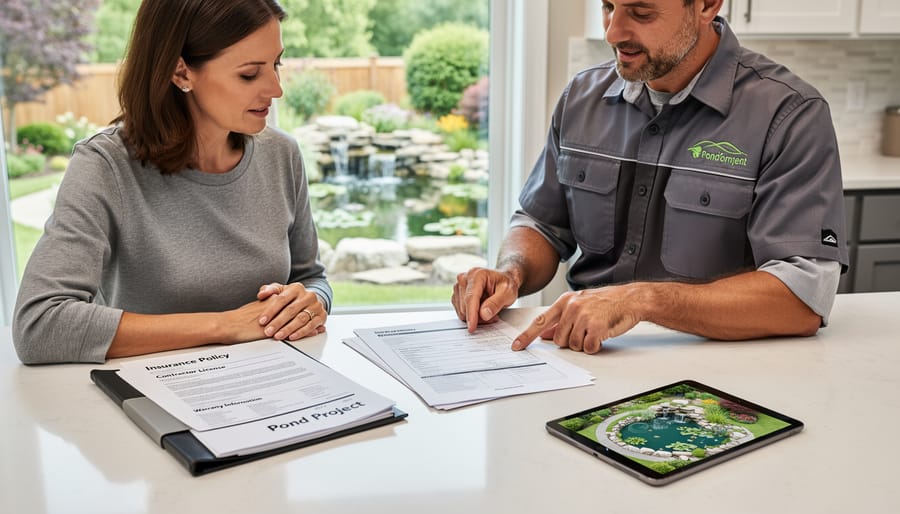
Missing insurance information is another major red flag. Any legitimate subcontractor should readily provide proof of liability insurance and workers’ compensation coverage. If they hesitate or dodge this question, walk away. This protects both you and them if accidents happen.
Beware of bids that come in significantly lower than others—sometimes 30% or more below the competition. While everyone loves a bargain, extremely low bids often mean cut corners, subpar materials, or hidden costs that’ll appear later. I learned this the hard way when a “great deal” on pond liner turned into a nightmare of leaks within six months.
Check their water feature experience specifically. A contractor might be excellent at general landscaping but clueless about proper pond construction, filtration needs, or aquatic ecosystem balance. Ask for photos of completed ponds and references from pond owners.
Finally, poor communication during the bidding process usually means poor communication throughout the project. If they’re slow to respond, vague in their answers, or dismissive of your questions now, imagine dealing with problems after they’ve started work.
Understanding the subcontractor bidding process puts you firmly in the driver’s seat of your pond project. Whether you’re evaluating professional bids or managing contractors yourself, you now have the knowledge to ask the right questions, spot red flags, and make confident decisions. The time you invest upfront in getting detailed quotes and comparing options pays dividends in fewer surprises, better quality work, and a pond that truly meets your vision.
Remember, you don’t need to master everything at once. Start with one aspect, maybe getting three quotes for your pond liner installation, and build your confidence from there. Every project teaches you something new about how contractors work and what your pond needs. Trust yourself to learn as you go, and don’t be afraid to ask questions along the way. Your dream pond is within reach, and understanding this process is a big step toward making it happen.