
Why DWC Systems Are Taking Over Plant Swap Networks (And How to Start Your Own)
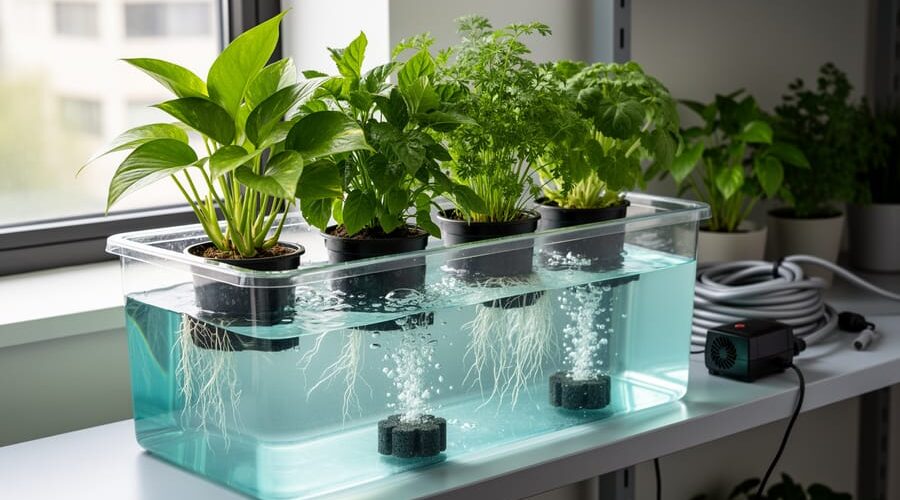
Deep Water Culture (DWC) hydroponics transforms ordinary plant propagation into a supercharged growing method that produces vigorous, healthy specimens perfect for your next plant swap. Instead of waiting weeks for cuttings to root in soil, suspend plant roots directly in oxygenated, nutrient-rich water where they explode with growth—often producing swap-ready plants in half the time.
The beauty of DWC lies in its simplicity: a container, an air pump, growing medium, and nutrients create an environment where plants thrive without soil’s limitations. Roots dangle freely in water constantly bubbled with oxygen, absorbing nutrients on demand while growing thick, white root systems that signal exceptional plant health. This accelerated growth means you’ll multiply your plant collection faster, giving you more specimens to share with fellow gardeners.
For plant swap enthusiasts, DWC solves a common challenge—preparing multiple healthy plants quickly without depleting your garden or waiting through lengthy propagation cycles. Whether you’re rooting pothos cuttings, growing lettuce starts, or propagating herbs, this method produces robust plants that impress at exchanges and establish quickly in their new homes.
Setting up your first DWC system costs less than a fancy planter, requires minimal space, and works year-round indoors. Once you experience watching roots flourish in crystal-clear water and plants doubling in size weekly, you’ll understand why hydroponic gardeners consistently bring the most sought-after specimens to community swaps. This growing revolution makes everyone a successful propagator.
What Is DWC Gardening and Why Water Gardeners Love It
The Connection Between DWC and Water Gardens
If you’ve ever gazed at your backyard pond and marveled at how beautifully those water lilies thrive, you’ve already witnessed DWC principles in action! Deep Water Culture gardening is essentially nature’s pond ecosystem, brilliantly adapted for growing vegetables and herbs.
Think about it: in a healthy pond, plant roots dangle freely in oxygen-rich water, absorbing nutrients that naturally cycle through the system. Fish waste breaks down, beneficial bacteria work their magic, and plants flourish with their roots submerged but still able to breathe. DWC takes this exact concept and refines it for maximum plant growth.
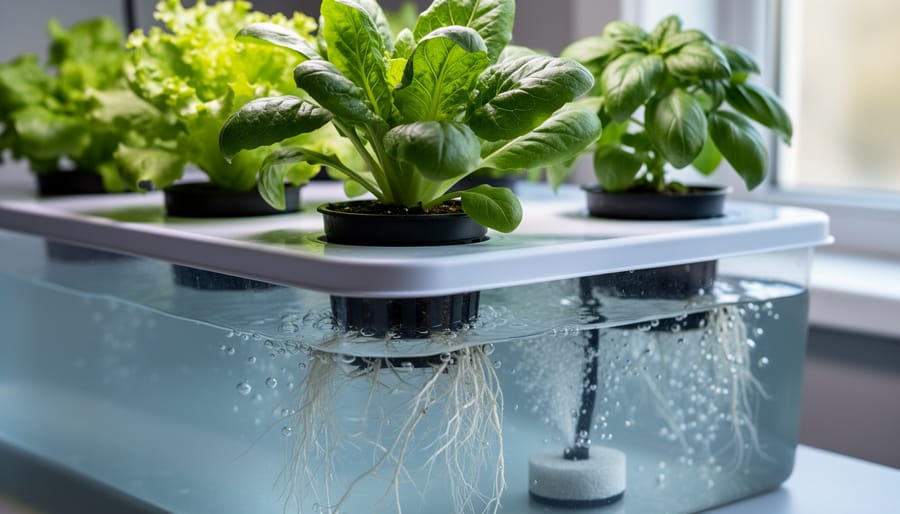
The secret lies in oxygenated water. Just like pond plants have evolved to absorb oxygen through their submerged roots, DWC plants thrive when air stones or pumps continuously bubble oxygen through the nutrient solution. This constant aeration prevents root rot and supercharges nutrient uptake, similar to how moving water in streams supports vigorous plant growth.
For water gardeners, transitioning to DWC feels wonderfully intuitive. You’re already familiar with managing water quality, understanding root systems that live underwater, and recognizing how plants communicate their needs through leaf color and growth patterns. The main difference? DWC gives you precise control over nutrients and oxygen levels, leading to faster growth than traditional ponds.
Many water gardeners also explore aquaponics systems, which beautifully combine fish-keeping with DWC principles, creating a complete ecosystem that produces both protein and vegetables.
Setting Up Your First DWC System for Plant Swapping
Materials You Already Have (Or Can Find Cheaply)
Before you head to the hydroponic store, take a look around your home and garage. You probably have most of what you need to start your DWC adventure right now!
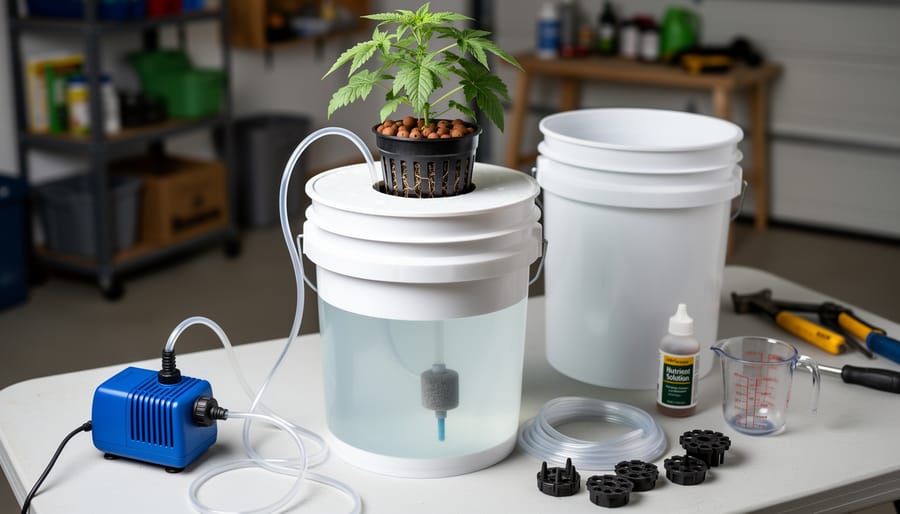
Five-gallon buckets are perfect for DWC containers. If you don’t have any lying around, ask at bakeries or restaurants, as they often give away food-grade buckets for free. Dark-colored buckets work best because they block light and prevent algae growth in your nutrient solution.
Got an aquarium collecting dust? That air pump is exactly what you need to oxygenate your water. Small aquarium pumps work beautifully for single-bucket systems, and they’re incredibly affordable at garage sales or thrift stores. Don’t forget the air stones and tubing while you’re at it.
Net pots can be purchased inexpensively online, but in a pinch, you can even modify plastic cups by drilling drainage holes. I’ve seen creative gardeners use berry containers and yogurt cups with great success.
As for growing medium, expanded clay pebbles are popular and reusable, but you can also use perlite, coconut coir, or even clean gravel from your yard. The key is choosing something that supports your plants while allowing roots to reach the water below.
If you’re involved in plant swaps, you’ll love how quickly DWC lets you propagate cuttings and grow them into healthy plants worth trading. The setup pays for itself after just one successful growing season.
Assembly in Under an Hour
Getting your first DWC system up and running is honestly easier than assembling most furniture, and I promise you won’t have any leftover mysterious screws at the end! Let me walk you through the basic setup that I wish someone had shown me when I started.
Step 1: Grab your five-gallon bucket and drill a hole in the lid, about 5-6 inches in diameter. This will hold your net pot. Pro tip from my early disasters: measure twice, drill once. I once eyeballed it and ended up with a net pot that fell right through.
Step 2: Insert your net pot into the hole. It should sit snugly without wobbling. If it’s loose, you can use food-safe silicone to secure it.
Step 3: Fill your bucket with water, leaving about 2 inches of space at the top. Add your hydroponic nutrients according to the package directions. I learned the hard way that more nutrients doesn’t mean faster growth, it just means burned roots and sad plants.
Step 4: Drop in your air stone, connect it to your air pump outside the bucket, and turn it on. You should see vigorous bubbling. This oxygen is what makes DWC magic happen.
Step 5: Place your plant in the net pot with growing medium like clay pebbles or hydroton around the roots. Make sure the bottom of your net pot touches the water surface initially so roots can reach down.
Step 6: Put the lid on, and you’re done! Check water levels weekly and top off as needed.
Common mistake I see beginners make: forgetting to plug in the air pump. Without oxygen, your plants will suffer within hours, so double-check that bubbler is running.
Best Water Garden Plants to Grow and Share Using DWC
Fast Propagators That Everyone Wants
If you’re looking to build up your plant collection quickly for swaps, certain aquatic plants are absolute champions in DWC systems. These fast growers will have you sharing extras with your gardening community in no time!
Water lettuce and water hyacinth are the superstars here. I once placed three water lettuce plants in my setup, and within a month, I had over twenty! These floating plants simply love the nutrient-rich water and will multiply like crazy during warm months. They produce offsets that break away naturally, making them perfect for dividing and sharing. Just keep an eye on them because they can take over your system if you’re not careful.
Lucky bamboo is another favorite that thrives in DWC environments. Despite its name, it’s not actually bamboo, but it grows happily with its roots submerged in water. It propagates easily from cuttings, and each stem you grow can become multiple plants for trading. People love receiving lucky bamboo because it’s attractive and symbolizes good fortune.
Marginal plants like sweet flag, pickerel rush, and cardinal flower also propagate reliably in DWC systems. These plants naturally grow along pond edges and adapt beautifully to deep water culture. They spread through rhizomes or produce side shoots that you can separate once they’ve established their own root systems. Within one growing season, you’ll have plenty of divisions ready for your next plant swap event, making you the go-to source for healthy aquatic varieties in your community.
Specialty Plants That Make You the Star of Swap Day
Ready to become the MVP of your next plant swap? DWC systems excel at growing some truly show-stopping specimens that’ll have everyone asking for your secrets. These plants thrive in water culture and guarantee you’ll never show up empty-handed.
Exotic herbs are your first ticket to swap day fame. Thai basil, Vietnamese coriander, and water celery grow like crazy in DWC and offer flavors that grocery stores rarely carry. I once brought a dozen Thai basil starts to a swap and had people literally asking if I’d save them one before the event even started. These culinary treasures grow faster in DWC than soil, giving you plenty to share.
Pitcher plants and sundews make surprisingly excellent DWC candidates and create instant buzz. These carnivorous beauties love the constant moisture and grow stunning, conversation-starting foliage. Just use distilled water in your system since they’re sensitive to minerals.
Unusual lettuces like speckled romaine, red oak leaf, or buttercrunch varieties turn heads at swaps. DWC produces such perfect, vibrant leaves that people assume you’re bringing store-bought plants. The compact root systems make them easy to pot up right before the event.
Don’t overlook flowering plants like impatiens or begonias. While not traditional DWC choices, they adapt beautifully and produce blooms that make your contribution immediately eye-catching. The key is starting them young in the system so they adjust naturally. These specialty plants transform you from participant to plant swap legend.
Maintaining Your DWC System Between Swap Events
The Weekly Five-Minute Check
Think of your weekly check as a friendly plant visit rather than a maintenance task. Every few days, peek at your DWC system while enjoying your morning coffee or evening garden stroll.
Start with the water level. It should sit about an inch below the net pot, allowing roots to breathe while staying hydrated. If it’s dropped significantly, top it off with fresh nutrient solution. Next, listen for your air pump’s gentle bubbling. That steady hum means oxygen is flowing to those submerged roots, keeping them happy and healthy.
Now for the fun part: gently lift a net pot to check the roots. Healthy DWC roots look white or cream-colored and smell fresh, almost like cucumbers. Brown, slimy roots signal trouble, but catching issues early makes them easy to fix. Finally, observe your plants themselves. Perky leaves and steady growth mean you’re doing everything right.
I make my rounds with a simple notepad, jotting down which plants are ready for propagation and swap events. This five-minute ritual keeps problems at bay and helps you time your harvests perfectly for sharing with your plant swap community. You’ll soon know your system so well that spotting changes becomes second nature.
Problem-Solving Common Issues
Even with DWC’s straightforward setup, you might encounter a few hiccups along the way. The good news? Most issues have simple fixes that’ll get your system back on track quickly.
Algae growth is probably the most common challenge. Those green streaks forming on your reservoir walls? They’re algae thriving on light and nutrients. The solution is surprisingly easy: keep light out of your water. Use opaque containers or wrap clear ones with black plastic or aluminum foil. I learned this the hard way when my first clear bucket turned into a science experiment! Also, clean your reservoir during weekly water changes to remove any algae before it takes hold.
Root rot shows up as brown, slimy roots with an unpleasant odor. This usually happens when water temperatures climb above 75°F or oxygen levels drop. Maintain cooler water temperatures by keeping your system in a shaded area or adding frozen water bottles to the reservoir. Make sure your air pump is running continuously and producing plenty of bubbles. If you catch root rot early, trim away affected roots, refresh your water completely, and add beneficial bacteria like hydroguard to prevent recurrence.
Nutrient deficiencies appear as yellowing leaves, stunted growth, or discolored foliage. Check your nutrient solution strength with a TDS meter and adjust accordingly. Remember that plants consume nutrients at different rates, so what worked initially might need tweaking as they grow. When preparing plants for swaps, healthy roots and vibrant foliage make all the difference, so stay observant and address issues promptly.
Connecting with Your Local Water Gardening Plant Swap Network
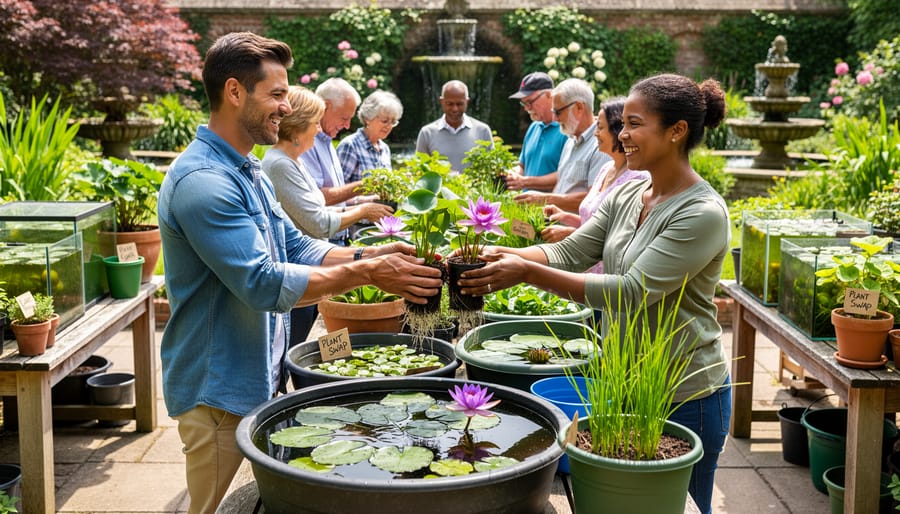
Finding your local water gardening plant swap network can transform your DWC growing experience from a solo hobby into a thriving community adventure. Start by searching social media platforms like Facebook for groups with keywords like “water garden swap,” “pond plants,” or “aquatic plant exchange” along with your city or region name. Local gardening clubs often welcome water gardeners, so check community bulletin boards at garden centers and libraries.
If you can’t find an existing network, why not start your own? Begin small by inviting a few neighbors or friends who share your interest in water features. Schedule quarterly meetups at rotating homes or a public park with picnic facilities. I started my local swap with just three people, and within a year we had fifteen regular participants trading everything from water lettuce to hardy lily divisions.
When organizing swaps, establish simple ground rules upfront. Healthy plants only—no pests or diseases allowed. Label everything clearly with plant names and care requirements. Consider a “one-for-one” trading system where participants bring what they can spare and take equal amounts. This keeps things fair and friendly.
Your DWC system becomes incredibly valuable here because you can propagate multiple plants quickly for trading. Those extra water lettuce runners and papyrus divisions you’ve been growing become currency for acquiring new varieties you’ve wanted to try.
To connect with experienced gardeners, attend your first few swaps with questions prepared and enthusiasm ready. These connections often lead to broader community water gardening projects. Consider expanding beyond plant swaps to include water garden club activities like pond tours, propagation workshops, or equipment sharing programs. The friendships you build will enrich your gardening journey far beyond the plants themselves.
You’ve discovered something truly special at the intersection of DWC gardening and community plant swapping. By combining these two passions, you’re not just growing plants—you’re cultivating connections, sharing knowledge, and contributing to a more sustainable way of gardening. The beauty of DWC systems is that they make propagating plants for swaps incredibly efficient, giving you healthy specimens that fellow gardeners will genuinely appreciate.
If you haven’t started yet, don’t feel overwhelmed. Begin small. Maybe build that simple bucket system this weekend, or search for a local plant swap happening in your area. The water gardening community is remarkably welcoming, and everyone remembers being a beginner. Each plant you successfully grow becomes a potential gift, a conversation starter, and a chance to learn something new from another enthusiast.
There’s something magical about watching someone’s eyes light up when they receive a thriving plant you’ve nurtured from your own system. That shared excitement, the exchange of growing tips over coffee, the photos you’ll later receive of your plant flourishing in its new home—these moments remind us why we garden in the first place. So take that first step today, and join the vibrant world where water gardening meets community spirit.