Turn Your Backyard Pond Into a Safe Haven for Frogs and Toads

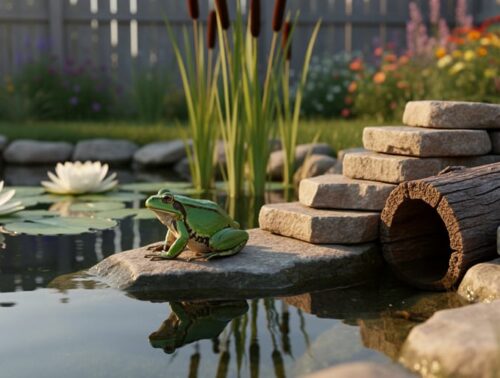
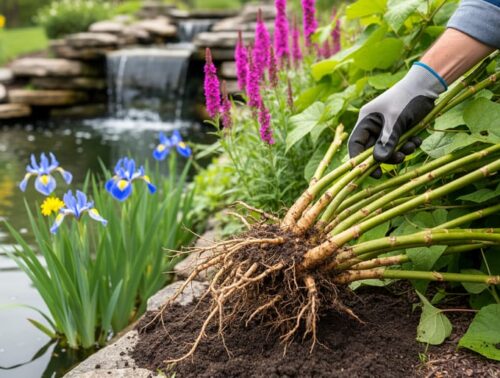
Transform your backyard pond into a thriving amphibian sanctuary by adding shallow entry zones with gradual slopes of 20 degrees or less, allowing frogs, newts, and salamanders easy access in and out of the water. Native aquatic plants like water lilies, cattails, and submerged vegetation provide essential egg-laying sites and protective cover—aim for 40-60% plant coverage around your pond’s edges. Create hiding spots using stacked rocks, hollow logs, and dense plantings within three feet of the water’s edge, giving amphibians safe spaces to retreat from predators and harsh weather.
Your pond becomes more than a …

Read more Turn Your Backyard Pond Into a Safe Haven for Frogs and Toads

Why Coastal Birds Need Your Backyard Pond (And How to Help Them Thrive)

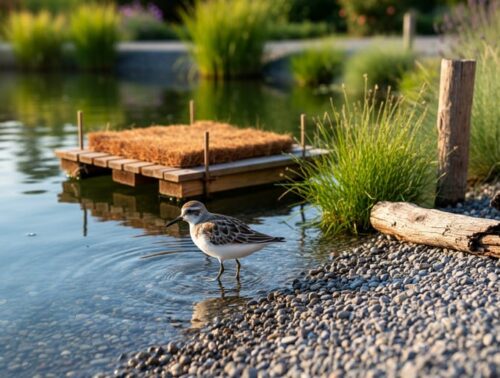
Transform your backyard pond into a haven for coastal birds by installing shallow gravel beaches along pond edges where shorebirds can safely nest and forage. Create these gently sloping areas using pea gravel or small river rocks, maintaining water depths of 1-3 inches that mimic natural tidal zones where plovers, sandpipers, and terns typically breed.
Establish vegetation buffers using native salt-tolerant grasses and sedges around your pond perimeter to provide critical nesting cover and predator protection. Plant species like saltgrass or rush varieties in clusters 2-3 feet from the water’s edge, creating natural screens …

Read more Why Coastal Birds Need Your Backyard Pond (And How to Help Them Thrive)

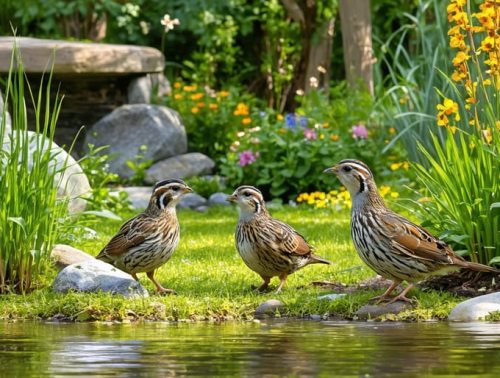
Why Coastal Quail Need Your Waterside Garden (And How to Help Them Nest)

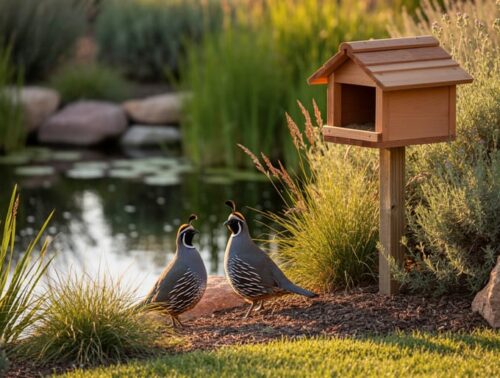
Position your quail nesting box 12-18 inches above ground near dense shrubs or tall grasses where these ground-dwelling birds feel naturally secure. Mount it on a sturdy post or fence rail with the entrance facing away from prevailing winds, and angle the floor slightly forward to prevent water accumulation during rain.
Design the box with dimensions of 12 inches wide, 12 inches deep, and 10 inches tall – spacious enough for a covey of 6-8 quail to roost comfortably. Cut a 3-inch entrance hole positioned low on the front panel, since quail prefer ground-level access rather than perching high like songbirds.
Line the bottom …

Read more Why Coastal Quail Need Your Waterside Garden (And How to Help Them Nest)

Perfect Kestrel Nesting Boxes: Protect These Coastal Hunters in Your Garden

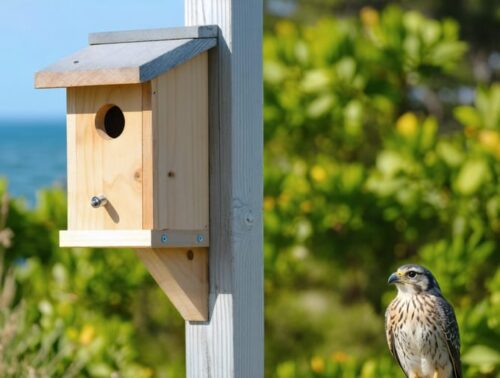
Transform your backyard into a thriving wildlife haven by building a kestrel nesting box, a critical conservation tool that helps protect these magnificent birds of prey. American Kestrels face declining populations due to habitat loss, making DIY nesting boxes essential for their survival. These compact raptors, nature’s own pest controllers, need specific dimensions and placement requirements to successfully raise their young. By following proven nesting box designs, you’ll create a safe…

Read more Perfect Kestrel Nesting Boxes: Protect These Coastal Hunters in Your Garden

Natural Nesting Materials That Keep Coastal Bluebirds Coming Back

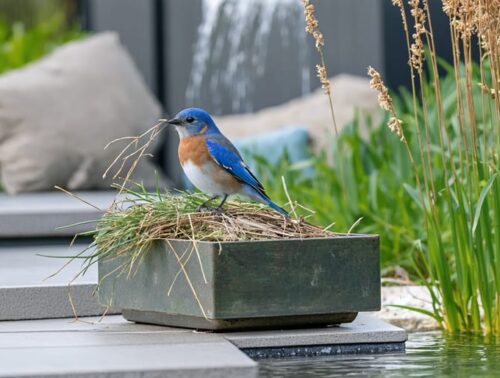
Collect pine needles, dried grass, and small twigs in early spring to create an irresistible nesting foundation for bluebirds in coastal areas. Place these materials in shallow, weather-resistant containers or specialized nesting boxes mounted 5-6 feet above ground, sheltered from prevailing winds. Create diverse nesting bundles by mixing soft, natural fibers like cotton, wool, and plant down with sturdier materials that can withstand coastal humidity and salt spray. Strategic placement of nesting materials near water features and native plantings helps …

Read more Natural Nesting Materials That Keep Coastal Bluebirds Coming Back

Living on Nature’s Edge: Smart Solutions for Pond Owners in Wildlife Zones

Living at the intersection of wilderness and civilization presents unique challenges and opportunities for homeowners. The wildland-urban interface (WUI) – where human development meets natural areas – represents one of the fastest-growing land-use types in America, with over 44 million homes now situated in these transitional zones. For pond owners and outdoor enthusiasts, understanding the WUI isn’t just about definition; it’s about crafting sustainable spaces that bridge the gap between human needs and natural ecosystems.
As communities expand into previously undeveloped areas, property owners must …

Read more Living on Nature’s Edge: Smart Solutions for Pond Owners in Wildlife Zones

How Smart Cities Are Protecting Urban Wildlife (And Why Your Pond Matters)

In the heart of our bustling cities, a remarkable network of wildlife corridors and habitats is quietly thriving, connecting your backyard pond to a vast ecosystem of urban nature. The Urban Wildlife Information Network (UWIN) represents a groundbreaking collaboration between scientists, city planners, and homeowners like you who are transforming urban spaces into vibrant wildlife sanctuaries.
As pond owners and water gardening enthusiasts, we’re uniquely positioned to play a crucial role in this urban wildlife renaissance. Our water features serve as vital stepping stones in the urban wildlife corridor, providing essential …

Read more How Smart Cities Are Protecting Urban Wildlife (And Why Your Pond Matters)

Forest Habitats That Keep Tree-Dwelling Animals Thriving

Forest management transcends traditional timber harvesting, embracing a complex interplay of ecological processes, wildlife conservation, and sustainable resource utilization. Modern forest stewardship requires a delicate balance between human needs and ecosystem health, integrating scientific understanding with practical conservation strategies.
Successful forest management hinges on three fundamental pillars: biodiversity preservation, ecosystem resilience, and sustainable resource utilization. Each management decision ripples through the entire forest ecosystem, affecting everything from soil microorganisms to canopy-dwelling …

Read more Forest Habitats That Keep Tree-Dwelling Animals Thriving

Transform Your Backyard Into a Quail Paradise: A Water-Smart Habitat Guide

Transform depleted landscapes into thriving quail habitats by strategically planting native bunch grasses, creating essential cover that protects these ground-dwelling birds from predators while providing vital nesting sites. Intersperse wildflower patches and legumes throughout the restoration area to establish sustainable food sources and attract insects that quail chicks depend on for survival. Beyond vegetation, incorporate brush piles, fallen logs, and rock formations to create the diverse microhabitats quail need for roosting, nesting, and escape cover.
The dramatic decline in quail populations across North America stems …

Read more Transform Your Backyard Into a Quail Paradise: A Water-Smart Habitat Guide

Transform Your Land Into a Thriving Haven for Grassland Birds

Transform degraded grasslands into thriving bird habitats by reintroducing native grass species like big bluestem, indiangrass, and switchgrass. These deep-rooted prairie plants create essential nesting sites while naturally controlling erosion and improving soil health. Successful restoration begins with a thorough site assessment – identifying existing vegetation, soil conditions, and local wildlife patterns helps determine the most effective restoration approach.
Native grasslands once covered nearly half of North America, supporting incredible biodiversity and serving as critical habitat for countless bird species. Today, …

Read more Transform Your Land Into a Thriving Haven for Grassland Birds