
The World’s Most Legendary Ponds (And What They Teach Us About Water Garden Design)
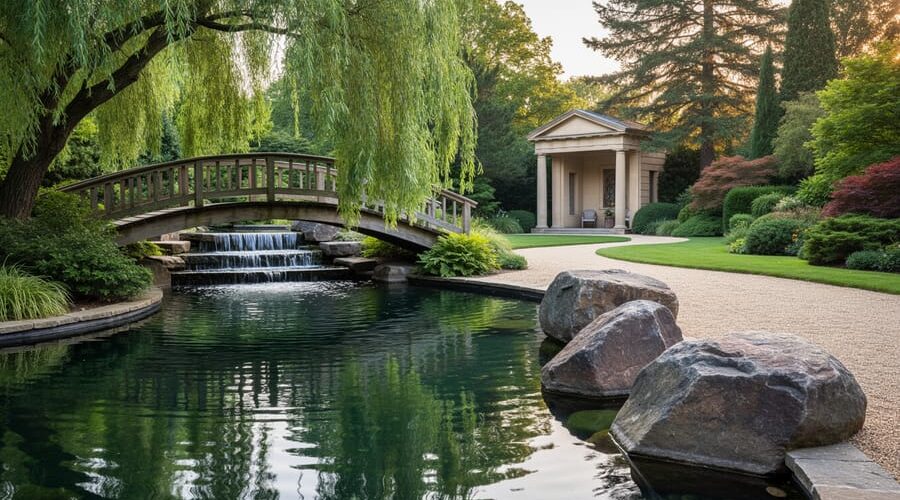
Study Monet’s water lily pond at Giverny to understand how curved bridges and overhanging willows create intimate reflections that transform a simple water feature into living art. The Japanese-inspired design proves you don’t need vast acreage—just 100 feet of carefully planted perimeter can achieve the same dreamy atmosphere in your backyard.
Walk through Kyoto’s Ryoan-ji Temple pond gardens to see how strategic rock placement and minimal plantings direct the eye across water surfaces. Ancient designers positioned every stone to create specific viewing angles, a technique you can replicate by placing three to five large boulders at your pond’s edges before adding any plants.
Examine the Renaissance water gardens at Villa d’Este to discover how multiple pond levels connected by streams add movement and sound. Even a modest 10-foot drop between two small pools generates the soothing acoustics that made these Italian masterpieces legendary gathering places for centuries.
Visit England’s Stourhead landscape garden, where designers created an entire walking circuit around interconnected ponds dotted with classical temples. This circuit concept works brilliantly in residential settings—a meandering path around your pond with two or three focal points transforms a static water feature into an immersive experience.
These historical examples share common principles: thoughtful sight lines, restrained plant palettes, and architectural focal points. Whether you’re planning your first container water garden or expanding an existing pond, these time-tested designs offer concrete blueprints for creating your own famous pond.
Why Looking to the Past Creates Better Ponds Today
When I first started dreaming about my own backyard pond, I thought I’d need to reinvent the wheel. But here’s what I discovered: the world’s most celebrated ponds weren’t famous because they were trendy or complicated. They endured because their creators understood something fundamental about water, beauty, and balance.
Think about it. The Japanese gardens that still draw millions of visitors weren’t designed with pumps, filters, or fancy equipment. The reflecting pools that have inspired poets for centuries work with gravity, natural water flow, and simple plantings. These historical masterpieces teach us that sometimes the best approach is the one that’s been proven over hundreds of years.
What makes these classic designs so relevant for us today? First, they prioritize sustainability. Historical pond builders couldn’t run to the store for chemicals or replacement parts, so they created self-sustaining ecosystems. That’s exactly what modern water gardeners are rediscovering: ponds that work with nature, not against it.
Second, these famous ponds show us that beauty doesn’t require complexity. A thoughtfully placed rock, the right mix of shallow and deep areas, strategic plant placement—these simple elements create visual interest that never goes out of style. I’ve seen backyards transformed by applying principles from centuries-old designs, using materials available at any garden center.
Finally, historical ponds remind us that patience pays off. They weren’t built overnight, and they matured beautifully over time. When you study what made these ponds famous, you’re not just learning history. You’re discovering timeless principles that will make your own water garden a place of lasting beauty and tranquility.
Monet’s Water Lily Pond at Giverny
The Story Behind the Masterpiece
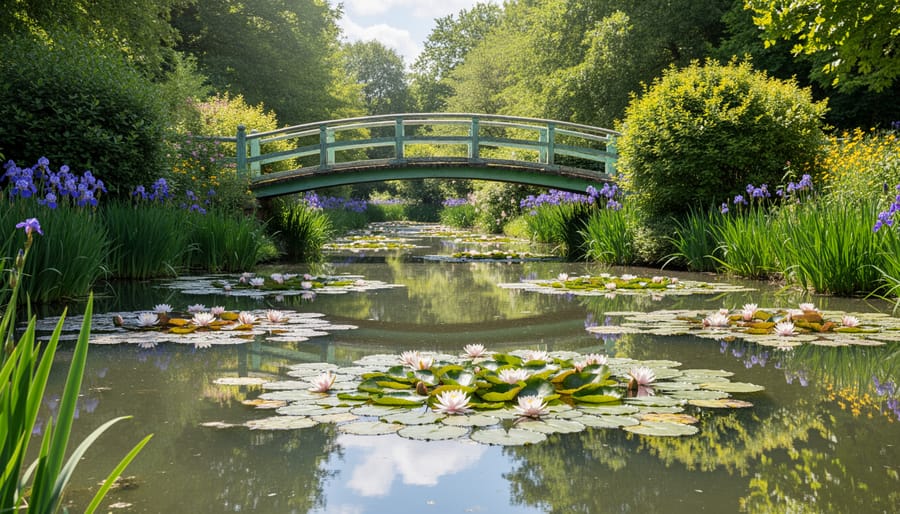
In 1893, French Impressionist painter Claude Monet purchased a plot of land adjacent to his property in Giverny, France, with a dream that would change both art history and garden design forever. He transformed a simple marshy area fed by a small river into an enchanting water garden, complete with a now-iconic Japanese-style bridge draped in wisteria. Local authorities initially resisted his plans, worried his exotic water plants might poison the village water supply, but Monet persisted.
What makes this pond truly revolutionary is how Monet treated it as both a living canvas and an endless source of artistic inspiration. For nearly three decades, he obsessively painted his water lilies from every angle and in every season, creating over 250 paintings. These weren’t just pretty pictures—they helped launch modern abstract art. The pond’s influence rippled far beyond the art world, inspiring homeowners everywhere to see their own water gardens as works of art in progress. Monet proved that with patience and vision, anyone could create their own sanctuary that grows more beautiful with time. His approach was hands-on and experimental, exactly the spirit every water gardener should embrace.
Design Elements You Can Steal
Ready to bring some Monet-inspired magic to your own backyard? Here are the key elements you can absolutely recreate, even on a budget.
Start with the iconic arched bridge. You don’t need an elaborate Japanese structure—a simple wooden footbridge painted in a soft green or traditional red creates that same reflective focal point. Position it where you’ll see it mirrored in the water below. I built mine using treated lumber and basic woodworking skills, and it completely transformed my pond’s personality.
The secret to successful water lily placement is clustering them asymmetrically rather than spacing them evenly. Monet grouped his lilies to create natural-looking colonies that left open water between. Aim for covering about one-third to half your pond surface—this creates visual interest while maintaining balance.
Weeping willows add that romantic, trailing element that softens hard edges. If you’re working with limited space, try dwarf varieties or substitute with ornamental grasses that cascade toward the water. They create similar movement and texture without overwhelming smaller gardens.
Those famous curved edges are easier than you think. Forget rigid rectangles—sketch your pond outline with a garden hose first, creating gentle curves that feel natural. This single change makes any pond feel more established and artistic. Remember, nature rarely creates straight lines, and neither should your water garden.
Making It Work in Your Space
You don’t need acres of land to capture that impressionist magic in your own backyard! Start small with a preformed pond liner or even a half-barrel water garden. The key is layering your plantings just like Monet did. Choose water lilies as your stars, they’re easier than you’d think and bloom for months. Add vertical interest with dwarf cattails or iris along the edges, and let some creeping Jenny spill over the sides for that soft, romantic look.
For maintenance, remember that famous ponds have full-time gardeners, but you can keep things manageable. Thin out overgrown plants in spring, deadhead spent blooms weekly, and add a simple pump to keep water moving. I’ve found that embracing a slightly wild, natural aesthetic actually means less work. Don’t stress about every algae bloom or fallen leaf. That lived-in, painterly quality comes from letting nature do some of the work while you guide the overall composition.
Japanese Temple Ponds: The Art of Reflection
Ryoan-ji and the Philosophy of Water
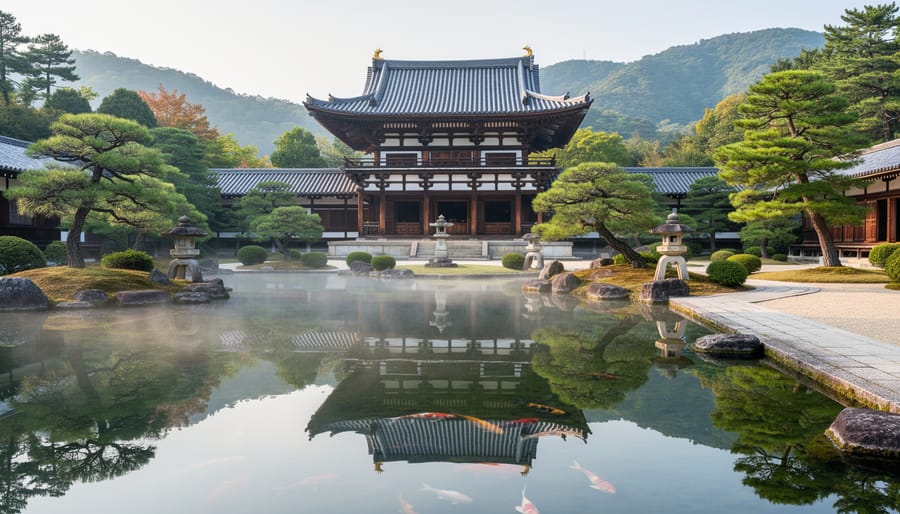
Here’s something magical about Zen Buddhist pond design that changed how I think about water features: it’s all about reflection, both literal and spiritual. At Kyoto’s famous Ryoan-ji temple, the water mirror pond embodies a principle called “mizu no kokoro,” which translates to “mind like water.” The idea is beautifully simple – when water sits perfectly still, it reflects the world with complete clarity.
The monks at Ryoan-ji created their pond to encourage meditation and contemplation. Unlike elaborate European fountains with their splashing displays, these Zen ponds embrace stillness. The surface becomes a mirror, reflecting surrounding trees, sky, and temple architecture. This creates a sense of doubled space and invites you to pause and really look.
What I love about this approach is how accessible it is for home gardeners. You don’t need fancy equipment or complicated filtration systems. The focus is on simplicity and natural balance. Position your pond where it catches morning light, keep the surface free of debris, and surround it with carefully chosen rocks and plants that complement rather than overwhelm. The goal isn’t perfection in the Western sense – it’s creating a space that feels harmonious and encourages peaceful reflection.
Key Features of Japanese Pond Design
Japanese pond design is like nature’s poetry, and once you understand the key elements, you’ll see why these gardens have captivated people for centuries. Let me walk you through the building blocks that make these spaces so special.
Koi fish are the living jewels of any Japanese pond. These colorful swimmers aren’t just decorative—they bring movement and life to still water. When I first added koi to my pond, I was amazed at how they transformed the entire atmosphere. They create ripples, cast shadows, and draw your eye across the water’s surface.
Stone lanterns serve as both functional lighting and sculptural focal points. Traditionally placed near water’s edge, these weathered granite structures guide visitors through the garden while adding vertical interest. You don’t need an antique lantern to achieve this effect—even modern reproductions create that authentic aesthetic.
Stepping stones invite interaction with your pond. Placed deliberately across shallow areas or alongside the shore, they encourage slow, mindful movement. The Japanese call this experience “borrowed scenery,” where each step reveals a new viewing angle.
Bamboo fountains, or shishi-odoshi, add gentle sound to your water garden. The rhythmic clack of bamboo creates a peaceful soundtrack that masks urban noise while attracting birds.
Perhaps most importantly, asymmetrical balance ties everything together. Unlike formal European gardens with their perfect symmetry, Japanese designs embrace odd numbers and natural irregularity. Three rocks instead of four, five plants instead of six—this creates visual harmony that feels organic rather than forced.
Creating Zen in Your Backyard
Ready to bring those famous pond principles home? Let’s start simple. Begin with what you have: even a small corner can become your zen retreat. I remember transforming a bare patch beside my deck with just three elements: a water basin, smooth river stones, and a dwarf Japanese maple.
Start by choosing your focal point. Japanese pond design emphasizes asymmetry, so avoid centering everything. Place your pond or water feature slightly off-center, creating natural visual flow.
Next, embrace simplicity. Select three to five plants maximum for your first project. Native grasses, a bamboo accent, and water iris work beautifully together without overwhelming the space. Add rocks thoughtfully, positioning larger stones first as anchors, then smaller ones to complete the scene.
Finally, create contemplation spaces. A simple wooden bench or flat viewing stone invites you to pause and enjoy your creation. Remember, zen gardens evolve slowly. Start small, observe what brings you peace, and expand gradually.
Versailles: When Ponds Became Grand Statements
The Geometry of Grandeur
When you look at the grand formal ponds of history, one thing becomes immediately clear: geometry ruled the design world. These weren’t casual, meandering water features. They were bold statements of human creativity and control, shaped by precise mathematical principles.
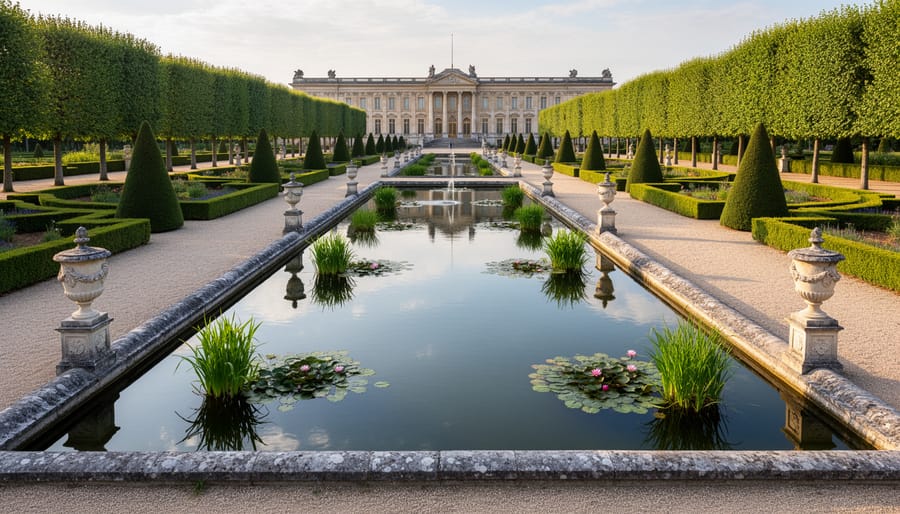
Think of Versailles with its perfect rectangular reflecting pools, or the circular fountains of Renaissance Italy. Designers used simple shapes like rectangles, circles, and ovals because they created a sense of order and harmony that felt both impressive and peaceful. The symmetry was key. If you split these ponds down the middle, each side mirrored the other perfectly.
Scale played an equally important role. These weren’t timid puddles. Grand formal ponds commanded attention through sheer size, often stretching hundreds of feet to create dramatic vistas and reflections of palaces or gardens.
Here’s the exciting part for your own backyard: you don’t need acres of land to borrow from this approach. Even a modest rectangular pond with matching planters on each side captures that formal elegance. Try using square or circular shapes for a more structured look, and position your pond where it can reflect your home or favorite garden feature. The principles of symmetry and intentional geometry work beautifully at any scale.
Scaling Down the Palace Look
You don’t need a 50-acre estate to capture the magic of Versailles or the elegance of Italian villa gardens! The secret is selecting just a few signature elements and adapting them to your space.
Start with raised edges, even if it’s just a low stone or brick border around your pond. This simple touch instantly adds structure and formality. I remember transforming my basic backyard pond by adding a 6-inch raised limestone edge—the difference was remarkable, and it only took a weekend.
Fountains are your next best friend. A single tiered fountain or simple water jet creates that European palace atmosphere without breaking the bank. Even a small bubbler can work wonders.
For plantings, think symmetry on a smaller scale. Flank your pond entrance with matching potted topiaries or plant identical groupings of ornamental grasses on each side. You’re creating balance, not filling acres.
Finally, consider one carefully chosen statue or urn as a focal point. Position it where sight lines naturally draw the eye—perhaps at the pond’s far end or beside your fountain. Quality trumps quantity here. One beautiful piece beats a garden cluttered with decorations, giving you that refined palace aesthetic in a space that’s perfectly yours.
Modern Formal Pond Projects
Ready to bring formal pond elegance to your own backyard? Start by planning your space with clean geometry in mind. Whether you choose a rectangle, circle, or octagon, precise measurements matter. Use stakes and string to outline your shape, checking corners with a carpenter’s square for that crisp, intentional look.
Consider edging carefully. Natural stone coping, brick pavers, or even poured concrete borders create that polished transition between water and land. I’ve found that keeping edging level is crucial—nothing disrupts formal symmetry like a wobbly border!
Add a central focal point like a simple fountain or a single dramatic water lily. Formal ponds thrive on restraint and repetition. Plant matching pots on either side of your pond, or mirror plantings for balance.
Budget-friendly tip: repurpose materials like salvaged pavers or stacked cinder blocks painted to match your aesthetic. The beauty of formal design is that it works at any scale—even a small raised pond with straight lines delivers that sophisticated impact famous gardens achieve.
Thoreau’s Walden Pond: The Natural Inspiration
The Beauty of Wild Water
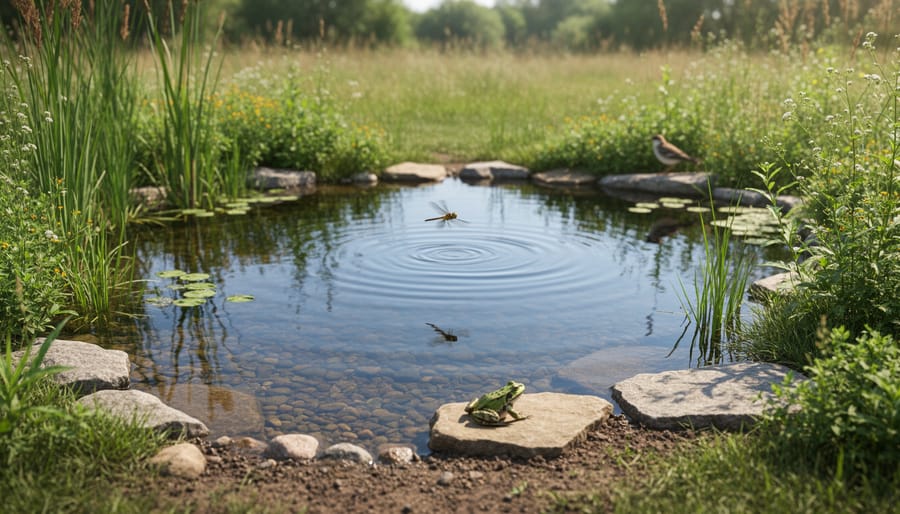
There’s something magical about stumbling upon a pond in the wild – that moment when you discover still water reflecting the sky, surrounded by weathered stones and native plants growing exactly where they please. This natural beauty is what inspires the most beloved pond designs throughout history.
Wild water environments teach us that perfection isn’t about straight edges or perfectly placed rocks. Instead, it’s about creating balance. Natural ponds support entire ecosystems, from dragonflies skimming the surface to frogs hiding among the reeds. When you design with nature in mind, you’re not just building a water feature – you’re creating habitat.
The ecological benefits are impressive too. Naturalistic ponds filter water through plant roots, provide drinking spots for wildlife, and cool the surrounding area on hot days. They require less maintenance than formal designs because they work with nature rather than against it.
I’ve learned that the best pond designs borrow from wild landscapes. Irregular shorelines, varied depths, and native plantings create that authentic look we’re all chasing. Your pond doesn’t need to be famous to capture that same wild beauty – it just needs to feel like it belongs exactly where it is.
Building a Wildlife Pond
Creating your own wildlife-friendly water gardens inspired by natural ponds is easier than you might think. The key is mimicking what wild ponds do best: balancing themselves.
Start by designing gentle, sloping edges rather than steep sides. This gives frogs, birds, and beneficial insects easy access to water while creating varied depth zones for different plants. Aim for a gradual incline of about 20 degrees on at least one side of your pond.
Skip the concrete and go natural with a flexible pond liner topped with pebbles and rocks. This creates hiding spots for wildlife and surfaces where beneficial bacteria can colonize, helping with natural filtration. I learned this the hard way after my first rigid pond attracted far fewer visitors than my later, more natural design.
Choose native aquatic plants like water lilies for deeper sections and marginal plants such as native rushes for shallow areas. These plants oxygenate water, provide shelter, and require zero special care since they’re adapted to your local climate. Include some floating plants to provide shade and reduce algae growth naturally.
Position your pond where it receives partial sunlight, ideally four to six hours daily. Too much sun encourages excessive algae, while too little limits plant growth. Add a small log or two near the edge as wildlife ramps and perches, and watch your garden transform into a thriving ecosystem.
Chinese Scholar Gardens: Islands and Miniature Worlds
Creating Landscapes Within Landscapes
Chinese garden designers were masters at creating entire miniature worlds within their ponds. Think of it as nature’s version of a snow globe, where every element tells a story and invites exploration. These weren’t just holes filled with water—they were carefully composed landscapes that made you feel like you’d stepped into a living painting.
The secret? Islands, bridges, and strategically placed rocks. Garden designers would position small islands throughout their ponds, accessible by zigzagging bridges that encouraged visitors to slow down and appreciate different views. Why zigzag? The belief was that evil spirits could only travel in straight lines, so curved paths kept both bad energy and guests moving mindfully through the space.
Rocks played a starring role too. The Chinese valued weathered, textured stones that resembled mountains in miniature. Positioned at the water’s edge or emerging from the pond itself, these rocks created the illusion of distant peaks reflected in a vast lake. You can borrow this idea in your own yard by selecting a few statement rocks with interesting textures and placing them deliberately rather than scattering them randomly. Even a small backyard pond can evoke that sense of discovering a hidden mountain valley when you thoughtfully arrange just three or four well-chosen stones.
Small-Space Chinese Pond Design
You don’t need acres of land to create your own Chinese-inspired water garden! The beauty of traditional Chinese pond design lies in its philosophy, not its size. I’ve helped countless friends transform tiny balconies and postage-stamp backyards into peaceful water retreats, and you can too.
Start with container ponds. A half-barrel, large ceramic pot, or even a repurposed basin can become your miniature landscape. The key is thinking vertically and symbolically. Choose one small rock formation to represent a mountain range, add a single water lily to suggest vast lotus fields, and use dwarf bamboo in a corner to create depth. Remember, you’re painting with living elements!
For small courtyard spaces, consider an L-shaped design along two walls. This naturally creates the irregular shoreline that Chinese gardens prize. Use only three to five rocks maximum, positioning them asymmetrically. One larger “mountain” stone paired with two smaller “attendant” rocks tells a complete story without overwhelming your space.
My favorite trick for tiny yards? Create a shallow basin pond, just 6-8 inches deep, with a recirculating fountain disguised within a rock arrangement. This gives you moving water’s soothing sound without the maintenance demands of a deeper pond. Add floating plants like water lettuce or miniature lotus varieties that won’t outgrow their home.
The secret is embracing simplicity. Chinese garden masters understood that suggesting nature’s grandeur matters more than replicating it literally.
Bringing Historic Inspiration Into Your Design
Mixing Styles That Work Together
The secret to blending different pond styles is finding common threads that tie everything together. Think of it like creating a recipe—you wouldn’t mix every ingredient in your pantry, but complementary flavors can create something amazing.
Start by choosing one dominant style as your foundation. If you love Japanese design, make that your primary influence, then carefully add one or two elements from another tradition. For example, a Japanese-style pond can incorporate French-inspired symmetrical pathways without losing its contemplative feel.
Focus on repetition to create unity. If you’re mixing English cottage plantings with formal Italian water features, repeat certain plant colors or materials throughout the space. This repetition acts as visual glue, helping different elements feel intentional rather than random.
Scale matters tremendously. When I added a small classical statue to my naturalistic pond, I kept it modest in size so it felt like a discovered treasure rather than a jarring centerpiece. Larger, bolder elements should align with your dominant style.
Finally, limit your palette. Stick to three main materials—perhaps stone, wood, and a single metal finish—regardless of which traditions inspire you. This restraint prevents your pond from feeling like a theme park and instead creates a cohesive sanctuary that honors multiple influences harmoniously.
Starting Your Historically-Inspired Pond Project
Ready to bring some famous pond inspiration to your own backyard? The best place to start is by choosing which historical style speaks to you most. Do you love the natural, meditative quality of Japanese gardens, or are you drawn to the formal symmetry of European designs? Maybe you’re captivated by the lotus-filled serenity of Chinese ponds. Pick one as your starting point.
Next, assess your space honestly. Even a small corner can capture the essence of these grand designs. I learned this firsthand when I created a mini Monet-inspired pond in just 8 by 10 feet. The magic isn’t in the size, it’s in the thoughtful details.
Start simple with these planning steps: sketch your space, noting sunlight patterns throughout the day. Research plants that thrive in your climate zone. Consider starting with a preformed pond liner for easier installation, or go flexible if you want custom shapes.
Gather inspiration photos of your chosen famous pond style and identify three key elements you can realistically recreate. Maybe it’s a specific water lily variety, a gracefully arched bridge, or strategic rock placement. Remember, you’re not copying these masterpieces exactly. You’re translating their spirit into something uniquely yours.
Here’s the wonderful truth about every famous pond we’ve explored: they all started with someone standing at the edge of an empty space, imagining what could be. Monet didn’t inherit his lily pond masterpiece—he dug it, planted it, and tended it with his own hands. The designers of Kyoto’s temple gardens worked through countless adjustments to achieve that perfect reflection. Even the grand fountains of European estates began as sketches and muddy construction sites.
Your pond doesn’t need to be famous to be extraordinary. Take what speaks to you from these historical examples—maybe it’s the lush plantings inspired by Monet, the peaceful simplicity of Japanese design, or the dynamic movement of classical fountains—and make it yours. Mix and match. Experiment. There’s no wrong way to create something beautiful that brings you joy.
The hardest part is simply beginning. Whether you’re planning your first small water feature or reimagining an existing pond, remember that every great garden is a work in progress. Monet spent decades refining his water garden. You have permission to do the same.
So grab that shovel, sketch that design, or order those plants you’ve been eyeing. Your future self, sitting peacefully beside your completed pond on a warm summer evening, will thank you for taking that first step today. The world could always use another beautiful pond, and yours is waiting to be created.