
Transform Your Water Garden with an Interactive Fountain That Responds to You
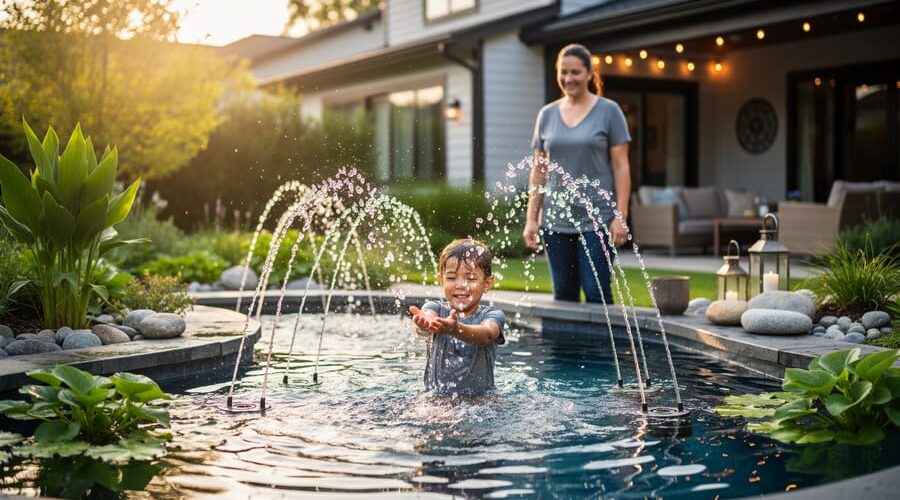
Picture this: you’re relaxing in your backyard on a summer evening when suddenly, jets of water respond to your child’s delighted laughter, creating dancing patterns that seem almost magical. That’s the beauty of an interactive fountain—a water feature that doesn’t just sit there looking pretty, but actually engages with people through sensors, timers, or manual controls.
Interactive fountains transform ordinary outdoor spaces into playful, dynamic environments where water becomes entertainment. Unlike traditional fountains that follow fixed patterns, these responsive systems can detect motion, respond to touch, or activate on demand, creating an ever-changing display that captivates visitors of all ages. They’re showing up everywhere from public parks to residential backyards, and for good reason—they add an element of surprise and delight that static water features simply can’t match.
Whether you’re dreaming of a splash pad alternative for the kids, planning an eye-catching focal point for your garden, or looking to upgrade your existing pond setup, interactive fountains offer exciting possibilities. The technology has become surprisingly accessible for DIY installation, with options ranging from simple solar-powered models to sophisticated programmable systems. You don’t need to be a tech wizard or professional landscaper to bring this feature home—just some basic understanding, the right equipment, and a willingness to experiment. Let’s explore how these captivating water features work and whether one might be the perfect addition to your outdoor oasis.
What Makes a Fountain ‘Interactive’?

The Magic Behind the Movement
Here’s what really blew my mind when I first installed an interactive fountain in my backyard: it’s basically like teaching your fountain to listen and respond, almost like training a friendly water-spouting pet!
Most interactive fountains use one of three sensing methods. Motion sensors work like those automatic doors at the grocery store—when you walk past, an infrared beam detects movement and triggers the water display. Sound sensors are even cooler; they pick up noise levels (clapping, music, voices) and translate that into water patterns, kind of like how your phone’s voice assistant hears you talking. Touch sensors respond when you physically interact with the water or a control pad, similar to tapping your smartphone screen.
Once the sensor detects input, it sends a signal to the fountain’s control system—think of it as the fountain’s brain. This brain tells the pump to increase or decrease water flow, activates different jets, or changes lighting sequences. The whole process happens in milliseconds, creating that magical instant response.
The beauty is that modern systems come with user-friendly controllers, so you don’t need an engineering degree. Most allow you to adjust sensitivity and program different response patterns until you get exactly the interactive experience you’re dreaming of.
Different Types of Interactivity
Interactive fountains come in several exciting varieties, each offering unique ways to engage with your water feature. Motion-activated jets are perhaps the most dramatic—they use sensors to detect movement and respond by shooting water streams skyward or changing spray patterns. I’ve seen these create magical moments at public parks where children run through the jets, triggering surprise bursts of water. For home gardens, smaller motion-sensitive models can greet visitors with gentle sprays or create playful displays when pets wander near.
Touch-sensitive controls let you physically interact with the fountain, typically through waterproof panels or capacitive sensors built into rocks or fountain edges. A simple touch can change water height, activate LED lighting, or switch between spray patterns.
Sound-reactive displays sync water movements to music or ambient noise, creating mesmerizing choreographed performances. These work beautifully for outdoor entertaining, pulsing to your favorite playlist.
App-controlled features represent the cutting-edge option, allowing smartphone management of every fountain aspect from anywhere. You can schedule displays, adjust settings remotely, and even integrate with smart water flow meters for efficient water management. Many DIY enthusiasts find app-controlled systems surprisingly accessible, with user-friendly interfaces that require no programming knowledge.
Why Add an Interactive Fountain to Your Water Garden
Entertainment for Family and Guests
There’s something genuinely magical about watching people discover an interactive fountain for the first time. I’ll never forget the afternoon my neighbor’s grandkids came over and spent two solid hours playing with our fountain, squealing with delight every time the water jets responded to their movements. They turned it into an impromptu game, taking turns triggering different spray patterns and trying to predict the sequences.
Interactive fountains transform ordinary backyard gatherings into memorable experiences. Adults are just as captivated as children, though they’re usually a bit more subtle about it. During our last barbecue, I caught several guests sneaking over to wave their hands above the sensors, grinning like kids when the fountain responded.
What makes these features so appealing is their element of surprise and participation. Unlike traditional fountains that simply run on a timer, interactive versions invite engagement. Children especially love the cause-and-effect relationship, learning they can actually control the water. It becomes entertainment that never quite gets old, whether you’re hosting a party or simply enjoying a quiet evening watching the grandchildren play.
Enhanced Pond Aeration and Water Movement
Beyond the visual appeal and entertainment value, interactive fountains actually do some serious heavy lifting for your pond’s ecosystem. Every time that spray shoots up or water cascades down, it’s pulling oxygen into your pond—and that’s fantastic news for your fish and beneficial bacteria. I’ve noticed in my own pond that areas with more water movement stay clearer and healthier throughout the summer months.
The constant circulation created by fountain jets helps prevent those dreaded stagnant zones where algae loves to set up camp. Moving water also distributes nutrients more evenly, ensuring your aquatic plants get what they need while preventing buildup in problem areas. If you’re serious about maintaining a balanced ecosystem, combining your interactive fountain with regular pond health monitoring gives you the best of both worlds—entertainment and function working together. Your fish will appreciate the oxygen boost during hot weather, and you’ll appreciate fewer algae battles. It’s honestly one of the easiest ways to improve water quality while adding something genuinely fun to your backyard.
A Unique Focal Point
Adding interactive elements transforms your water garden from something guests admire into something they remember. I’ll never forget watching my neighbor’s grandchildren discover the motion sensors on his fountain for the first time—their delighted squeals as water jets responded to their movements brought the whole backyard to life.
When planning your interactive fountain, think about sightlines. Place it where it’s visible from your favorite outdoor seating area or from inside your home through a window. The movement and changing water patterns naturally draw the eye, creating a living sculpture that never gets boring.
Consider scale carefully. An interactive fountain doesn’t need to dominate your space to make an impact. Even a modest tabletop version with touch-activated jets can become a conversation starter. The key is positioning it where people will naturally encounter and engage with it, making discovery part of the experience. Lighting adds another dimension—underwater LEDs that change with interaction extend the visual interest into evening hours.
Choosing the Right Interactive Fountain for Your Space
Scale and Pond Size Considerations
Getting the size right is honestly one of those things I learned the hard way! Your interactive fountain needs to match your pond’s dimensions, or you’ll either end up with a tiny dribble that looks lost, or a powerful spray that empties half your pond onto the patio.
For small backyard ponds (under 500 gallons), look for fountains with adjustable flow rates around 200-400 gallons per hour. These create lovely effects without overwhelming your space. I remember setting up my first 300-gallon pond and being so excited about a “powerful” fountain that it splashed water everywhere and stressed my fish!
Larger installations (1000+ gallons) can handle more dramatic features with pumps rated 800-1500 GPH or higher. The rule of thumb I follow: your fountain height should stay within your pond’s width to minimize water loss from wind drift. Also consider depth—pumps typically need at least 12-18 inches of water to function properly without running dry or creating excessive noise.
Power Requirements and Electrical Setup
Most interactive fountains run on standard household electricity, typically requiring a GFCI-protected outlet near your water feature. Small pump systems usually operate on 120 volts and draw minimal power, similar to running a few light bulbs. You’ll want your outlet within reach of a heavy-duty, outdoor-rated extension cord, or better yet, have a dedicated weatherproof outlet installed about six feet from your fountain.
Safety is straightforward but essential. Always use a ground fault circuit interrupter, which instantly cuts power if water contacts electricity. Never handle pumps or electrical connections with wet hands, and keep all connections above water level in weatherproof junction boxes.
Here’s my honest take: if you’re comfortable installing outdoor lighting, you can probably handle basic fountain wiring. However, if you need to run new electrical lines from your breaker box or install permanent outlets, hiring a licensed electrician is worth every penny. They’ll ensure everything meets local codes and keeps your family safe. Many homeowners tackle the fountain assembly themselves while bringing in a pro just for the electrical rough-in—it’s a smart compromise that saves money without cutting corners on safety.
Budget-Friendly vs. High-End Options
Good news: interactive fountains aren’t just for commercial installations anymore! DIY retrofit kits start around $150-$300 and include basic LED lights with color-changing programs and simple waterproof controllers. These work beautifully for smaller ponds and give you that wow factor without breaking the bank. I’ve installed several of these starter systems, and they’re genuinely fun to set up on a weekend afternoon.
Mid-range options ($500-$1,200) offer smartphone control, more lighting zones, and better quality components that last longer in outdoor conditions. You’ll get programmable sequences and often sound-reactive features that respond to music.
Professional-grade systems ($2,000+) include multiple fountain heads, advanced sensors, synchronized lighting across larger areas, and weatherproof touchscreen controls. These make sense if you’re planning a focal point for entertaining or have a larger water feature. The installation becomes more complex, but the visual impact is spectacular—think miniature theme park quality in your backyard.
Installing Your Interactive Fountain: A DIY Approach
What You’ll Need Before You Start
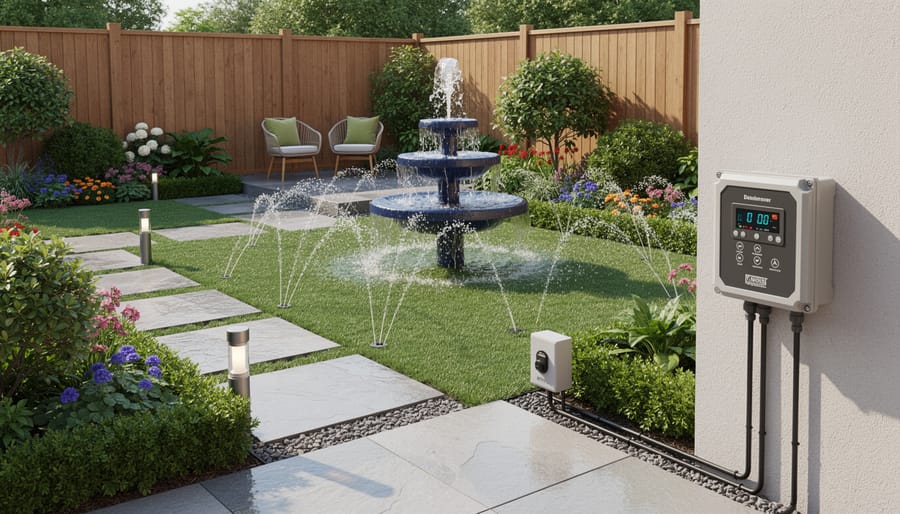
Getting started with your interactive fountain doesn’t require a massive shopping trip, but having everything ready beforehand makes installation much smoother. Here’s what you’ll need:
First, the star of the show: a submersible pump sized appropriately for your fountain’s height and water volume. Think of this as the heart of your system—too small and you’ll get disappointing dribbles instead of impressive jets.
You’ll also need flexible tubing to connect everything, a waterproof power source with GFCI protection for safety, and a basin or reservoir to hold your water. The basin can be an above-ground pond, a hidden underground reservoir, or even a decorative container depending on your design.
Don’t forget sensor equipment if you’re going the interactive route—motion sensors, touch-activated switches, or light sensors depending on your vision. A fountain nozzle or spray head shapes your water display beautifully.
Finally, gather basic tools: adjustable wrenches, wire cutters, waterproof sealant, and leveling equipment. I learned the hard way that skipping the level creates lopsided water flows that look unintentional rather than artistic!
Step-by-Step Installation Process
Ready to bring your interactive fountain to life? Let’s walk through this together, one manageable step at a time. I remember my first installation—I was nervous, but breaking it down made all the difference!
1. Prepare your basin or pond. Clear away any debris and ensure the area is level. If you’re working with an existing pond, give it a good cleaning. Your pump will thank you later! For above-ground installations, position your basin where you want it and fill with clean water.
2. Position your pump at the lowest point of your basin. This ensures proper water circulation and prevents air pockets. Make sure it sits flat and stable—wobbling pumps can create uneven spray patterns that’ll drive you crazy.
3. Attach the fountain head or nozzle according to manufacturer instructions. Hand-tighten connections firmly, but don’t overdo it. Stripped threads are a common pitfall that’s easily avoided with gentle pressure.
4. Install your sensor system. Most interactive fountains use motion sensors or pressure pads. Position sensors 3-5 feet from the fountain at the height recommended in your manual. Test the detection range before finalizing placement.
5. Run electrical connections safely. Use outdoor-rated GFCI outlets and weatherproof cable covers. Never run cords across walkways where they could become tripping hazards.
6. Fill your basin to the recommended level, then power up for your first test. Walk past the sensor slowly and watch the magic happen!
Troubleshooting tip: If your fountain doesn’t activate, check sensor batteries first—it’s almost always the simplest solution. Uneven spray patterns? Adjust water levels or clean the nozzle openings with a soft brush.
Take your time with each step. There’s no rushing creativity!
Testing and Calibrating Your System
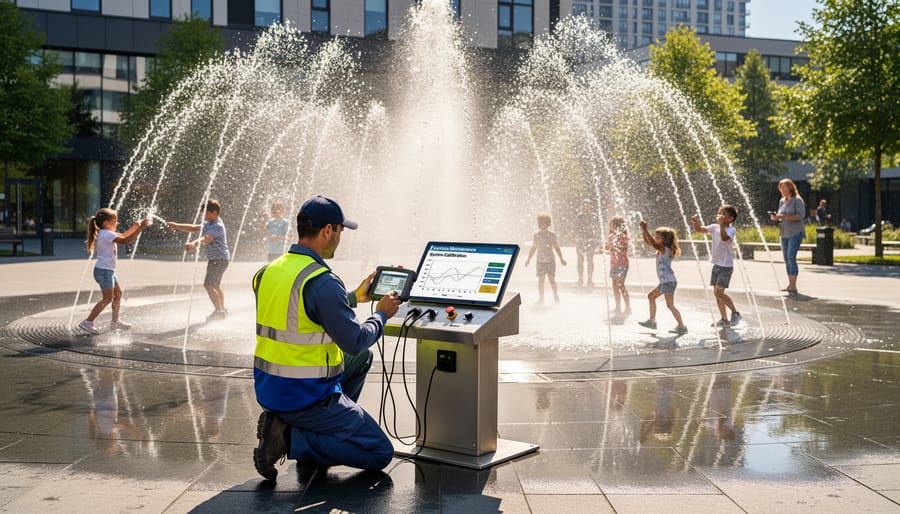
Once everything’s connected, it’s time to test your interactive fountain! Start by checking each sensor individually—wave your hand slowly over motion sensors or step near pressure pads to confirm they’re detecting movement. If responses seem sluggish or overly sensitive, most systems have adjustable sensitivity settings you can tweak.
Next, observe your water patterns carefully. Turn on the fountain and activate different sensors to see how the water responds. Does it shoot up dramatically enough? Too much? This is where the fun fine-tuning happens! Adjust pump speeds and valve settings until you get patterns that feel responsive and exciting.
I learned this the hard way when my first setup barely dribbled when activated—visitors thought it was broken! After adjusting the pump flow rate and sensor delay times, suddenly the fountain came alive with personality.
Test during different times of day, since sunlight can affect some sensors. Have family members try it out too—kids are excellent testers and will quickly show you if the interactive features need adjustment. Don’t rush this phase; proper calibration makes all the difference between a fountain that delights and one that disappoints.
Integrating Interactive Features with Your Existing Water Garden
Placement for Maximum Impact
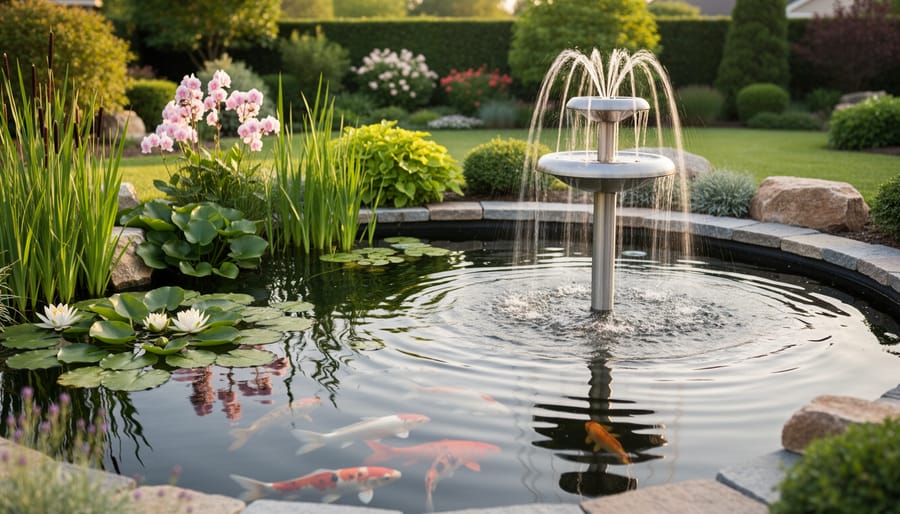
Location makes all the difference when it comes to interactive fountains! From my experience adding fountains to various garden spaces, I’ve found they work best where people naturally gather or pause. Think about positioning yours near a patio, deck, or seating area where family and friends can enjoy the show up close. The sound and movement become a natural conversation starter during outdoor gatherings.
Consider pathways too. Placing an interactive fountain alongside a garden walk creates delightful surprise moments as people pass by. Just ensure there’s enough clearance so splashing water doesn’t make paths slippery. I learned this the hard way with my first fountain placement!
Sightlines matter enormously. Position your fountain where it’s visible from key windows or sitting spots, so you’ll enjoy it even when you’re indoors. Avoid tucking it behind tall plants or structures where its magic gets hidden. Open areas work wonderfully, especially where sunlight can catch the water droplets and create rainbows during afternoon hours. Remember, interactive fountains thrive on visibility and accessibility, so give yours center stage in your outdoor space.
Protecting Your Pond Plants and Fish
Your pond’s living ecosystem should always come first when adding an interactive fountain. I learned this the hard way when my first vigorous fountain stressed my goldfish and sent lily pads spinning! The key is finding that sweet spot where you get beautiful water movement without overwhelming your aquatic friends.
Start by observing your fish behavior during fountain operation. If they’re constantly hiding or swimming frantically, dial back the intensity. Most fish actually appreciate gentle water movement because it adds oxygen, but strong currents can exhaust them. Position fountain jets away from primary fish hangout spots and create calm zones with strategic aquatic plant placement where they can rest.
Delicate plants need special consideration too. Water lilies and lotus prefer still water, so keep fountain spray away from their leaves. Submerged plants and marginals generally tolerate more movement, making them perfect companions for fountain areas. Consider installing your interactive fountain in sections of the pond separate from sensitive plant zones, or use adjustable nozzles that let you customize flow patterns.
Test your setup gradually. Run the fountain for short periods initially, then increase duration while monitoring plant health and fish stress levels. Remember, your pond is a living community, and the fountain should enhance their environment, not dominate it.
Maintaining Your Interactive Fountain
Seasonal Maintenance Tasks
Getting your interactive fountain ready for each season doesn’t have to be complicated! In spring, start by thoroughly cleaning all components, checking electrical connections, and testing sensors before refilling. I always run mine through several test cycles to ensure everything responds properly after winter storage.
During summer operation, keep an eye on water levels since evaporation affects sensor performance. Clean spray nozzles weekly and inspect electronic housings for moisture intrusion. A quick rinse of motion sensors keeps them responding accurately to visitors.
When fall arrives, winterization becomes crucial for protecting your investment. Drain all water completely, disconnect and store electronic components indoors, and remove pumps to prevent freeze damage. I learned the hard way that leaving electronics exposed to winter weather leads to costly replacements! Wrap any permanently installed sensors in weatherproof covers. Store control panels in a dry location, and keep all instruction manuals handy for spring reinstallation. Taking these seasonal steps ensures your interactive fountain will delight visitors year after year without unexpected repairs.
Troubleshooting Common Issues
If your sensors aren’t responding, start by checking the power connection and cleaning the sensor surface—I once spent an hour troubleshooting only to discover a single leaf blocking mine! Gently wipe sensors with a soft cloth and rinse away any mineral deposits with diluted vinegar.
For uneven water patterns, inspect your pump intake for debris and ensure all nozzles are clear. Sometimes adjusting the water level solves everything, as pumps need proper depth to function smoothly. Check that your pump capacity matches your fountain’s requirements too.
Connectivity issues with smart fountains usually resolve with a simple router restart or moving your device closer to the Wi-Fi source. Verify your app is updated and that you’re using the correct network frequency—many systems prefer 2.4GHz over 5GHz.
Regular maintenance prevents most problems. Clean filters weekly during peak season, and don’t hesitate to consult your manual. Remember, even experienced water gardeners face hiccups—troubleshooting is part of the journey!
You’ve explored the possibilities, learned the basics, and discovered just how accessible interactive fountains can be. Now it’s time to take that exciting next step and bring this dynamic feature into your own backyard oasis. Whether you start with a simple spray ring kit or dream bigger with a custom design, remember that every water gardener began exactly where you are now—with curiosity and a willingness to try something new.
I’ll never forget the first time I saw kids laughing as they chased water jets in my own garden, or how neighbors gathered around just to watch the patterns change with the setting sun. These aren’t just fountains; they’re conversation starters, joy creators, and the kind of magical moments that make a house feel like home.
Your interactive fountain doesn’t need to be perfect from day one. Start small, experiment with different patterns, and adjust as you go. The beauty of DIY water gardening is that it grows with you, becoming more sophisticated as your confidence builds. So grab that pump, sketch out your vision, and get ready to create something truly special. Your backyard is waiting for its transformation.