
Why Your Pond Needs an External Filter (And How to Choose One)
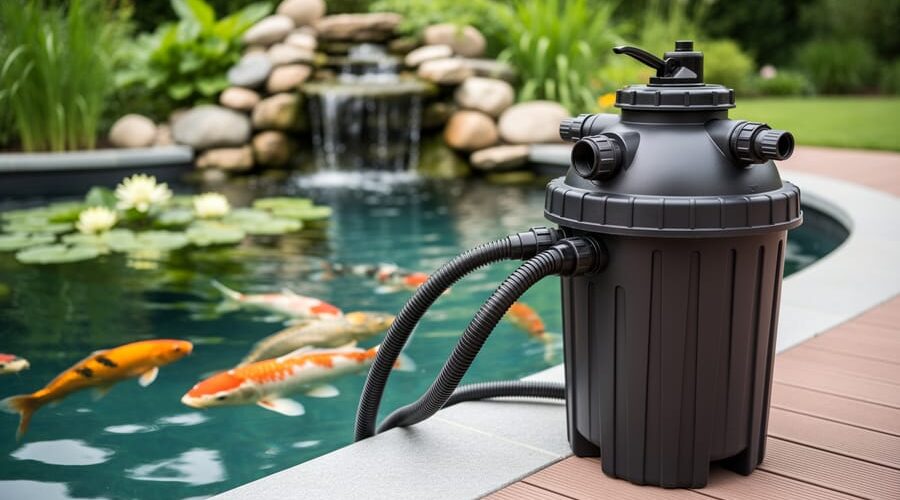
Your pond’s water clarity depends on choosing filtration that works outside the pond basin, keeping unsightly equipment hidden while delivering powerful mechanical and biological cleaning. External pond filters sit beside your water feature, processing gallons through specialized media chambers before returning crystal-clear water to your fish and plants.
Understanding which external filter matches your pond size saves you from costly mistakes and murky disappointments. A 1,000-gallon koi pond needs different filtration capacity than a 200-gallon water garden, and the wrong choice means constant maintenance headaches or unhealthy water conditions that stress your aquatic life.
External filters excel at three essential tasks: trapping debris before it decomposes, housing beneficial bacteria colonies that neutralize fish waste, and providing easy access for cleaning without disturbing your pond environment. Unlike submersible units that crowd your pond interior, external systems give you room to customize filtration stages while keeping pumps and equipment accessible for seasonal maintenance.
This guide walks you through selecting the right external filter capacity, comparing pressurized versus gravity-fed designs, and installing your system for maximum efficiency with minimum effort. You’ll discover practical setup techniques that prevent common beginner mistakes, maintenance routines that take minutes instead of hours, and eco-friendly practices that reduce water waste while keeping your pond ecosystem thriving year-round.
What Makes External Pond Filters Different
The Natural Filtration Connection
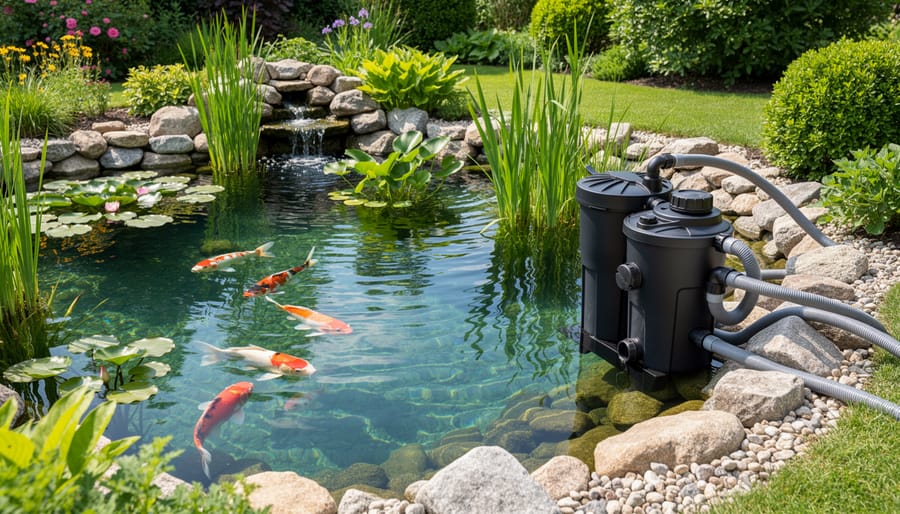
Ever wonder how a crystal-clear mountain stream stays so clean without any pumps or technology? Nature’s been perfecting water filtration for millions of years, and your external pond filter is essentially borrowing those same time-tested tricks. It’s pretty amazing when you think about it – we’re just giving nature a helpful boost in a more compact space.
Let’s break down what’s happening inside that filter box. Think of it as a three-stage cleaning crew, each with its own specialty. First up is mechanical filtration, which is basically the bouncer at the door. Foam pads, sponges, or brushes catch leaves, fish waste, and other debris floating around. It’s like using a strainer when you’re cooking – simple but effective.
Next comes biological filtration, and this is where the real magic happens. Beneficial bacteria set up home on special media inside your filter, munching away on harmful ammonia and nitrites that could make your fish sick. These microscopic helpers work 24/7, converting toxic stuff into safer nitrates. I like to think of them as your pond’s invisible maintenance team. This natural pond water treatment process mirrors what happens in rivers and wetlands.
Finally, there’s chemical filtration, which uses materials like activated carbon to remove dissolved nasties, odors, and discoloration. It’s the polish that makes everything sparkle.
The beauty of external filters is they give these natural processes more room to work their magic compared to cramped in-pond filters. You’re essentially creating a miniature ecosystem that keeps itself balanced – nature’s way, just slightly engineered.
Why External Filters Win for Eco-Friendly Pond Keeping
Less Disturbance to Your Pond Ecosystem
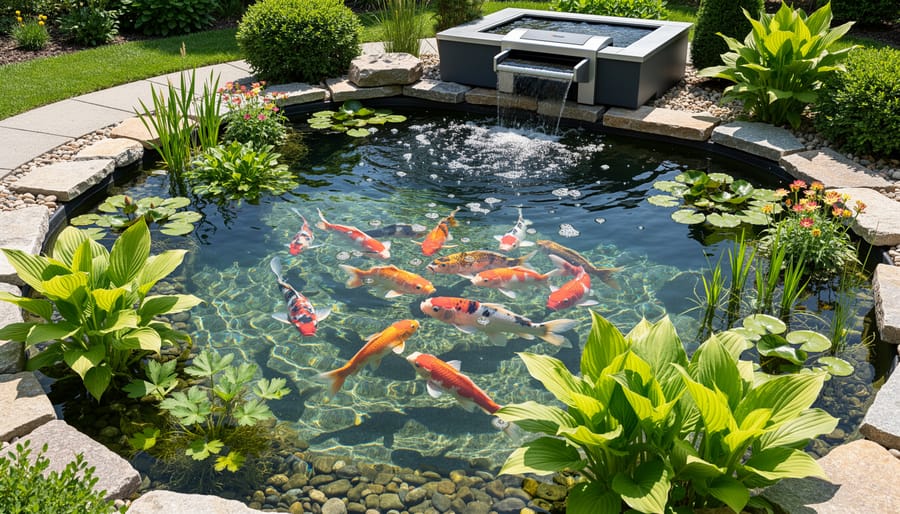
One of the most wonderful benefits I’ve discovered with external pond filters is how much gentler they are on the living community in your pond. When you keep your filtration equipment outside the water, you’re essentially giving your fish, plants, and beneficial bacteria the space they need to thrive naturally.
Think about it this way: internal filters sit right in your pond, taking up valuable swimming space and creating currents that can stress fish or uproot delicate plants. External filters eliminate this problem entirely. Your fish can glide freely without bumping into equipment or getting spooked by machinery humming beneath the surface. I’ve noticed that my koi are noticeably calmer since switching to an external system – they actually seem to enjoy exploring every corner of their pond now.
Plant health improves dramatically too. Those lovely water lilies and marginal plants need stable conditions to flourish, and maintaining pond ecosystem balance becomes much easier when you’re not constantly reaching into the water to service equipment. With external filters, all your maintenance happens outside, meaning fewer disruptions to water temperature, fewer disturbances to settled sediment, and less stress on your aquatic inhabitants.
The beneficial bacteria colonies that naturally develop on rocks and gravel remain undisturbed, continuing their essential work of breaking down waste. This hands-off approach creates a more stable, balanced environment where nature can do what it does best – finding its own healthy equilibrium.
Easier Maintenance Means Less Water Waste
One of the biggest benefits of external pond filters is how much easier they make regular maintenance – and that’s fantastic news for water conservation! Unlike internal filters that require you to wade into your pond or drain water levels to access them, external filters sit conveniently outside the pond where you can reach them without any hassle.
When it’s time to clean your filter media, you simply open the external unit, rinse the media in pond water you’ve set aside, and you’re done. Your fish stay happy, your plants remain undisturbed, and most importantly, you don’t need to do massive water changes just to perform routine maintenance. I remember the days of internal filters when I’d have to remove gallons of water just to get at the filter cartridge – what a waste!
External filters also do such an efficient job at biological and mechanical filtration that they significantly reduce how often you need to change pond water. Healthy beneficial bacteria colonies thrive in these larger filter chambers, breaking down waste more effectively and keeping your water parameters stable for longer periods. This means you’re conserving water while maintaining a healthier environment for your aquatic friends – a true win-win situation for both your pond and the planet.
Supporting Beneficial Bacteria
One of the most exciting benefits of external pond filters is how they become thriving neighborhoods for beneficial bacteria. These microscopic helpers are the unsung heroes of natural water cleaning, and your external filter gives them the perfect place to call home.
Here’s how it works: as water flows through your filter media, helpful bacteria colonize the surfaces, forming what’s called a biofilm. These bacteria naturally consume harmful ammonia and nitrites produced by fish waste and decomposing organic matter, converting them into less harmful nitrates. It’s essentially nature’s own water treatment plant, running 24/7 right in your backyard.
The beauty of external filters is their larger capacity compared to submersible models. More filter media means more surface area for bacterial colonies to establish themselves. Think of it like providing a spacious apartment complex rather than a studio for your microscopic workforce.
I remember when I first started pond keeping, I relied heavily on chemical treatments to keep water clear. Once I understood how beneficial bacteria work in external filters, my chemical usage dropped dramatically. The bacteria do the heavy lifting naturally, which means healthier fish, clearer water, and fewer trips to buy pond treatments. Just give these helpful microbes time to establish themselves, usually four to six weeks, and they’ll reward you with consistently clean, balanced water.
Types of External Pond Filters (And Which One Fits Your Setup)
Pressurized Filters
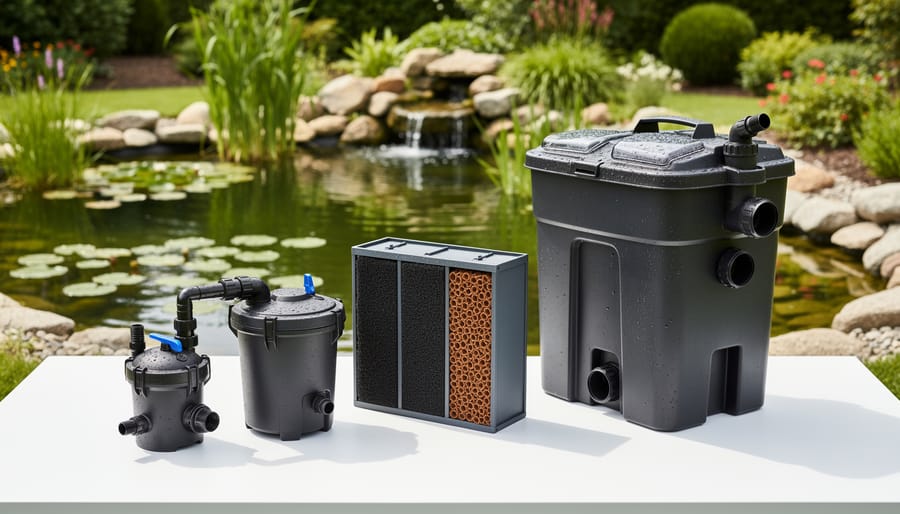
Pressurized filters are the workhorses of pond filtration, combining mechanical and biological cleaning in a sealed unit that operates under pressure. Think of them as the all-in-one solution that sits outside your pond, often tucked behind plants or rocks to keep your garden looking natural.
What makes pressurized filters special is their ability to push water upward after filtration. This means you can place them below water level and still power impressive waterfalls or fountain features. The sealed design keeps debris contained and prevents water from bypassing the filter media, ensuring every drop gets properly cleaned.
These filters work beautifully for small to medium-sized ponds, typically up to 2,000 gallons. I’ve found they’re particularly perfect for garden ponds with koi or goldfish, where you want crystal-clear water without a bulky filtration setup dominating your landscape.
The real advantage comes during maintenance. Most pressurized filters feature a backwash function, which is honestly a game-changer. Instead of dismantling the entire unit, you simply turn a valve, and the system flushes accumulated waste out through a discharge hose. This takes about five minutes compared to the hour-long cleaning sessions required by some other filter types.
They work best when paired with a reliable pump and positioned close to your pond. If you’re dealing with heavy fish loads or limited space for equipment, a pressurized filter delivers efficient filtration without the footprint of gravity-fed systems.
Gravity-Fed Bio Filters
Gravity-fed bio filters work with nature rather than against it, using the simple power of gravity to move water through your filtration system. If you’ve ever watched water flow naturally downhill, you already understand the basic principle! These systems position your filter higher than your pond, allowing water to return naturally without requiring additional pumps.
The beauty of gravity systems lies in their eco-friendly advantages. Since water flows back to your pond by gravity alone, you’re using less electricity compared to systems that need multiple pumps. This means lower energy bills and a smaller carbon footprint. I’ve found that many pond keepers appreciate the whisper-quiet operation too, since you’re eliminating one potential noise source from your backyard oasis.
Setting up a gravity-fed system does require some planning. You’ll need to ensure your filter sits at an appropriate elevation above your pond’s water level. The return pipe must have a gentle, consistent slope to maintain steady flow. Many DIYers build raised platforms or incorporate natural landscaping features like berms to achieve the right positioning.
These filters shine brightest in larger ponds where you’re already using substantial pumping capacity. They’re particularly effective for koi ponds and water gardens with heavy bioloads. However, they might not suit smaller spaces where elevated filter placement could look awkward or dominate your landscape. Consider your pond’s layout and surroundings before committing to this eco-conscious option.
Multi-Chamber Filter Systems
Think of multi-chamber filter systems as the ultimate cleaning crew for larger ponds, typically those over 1,000 gallons. These powerhouse filters use separate compartments to tackle different aspects of filtration in stages, making the whole process much more efficient than trying to do everything at once.
Here’s how the magic happens: water flows through multiple chambers, each designed for a specific job. The first chamber usually handles mechanical filtration, trapping larger debris like leaves and fish waste using brushes or coarse foam. This prevents the finer filters from getting clogged too quickly, which is a real time-saver!
The second and third chambers typically focus on biological filtration. They’re packed with media that provides tons of surface area for beneficial bacteria to colonize. These tiny helpers break down harmful ammonia and nitrites, keeping your fish healthy and happy. Some systems add a fourth chamber with UV clarifiers or additional chemical filtration for crystal-clear water.
What I love about multi-chamber systems is their flexibility. You can customize each chamber based on your pond’s specific needs, and maintenance becomes easier since you can clean one chamber without disturbing the beneficial bacteria in others. Yes, they’re bigger and pricier than single-chamber units, but for larger ponds with substantial fish populations, they’re absolutely worth the investment.
DIY External Filter Options
If you enjoy hands-on projects, building your own external filter can be a rewarding adventure that saves money while giving you complete control over your pond’s filtration. Many pond enthusiasts have successfully created effective DIY filters using everyday materials like plastic storage containers, PVC pipes, and various filter media. The beauty of building your own system is that you can customize it to fit your pond’s specific needs and available space. Plus, you can incorporate eco-friendly materials and design elements that align with sustainable pond designs. While it requires some planning and basic construction skills, a DIY external filter can perform just as well as commercial options at a fraction of the cost. Just remember to research proper sizing and flow rates to ensure your homemade filter effectively supports your pond’s ecosystem.
What to Look for When Choosing Your External Filter
Matching Filter Size to Pond Volume
Getting the right filter size doesn’t require advanced math, just a simple starting point. The golden rule is that your filter should turn over your entire pond volume at least once every two hours. So for a 1,000-gallon pond, you’ll want a filter rated for at least 500 gallons per hour.
Here’s how to calculate your needs: First, measure your pond’s volume. For rectangular ponds, multiply length times width times average depth times 7.5 (that converts cubic feet to gallons). Circular ponds need radius squared times 3.14 times depth times 7.5. Once you have your volume, divide by two to get your minimum flow rate.
Let me share a real-world example. My neighbor built a charming 800-gallon koi pond and initially bought a filter rated for exactly 400 gallons per hour, thinking he’d nailed the calculation. Within weeks, the water turned murky. The problem? He forgot to account for fish load. With ten koi, he actually needed a filter rated for at least 1,200 gallons per hour.
Always size up rather than down, especially if you have fish or plan to add more later. A slightly oversized filter gives you breathing room and better water quality.
Considering Your Fish Load
Think of your fish as tiny houseguests—the more you have, the more cleanup is required! Your fish load directly impacts how powerful your external filter needs to be. A pond with just a few goldfish requires far less filtration than one packed with hungry koi, which are basically the gluttons of the pond world. As a general rule, calculate your pond’s total gallons and match it with a filter rated for at least that capacity, but here’s my secret: always go bigger. I learned this the hard way when my small filter couldn’t keep up with my growing koi family, and the water turned murky within days. Consider that larger fish like koi produce significantly more waste than smaller species. If you’re stocking heavily or planning to add more fish later, choose a filter rated for 150-200% of your pond’s volume. This gives you breathing room and keeps water quality consistently excellent, even during feeding frenzies.
Climate and Seasonal Factors
Your local climate plays a bigger role in filter selection than you might think! If you live somewhere with freezing winters, you’ll need to consider whether your external filter can handle the cold or if you’ll need to bring it indoors during winter months. Some models are designed to withstand harsh weather, while others require seasonal adjustments.
In warmer climates, you might deal with algae blooms and faster debris accumulation, meaning your filter will work harder year-round. This affects how often you’ll need to clean it and may influence whether you choose a mechanical or biological system. Understanding seasonal pond changes helps you prepare your filtration system for success throughout the year.
Consider rainfall patterns too – heavy rains can overwhelm smaller filters with runoff debris. Choose a system that matches your local weather challenges, and you’ll save yourself headaches down the road!
Energy Efficiency and Eco-Friendly Features
When choosing an external pond filter, consider its environmental footprint alongside performance. Look for models with low-wattage pumps that deliver strong filtration without driving up your electricity bill. Some filters run on as little as 20-50 watts, making them surprisingly affordable to operate year-round. I’ve found that investing in energy-efficient pond equipment pays off quickly through lower power costs.
Check whether the filter housing uses UV-resistant recycled plastics or sustainably sourced materials. Quality manufacturers increasingly design filters with replaceable components rather than disposable units, reducing waste over time. Look for filters with efficient water flow designs that minimize pump strain, and consider units compatible with solar power options if you’re planning a truly green setup. Bio-media made from natural materials like ceramic or lava rock offers excellent filtration while being environmentally friendly and long-lasting.
Setting Up Your External Filter the Right Way
Placement Matters
Where you place your external pond filter can make a real difference in how well it works and how much you enjoy your pond. First things first: position your filter as close to the pond as possible, ideally within 10-15 feet. The closer it is, the more efficiently your pump works and the less energy you’ll use. I learned this the hard way when I initially placed mine 20 feet away and noticed my pump was working overtime!
Make sure the filter sits on level ground above the waterline. This prevents back-siphoning and makes maintenance so much easier when you need to clean it. You’ll thank yourself later when you’re not wrestling with awkward angles.
Now, let’s talk about keeping things looking natural. Nobody wants a plastic box dominating their beautiful pond view! Tuck your filter behind decorative rocks, strategically placed shrubs, or ornamental grasses. I’ve even seen folks create charming “filter houses” using stacked stone or weathered wood that blend right into the landscape. Just remember to leave enough space around it for easy access. You’ll need to get in there regularly for cleaning, so don’t make it a treasure hunt every time. A well-hidden filter that’s still accessible is the sweet spot you’re aiming for.
Connecting Pumps and Plumbing
Connecting your external pond filter might seem intimidating at first, but trust me, it’s easier than assembling most furniture! The key is taking it slow and double-checking each connection before you flip that switch.
Start by positioning your pump in the pond at the recommended depth, usually on a brick or stand to keep debris away from the intake. Run your flexible tubing from the pump outlet to the filter inlet, making sure there are no kinks or sharp bends that could restrict water flow. Think of it like a garden hose—water flows best through smooth, gentle curves.
Secure all connections with hose clamps to prevent leaks. I learned this the hard way when my first setup created a mini waterfall in my flower bed! Tighten them snugly, but don’t go crazy—you’re not trying to crush the tubing.
From the filter outlet, connect another tube back to your pond. Many pond keepers like directing this return flow through a waterfall or fountain feature for added aeration and visual appeal.
Before starting the system, fill the filter chamber with water to prevent air locks. Run the pump for a few minutes and check all connections for drips. A little patience now saves gallons of water later!
Starting Up and Cycling Your Filter
Here’s the exciting part that truly brings your filter to life! Cycling your filter means establishing a colony of beneficial bacteria that naturally break down fish waste and harmful ammonia. Think of it as creating a microscopic cleanup crew for your pond.
Start by filling your filter with dechlorinated water and running it continuously. Add a bacterial starter product to speed things up, though nature will eventually do the job on its own. This process typically takes four to six weeks, so patience is your friend here. During this time, the bacteria are multiplying and setting up shop in your filter media.
I learned the hard way not to rush this step with my first pond. Adding too many fish before cycling was complete led to cloudy water and stressed koi. Now I always test my water weekly during cycling, watching for ammonia and nitrite levels to spike and then drop to zero. That’s when you know your biological filter is ready to handle fish waste effectively. Keep the filter running 24/7 during this period, as turning it off can kill your newly established bacteria colony.
Keeping Your External Filter Running Smoothly
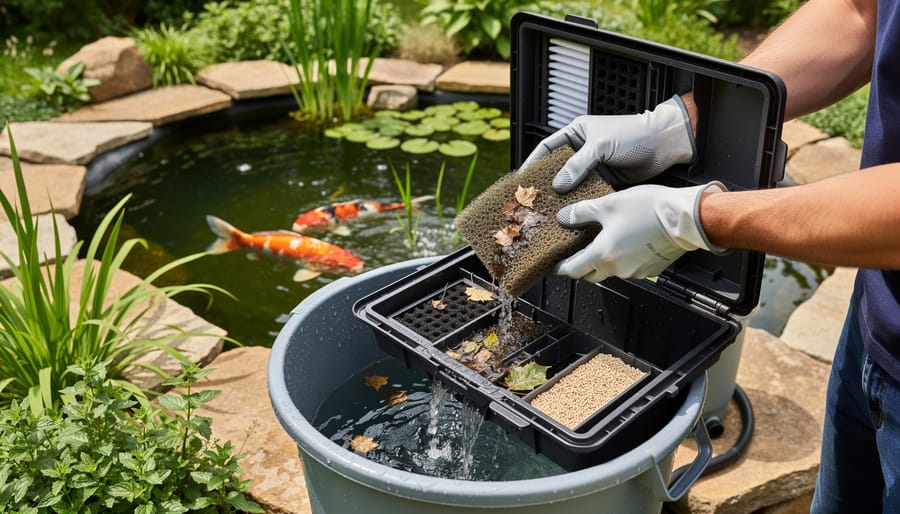
Simple Weekly and Monthly Tasks
Let me share a realistic maintenance schedule that won’t eat up your entire weekend! I’ve learned that consistency beats marathon cleaning sessions every time.
Weekly tasks should take about 10-15 minutes. Give your filter media a quick visual check through any inspection windows to spot obvious debris buildup. Test your water quality with a simple dip strip, keeping an eye on ammonia and nitrite levels. Rinse your pre-filter foam or mechanical pad under pond water (never tap water, which kills beneficial bacteria). This little habit prevents your biological media from getting clogged prematurely.
Monthly maintenance requires about 30-45 minutes. Gently rinse biological media in a bucket of pond water, handling it carefully to preserve those hardworking bacteria colonies. Check all O-rings and seals for wear, applying a bit of silicone lubricant if needed. Inspect your pump intake for clogs and verify that flow rates match your filter’s specifications.
Here’s my favorite efficiency tip: keep a dedicated maintenance bucket and tools near your pond. When everything’s handy, you’re more likely to stick with the schedule. I also recommend choosing a consistent day each week, like Sunday mornings with coffee in hand, making it part of your relaxing outdoor routine rather than a dreaded chore.
Cleaning Without Harming Good Bacteria
Here’s the secret to keeping your beneficial bacteria happy while cleaning your filter: never clean everything at once! I learned this the hard way when I scrubbed my entire filter squeaky clean and watched my pond water turn green within days. Those good bacteria living in your filter media are your pond’s cleanup crew, and they need gentle treatment.
When it’s time to clean, remove only half of your filter media at a time. Rinse it gently using pond water, not tap water. Why? Chlorine in tap water kills bacteria instantly. I keep a bucket of pond water beside me during cleaning sessions. Swish the media around gently until you’ve removed the chunky debris, but stop before the water runs completely clear. That slight cloudiness means beneficial bacteria are still present.
Clean your mechanical filter components more frequently than biological media. Sponges and filter pads can be rinsed weekly, while bio-balls or ceramic rings might only need attention every few months. Your filter will tell you when cleaning is necessary through reduced water flow.
Seasonal Adjustments
Your pond filter needs different care as the seasons change, especially when temperatures drop. In spring, gradually increase feeding and run your filter continuously as fish become more active and beneficial bacteria multiply. During hot summer months, check water flow more frequently since evaporation can lower water levels and stress your pump.
Fall preparation is critical. Remove fallen leaves regularly to prevent them from clogging your filter media. As temperatures dip below 50°F, your biological bacteria become dormant, so you can reduce or stop feeding fish.
Winter requires the biggest adjustment. In mild climates, you can run filters year-round at reduced flow. However, if you experience freezing temperatures, you’ll need to either move your filter indoors or winterize it completely. Disconnect hoses, drain all water from the unit, clean the media, and store everything in a frost-free location. Never let water freeze inside your filter housing, as ice expansion can crack the casing and damage components. I learned this the hard way my first winter when I forgot to drain my UV clarifier – an expensive mistake! Come spring, reassemble everything and restart your system before fish become active.
Troubleshooting Common External Filter Issues
When Water Flow Slows Down
When your pond’s water flow starts to resemble a lazy creek rather than a healthy stream, it’s time for some detective work! The most common culprit is a clogged filter media, which happens to all of us. Start by checking your mechanical filter pads—they catch debris like fallen leaves and fish waste, and they fill up faster than you’d think. Give them a gentle rinse with pond water (never tap water, as chlorine kills beneficial bacteria). Next, examine your pump intake for blockages. I once spent an hour troubleshooting only to find a stubborn oak leaf blocking the entire inlet! Check all hoses and connections for kinks or disconnections too. If your pump sounds different or struggles, the impeller might need cleaning. Simply remove any string algae or debris wrapped around it. Remember, a little monthly maintenance prevents these slowdowns from happening in the first place, keeping your fish happy and your water crystal clear.
Dealing with Green Water Despite Filtration
Green water can stubbornly persist even with a good external filter running, and here’s why: filters remove particles, but tiny free-floating algae often slip right through. These microscopic troublemakers thrive on excess nutrients and sunlight, not mechanical filtration alone.
The good news? You can tackle this naturally. Start by adding more aquatic plants, which compete with algae for nutrients. Water lilies and floating plants provide shade, blocking the sunlight algae love. Introduce beneficial bacteria supplements to help break down organic waste before it feeds algae blooms.
Check your feeding habits too. Overfeeding fish creates more waste and nutrients, fueling algae growth. Feed only what your fish can consume in a few minutes. Consider adding barley straw extract, a time-tested natural algae inhibitor that works alongside your filtration system.
Remember, achieving crystal-clear water takes patience and balance. Your external filter handles the heavy lifting, but creating a healthy ecosystem with plants, proper stocking levels, and mindful maintenance makes all the difference in winning the battle against green water.
Strange Noises and Leaks
Strange sounds from your external filter usually have simple explanations, and I’ve dealt with my fair share of mysterious gurgles over the years! If you hear rattling or vibrating, first check that your filter is sitting level on its base. An uneven surface can make the motor work harder and create noise. Gurgling typically means air is trapped in the system, so try loosening the lid slightly to release air bubbles, then retighten once water flows smoothly.
For leaks, the culprit is often a loose connection or worn O-ring. Turn off your pump and inspect all hose connections, tightening clamps where needed. Check rubber seals around the lid and replace them if they look cracked or compressed. A small leak at the outlet? Try wrapping plumber’s tape around the threads before reconnecting. Most hardware stores carry replacement O-rings and seals for common filter models. These quick fixes solve about 90 percent of minor issues without calling in help.
Investing in an external pond filter is one of the best decisions you can make for your water garden’s health and your own peace of mind. These systems work harmoniously with nature, supporting beneficial bacteria that keep your pond balanced while reducing the need for harsh chemicals. You’re not just installing a piece of equipment—you’re creating a thriving ecosystem that benefits fish, plants, and wildlife alike.
The journey to crystal-clear, healthy pond water is absolutely within your reach. Whether you’re just starting out with your first pond or looking to upgrade your current setup, external filters offer the flexibility and power to handle your specific needs. Remember, every pond is unique, and finding the right filter is about matching your pond’s personality with the right technology.
Ready to transform your pond? Start by assessing your water volume and fish load, then explore the filter options that fit your budget and maintenance preferences. Your pond will thank you with sparkling water and happy, healthy inhabitants.
We’d love to hear from you! Have you installed an external filter, or are you still weighing your options? Share your experiences, questions, or concerns in the comments below. Let’s learn from each other and build a community of successful pond keepers together.