
Transform Your Koi Pond Into a Living Canvas with Interactive Design Elements
Transform your koi pond from a simple water feature into living artwork by layering visual depth through strategic plant placement at varying heights—submerged oxygenators at the bottom, floating lotus in the middle, and marginal irises along edges. This creates natural “frames” that guide the eye and encourage visitors to pause at different viewing angles around your pond.
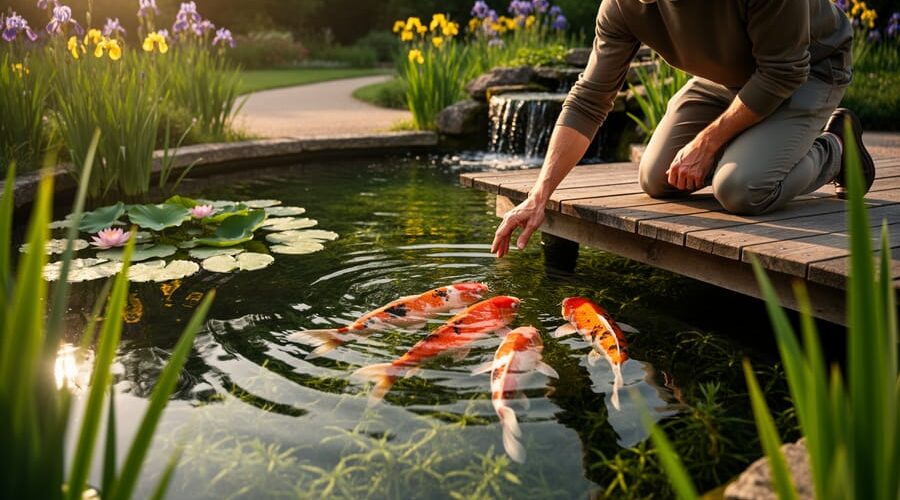
Design interactive viewing stations by installing flat rocks or wooden platforms at water level where people can crouch down and watch koi swim beneath the surface, making the experience more immersive than standing at the edge. Position these stations near feeding areas where fish naturally congregate, turning routine maintenance into an engaging ritual that connects you with your aquatic ecosystem.
Incorporate movement beyond the fish themselves through carefully placed fountains, spillways, or gentle waterfalls that create rippling patterns across the surface. These dynamic elements catch sunlight differently throughout the day, transforming your pond’s appearance from morning to evening and giving you endless reasons to stop and appreciate the changing scene.
Think of your koi pond as a three-dimensional canvas where every element—from the gliding fish to the dancing water lilies to the play of light and shadow—works together to create moments of wonder. The most successful pond illustrations aren’t just beautiful to look at; they invite interaction, reward careful observation, and evolve with the seasons, giving you a living masterpiece that deepens your connection to the natural world right in your own backyard.
What Makes a Koi Pond an ‘Illustration’?
Think of your koi pond as a living canvas that changes with every season, every swim of your fish, and every ripple on the water’s surface. When we talk about a koi pond as an illustration, we’re recognizing it as something far more dynamic than a static painting on a wall. It’s artwork that breathes, grows, and interacts with you and your environment.
The magic happens when you start seeing each element as part of a bigger picture. Your koi aren’t just fish, they’re moving brushstrokes of orange, white, and black that create patterns as they glide through the water. The rocks you carefully place become the frame and texture of your composition. Those water lilies and lotus plants? They’re focal points that draw the eye and add layers of depth. Even the sound of your waterfall contributes to the overall sensory experience.
Here’s where it gets really interesting. There are two ways to approach your pond as an illustration. The static approach focuses on creating a beautiful scene that looks stunning from one or two specific viewing angles, kind of like a traditional landscape painting. You might arrange your rocks and plants to look perfect from your patio, for example.
The interactive approach, which I personally find more rewarding, treats your pond as a living story that unfolds from multiple perspectives. You design pathways around it, create viewing windows at different heights, and position features that encourage you to walk around and discover new angles. Your koi become characters in this story, swimming beneath bridges you’ve built or appearing unexpectedly from behind plant clusters. The pond invites exploration rather than passive observation, making each visit a fresh experience.
Interactive Elements That Bring Your Pond to Life
Movement and Flow: Water Features as Brushstrokes
Think of moving water as the brushstrokes that bring your koi pond illustration to life. While a still pond has its own quiet beauty, adding water features and fountains creates dynamic movement that transforms the entire scene.
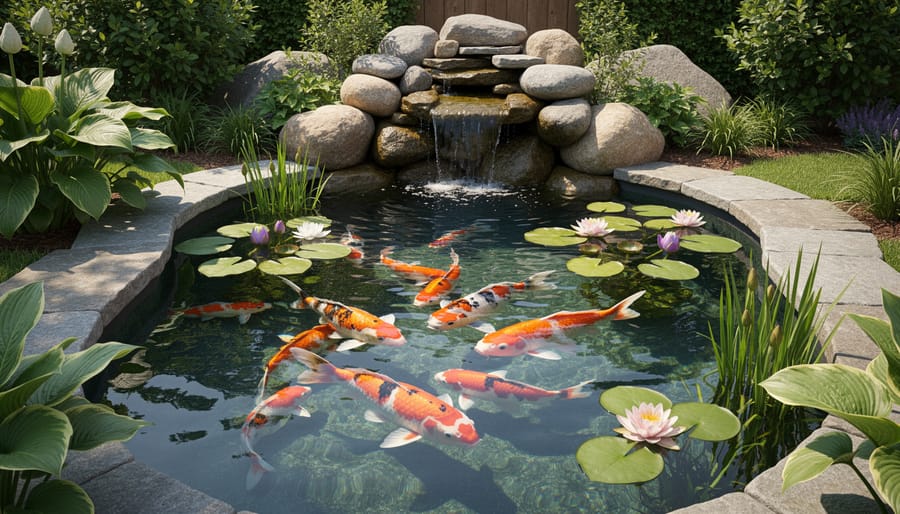
Waterfalls act like cascading paint, adding vertical dimension and creating soothing sounds that enhance your outdoor space. I’ve noticed in my own pond that when the waterfall runs, my koi gather near the base, enjoying the oxygen-rich water and the gentle current. This natural behavior becomes part of your living artwork, drawing the eye to different areas throughout the day.
Streams and spillways guide movement through your design, much like how an artist’s brush guides the viewer’s gaze across a canvas. The ripples they create catch sunlight differently throughout the day, adding sparkle and constantly changing reflections. You can play with flow rates too. A gentle trickle creates subtle, peaceful movement, while a stronger flow adds drama and energy.
Fountains serve as focal points, sending water droplets into the air like suspended paint spatters. They’re particularly effective in larger ponds where you want to create multiple areas of interest. The spray patterns interact with wind and light, creating ever-changing displays.
Here’s something wonderful I’ve discovered: koi actually respond to these flow patterns. They’ll swim against gentle currents for exercise or rest in calmer pockets. Watching them navigate these watery brushstrokes adds another layer of movement and life to your masterpiece.
Playing with Light and Shadow
Light transforms your koi pond illustration from ordinary to extraordinary, creating different moods throughout the day. Think of lighting as your secret ingredient for adding drama and dimension to your pond design.
During daylight hours, natural sunlight creates beautiful dancing patterns as it filters through water and foliage. When planning your illustration, consider how morning light casts long, gentle shadows across the pond surface, while midday sun creates sharp contrasts and illuminates the vibrant colors of your koi. Late afternoon brings that magical golden hour glow that makes everything look enchanting.
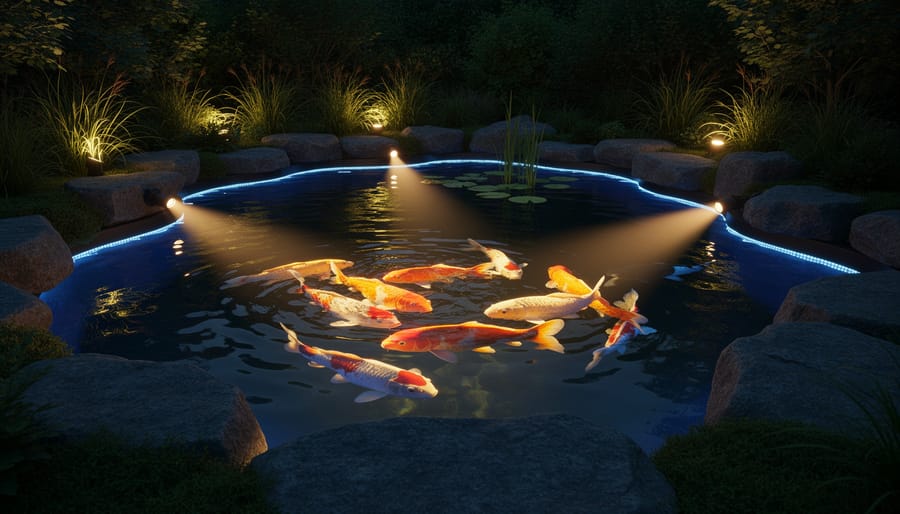
Underwater lighting opens up a whole new world after dark. Positioning lights beneath the water surface makes your koi appear to glow as they swim, creating an almost ethereal effect. The way light refracts through moving water adds sparkle and movement to your illustration. I’ve found that showing subtle light rays penetrating the water depths really brings a pond scene to life.
Floating lights and landscape lighting around the pond perimeter create stunning reflections on the water surface. These reflections double the visual impact of your design, mirroring plants, rocks, and decorative elements. dynamic pond lighting can completely change the atmosphere from peaceful daytime retreat to dramatic nighttime showcase.
Don’t forget shadows! They’re just as important as the light itself. Shadows add depth, define shapes, and create contrast. Show how overhanging plants cast dappled shadows, or how rocks create dark pockets that suggest mystery and depth beneath the surface.
Your Koi as Living Color Palettes
Think of your koi as swimming paintbrushes, each one adding its own splash of color to your living canvas. When you select koi for your pond, you’re not just buying fish – you’re choosing a color palette that will constantly rearrange itself throughout the day.
Start by considering how different varieties work together. A brilliant orange Kohaku paired with the deep blacks of a Showa creates dramatic contrast that catches the eye from across your yard. Add a white Platinum Ogon, and suddenly you have a classic triadic scheme that shifts and flows. I learned this the hard way when I initially bought six identical butterscotch-colored koi. Beautiful fish, but visually? A bit boring.
The magic happens when your koi start moving. Unlike your static rocks and plants, these living elements glide through different areas, creating temporary compositions that would make any artist jealous. One moment, three orange koi cluster near your purple water iris, forming a complementary color story. Minutes later, they’ve dispersed, and a white koi hovers over dark pebbles, creating striking contrast.
Position feeding areas strategically to encourage your koi to swim through specific viewing zones. This lets you guide their movement patterns without restricting their natural behavior. Morning feeding near your favorite sitting area means you’ll enjoy the full animated color show with your coffee. Your pond becomes a living kaleidoscope, constantly creating new visual moments you could never plan but can definitely encourage.
Seasonal Transitions: A Changing Canvas
Your koi pond can become a living artwork that reinvents itself with every season, and choosing the right plants makes all the difference! Think of your pond as a canvas that nature repaints throughout the year. Deciduous plants like Japanese maples offer vibrant spring greens, summer shade, and spectacular autumn colors before revealing beautiful branch structures in winter. Meanwhile, evergreens like dwarf pines and bamboo provide year-round structure and keep your pond looking lush even in the coldest months.
The real magic happens when you layer in seasonal bloomers. Spring brings irises and primulas, summer showcases water lilies and lotus flowers, while autumn asters add late-season pops of color. I love mixing early bloomers with late-season performers so there’s always something catching my eye. This approach to seasonal pond transformations keeps your illustration fresh and exciting all year long. Pro tip: plant in groups of three or five for natural-looking clusters that mirror how plants grow in the wild, creating a more authentic and visually pleasing composition around your pond.
Touch and Sound: Multi-Sensory Interaction
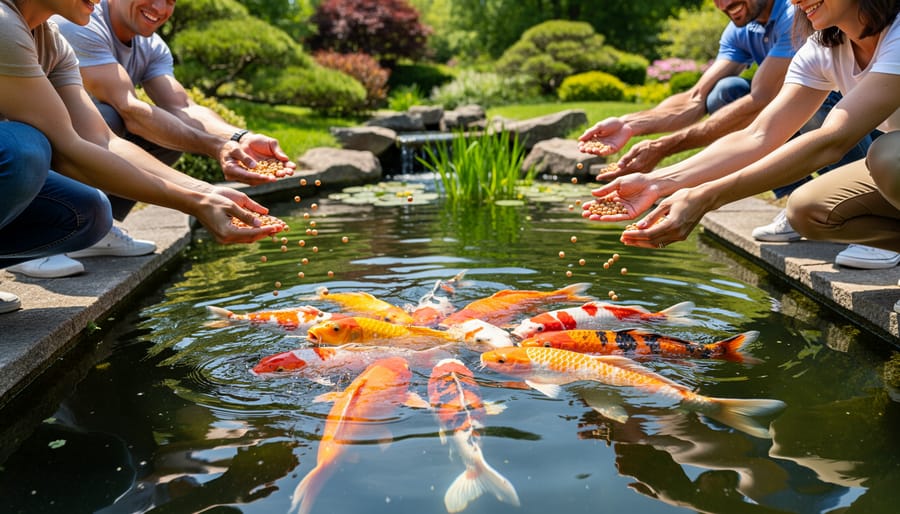
Your koi pond becomes truly magical when visitors can engage with it through touch and sound. Think about adding feeding stations at different points around your pond—there’s nothing quite like the gentle splash and excitement when your koi recognize feeding time! I’ve found that dedicating a specific shallow area with easy access encourages interaction without disrupting the entire pond ecosystem.
Stepping stones create both functional pathways and artistic elements. Position them strategically so you can reach different viewing angles, making maintenance easier while adding visual interest. Natural flat stones work beautifully, but concrete pavers offer more stability if you’re concerned about slippery surfaces.
Viewing platforms or small decks at pond level transform the experience entirely. Sitting close to the water lets you observe fish behavior you’d miss from standing height, and kids especially love dangling their fingers near the surface (though save actual touching for designated interaction times to protect your fish).
The soundtrack matters too. Water sounds—whether from a simple fountain, cascading waterfall, or bubbling stream—mask neighborhood noise and create that peaceful atmosphere we’re all chasing. Position your water features where the sound carries to your favorite sitting areas. Even a modest spitter or bamboo fountain adds that soothing ripple effect that makes hours disappear beside your pond.
Designing Your Interactive Pond Illustration: A Step-by-Step Approach
Start with Your Visual Story
Before you sketch a single line or choose your first plant, take a moment to dream about what story your koi pond will tell. This isn’t just about placing rocks and water—it’s about creating a living canvas that reflects your personality and vision.
Start by asking yourself some guiding questions: What feeling do you want visitors to experience when they approach your pond? Are you drawn to the peaceful minimalism of a Japanese zen garden, the lush abundance of a tropical paradise, or perhaps something uniquely your own? Do you envision your pond as a quiet meditation space or a lively gathering spot where friends and family can watch your koi dance beneath the surface?
Grab some paper and colored pencils, and sketch out your ideas—no artistic talent required! Draw rough shapes for your pond, note where sunlight hits throughout the day, and mark spots where you might add focal points like a waterfall or decorative bridge. I remember my first pond sketch looked like a lumpy potato with arrows everywhere, but it helped me visualize the flow and energy of the space.
Think about the journey: How will people discover your pond? What will catch their eye first? These early sketches become your roadmap, guiding every decision from plant selection to rock placement.
Layer Your Elements Like an Artist
Think of your koi pond illustration like a painting that draws the eye inward. The secret lies in creating three distinct layers that work together harmoniously.
Start with your foreground, the area closest to viewers. This is where you’ll place your boldest features—perhaps a cluster of rounded river rocks or low-growing marginal plants that spill over the pond’s edge. These elements should be detailed and textured, creating an inviting entry point into your design.
Your midground is where the magic happens. This is typically the water surface itself, where your koi become the stars of the show. Position water lilies and floating plants here to create natural gathering spots for fish. This middle layer connects everything together and provides the most visual activity.
The background adds depth and mystery. Taller plants, a weathered statue, or layered shrubs create the illusion that your pond extends beyond its actual boundaries. Use strategic plant arrangements that graduate in height from front to back.
This layering technique transforms a simple water feature into a three-dimensional living artwork that constantly draws the eye through the space, creating natural visual flow and making even modest ponds feel surprisingly expansive.
Add Interactive Focal Points
Now let’s bring your koi pond to life by creating spaces where you and your visitors can truly connect with the water! Think of these interactive focal points as the heart of your pond experience, where observation becomes participation.
Start with a primary viewing platform positioned at the pond’s widest section. This could be a simple wooden deck extension, a stone patio, or even a comfortable bench arrangement. I’ve found that placing seating about two feet above water level gives you the perfect angle to watch your koi glide beneath the surface. Make it inviting with weatherproof cushions or nearby potted plants.
Your feeding station deserves thoughtful placement too. Choose a spot that’s easily accessible from your main walking path but also visible from indoor windows. Many pond enthusiasts install a decorative feeding platform that floats at the water’s edge, which trains koi to gather in one area during feeding time. This creates an incredible show for guests and makes those daily interactions genuinely magical.
Consider adding stepping stones that lead to a special observation point. These create a sense of adventure and allow viewing from different angles. Just ensure they’re stable and placed about 18 inches apart for comfortable, safe crossing.
For families, a shallow touch pool or separate stream section lets children safely interact with the water ecosystem. You might incorporate a gentle waterfall they can reach into or smooth river rocks perfect for little hands to explore. These interactive elements transform your pond from something beautiful to look at into an experience everyone can enjoy together.
Maintaining the Magic: Keeping Your Interactive Elements Working
Creating an interactive koi pond is exciting, but the real magic happens when you keep everything running smoothly season after season. Think of maintenance as part of the creative process rather than a chore – it’s what keeps your living artwork thriving.
Let’s start with your interactive lighting features. I learned this the hard way after my first underwater LED setup started flickering after just three months. Check all electrical connections monthly, especially during spring and autumn when temperature changes create condensation. Clean light fixtures every six weeks to prevent algae buildup that dims your beautiful effects. Always keep spare bulbs on hand – nothing breaks the magic faster than a dark focal point during an evening gathering.
For water features like fountains or streams, winter preparation is essential. In colder climates, remove pump components before the first freeze and store them indoors. I wrap mine in old towels in the garage, labeled with installation dates so I know which ones might need replacing soon. During active months, clean pump filters weekly to maintain consistent water flow and prevent strain on the motor.
Your interactive plant elements need attention too. Trim overhanging foliage monthly to prevent excessive debris in the water. Floating plants like water lettuce can quickly overtake feeding stations or viewing areas, so thin them regularly. This also ties into your overall koi pond landscaping maintenance routine.
Most importantly, never sacrifice water quality for aesthetics. Test water parameters weekly when you have interactive features, as additional equipment can affect filtration. Your koi’s health always comes first – they’re the real stars of your interactive masterpiece.
Your koi pond isn’t just a collection of water, rocks, and fish—it’s a living, breathing art installation that changes with every ripple, every season, and every visitor who stops to take it in. Unlike a static painting on a wall, your pond offers something truly special: an experience that evolves moment by moment, inviting people to slow down, observe, and connect with nature right in your own backyard.
If you’re feeling overwhelmed by all the possibilities, here’s my advice: start small. Choose just one or two interactive elements that excite you most. Maybe it’s a simple feeding station where guests can hand-feed your koi, or perhaps a stepping stone path that lets them walk across the water. You can always add more features as you discover what brings you and your visitors the most joy.
I’ll never forget watching my neighbor’s grandson visit her pond for the first time. He was glued to his phone until he spotted the koi gathering near the bridge. Within minutes, he was lying on his stomach, fingers trailing in the water, laughing as the fish nibbled at his fingertips. His grandmother stood nearby with tears in her eyes, grateful for this simple design choice that created such a magical moment. That’s the real beauty of a well-designed interactive pond—it has the power to transform ordinary afternoons into cherished memories that last a lifetime.